By Rafael, CA -- Autodesk, Inc (Nasdaq: ADSK), the world's leading design software and digital content company, today announced that the Taipei (Taiwan) City Government (TCG) has deployed Autodesk's Geographic Information Systems (GIS) technology as par


Arc Flash Training CSA Z462 - Electrical Safety Essentials

Our customized live online or in‑person group training can be delivered to your staff at your location.

  • Live Online
  • 6 hours Instructor-led
  • Group Training Available
Regular Price:
$249
Coupon Price:
$199
Reserve Your Seat Today
Autodesk, Inc (Nasdaq: ADSK), the world's leading design software and digital content company, today announced that the Taipei (Taiwan) City Government (TCG) has deployed Autodesk's Geographic Information Systems (GIS) technology as part of its ambitious “CyberCity” initiative to bring government services online. TCG is using Autodesk MapGuide, Autodesk OnSite View, and Autodesk OnSite Enterprise software to help them reach the initiative’s goals. The Autodesk GIS implementation, known as the “CityLook” Reporting and Management System, is designed to more efficiently manage city infrastructure, protect public safety, keep the city clean, and meet the evolving needs of citizens for more government accessibility online. Limited Space, New Strategies With physical expansion constrained by geography, the City of Taipei and its 2.6 million residents have experienced heavy congestion and an overtaxed municipal infrastructure. Without space to expand, the city government turned to cyberspace to improve the quality of life and help give businesses the competitive edge of working in a world-class city. The goal of the CyberCity initiative is to establish an easily accessible network to help bridge the gap between residents, businesses, and the city government. By bringing government services and processes online, city employees become cyber civil servants making government more accessible and the delivery of services faster and more efficient. Using the Reporting and Management System, city employees can collect a wide range of information linked to Taipei’s digital topographical maps, review the data, and help establish a highly efficient workflow across relevant city departments. They can create work orders and automatically send them to the appropriate city department and field crews for action. The field crews can check the status of the reported cases on wireless devices on the spot and once the problem has been corrected, can easily access the system to report completion and close the work order. Currently, more than 100 community service team members remotely monitor and report on services and maintenance of roads and bridges, street lights and traffic signals and trees and parks; facilities management (water, gas, electric); and garbage collection. Additionally, administrators in any of the city’s 435 districts and citizens with Internet access can report problems using a web browser running the Autodesk MapGuide client application, which is easily downloaded from the city website. “The intuitive graphical user interface of Autodesk software has made the system very easy to learn for residents and employees and we can easily set up a new online service within a very short timeframe, said Miss Mai-Zhu Hsieh, Community Service, TCG. “This system successfully demonstrates that Taipei is a city ready for the challenges of this century.” The CityLook Reporting and Management System was built by GAIAS GIS, Inc., an Autodesk reseller. For more information on the Taipei CyberCity initiative, visit www.taipei.gov.tw/English/cyber-city-taipei.htm. About Autodesk Founded in 1982, Autodesk, Inc., is the world’s leading design software and digital content company. The company serves a diverse portfolio of markets, including building design, geographic information systems, manufacturing, digital media, and wireless data services. By delivering tools that foster innovation and creativity, Autodesk helps customers create, use and share their digital design data. For more information about the company, see http://www.autodesk.com. For More Information Contact: Eric Sutphin 415-507-8390 www.autodesk.com eric.sutphin@autodesk.com

Related News

Europe's Worst Energy Nightmare Is Becoming Reality

European Energy Crisis shocks markets as Russia slashes gas via Nord Stream, spiking prices and triggering rationing, LNG imports, storage shortfalls, and emergency measures to secure energy security before a harsh winter.


Key Points

Europe-wide gas shock from reduced Russian flows drives price spikes, rationing risk, LNG reliance, and emergency action.

✅ Nord Stream cuts deepen supply insecurity and storage gaps

✅ LNG imports rise but terminal capacity and shipping are tight

✅ Policy tools: rationing, subsidies, demand response, coal restarts


As Russian gas cutoffs upend European energy security, the continent is struggling to cope with what experts say is one of its worst-ever energy crises—and it could still get much worse. 

For months, European leaders have been haunted by the prospect of losing Russia’s natural gas supply, which accounts for some 40 percent of European imports and has been a crucial energy lifeline for the continent. That nightmare is now becoming a painful reality as Moscow slashes its flows in retaliation for Europe’s support for Ukraine, dramatically increasing energy prices and forcing many countries to resort to emergency plans, including emergency measures to limit electricity prices in some cases, and as backup energy suppliers such as Norway and North Africa are failing to step up.

“This is the most extreme energy crisis that has ever occurred in Europe,” said Alex Munton, an expert on global gas markets at Rapidan Energy Group, a consultancy. “Europe [is] looking at the very real prospect of not having sufficient gas when it’s most needed, which is during the coldest part of the year.”

“Prices have shot through the roof,” added Munton, who noted that European natural gas prices—nearly $50 per MMBTu—have eclipsed U.S. price rises by nearly tenfold, and that rolling back electricity prices is tougher than it appears in the current market. “That is an extraordinarily high price to be paying for natural gas, and really there is no immediate way out from here.” 

Many officials and energy experts worry that the crisis will only deepen after Nord Stream 1, the largest gas pipeline from Russia to Europe, is taken down for scheduled maintenance this week. Although the pipeline is supposed to be under repair for only 10 days, the Kremlin’s history of energy blackmail and weaponization has stoked fears that Moscow won’t turn it back on—leaving heavily reliant European countries in the lurch. (Russia’s second pipeline to Germany, Nord Stream 2, was killed in February as Russian President Vladimir Putin prepared to invade Ukraine, leaving Nord Stream 1 as the biggest direct gas link between Russia and Europe’s biggest economy.)

“Everything is possible. Everything can happen,” German economy minister Robert Habeck told Deutschlandfunk on Saturday. “It could be that the gas flows again, maybe more than before. It can also be the case that nothing comes.”

That would spell trouble for the upcoming winter, when demand for energy surges and having sufficient natural gas is necessary for heating. European countries typically rely on the summer months to refill their gas storage facilities. And at a time of war, when the continent’s future gas supply is uncertain, having that energy cushion is especially crucial.

If Russia’s prolonged disruptions continue, experts warn of a difficult winter: one of potential rationing, industrial shutdowns, and even massive economic dislocation. British officials, who just a few months ago warned of soaring power bills for consumers, are now warning of even worse, despite a brief fall to pre-Ukraine war levels in gas prices earlier in the year.

Europe could face a “winter of discontent,” said Helima Croft, a managing director at RBC Capital Markets. “Rationing, industrial shut-ins—all of that is looming.”

Unrest has already been brewing, with strikes erupting across the continent as households struggle under the pressures of spiraling costs of living and inflationary pressures. Some of this discontent has also had knock-on effects in the energy market. In Norway, the European Union’s biggest supplier of natural gas after Russia, mass strikes in the oil and gas industries last week forced companies to shutter production, sending further shockwaves throughout Europe.

European countries are at risk of descending into “very, very strong conflict and strife because there is no energy,” Frans Timmermans, the vice president of the European Commission, told the Guardian. “Putin is using all the means he has to create strife in our societies, so we have to brace ourselves for a very difficult period.”

The pain of the crisis, however, is perhaps being felt most clearly in Germany, which has been forced to turn to a number of energy-saving measures, including rationing heated water and closing swimming pools. To cope with the crunch, Berlin has already entered the second phase of its three-stage emergency gas plan; last week, it also moved to bail out its energy giants amid German utility troubles that have been financially slammed by Russian cutoffs. 

But it’s not just Germany. “This is happening all across Europe,” said Olga Khakova, an expert on European energy security at the Atlantic Council, who noted that France has also announced plans to nationalize the EDF power company as it buckles under mounting economic losses, and the EU outlines gas price cap strategies to temper volatility. “The challenging part is how much can these governments provide in support to their energy consumers, to these companies? And what is that breaking point?”

The situation has also complicated many countries’ climate goals, even as some call it a wake-up call to ditch fossil fuels for Europe. In late June, Germany, Italy, Austria, and the Netherlands announced they would restart old coal power plants as they grapple with shrinking supplies. 

The potential outcomes that European nations are grappling with reveal how this crisis is occurring on a scale that has only been seen in times of war, Munton said. In the worst-case scenario, “we’re talking about rationing gas supplies, and this is not something that Europe has had to contend with in any other time than the wartime,” he said. “That’s essentially where things have got to now. This is an energy war.”

They also underscore the long and painful battle that Europe will continue to face in weaning itself off Russian gas. Despite the continent’s eagerness to leave Moscow’s supply behind, experts say Europe will likely remain trapped in this spiraling crisis until it can develop the infrastructure for greater energy independence—and that could take years. U.S. gas, shipped by tanker, is one option, but that requires new terminals to receive the gas and U.S. energy impacts remain a factor for policymakers. New pipelines take even longer to build—and there isn’t a surfeit of eligible suppliers.

Until then, European leaders will continue to scramble to secure enough supplies—and can only hope for mild weather. The “worst-case scenario is people having to choose between eating and heating come winter,” Croft said. 


Related News

View more

Iran turning thermal power plants to combined cycle to save energy

Iran Combined-Cycle Power Plants drive energy efficiency, cut greenhouse gases, and expand megawatt capacity by converting thermal units; MAPNA-led upgrades boost grid reliability, reduce fuel use, and accelerate electricity generation growth nationwide.


Key Points

Upgraded thermal plants that reuse waste heat to boost efficiency, cut emissions, and add capacity to Iran's grid.

✅ 27 thermal plants converted; 160 more viable units identified

✅ Adds 12,600 MW capacity via heat recovery steam generators

✅ Combined-cycle share: 31.2% of 80.509 GW capacity


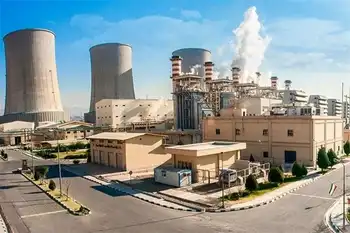
Iran has turned six percent of its thermal power plans into combined cycle plants in order to reduce greenhouse gases and save energy, with potential to lift thermal plants' PLF under rising demand, IRNA reported, quoting an energy official.

According to the MAPNA Group’s Managing Director Abbas Aliabadi, so far 27 thermal power plants have been converted to combined-cycle ones, aligning with Iran’s push to transmit power to Europe as a regional hub.

“The conversion of a thermal power plant to a combined cycle one takes about one to two years, however, it is possible for us to convert all the country’s thermal power plants into combined cycle plants over a five-year period.

Currently, a total of 478 thermal power plants are operating throughout Iran, of which 160 units could be turned into combined cycle plants. In doing so, 12,600 megawatts will be added to the country’s power capacity, supporting ongoing exports such as supplying a large share of Iraq's electricity under existing arrangements.

Related cross-border work includes deals to rehabilitate Iraq's power grid that support future exchanges.

As reported by IRNA on Wednesday, Iran’s Nominal electricity generation capacity has reached 80,509 megawatts (80.509 gigawatts), and it is deepening energy cooperation with Iraq to bolster regional reliability. The country increased its electricity generation capacity by 500 megawatts (MW) compared to the last year (ended on March 20).

Currently, with a total generation capacity of 25,083 MW (31.2 percent) combined cycle power plants account for the biggest share in the country’s total power generation capacity followed by gas power plants generating 29.9 percent, amid global trends where renewables are set to eclipse coal and regional moves such as Israel's coal reduction signal accelerating shifts. EF/MA


Related News

View more

Three Mile Island at center of energy debate: Let struggling nuclear plants close or save them

Three Mile Island Nuclear Debate spotlights subsidies, carbon pricing, wholesale power markets, grid reliability, and zero-emissions goals as Pennsylvania weighs keeping Exelon's reactor open amid natural gas competition and flat electricity demand.


Key Points

Debate over subsidies, carbon pricing, and grid reliability shaping Three Mile Island's zero-emissions future.

✅ Zero emissions credits vs market integrity

✅ Carbon pricing to value clean baseload power

✅ Closure risks jobs, tax revenue, and reliability


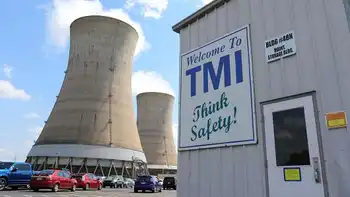
Three Mile Island is at the center of a new conversation about the future of nuclear energy in the United States nearly 40 years after a partial meltdown at the Central Pennsylvania plant sparked a national debate about the safety of nuclear power.

The site is slated to close in just two years, a closure plan Exelon has signaled, unless Pennsylvania or a regional power transmission operator delivers some form of financial relief, says Exelon, the Chicago-based power company that operates the plant.

That has drawn the Keystone State into a growing debate: whether to let struggling nuclear plants shut down if they cannot compete in the regional wholesale markets where energy is bought and sold, or adopt measures to keep them in the business of generating power without greenhouse gas emissions.

""The old compromise — that in order to have a reliable, affordable electric system you had to deal with a significant amount of air pollution — is a compromise our new customers today don't want to hear about.""
-Joseph Dominguez, Exelon executive vice president
Nuclear power plants produce about two-thirds of the country's zero-emissions electricity, a role many view as essential to net-zero emissions goals for the grid.

The debate is playing out as some regions consider putting a price on planet-warming carbon emissions produced by some power generators, which would raise their costs and make nuclear plants like Three Mile Island more viable, and developments such as Europe's nuclear losses highlight broader energy security concerns.

States that allow nuclear facilities to close need to think carefully because once a reactor is powered down, there's no turning back, said Jake Smeltz, chief of staff for Pennsylvania State Sen. Ryan Aument, who chairs the state's Nuclear Energy Caucus.

"If we wave goodbye to a nuclear station, it's a permanent goodbye because we don't mothball them. We decommission them," he told CNBC.

Three Mile Island's closure would eliminate more than 800 megawatts of electricity output. That's roughly 10 percent of Pennsylvania's zero-emissions energy generation, by Exelon's calculation. Replacing that with fossil fuel-fired power would be like putting roughly 10 million cars on the road, it estimates.

A closure would also shed about 650 well-paying jobs, putting the just transition challenge in focus for local workers and communities, tied to about $60 million in wages per year. Dauphin County and Londonderry Township, a rural area on the Susquehanna River where the plant is based, stand to lose $1 million in annual tax revenue that funds schools and municipalities. The 1,000 to 1,500 workers who pack local hotels, stores and restaurants every two years for plant maintenance would stop visiting.

Pennsylvanians and lawmakers must now decide whether these considerations warrant throwing Exelon a lifeline. It's a tough sell in the nation's second-largest natural gas-producing state, which already generates more energy than it uses. And time is running out to reach a short-term solution.

"What's meaningful to us is something where we could see the results before we turn in the keys, and we turn in the keys the third quarter of '19," said Joseph Dominguez, Exelon's executive vice president for governmental and regulatory affairs and public policy.

The end of the nuclear age?

The problem for Three Mile Island is the same one facing many of the nation's 60 nuclear plants: They are too expensive to operate.

Financial pressure on these facilities is mounting as power demand remains stagnant due to improved energy efficiency, prices remain low for natural gas-fired generation and costs continue to fall for wind and solar power.

Three Mile Island is something of a special case: The 1979 incident left only one of its two reactors operational, but it still employs about as many people as a plant with two reactors, making it less efficient. In the last three regional auctions, when power generators lock in buyers for their future energy generation, no one bought power from Three Mile Island.

But even dual-reactor plants are facing existential threats. FirstEnergy Corp's Beaver Valley will sell or close its nuclear plant near the Pennsylvania-Ohio border next year as it exits the competitive power-generation business, and facilities like Ohio's Davis-Besse illustrate what's at stake for the region.

Five nuclear power plants have shuttered across the country since 2013. Another six have plans to shut down, and four of those would close well ahead of schedule. An analysis by energy research firm Bloomberg New Energy Finance found that more than half the nation's nuclear plants are facing some form of financial stress.

Today's regional energy markets, engineered to produce energy at the lowest cost to consumers, do not take into account that nuclear power generates so much zero-emission electricity. But Dominguez, the Exelon vice president, said that's out of step with a world increasingly concerned about climate change.

"What we see is increasingly our customers are interested in getting electricity from zero air pollution sources," Dominguez said. "The old compromise — that in order to have a reliable, affordable electric system you had to deal with a significant amount of air pollution — is a compromise our new customers today don't want to hear about."

Strange bedfellows

Faced with the prospect of nuclear plant closures, Chicago and New York have both allowed nuclear reactors to qualify for subsidies called zero emissions credits. Exelon lobbied for the credits, which will benefit some of its nuclear plants in those states.

Even though the plants produce nuclear waste, some environmental groups like the Natural Resources Defense Council supported these plans. That's because they were part of broader packages that promote wind and solar power, and the credits for nuclear are not open-ended. They essentially provide a bridge that keeps zero-emissions power from nuclear reactors on the grid as renewable energy becomes more viable.

Lawmakers in Pennsylvania, Ohio and Connecticut are currently exploring similar options. Jake Smeltz, chief of staff to state Sen. Aument, said legislation could surface in Pennsylvania as soon as this fall. The challenge is to get people to consider the attributes of the sources of their electricity beyond just cost, according to Smeltz.

"Are the plants worth essentially saving? That's a social choice. Do they provide us with something that has benefits beyond the electrons they make? That's the debate that's been happening in other states, and those states say yes," he said.

Subsidies face opposition from anti-nuclear energy groups like Three Mile Island Alert, as well as natural gas trade groups and power producers who compete against Exelon by operating coal and natural gas plants.

"Where we disagree is to have an out-of-market subsidy for one specific company, for a technology that is now proven and mature in our view, at the expense of consumers and the integrity of competitive markets," NRG Energy Mauricio Gutierrez told analysts during a conference call this month.

Smeltz notes that power producers like NRG would fill in the void left by nuclear plants as they continue to shut down.

"The question that I think folks need to answer is are these programs a bailout or is the opposition to the program a payout? Because at the end of the day someone is going to make money. The question is who and how much?" Smeltz said.

Changing the market

Another critic is PJM Interconnection, the regional transmission organization that operates the grid for 13 states, including Pennsylvania, and Washington, D.C.

The subsidies distort price formation and inject uncertainty into the markets, says Stu Bresler, senior vice president in charge of operations and markets at PJM.

The danger PJM sees is that each new subsidy creates a precedent for government intervention. The uncertainty makes it harder for investors to determine what sort of power generation is a sound investment in the region, Bresler explained. Those investors could simply decide to put their capital to work in other energy markets where the regulatory outlook is more stable, ultimately leading to underinvestment in places where government intervenes, he added.

Three Mile Island nuclear power plant, Londonderry Township, Pennsylvania
PJM believes longer-term, regional approaches are more appropriate. It has produced research that outlines how coal plants and nuclear energy, which provide the type of stable energy that is still necessary for reliable power supply, could play a larger role in setting prices. It is also preparing to release a report on how to put a price on carbon emissions in all or parts of the regional grid.

"If carbon emissions are the concern and that is the public policy issue with which policymakers are concerned, the simple be-all answer from a market perspective is putting a price on carbon," Bresler said.

Three Mile Island could be viable if natural gas prices rose from below $3 per million British thermal units to about $5 per mmBtu and if a "reasonable" price were applied to carbon, according to Exelon's Dominguez. He is encouraged by the fact that conversations around new pricing models and carbon pricing are gaining traction.

"The great part about this is everybody understands we have a major problem. We're losing some of the lowest-cost, cleanest and most reliable resources in America," Dominguez said.


Related News

View more

Iran to Become Regional Hub for Renewable Energies

Iran Renewable Energy Strategy targets productivity first, then wind power expansion, investment, and exports, overcoming US sanctions, banking and forex limits, via private sector partnerships, precise wind maps, and regional grid interconnections.


Key Points

A policy prioritizing efficiency, wind deployment, and investor access while navigating US sanctions and currency limits.

✅ Prioritize efficiency, then scale wind generation capacity

✅ Leverage private sector, rial contracts, attract foreign capital

✅ Map high-wind corridors: Zabol, Khaf, Doroud; target exports


Deputy Energy Minister on Renewable Energies Affairs says the U.S. sanctions have currently affected the economic, banking and forex sectors of the country as the country‘s medicine is under sanctions and it means renewable energies are also under sanctions, and, globally, pandemic disruptions have compounded pressures on supply chains.

Speaking in a press conference yesterday, Mohammad Satkin said leading countries first focus on productivity then they turn to electricity production and the ministry in the first step has focused on productivity then on renewables, noting that renewables are now the cheapest new power in many regions, reiterating that the ministry will use all existing potentials in this regard especially in utilizing wind.

He added that the ministry is doing its best that the country would become the hub in the region for rush of investors and those who want take advantage of Iran’s experience in renewables, as markets like the U.S. scale renewables to a quarter of generation in coming years.

Satkin added that in the eastern part, the country has the biggest windy fields with capacity over 40mw. So the ministry is doing its best with full support of the private sector in equipping and investing in this field to carry out new policies.

He noted that in the past 12 years, wind potentials of the country have been under study, noting that country has three special channels in the east as one of them is north of Zabol which is very valuable in terms of energy and it has capability for construction of 2 to 3mw power station.

Satkin further said Khaf channel is the other one which has one of the most unique winds in the world, while Saudi wind expansion underscores regional momentum, and it can be developed for over 1000mw station. The windy region of Doroud is the third channel where the 50mw project has been kicked off there and it has capability for construction of some thousand-megawatt wind power station.

He added that Iran has prepared one of the most precise maps and it has even identified the border regions like with Afghanistan and perhaps in the future, Iran and Afghanistan may launch a joint project as Iran has enough expertise to offer its neighboring countries and as IRENA's decarbonisation roadmap highlights wider socio-economic benefits.

On signing agreement with foreign companies, Satkin said the ministry pays the sum of all contracts with domestic companies is paid in national currency rial as it is unable to pay in dollar or other currencies but Iranian companies may enjoy having foreign backings, including initiatives like ADFD-IRENA funding that support developing markets, and the ministry tries to attract foreign capital.

He also pointed to exports of renewables, adding that the government has authorized export of renewable energy but it needs proper planning to be assured of electricity production in order to export it to the neighboring states whenever they need, especially as Ireland targets over one-third green power within a few years.


Related News

View more

Most Energy Will Come From Fossil Fuels, Even In 2040

2040 Energy Outlook projects a shifting energy mix as renewables scale, EV adoption accelerates, and IEA forecasts plateauing oil demand alongside rising natural gas, highlighting policy, efficiency, and decarbonization trends that shape global consumption.


Key Points

A data-driven view of future energy mix, covering renewables, fossil fuels, EVs, oil demand, and policy impacts.

✅ Renewables reach 16-30% by 2040, higher with strong policy support.

✅ Fossil fuels remain dominant, with oil flat and natural gas rising.

✅ EV share surges, cutting oil use; efficiency curbs demand growth.


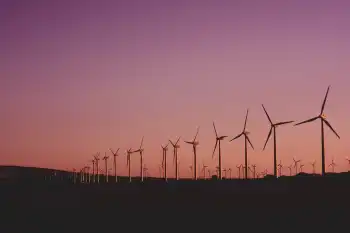
Which is more plausible: flying taxis, wind turbine arrays stretching miles into the ocean, and a solar roof on every house--or a scorched-earth, flooded post-Apocalyptic world? 

We have no way of peeking into the future, but we can certainly imagine it. There is plenty of information about where the world is headed and regardless of how reliable this information is—or isn’t—we never stop wondering. Will the energy world of 20 years from now be better or worse than the world we live in now? 

The answer may very well lie in the observable trends.


A Growing Population

The global population is growing, and it will continue to grow in the next two decades. This will drive a steady growth in energy demand, at about 1 percent per year, according to the International Energy Agency.

This modest rate of growth is good news for all who are concerned about the future of the planet. Parts of the world are trying to reduce their energy consumption, and this should have a positive effect on the carbon footprint of humanity. The energy thirst of most parts of the world will continue growing, however, hence the overall growth.

The world’s population is currently growing at a rate of a little over 1 percent annually. This rate of growth has been slowing since its peak in the 1960s and forecasts suggest that it will continue to slow. Growth in energy demand, on the other hand, may at some point stop moving in tune with population growth trends as affluence in some parts of the world grows. The richer people get, the more energy they need. So, to the big question: where will this energy come from?


The Rise of Renewables

For all the headline space they have been claiming, it may come as a disappointing surprise to many that renewable energy, excluding hydropower, to date accounts for just 14 percent of the global primary energy mix. 

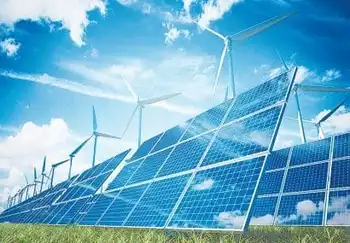
Certainly, adoption of solar and wind energy has been growing in leaps and bounds, with their global share doubling in five years in many markets, but unless governments around the world commit a lot more money and effort to renewable energy, by 2040, solar and wind’s share in the energy mix will still only rise to about 16 to 17 percent. That’s according to the only comprehensive report on the future of energy that collates data from all the leading energy authorities in the world, by non-profit Resources for the Future.

The growth in renewables adoption, however, would be a lot more impressive if governments do make serious commitments. Under that scenario, the share of renewables will double to over 30 percent by 2040, echoing milestones like over 30% of global electricity reached recently: that’s the median rate of all authoritative forecasts. Amongst them, the adoption rates of renewables vary between 15 percent and 61 percent by 2040.

Even the most bullish of the forecasts on renewables is still far below the 100-percent renewable future many would like to fantasize about, although BNEF’s 50% by 2050 outlook points to what could be possible in the power sector. 

But in 2040, most of the world’s energy will still come from fossil fuels.


EV Energy

Here, forecasters are more optimistic. Again, there is a wide variation between forecasts, but in each and every one of them the share of electric vehicles on the world’s roads in 2040 is a lot higher than the meagre 1 percent of the global car fleet EVs constitute today.
Related: Gas Prices Languish As Storage Falls To Near-Record Lows

Government policy will be the key, as U.S. progress toward 30% wind and solar shows how policy steers the power mix that EVs ultimately depend on. Bans of internal combustion engines will go a long way toward boosting EV adoption, which is why some forecasters expect electric cars to come to account for more than 50 percent of cars on the road in 2040. Others, however, are more guarded in their forecasts, seeing their share of the global fleet at between 16 percent and a little over 40 percent.

Many pin their hopes for a less emission-intensive future on electric cars. Indeed, as the number of EVs rises, they displace ICE vehicles and, respectively, the emission-causing oil that fuels for ICE cars are made from.  It should be a no brainer that the more EVs we drive, the less emissions we produce. Unfortunately, this is not necessarily the case: China is the world’s biggest EV market, and its solar PV expansion has been rapid, it has the most EVs—including passenger cars and buses—but it is also one of the biggest emitters.

Still, by 2040, if the more optimistic forecasts come true, the world will be consuming less oil than it is consuming now: anywhere from 1.2 million bpd to 20 million bpd less, the latter case envisaging an all-electric global fleet in 2040. 


This Ain’t Your Daddy’s Oil

No, it ain’t. It’s your grandchildren’s oil, for good or for bad. The vision of an oil-free world where renewable power is both abundant and cheap enough to replace all the ways in which crude oil and natural gas are used will in 2040 still be just that--a vision, with practical U.S. grid constraints underscoring the challenges. Even the most optimistic energy scenarios for two decades from now see them as the dominant source of energy, with forecasts ranging between 60 percent and 79 percent. While these extremes are both below the over-80 percent share fossil fuels have in the world’s energy mix, they are well above 50 percent, and in the U.S. renewables are projected to reach about one-fourth of electricity soon, even as fossil fuels remain foundational.

Still, there is good news. Fuel efficiency alone will reduce oil demand significantly by 2040. In fact, according to the IEA, demand will plateau at a little over 100 million bpd by the mid-2030s. Combined with the influx of EVs many expect, the world of 20 years from now may indeed be consuming a lot less oil than the world of today. It will, however, likely consume a lot more natural gas. There is simply no way around fossil fuels, not yet. Unless a miracle of politics happens (complete with a ripple effect that will cost millions of people their jobs) in 2040 we will be as dependent on oil and gas as we are but we will hopefully breathe cleaner air.

By Irina Slav for Oilprice.com


Related News

View more

The German economy used to be the envy of the world. What happened?

Germany's Economic Downturn reflects an energy crisis, deindustrialization risks, export weakness, and manufacturing stress, amid Russia gas loss, IMF and EU recession forecasts, and debates over electricity price caps and green transition.


Key Points

An economic contraction from energy price shocks, export weakness, and bottlenecks in manufacturing and digitization.

✅ Energy shock after loss of cheap Russian gas

✅ Exports slump amid China slowdown and weak demand

✅ Policy gridlock on power price cap and permits


Germany went from envy of the world to the worst-performing major developed economy. What happened?

For most of this century, Germany racked up one economic success after another, dominating global markets for high-end products like luxury cars and industrial machinery, selling so much to the rest of the world that half the economy ran on exports.

Jobs were plentiful, the government’s financial coffers grew as other European countries drowned in debt, and books were written about what other countries could learn from Germany.

No longer. Now, Germany is the world’s worst-performing major developed economy, with both the International Monetary Fund and European Union expecting it to shrink this year.

It follows Russia’s invasion of Ukraine and the loss of Moscow’s cheap Russian gas that underpinned industry — an unprecedented shock to Germany’s energy-intensive industries, long the manufacturing powerhouse of Europe.

The sudden underperformance by Europe’s largest economy has set off a wave of criticism, handwringing and debate about the way forward.

Germany risks “deindustrialization” as high energy costs and government inaction on other chronic problems threaten to send new factories and high-paying jobs elsewhere, said Christian Kullmann, CEO of major German chemical company Evonik Industries AG.

From his 21st-floor office in the west German town of Essen, Kullmann points out the symbols of earlier success across the historic Ruhr Valley industrial region: smokestacks from metal plants, giant heaps of waste from now-shuttered coal mines, a massive BP oil refinery and Evonik’s sprawling chemical production facility.

These days, the former mining region, where coal dust once blackened hanging laundry, is a symbol of the energy transition, as the power sector’s balancing act continues with wind turbines and green space.

The loss of cheap Russian natural gas needed to power factories “painfully damaged the business model of the German economy,” Kullmann told The Associated Press. “We’re in a situation where we’re being strongly affected — damaged — by external factors.”

After Russia cut off most of its gas to the European Union, spurring an energy crisis in the 27-nation bloc that had sourced 40% of the fuel from Moscow, the German government asked Evonik to turn to coal by keeping its 1960s coal-fired power plant running a few months longer.

The company is shifting away from the plant — whose 40-story smokestack fuels production of plastics and other goods — to two gas-fired generators that can later run on hydrogen amid plans to become carbon neutral by 2030 and following the nuclear phase-out of recent years.

One hotly debated solution: a government-funded cap on industrial electricity prices to get the economy through the renewable energy transition, amid an energy crisis that even saw a temporary nuclear extension to stabilize supply.

The proposal from Vice Chancellor Robert Habeck of the Greens Party has faced resistance from Chancellor Olaf Scholz, a Social Democrat, and pro-business coalition partner the Free Democrats. Environmentalists say it would only prolong reliance on fossil fuels, while others advocate a nuclear option to meet climate goals.

Kullmann is for it: “It was mistaken political decisions that primarily developed and influenced these high energy costs. And it can’t now be that German industry, German workers should be stuck with the bill.”

The price of gas is roughly double what it was in 2021, with a senior official arguing nuclear would do little to solve that gas issue, hurting companies that need it to keep glass or metal red-hot and molten 24 hours a day to make glass, paper and metal coatings used in buildings and cars.

A second blow came as key trade partner China experiences a slowdown after several decades of strong economic growth.

These outside shocks have exposed cracks in Germany’s foundation that were ignored during years of success, including lagging use of digital technology in government and business and a lengthy process to get badly needed renewable energy projects approved.


Related News

View more

Sign Up for Electricity Forum’s Newsletter

Stay informed with our FREE Newsletter — get the latest news, breakthrough technologies, and expert insights, delivered straight to your inbox.

Electricity Today T&D Magazine Subscribe for FREE

Stay informed with the latest T&D policies and technologies.
  • Timely insights from industry experts
  • Practical solutions T&D engineers
  • Free access to every issue

Live Online & In-person Group Training

Advantages To Instructor-Led Training – Instructor-Led Course, Customized Training, Multiple Locations, Economical, CEU Credits, Course Discounts.

Request For Quotation

Whether you would prefer Live Online or In-Person instruction, our electrical training courses can be tailored to meet your company's specific requirements and delivered to your employees in one location or at various locations.