Canadian provinces eye massive hydro power project

By Reuters


Arc Flash Training CSA Z462 - Electrical Safety Essentials

Our customized live online or in‑person group training can be delivered to your staff at your location.

  • Live Online
  • 6 hours Instructor-led
  • Group Training Available
Regular Price:
$249
Coupon Price:
$199
Reserve Your Seat Today
Two Canadian provinces joined forces recently to launch a study into building a massive hydroelectric project that would help ease uncomfortably tight power supplies in the country's biggest market.

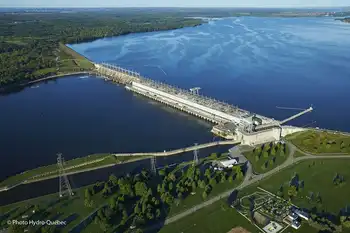
The $6 billion Conawapa power project would be located on Manitoba's Nelson River, 800 km north of Winnipeg, and include a high-voltage transmission line east to Ontario, which has been hit by growing worries over electricity shortages.

At 1,250 megawatts, enough to power 1.25 million average homes, Conawapa would be water-rich Manitoba's biggest hydro project. Government-owned Manitoba Hydro now runs 16 generating stations, 14 of them hydroelectric plants.

Manitoba Premier Gary Doer and Ontario Premier Ernie Eves signed a memorandum of understanding on Friday, kicking off the C$2-million study into the development, to be carried out by Manitoba Hydro and Hydro One, Ontario's main transmission grid.

The study, expected to be completed by the end of the year, will examine costs, estimated in-service dates and environmental and regulatory requirements, the provinces said.

The current estimated cost of the hydro station is $5 billion and construction is expected to take about five years.

The transmission line to Ontario could be worth $1 billion. It would supply as much as 5 percent of Ontario's peak demand.

Ontario, home to more than 11 million people, has been hit by rising electricity rates following a botched attempt at privatization. It is now fearing shortages and struggling to bring nuclear units back on line to meet peak summer demand.

Meanwhile, its coal-fired stations are slated to be retired by 2015.

Manitoba said the Conawapa project would require "minimal" flooding of 3 square km because of the region's geography.

Related News
Ermineskin First Nation soon to become major electricity generator

Ermineskin First Nation Solar Project delivers a 1 MW distributed generation array with 3,500 panels, selling power to Alberta's grid, driving renewable energy revenue, jobs, and regional economic development with partner SkyFire Energy.


Key Points

A 1 MW, 3,500-panel distributed generation plant selling power to Alberta's grid to support revenue and jobs.

✅ 1 MW array, 3,500 panels; grid-tied distributed generation

✅ Annual revenue projected at $80k-$150k, scalable

✅ Built with SkyFire Energy; expansion planned next summer


The switch will soon be flipped on a solar energy project that will generate tens of thousands of dollars for Ermineskin First Nation, while energizing economic development across Alberta, where selling renewables is emerging as a promising opportunity.

Built on six acres, the one-megawatt generator and its 3,500 solar panels will produce power to be sold into the province’s electrical grid, providing annual revenues for the band of $80,000 to $150,000, depending on energy demand and pricing.

The project cost $2.7 million, including connection costs and background studies, said Sam Minde, chief executive officer of the band-owned Neyaskweyahk Group of Companies Inc.

It was paid for with grants from the Western Economic Diversification Fund and the province’s Climate Leadership Plan, and, amid Ottawa’s green electricity contracting push, is expected to be connected to the grid by mid-December.

“It’s going to be the biggest distributed generation in Alberta,” he said.

Called the Sundancer generator, it was built and will be operated through a partnership with SkyFire Energy, reflecting how renewable power developers design better projects by combining diverse resources.

Minde said the project’s benefits extend beyond Ermineskin First Nation, one of four First Nations at Maskwacis, 20 km north of Ponoka, in a province where renewable energy surge could power thousands of jobs.

“Our nation is looking to do the best it can in business. It’s competitive, but at the same time, what is good for us is good for the region.

“If we’re creating jobs, we’re going to be building up our economy. And if you look at our region right now, we need to continue to create opportunities and jobs.”

Electricity prices are rock bottom right now, in the six to nine cents per kilowatt hour range, with recent Alberta solar contracts coming in below natural gas on cost. During the oilsands boom, when power demand was skyrocketing, the price was in the 16 to 18 cent range.

That means there is a lot of room for bigger returns for Ermineskin in the future, especially if pipelines such as TransMountain get going or the oilsands pick up again, and as Alberta solar growth accelerates in the years ahead.

The band is so confident that Sundancer will prove a success that there are plans to double it in size, a strategy echoed by community-scale efforts such as the Summerside solar project that demonstrate scalability. By next summer, a $1.5-million to $1.7-million project funded by the band will be built on another six acres nearby.

Minde said the project is an example of the community’s connection with the environment being used to create opportunities and embracing technologies that will likely figure large in the world’s energy future.


Related News

View more

Ontario sending 200 workers to help restore power in Florida

Ontario Utilities Hurricane Irma Aid mobilizes Hydro One and Toronto Hydro crews to Tampa Bay, Florida, restoring power outages with bucket trucks, lineworkers, and mutual aid alongside Florida Power & Light after catastrophic damage.


Key Points

Mutual aid sending Hydro One and Toronto Hydro crews to Florida to restore power after Hurricane Irma.

✅ 205 workers, 52 bucket trucks, 30 support vehicles deployed

✅ Crews assist Tampa Bay under FPL mutual aid agreements

✅ Weeks-long restoration projected after catastrophic outages


Hurricane Irma has left nearly 7 million homes in the southern United States without power and two Ontario hydro utility companies are sending teams to help out as part of Canadian power crews responding to the disaster.

Toronto Hydro is sending 30 staffers to aid in the restoration efforts in Tampa Bay while Hydro One said Sunday night that it would send 175 employees after receiving a request from Florida Power and Light.

“I've been on other storms down in the states and they are pretty happy to see you especially when they find out you're from Canada,” Dean Edwards, one of the Hydro One employees heading to Florida, told CTV Toronto.

Most of the employees are expected to cross the border on Monday afternoon and arrive Wednesday.

Among the crews, Hydro One says it will send 150 lines and forestry staff, as well as 25 supporting resources, including mechanics, to help. Crews will bring 52 bucket trucks to Florida, as well as 30 other vehicles, reflecting their Ontario storm restoration experience with large-scale deployments, and pieces of equipment to transport and replace poles.

Hurricane Irma has claimed at least 45 lives in the Caribbean and United States thus far. Officials estimate that restoring power to Florida will take weeks to bring power back online.

“I’m sure a lot of people wish they could go down and help, fortunately our job is geared towards that so we're going to go down there to do our best and represent Canada,” said Blair Clarke, who’s making his first trip over the border.

Hydro One has reciprocal arrangements with other North American utilities to help with significant power outages, and its employees have provided COVID-19 support in Ontario as part of broader emergency efforts. All the costs are covered by the utility receiving the help.

In the past, the utility has sent crews to Massachusetts, Michigan, Florida, Ohio, Vermont, Washington, DC, and the Carolinas, while Sudbury Hydro crews have worked to reconnect service after storms at home as well. In 2012, 225 Hydro One employees travelled to Long Island, N.Y., to help out with Hurricane Sandy.

“This is what our guys and gals do,” Natalie Poole-Moffat, vice president of Corporate Affairs for Hydro One, told CP24. “They’re fabulous at it and we’re really proud of the work they do.”


Related News

View more

Wind Denmark - Danish electricity generation sets a new green record

Denmark 2019 electricity CO2 intensity shows record-low emissions as renewable energy surges, wind power dominates, offshore wind expands, and coal phase-out accelerates Denmark's energy transition and grid decarbonization, driven by higher CO2 prices and flexibility.


Key Points

It is 135 g CO2/kWh, a record low enabled by wind power growth, offshore wind, and a sharp coal decline.

✅ Average emissions fell to 135 g CO2/kWh, the lowest on record

✅ Wind and solar supplied 49.9% of national electricity use

✅ Coal consumption dropped 46% as CO2 allowance prices rose


Danish electricity producers set a new green record in 2019, when an average produced kilowatt-hour emitted 135 gr CO2 / kWh.

It is the lowest CO2 emission ever measured in Denmark and about one-seventh of what the electricity producers emitted in 1990.

Never has a kilowatt-hour produced emitted as little CO2 as it did in 2019. And that's according to Energinet's recently published annual Environmental Report on Danish electricity generation and cogeneration, two primary causes.

One reason is that more green power has been produced because the Horns Rev 3 offshore wind farm, which can produce electricity for 425,000 households, was commissioned in 2019. The other is that Danish coal consumption fell by 46 percent from 2018 to 2019, as coal phase-out plans gathered pace across the sector. the dramatic decline in coal consumption is partly due a significant increase in the price of CO2 quotas, and thus also the price of CO2 emissions.

'Historically, 135 gr CO2 / kWh is a really, really low figure, showing the impressive green travel that the Danish electricity system has been on. In 1990, a kilowatt-hour produced emitted over 1000 grams of CO2, ie about seven times as much as today, 'says Hanne Storm Edlefsen, area manager in Energinet Power Systems Responsibility.

Wind energy is the dominant form of electricity generation in Denmark, a pattern the UK wind beat coal in 2016 when shifting away from fossil fuels.

17.1 TWh. Danish wind turbines and solar cells generated so much electricity in 2019, corresponding to 49.9 per cent. of Danish electricity consumption, reflecting broader EU wind and solar growth trends as well. An increase of 15 per cent. The wind turbines alone produced 16 TWh, which is not only a new green record, but also puts a thick line that wind energy is by far the most dominant form of electricity generation in Denmark.

'Thanks to our large wind resources, turbines are by far the largest supplier of renewable energy in Denmark, and this will be for many years to come. The large price drop in new wind energy in recent years - for both onshore and offshore winds - will ensure that wind energy will drive a large part of the growth in renewable energy in the coming years, as new wind generation records are set in markets like the UK, 'says Soren Klinge, electricity market manager at Wind Denmark.

Conversely, total electricity generation from fossil and bio-based fuels decreased by 26 PJ (petajoule ed.), Corresponding to 34 per cent. from 2018 to 2019, mirroring renewables overtaking coal in Germany. Nevertheless, net electricity generation was just under 30 TWh both years.

'It is worth noting that while fossil fuels are being phased out, Denmark maintains its annual net production of electricity. The green, so to speak, replaces the black. It once again underpins that green conversion, high security of supply and an affordable electricity price can go hand in hand, 'says Hanne Storm Edlefsen.

Danish power system is ready for a green future

Including trade in electricity with neighboring countries, 1 kWh in a Danish outlet generates 145 gr CO2 / kWh.

'There has been a very significant development in the Danish electricity system in recent years, where the electricity system can now be operated solely on the renewable energy. It is a remarkable development, also from an international perspective where low-carbon progress stalled in the UK in 2019, that one would not have thought possible for just a few years ago, 'he says.

More than expected have phased out coal

The electricity from the Danish sockets will be greener , predicts Energinet's environmental report , which expects CO2 intensity in the coming years. This is explained by an expectation of increased electrification of energy consumption, together with a continued expansion with wind and solar.

'Wind energy is the cornerstone of the green transition. With the commissioning of the Kriegers Flak offshore wind farm and several major onshore wind turbine projects within the next few years, we can well expect that only the wind's share of electricity consumption will exceed 50 per cent hopefully as early as 2021,' concludes Soren Klinge.


Related News

View more

Cheap at Last, Batteries Are Making a Solar Dream Come True

Solar Plus Storage is accelerating across utilities and microgrids, pairing rooftop solar with lithium-ion batteries to enhance grid resilience, reduce peak costs, prevent blackouts, and leverage tax credits amid falling prices and decarbonization goals.


Key Points

Solar Plus Storage combines solar generation with batteries to shift load, boost reliability, and cut energy costs.

✅ Cuts peak demand charges and enhances blackout resilience

✅ Falling battery and solar costs drive nationwide utility adoption

✅ Enables microgrids and grid services like frequency regulation


Todd Karin was prepared when California’s largest utility shut off power to millions of people to avoid the risk of wildfires last month. He’s got rooftop solar panels connected to a single Tesla Powerwall in his rural home near Fairfield, California. “We had backup power the whole time,” Karin says. “We ran the fridge and watched movies.”

Californians worried about an insecure energy future are increasingly looking to this kind of solution. Karin, a 31-year-old postdoctoral fellow at Lawrence Berkeley National Laboratory, spent just under $4,000 for his battery by taking advantage of tax credits. He's also saving money by discharging the battery on weekday evenings, when energy is more expensive during peak demand periods. He expects to save around $1,500 over the 10 years the battery is under warranty.

The economics don’t yet work for every household, but the green-power combo of solar panels plus batteries is popping up on a much bigger scale in some unexpected places. Owners of a rice processing plant in Arkansas are building a system to generate 26 megawatts of solar power and store another 40 MW. The plant will cut its power bill by a third, and owners say they will pass the savings to local rice growers. New York’s JFK Airport is installing solar plus storage to reduce its power load by 10 percent, while Pittsburgh International Airport is building a 20-MW solar and natural gas microgrid to keep it independent from the local utility. Officials at both airports are worried about recent power shutdowns due to weather and overload-related blackouts.

And residents of the tiny northern Missouri town of Green City (pop. 608) are getting 2.5 MW of solar plus four hours of battery storage from the state’s public utility next year. The solar power won’t go directly to townspeople, but instead will back up the town’s substation, reducing the risk of a potential shutdown. It’s part of a $68 million project to improve the reliability of remote substations far from electric generating stations.

“It’s a pretty big deal for us,” says Chad Raley, who manages technology and renewables at Ameren, a Missouri utility that is building three rural solar-plus-storage projects to better manage the flow of electricity across the local grid. “It gives us so much flexibility with renewable generation. We can’t control the sun or clouds or wind, but we can have battery storage.”

The first solar-plus-storage installations started about a decade ago on a small scale in sunny states like California, Hawaii, and Arizona. Now they’re spreading across the country, driven by falling prices of both solar panels and lithium-ion batteries the size of a shipping container imported from both China and South Korea, with wind, solar, and batteries making up most of the utility-scale pipeline nationwide. These countries have ramped up production efficiencies and lowered labor costs, leaving many US manufacturers in the dust. In fact, the price of building a comparable solar-plus-storage generating facility is now cheaper than operating a coal-fired power plant, industry officials say. In certain circumstances, the cost is equal to some natural gas plants.

“This is not just a California, New York, Massachusetts thing,” says Kelly Speakes-Backman, CEO of the Energy Storage Association, an industry group in Washington. She says more than 30 states have renewable storage on the grid. Utilities have proposed and states have approved 7 gigawatts to be installed by 2030, and most new storage will be paired with solar across the US.

Speakes-Backman estimates the unit cost of electricity produced from a solar-plus-storage system will drop 10 to 15 percent each year through 2024, supporting record growth in solar and storage investments. “If you have the option of putting out a polluting or non-polluting generating source at the same price, what are you going to pick?” says Speakes-Backman.

She notes that PJM, a large Mid-Atlantic wholesale grid operator, announced it will deploy battery storage to help smooth out fluctuating power from two wind farms it operates. “When the grid fluctuates, storage can react to it quickly and can level out the supply,” she says. In the Midwest, grid-level battery storage is also being used to absorb extra wind power. Batteries hold onto the wind and put it back onto the grid when people need it.

While the solar-plus-storage trend isn’t yet putting a huge dent in our fossil fuel use, according to Paul Denholm, an energy analyst at the National Renewable Energy Laboratory in Golden, Colorado, it is a good beginning and has the side effect of cutting air pollution. By 2021, solar and other renewable energy sources will overtake coal as a source of energy, and the US is moving toward 30% electricity from wind and solar, according to a new report by the Institute for Energy Economics and Financial Analysis, a nonprofit think tank based in Cleveland.

That’s a glimmer of hope in a somewhat dreary week of news on carbon emissions. A new United Nations report released this week finds that the planet is on track to warm by 3.9 degrees Celsius (7 Fahrenheit) by 2100 unless drastic cuts are made by phasing out gas-powered cars, eliminating new coal-fired power plants, and changing how we grow and manage land, and scientists are working to improve solar and wind power to limit climate change as well.

Energy-related greenhouse gas emissions in the US rose 2.7 percent in 2018 after several years of decline. The Trump administration has rolled back climate policies from the Obama years, including withdrawing from the Paris climate accords.

There may be hope from green power initiatives outside the Beltway, though, and from federal proposals like a tenfold increase in US solar that could remake the electricity system. Arizona plans to boost solar-plus-storage from today’s 6 MW to a whopping 850 MW by 2025, more than the entire capacity of large-scale batteries in the US today. And some folks might be cheering the closing of the West’s biggest coal-fired power plant, the 2.25-gigawatt Navajo Generating Station, in Arizona, which had spewed soot and carbon dioxide over the region for 45 years until last week. The closure might help the planet and clear the hazy smog over the Grand Canyon.


Related News

View more

Solar Becomes #3 Renewable Electricity Source In USA

U.S. Solar Generation 2017 surpassed biomass, delivering 77 million MWh versus 64 million MWh, trailing only hydro and wind; driven by PV expansion, capacity additions, and utility-scale and small-scale growth, per EIA.


Key Points

It was the year U.S. solar electricity exceeded biomass, hitting 77 million MWh and trailing only hydro and wind.

✅ Solar: 77 million MWh; Biomass: 64 million MWh (2017, EIA)

✅ PV expansion; late-year capacity additions dampen annual generation

✅ Hydro: 300 and wind: 254 million MWh; solar thermal ~3 million MWh


Electricity generation from solar resources in the United States reached 77 million megawatthours (MWh) in 2017, surpassing for the first time annual generation from biomass resources, which generated 64 million MWh in 2017. Among renewable sources, only hydro and wind generated more electricity in 2017, at 300 million MWh and 254 million MWh, respectively. Biomass generating capacity has remained relatively unchanged in recent years, while solar generating capacity has consistently grown.

Annual growth in solar generation often lags annual capacity additions because generating capacity tends to be added late in the year. For example, in 2016, 29% of total utility-scale solar generating capacity additions occurred in December, leaving few days for an installed project to contribute to total annual generation despite being counted in annual generating capacity additions. In 2017, December solar additions accounted for 21% of the annual total. Overall, solar technologies operate at lower annual capacity factors and experience more seasonal variation than biomass technologies.

Biomass electricity generation comes from multiple fuel sources, such as wood solids (68% of total biomass electricity generation in 2017), landfill gas (17%), municipal solid waste (11%), and other biogenic and nonbiogenic materials (4%).These shares of biomass generation have remained relatively constant in recent years, even as renewables' rise in 2020 across the grid.

Solar can be divided into three types: solar thermal, which converts sunlight to steam to produce power; large-scale solar photovoltaic (PV), which uses PV cells to directly produce electricity from sunlight; and small-scale solar, which are PV installations of 1 megawatt or smaller. Generation from solar thermal sources has remained relatively flat in recent years, at about 3 million MWh, even as renewables surpassed coal in 2022 nationwide. The most recent addition of solar thermal capacity was the Crescent Dunes Solar Energy plant installed in Nevada in 2015, and currently no solar thermal generators are under construction in the United States.

Solar photovoltaic systems, however, have consistently grown in recent years, as indicated by 2022 U.S. solar growth metrics across the sector. In 2014, large-scale solar PV systems generated 15 million MWh, and small-scale PV systems generated 11 million MWh. By 2017, annual electricity from those sources had increased to 50 million MWh and 24 million MWh, respectively, with projections that solar could reach 20% by 2050 in the U.S. mix. By the end of 2018, EIA expects an additional 5,067 MW of large-scale PV to come online, according to EIA’s Preliminary Monthly Electric Generator Inventory, with solar and storage momentum expected to accelerate. Information about planned small-scale PV systems (one megawatt and below) is not collected in that survey.


Related News

View more

Germany’s renewable energy dreams derailed by cheap Russian gas, electricity grid expansion woes

Germany Energy Transition faces offshore wind expansion, grid bottlenecks, and North-South transmission delays, while Nord Stream 2 boosts Russian gas reliance and lignite coal persists amid a nuclear phaseout and rising re-dispatch costs.


Key Points

Germanys shift to renewables faces grid delays, boosting gas via Nord Stream 2 and extending lignite coal use.

✅ Offshore wind grows, but grid congestion curtails turbines.

✅ Nord Stream 2 expands Russian gas supply to German industry.

✅ Lignite coal persists, raising emissions amid nuclear exit.


On a blazing hot August day on Germany’s Baltic Sea coast, a few hundred tourists skip the beach to visit the “Fascination Offshore Wind” exhibition, held in the port of Mukran at the Arkona wind park. They stand facing the sea, gawking at white fiberglass blades, which at 250 feet are longer than the wingspan of a 747 aircraft. Those blades, they’re told, will soon be spinning atop 60 wind-turbine towers bolted to concrete pilings driven deep into the seabed 20 miles offshore. By early 2019, Arkona is expected to generate 385 megawatts, enough electricity to power 400,000 homes.

“We really would like to give the public an idea of what we are going to do here,” says Silke Steen, a manager at Arkona. “To let them say, ‘Wow, impressive!’”

Had the tourists turned their backs to the sea and faced inland, they would have taken in an equally monumental sight, though this one isn’t on the day’s agenda: giant steel pipes coated in gray concrete, stacked five high and laid out in long rows on a stretch of dirt. The port manager tells me that the rows of 40-foot-long, 4-foot-thick pipes are so big that they can be seen from outer space. They are destined for the Nord Stream 2 pipeline, a colossus that, when completed next year, will extend nearly 800 miles from Russia to Germany, bringing twice the amount of gas that a current pipeline carries.

The two projects, whose cargo yards are within a few hundred feet of each other, provide a contrast between Germany’s dream of renewable energy and the political realities of cheap Russian gas. In 2010, Germany announced an ambitious goal of generating 80 percent of its electricity from renewable sources by 2050. In 2011, it doubled down on the commitment by deciding to shut down every last nuclear power plant in the country by 2022, as part of a broader coal and nuclear phaseout strategy embraced by policymakers. The German government has paid more than $600 billion to citizens and companies that generate solar and wind power. As a result, the generating capacity from renewable sources has soared: In 2017, a third of the nation’s electricity came from wind, solar, hydropower and biogas, up from 3.6 percent in 1990.

But Germany’s lofty vision has run into a gritty reality: Replacing fossil fuels and nuclear power in one of the largest industrial nations in the world is politically more difficult and expensive than planners thought. It has forced Germany to put the brakes on its ambitious renewables program, ramp up its investments in fossil fuels, amid a renewed nuclear option debate over climate strategy, and, to some extent, put its leadership role in the fight against climate change on hold.

The trouble lies with Germany’s electricity grid. Solar and wind power call for more complex and expensive distribution networks than conventional large power plants do. “What the Germans were good at was getting new technology into the market, like wind and solar power,” said Arne Jungjohann, author of Energy Democracy: Germany’s ENERGIEWENDE to Renewables. To achieve its goals, “Germany needs to overhaul its whole grid.”


The North-South Conundrum

The boom in wind power has created an unanticipated mismatch between supply and demand. Big wind turbines, especially offshore plants such as Arkona, produce powerful, concentrated gusts of energy. That’s good when the factory that needs that energy is nearby and the wind kicks up during working hours. It’s another matter when factories are hundreds of miles away. In Germany, wind farms tend to be located in the blustery north. Many of the nation’s big factories lie in the south, which also happens to be where most of the country’s nuclear plants are being mothballed.

Getting that power from north to south is problematic. On windy days, northern wind farms generate too much energy for the grid to handle. Power lines get overloaded. To cope, grid operators ask wind farms to disconnect their turbines from the grid—those elegant blades that tourists so admired sit idle. To ensure a supply of power, operators employ backup generators at great expense. These so-called re-dispatching costs ran to 1.4 billion euros ($1.6 billion) last year.

The solution is to build more power transmission lines to take the excess wind from northern wind farms to southern factories. A grid expansion project is underway to do exactly that. Nearly 5,000 miles of new transmission lines, at a cost of billions of euros, will be paid for by utility customers. So far, less than a fifth of the lines have been built.

The grid expansion is “catastrophically behind schedule,” Energy Minister Peter Altmaier told the Handelsblatt business newspaper in August. Among the setbacks: citizens living along the route of four high-voltage power lines have demanded the cables be buried underground, which has added to the time and expense. The lines won’t be finished before 2025—three years after Germany’s nuclear shutdown is due to be completed.

With this backlog, the government has put the brakes on wind power, reducing the number of new contracts for farms and curtailing the amount it pays for renewable energy. “In the past, we have focused too much on the mere expansion of renewable energy capacity,” Joachim Pfeiffer, a spokesman for the Christian Democratic Union, wrote to Newsweek. “We failed to synchronize this expansion of generation with grid expansion.”

Advocates of renewables are up in arms, accusing the government of suffocating their industry and making planning impossible. Thousands of people lost their jobs in the wind industry, according to Wolfram Axthelm, CEO of the German Wind Energy Association. “For 2019 and 2020, we see a highly problematic situation for the industry,” he wrote in an email.


Fueling the Gap

Nord Stream 2, by contrast, is proceeding according to schedule. A beige and black barge, Castoro 10, hauls dozens of lengths of giant pipe off Germany’s Baltic Sea coast, where a welding machine connects them for lowering onto the seabed. The $11 billion project is funded by Russian state gas monopoly Gazprom and five European investors, at no direct cost to the German taxpayer. It is slated to cross the territorial waters of five countries—Germany, Russia, Finland, Sweden and Denmark. All but Denmark have approved the route. “We have good reason to believe that after four governments said yes, that Denmark will also approve the pipeline,” says Nord Stream 2 spokesman Jens Mueller.

Construction of the pipeline off Finland began in September, and the gas is expected to start flowing in late 2019, giving Russia leverage to increase its share of the European gas market. It already provides a third of the gas used in the EU and will likely provide more after the Netherlands stops its gas production in 2030. President Donald Trump has called the pipeline “a very bad thing for NATO” and said that “Germany is totally controlled by Russia.” U.S. senators have threatened sanctions against companies involved in the project. Ukraine and Poland are concerned the new pipeline will make older pipelines in their territories irrelevant.

German leaders are also wary of dependence on Russia but are under considerable pressure to deliver energy to industry. Indeed, among the pipeline’s investors are German companies that want to run their factories, like BASF’s Wintershall subsidiary and Uniper, the German utility. “It’s not that Germany is naive,” says Kirsten Westphal, an energy expert at the German Institute for International and Security Affairs. It’s just pragmatic. “Economically, the judgment is that yes, this gas will be needed, we have an import gap to fill.”

The electricity transmission problem has also opened an opportunity for lignite coal, as coal generation in Germany remains significant, the most carbon-intensive fuel available and the source for nearly a quarter of Germany’s power. Mining companies are expanding their operations in coal-rich regions to strip out the fuel while it is still relevant. In the village of Pödelwitz, 155 miles south of Berlin, most houses feature a white sign with the logo of Mibrag, the German mining giant, which has paid nearly all the 130 residents to relocate. The company plans to level the village and scrape lignite that lies below the soil.

A resurgence in coal helped raise carbon emissions in 2015 and 2016 (2017 saw a slight decline), maintaining Germany’s place as Europe’s largest carbon emitter. Chancellor Angela Merkel has scrapped her pledge to slash carbon emissions to 40 percent of 1990 levels by the year 2020. Several members have threatened to resign from her policy commission on coal if the government allows utility company RWE to mine for lignite in Hambach Forest.

Only a few years ago, during the Paris climate talks, Germany led the EU in pushing for ambitious plans to curb emissions. Now, it seems to be having second thoughts. Recently, the European Union’s climate chief, Miguel Arias Cañete, suggested EU nations step up their commitment to reduce carbon emissions by 45 percent of 1990 levels instead of 40 percent by 2030. “I think we should first stick to the goals we have already set ourselves,” Merkel replied, even as a possible nuclear phaseout U-turn is debated, “I don’t think permanently setting ourselves new goals makes any sense.”


Related News

View more

Sign Up for Electricity Forum’s Newsletter

Stay informed with our FREE Newsletter — get the latest news, breakthrough technologies, and expert insights, delivered straight to your inbox.

Electricity Today T&D Magazine Subscribe for FREE

Stay informed with the latest T&D policies and technologies.
  • Timely insights from industry experts
  • Practical solutions T&D engineers
  • Free access to every issue

Live Online & In-person Group Training

Advantages To Instructor-Led Training – Instructor-Led Course, Customized Training, Multiple Locations, Economical, CEU Credits, Course Discounts.

Request For Quotation

Whether you would prefer Live Online or In-Person instruction, our electrical training courses can be tailored to meet your company's specific requirements and delivered to your employees in one location or at various locations.