Quebec Asks Newfoundland To Sign Hydro Deal

By Reuters


Protective Relay Training - Basic

Our customized live online or in‑person group training can be delivered to your staff at your location.

  • Live Online
  • 12 hours Instructor-led
  • Group Training Available
Regular Price:
$699
Coupon Price:
$599
Reserve Your Seat Today
Quebec Premier Bernard Landry urged Newfoundland to give the green light to a massive C$5 billion ($3.2 billion) hydro-electric project in Labrador.

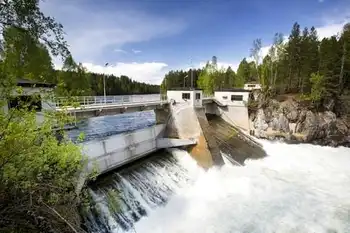
The 2,200 megawatt Gull Island project -- an extension of Labrador's huge Churchill Falls hydro project in Canada's northeast -- was put on hold last week as opposition to the deal grew in Newfoundland.

An agreement between the two provinces was expected to be signed before Christmas but Newfoundland Premier Roger Grimes said this week it was unlikely.

Quebec's Landry urged Newfoundland on Wednesday "to grasp this amazing opportunity to quickly launch construction."

Newfoundland, still seething over a long-term contract that gives Hydro-Quebec low-cost power from Churchill Falls, is wondering whether this deal will be any better.

Virtually all the electricity produced at Gull Island would be sold to Hydro-Quebec, one of North America's biggest utilities, with recall rights held by Newfoundland.

Newfoundland has argued it should be paid much more for the power generated by Churchill Falls, but Quebec has rejected that idea. The issue has remained a bitter division between the neighboring provinces and made any new deal between them an uphill battle.

Quebec still hopes a deal can be reached in 2003.

Related News
A resilient Germany is weathering the energy crunch

German Energy Price Brakes harness price signals in a market-based policy, cutting gas consumption, preserving industrial output, and supporting CO2 reduction, showcasing Germany's resilience and adaptation while protecting households and businesses across Europe.


Key Points

Fixed-amount subsidies preserving price signals to curb gas use, shield consumers, and sustain industrial output.

✅ Maintains incentives via market-based price signals

✅ Cuts gas consumption without distorting EU markets

✅ Protects households and industry while curbing CO2


German industry and society are once again proving much more resilient and adaptable than certain people feared. Horror scenarios of a dangerous energy rationing or a massive slump in our economy have often been bandied about. But we are nowhere near that. With a challenging year just behind us, this is good news — not only for Germany, but also for Europe, where France-Germany energy cooperation has strengthened solidarity.

Companies and households reacted swiftly to the sharp increases in energy prices, in line with momentum in the global energy transition seen across markets. They installed more efficient heating or production facilities, switched to alternatives and imported intermediate products. The results are encouraging: German households and businesses have reduced gas consumption significantly, despite recent cold weather. From the start of the war in Ukraine to mid-December industrial gas consumption in Germany was (temperature-adjusted) around 20 per cent lower than the average level for the preceding three years. Even if some firms have cut back production, especially in energy-intensive sectors, industrial output as a whole has only fallen by about 1 per cent since the start of 2022. Added to this, in a survey released by the Ifo institute in November, over a third of German companies saw the potential to reduce gas consumption further without endangering output.

Instead of imposing excessive laws and regulations, we have relied on price signals and the prudence of market participants to create the right incentives and reduce gas consumption, as falling costs like record-low solar power prices continue to reinforce those signals across sectors.

We will follow this approach in coming months, when energy savings will remain important, even as the EU electricity outlook anticipates sharply higher demand by 2050. Our latest relief measures will not distort price signals. To this end, the Bundestag approved gas and electricity price brakes in its final session in 2022. They are designed to function without any intervention in markets or prices. This system will pay out a fixed amount relative to previous years’ consumption and the current difference to a reference price — regardless of current consumption.

Energy price brakes are the main component of Germany’s “protective shield”, which makes up to €200bn available for measures in 2022 to 2024. Seen in relation to the German economy’s size, its past heavy reliance on Russian energy imports and the fact that the measures will expire in 2024, these are balanced and expedient mechanisms. In contrast to instruments used in other countries, our new arrangements will not affect the price formation process driven by supply and demand, or on incentives to save gas. Companies and households will continue to save the full market price when they reduce consumption by a unit of gas or electricity. In this way, the price brakes also avoid the creation of additional demand for gas at the expense of consumers in other European countries, even as Europe’s Big Oil turning electric signals broader structural shifts in energy markets. No one need fear that competition will be distorted or that gas will be bought up. Indeed, a recent IMF working paper on cushioning the impact of high energy prices on households explicitly praises the German energy price brakes.

Current developments confirm the effectiveness of a market-based approach — and show that we should also rely on price signals when it comes to reducing CO₂ emissions, as suggested by IEA CO2 trends in recent years. Last year, households and companies had only a few weeks to adapt, yet we have already seen a strong response. The effect of CO₂ prices can be even stronger, as adaptation is possible over a much longer time and they additionally affect expectations and long-term decisions. Regulatory interventions and subsidy schemes, even if well targeted, cannot compete with market co-ordination and incentives that support individual decision-making and promote innovation.

Europe and Germany can weather this crisis without a collapse in industrial production. We also have an opportunity to deal efficiently with the move to climate neutrality, aligned with Germany’s hydrogen strategy for imported low-carbon fuels. In both cases, we should have confidence in price signals as well as in the power of people and business to innovate and adapt.


Related News

View more

Report: Duke Energy to release climate report under investor pressure

Duke Energy zero-coal 2050 plan outlines a decarbonized energy mix, aligning with Paris goals, cutting greenhouse gas emissions, driven by investor pressure, shifting to natural gas, extending nuclear power, and phasing out coal.


Key Points

An investor-driven scenario to end coal by 2050, shift to natural gas, extend nuclear plants, and manage climate risk.

✅ Eliminates coal from the generation mix by 2050

✅ Prioritizes natural gas transitions without CCS breakthroughs

✅ Extends nuclear plant licenses to limit carbon emissions


One of America’s largest utility companies, Duke Energy, is set to release a report later this month that sketches a drastically changed electricity mix in a carbon-constrained future.

The big picture: Duke is the latest energy company to commit to releasing a report about climate change in response to investor pressure, echoing shifts such as Europe's oil majors going electric across the sector, conveyed by non-binding but symbolically important shareholder resolutions. Duke provides electricity to more than seven million customers in the Carolinas, the Midwest and Florida.

Gritty details: The report is expected to find that coal, currently 33% of Duke’s mix, gone entirely from its portfolio by 2050 in a future scenario where the world has taken steps to cut greenhouse gas emissions, and where global coal-fired electricity use is falling markedly, to a level consistent with keeping global temperatures from rising two degrees Celsius. That’s the big ambition of the 2015 Paris climate deal, but the current commitments aren’t close to reaching that.

What they're saying: “What’s difficult about this is we are trying to overlay what we understand currently about technology,” Lynn Good, Duke CEO, told Axios in an interview on the sidelines of a major energy conference here.

She went on to say that this scenario of zero coal by 2050 doesn’t assume any breakthroughs in technology that captures carbon emissions from coal-fired power plants. “We don’t see that technology today, and we need to make economic decisions to get those units moving and replacing them with natural gas.”

Good also stressed the benefits of its several nuclear power plants, highlighting the role of sustaining U.S. nuclear power in decarbonization, which emit no carbon emissions. She said Duke isn’t considering investing in new nuclear plants, but plans to seek federal relicensing of current plants.

“If I turn them off, the resource that would replace them today is natural gas, so carbon will go up,” Good said. “Our objective is to continue to keep those plants as long as possible.”

What’s next: A spokesman said the other details of their 2050 scenario estimates will be available when the report is officially released by month’s end.

Axios reports that Duke Energy will release a report later this month that detail the utility's efforts to mitigate climate change risks and plan carbon-free electricity investments across its operations. The report includes a scenario that eliminates coal entirely from the company's power mix by 2050. Coal currently makes up about a third of Duke's generation.

Duke CEO Lynn Good told the news outlet the scenario ending coal-fired generation assumes no technological advances in emissions capture, seemingly leaving open the possibility.

Last year, a report by the Union of Concerned Scientists concluded one in four of the remaining operating coal-fired plants in the U.S. are slated for closure or conversion to natural gas, amid falling power-sector carbon emissions across the country. Duke's report is expected to be released by the end of the month.

Duke's report on its carbon plans comes at the behest of shareholders, a trend utility companies have seen growing among investors who are increasingly concerned about companies' sustainability and their financial exposure to climate policy.

Last year, a majority of shareholders of Pennsylvania utility PPL Corp. called on company management to publish a report on how climate change policies and technological innovations will affect the company's bottom line. Almost 60% of shareholders voted in favor of the non-binding proposal.

The vote, reportedly a first for the power sector, followed a similar decision by shareholders of Occidental Petroleum, which was supported by about 66% of shareholders.

Duke's Good told Axios that right now the utility does not see the coal technology on the horizon that would keep it operating plants. “We don't see that technology today, and we need to make economic decisions to get those units moving and replacing them with natural gas," Good said. However, it does not mean the utility is making near-term efforts to erase coal from its power mix. However, some utilities are taking those steps as they prepare for en energy landscape with more carbon regulations.

In addition to the 25% of coal plants heading for closure or conversion, the UCS report also said that another 17% of the nation’s operating coal plants are uneconomic compared with natural gas-fired generation, and could face retirement soon. But there is plenty of ongoing research into "clean coal" possibilities, and the federal government has expressed an interest in smaller, modular coal units.


Related News

View more

Canada's looming power problem is massive but not insurmountable: report

Canada Net-Zero Electricity Buildout will double or triple power capacity, scaling clean energy, renewables, nuclear, hydro, and grid transmission, with faster permitting, Indigenous consultation, and trillions in investment to meet 2035 non-emitting regulations.


Key Points

A national plan to rapidly expand clean, non-emitting power and grid capacity to enable a net-zero economy by 2050.

✅ Double to triple generation; all sources non-emitting by 2035

✅ Accelerate permitting, transmission, and Indigenous partnerships

✅ Trillions in investment; cross-jurisdictional coordination


Canada must build more electricity generation in the next 25 years than it has over the last century in order to support a net-zero emissions economy by 2050, says a new report from the Public Policy Forum.

Reducing our reliance on fossil fuels and shifting to emissions-free electricity, as provinces such as Ontario pursue new wind and solar to ease a supply crunch, to propel our cars, heat our homes and run our factories will require doubling — possibly tripling — the amount of power we make now, the federal government estimates.

"Imagine every dam, turbine, nuclear plant and solar panel across Canada and then picture a couple more next to them," said the report, which will be published Wednesday.

It's going to cost a lot, and in Ontario, greening the grid could cost $400 billion according to one report. Most estimates are in the trillions.

It's also going to require the kind of cross-jurisdictional co-operation, with lessons from Europe's power crisis underscoring the stakes, Indigenous consultation and swift decision-making and construction that Canada just isn't very good at, the report said.

"We have a date with destiny," said Edward Greenspon, president of the Public Policy Forum. "We need to build, build, build. We're way behind where we need to be and we don't have a lot of a lot of time remaining."

Later this summer, Environment Minister Steven Guilbeault will publish new regulations to require that all power be generated from non-emitting sources by 2035 clean electricity goals, as proposed.

Greenspon said that means there are two major challenges ahead: massively expanding how much power we make and making all of it clean, even though some natural gas generation will be permitted under federal rules.

On average, it takes more than four years just to get a new electricity generating project approved by Ottawa, and more than three years for new transmission lines.

That's before a single shovel touches any dirt.

Building these facilities is another thing, and provinces such as Ontario face looming electricity shortfalls as projects drag on. The Site C dam in British Columbia won't come on line until 2025 and has been under construction since 2015. A new transmission line from northern Manitoba to the south took more than 11 years from the first proposal to operation.

"We need to move very quickly, and probably with a different approach ... no hurdles, no timeouts," Greenspon said.

There are significant unanswered questions about the new power mix, and the pace at which Canada moves away from fossil fuel power is one of the biggest political issues facing the country, with debates over whether scrapping coal-fired electricity is cost-effective still unresolved.


Related News

View more

Strong Winds Knock Out Power Across Miami Valley

Miami Valley Windstorm Power Outages disrupted thousands as 60 mph gusts toppled trees, downed power lines, and damaged buildings. Utility crews and emergency services managed debris, while NWS alerts warned of extended restoration.


Key Points

Region-wide power losses from severe winds in the Miami Valley, causing damage, debris, and restoration.

✅ 60 mph gusts downed trees, snapped lines, blocked roads

✅ Crews from DP&L worked extended shifts to restore service

✅ NWS issued wind advisories; schools, businesses closed


On a recent day, powerful winds tore through the Miami Valley, causing significant disruption across the region. The storm, which was accompanied by gusts reaching dangerous speeds, led to windstorm power outages affecting thousands of homes and businesses. As trees fell and power lines were snapped, many residents found themselves without electricity for hours, and in some cases, even days.

The high winds, which were part of a larger weather system moving through the area, left a trail of destruction in their wake. In addition to power outages, there were reports of storm damage to buildings, vehicles, and other structures. The force of the wind uprooted trees, some of which fell on homes and vehicles, causing significant property damage. While the storm did not result in any fatalities, the destruction was widespread, with many communities experiencing debris-filled streets and blocked roads.

Utility companies in the Miami Valley, including Dayton Power & Light, quickly mobilized crews, similar to FPL's storm response in major events, to begin restoring power to the affected areas. However, the high winds presented a challenge for repair crews, as downed power lines and damaged equipment made restoration efforts more difficult. Many customers were left waiting for hours or even days for their power to be restored, and some neighborhoods were still experiencing outages several days after the storm had passed.

In response to the severe weather, local authorities issued warnings to residents, urging them to stay indoors and avoid unnecessary travel. Wind gusts of up to 60 miles per hour were reported, making driving hazardous, particularly on bridges and overpasses, similar to Quebec windstorm outages elsewhere. The National Weather Service also warned of the potential for further storm activity, advising people to remain vigilant as the system moved eastward.

The impact of the storm was felt not only in terms of power outages but also in the strain it placed on emergency services. With trees blocking roads and debris scattered across the area, first responders were required to work quickly and efficiently to clear paths and assist those in need. Many residents were left without heat, refrigeration, and in some cases, access to medical equipment that relied on electricity.

Local schools and businesses were also affected by the storm. Many schools had to cancel classes, either due to power outages or because roads were impassable. Businesses, particularly those in the retail and service sectors, faced disruptions in their operations as they struggled to stay open without power amid extended outages that lingered, or to address damage caused by fallen trees and debris.

In the aftermath of the storm, Miami Valley residents are working to clean up and assess the damage. Many homeowners are left dealing with the aftermath of tree removal, property repairs, and other challenges. Meanwhile, local governments are focusing on restoring infrastructure, as seen after Toronto's spring storm outages in recent years, and ensuring that the power grid is secured to prevent further outages.

While the winds have died down and conditions have improved, the storm’s impact will be felt for weeks to come, reflecting Florida's weeks-long restorations after severe storms. The region will continue to recover from the damage, but the event serves as a reminder of the power of nature and the resilience of communities in the face of adversity. For residents affected by the power outages, recovery will require patience as utility crews and local authorities work tirelessly to restore normalcy.

Looking ahead, experts are urging residents to prepare for the next storm season by ensuring that they have emergency kits, backup generators, and contingency plans in place. As climate change contributes to more extreme weather events, it is likely that storms of this magnitude will become more frequent. By taking steps to prepare in advance, communities across the Miami Valley can better handle whatever challenges come next.


Related News

View more

California’s Solar Power Cost Shift: A Misguided Policy Threatening Energy Equity

California Rooftop Solar Cost Shift examines PG&E rate hikes, net metering changes, and utility infrastructure spending impacts on low-income households, distributed generation, and clean energy adoption, potentially raising bills and undermining grid resilience.


Key Points

A claim that rooftop solar shifts fixed grid costs to others; critics cite PG&E rates, avoided costs, and impacts.

✅ PG&E rates outpace national average, underscoring cost drivers.

✅ Net metering cuts risk burdening low- and middle-income homes.

✅ Distributed generation avoids infrastructure spend and grid strain.


California is grappling with soaring electricity prices across the state, with Pacific Gas & Electric (PG&E) rates more than double the national average and increasing at an average of 12.5% annually over the past six years. In response, Governor Gavin Newsom issued an executive order directing state energy agencies to identify ways to reduce power costs. However, recent policy shifts targeting rooftop solar users may exacerbate the problem rather than alleviate it.

The "Cost Shift" Theory

A central justification for these pricing changes is the "cost shift" theory. This theory posits that homeowners with rooftop solar panels reduce their electricity consumption from the grid, thereby shifting the fixed costs of maintaining and operating the electrical grid onto non-solar customers. Proponents argue that this leads to higher rates for those without solar installations.

However, this theory is based on a flawed assumption: that PG&E owns 100% of the electricity generated by its customers and is entitled to full profits even for energy it does not deliver. In reality, rooftop solar users supply only about half of their energy needs and still pay for the rest. Moreover, their investments in solar infrastructure reduce grid strain and save ratepayers billions by avoiding costly infrastructure projects and reducing energy demand growth, aligning with efforts to revamp electricity rates to clean the grid as well.

Impact on Low- and Middle-Income Households

The majority of rooftop solar users are low- and middle-income households. These individuals often invest in solar panels to lower their energy bills and reduce their carbon footprint. Policy changes that undermine the financial viability of rooftop solar disproportionately affect these communities, and efforts to overturn income-based charges add uncertainty about affordability and access.

For instance, Assembly Bill 942 proposes to retroactively alter contracts for millions of solar consumers, cutting the compensation they receive from providing energy to the grid, raising questions about major changes to your electric bill that could follow if their home is sold or transferred. This would force those with solar leases—predominantly lower-income individuals—to buy out their contracts when selling their homes, potentially incurring significant financial burdens.

The Real Drivers of Rising Energy Costs

While rooftop solar users are being blamed for rising electricity rates, calls for action have mounted as the true culprits lie elsewhere. Unchecked utility infrastructure spending has been a significant factor in escalating costs. For example, PG&E's rates have increased rapidly, yet the utility's spending on infrastructure projects has often been criticized for inefficiency and lack of accountability. Instead of targeting solar users, policymakers should scrutinize utility profit motives and infrastructure investments to identify areas where costs can be reduced without sacrificing service quality.

California's approach to addressing rising electricity costs by targeting rooftop solar users is misguided. The "cost shift" theory is based on flawed assumptions and overlooks the substantial benefits that rooftop solar provides to the grid and ratepayers. To achieve a sustainable and equitable energy future, the state must focus on controlling utility spending, promoting clean energy access for all, especially as it exports its energy policies across the West, and ensuring that policies support—not undermine—the adoption of renewable energy technologies.


Related News

View more

Ottawa making electricity more expensive for Albertans

Alberta Electricity Price Surge reflects soaring wholesale rates, natural gas spikes, carbon tax pressures, and grid decarbonization challenges amid cold-weather demand, constrained supply, and Europe-style energy crisis impacts across the province.


Key Points

An exceptional jump in Alberta's power costs driven by gas price spikes, high demand, policy costs, and tight supply.

✅ Wholesale prices averaged $123/MWh in December

✅ Gas costs surged; supply constraints and outages

✅ Carbon tax and decarbonization policies raised costs


Albertans just endured the highest electricity prices in 21 years. Wholesale prices averaged $123 per megawatt-hour in December, more than triple the level from the previous year and highest for December since 2000.

The situation in Alberta mirrors the energy crisis striking Europe where electricity prices are also surging, largely due to a shocking five-fold increase in natural gas prices in 2021 compared to the prior year.

The situation should give pause to Albertans when they consider aggressive plans to “decarbonize” the electric grid, including proposals for a fully renewable grid by 2030 from some policymakers.

The explanation for skyrocketing energy prices is simple: increased demand (because of Calgary's frigid February demand and a slowly-reviving post-pandemic economy) coupled with constrained supply.

In the nitty gritty details, there are always particular transitory causes, such as disputes with Russian gas companies (in the case of Europe) or plant outages (in the case of Alberta).

But beyond these fleeting factors, there are more permanent systemic constraints on natural gas (and even more so, coal-fired) power plants.

I refer of course to the climate change policies of the Trudeau government at the federal level and some of the more aggressive provincial governments, which have notable implications for electricity grids across Canada.

The most obvious example is the carbon tax, the repeal of which Premier Jason Kenney made a staple of his government.

Putting aside the constitutional issues (on which the Supreme Court ruled in March of last year that the federal government could impose a carbon tax on Alberta), the obvious economic impact will be to make carbon-sourced electricity more expensive.

This isn’t a bug or undesired side-effect, it’s the explicit purpose of a carbon tax.

Right now, the federal carbon tax is $40 per tonne, is scheduled to increase to $50 in April, and will ultimately max out at a whopping $170 per tonne in 2030.

Again, the conscious rationale of the tax, aligned with goals for cleaning up Canada's electricity, is to make coal, oil and natural gas more expensive to induce consumers and businesses to use alternative energy sources.

As Albertans experience sticker shock this winter, they should ask themselves — do we want the government intentionally making electricity and heating oil more expensive?

Of course, the proponent of a carbon tax (and other measures designed to shift Canadians away from carbon-based fuels) would respond that it’s a necessary measure in the fight against climate change, and that Canada will need more electricity to hit net-zero according to the IEA.

Yet the reality is that Canada is a bit player on the world stage when it comes to carbon dioxide, responsible for only 1.5% of global emissions (as of 2018).

As reported at this “climate tracker” website, if we look at the actual policies put in place by governments around the world, they’re collectively on track for the Earth to warm 2.7 degrees Celsius by 2100, far above the official target codified in the Paris Agreement.

Canadians can’t do much to alter the global temperature, but federal and provincial governments can make energy more expensive if policymakers so choose, and large-scale electrification could be costly—the Canadian Gas Association warns of $1.4 trillion— if pursued rapidly.

As renewable technologies become more reliable and affordable, business and consumers will naturally adopt them; it didn’t take a “manure tax” to force people to use cars rather than horses.

As official policy continues to make electricity more expensive, Albertans should ask if this approach is really worth it, or whether options like bridging the Alberta-B.C. electricity gap could better balance costs.

Robert P. Murphy is a senior fellow at the Fraser Institute.


Related News

View more

Sign Up for Electricity Forum’s Newsletter

Stay informed with our FREE Newsletter — get the latest news, breakthrough technologies, and expert insights, delivered straight to your inbox.

Electricity Today T&D Magazine Subscribe for FREE

Stay informed with the latest T&D policies and technologies.
  • Timely insights from industry experts
  • Practical solutions T&D engineers
  • Free access to every issue

Download the 2025 Electrical Training Catalog

Explore 50+ live, expert-led electrical training courses –

  • Interactive
  • Flexible
  • CEU-cerified