By For more information, please visit our website at www.enmax.com.


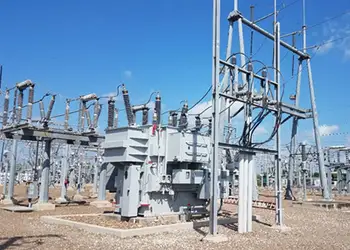
Substation Relay Protection Training

Our customized live online or in‑person group training can be delivered to your staff at your location.

  • Live Online
  • 12 hours Instructor-led
  • Group Training Available
Regular Price:
$699
Coupon Price:
$599
Reserve Your Seat Today
CALGARY (Canada NewsWire via COMTEX) -- ENMAX Corporation and Chinook Centre announced today the signing of a contract that will make Chinook Centre the first shopping centre in Canada to support wind-generated power.

ENMAX Energy, a wholly owned subsidiary of ENMAX, will provide wind-generated electricity to Chinook Centre through its Greenmax program.

"We've made history again today. ENMAX was the first Canadian company to offer customers a wind-generated electricity option, and now with Chinook Centre, we're the first company in Canada to provide a shopping centre with a green alternative," said Sean Durfy, ENMAX vice-president and chief operating officer of ENMAX Energy Corporation.

The three-year contract means Chinook Centre will purchase one per cent of its total consumption from Greenmax. The power, amounting to 160 megawatt hours annually, is equivalent to reducing 160 tonnes of carbon dioxide (CO2) emissions or not driving a car for 696,000 kilometres. This is the same amount of CO2 reduced by 17,400 trees per year.

Chinook Centre will also receive emission reduction credits on an annual basis.

"This contract is a win-win for everyone involved... Chinook Centre, ENMAX, our customers and most importantly the environment," said Terry Napper, manager of Chinook Centre.

ENMAX Corporation, a wholly owned subsidiary of The City of Calgary, provides electricity, natural gas and value-added services to about 400,000 residential, commercial and industrial customers in Alberta through its subsidiary companies.

Related News

Lack of energy: Ottawa’s electricity consumption drops 10 per cent during pandemic

Ottawa Electricity Consumption Drop reflects COVID-19 impacts, with Hydro Ottawa and IESO reporting 10-12% lower demand, delayed morning peaks, and shifted weekend peak to 4 p.m., alongside provincial time-of-use rate relief.


Key Points

A 10-12% decline in Ottawa's electricity demand during COVID-19, with later morning peaks and weekend peak at 4 p.m.

✅ Weekday demand down 11%; weekends down 10% vs April 2019.

✅ Morning peak delayed about 4 hours; 6 a.m. usage down 17%.

✅ Weekend peak moved from 7 p.m. to 4 p.m.; rate relief ongoing.


Ottawa residents may be spending more time at home, with residential electricity use up even as the city’s overall energy use has dropped during the COVID-19 pandemic.

Hydro Ottawa says there was a 10-to-11 per cent drop in electricity consumption in April, with the biggest decline in electricity usage happening early in the morning, a pattern echoed by BC Hydro findings in its province.

Statistics provided to CTV News Ottawa show average hourly energy consumption in the City of Ottawa dropped 11 per cent during weekdays, mirroring Manitoba Hydro trends reported during the pandemic, and a 10 per cent decline in electricity consumption on weekends.

The drop in energy consumption came as many businesses in Ottawa closed their doors due to the COVID-19 measures and physical distancing guidelines.

“Based on our internal analysis, when comparing April 2020 to April 2019, Hydro Ottawa observed a lower, flatter rise in energy use in the morning, with peak demand delayed by approximately four hours.” Hydro Ottawa said in a statement to CTV News Ottawa.

“Morning routines appear to have the largest difference in energy consumption, most likely as a result of a collective slower pace to start the day as people are staying home.”

Hydro Ottawa says overall, there was an 11 per cent average hourly reduction in energy use on weekdays in April 2020, compared to April 2019. The biggest difference was the 6 a.m. hour, with a 17 per cent decrease.

On weekends, the average electricity usage dropped 10 per cent in April, compared to April 2019. The biggest difference was between 7 a.m. and 8 a.m., with a 13 per cent drop in hydro usage.

Hydro Ottawa says weekday peak continues to be at 4 p.m., while on weekends the peak has shifted from 7 p.m. before the pandemic to 4 p.m. now, though Hydro One has not cut peak rates for self-isolating customers.

The Independent Electricity System Operator says across Ontario, there has been a 10 to 12 per cent drop in energy consumption during the pandemic, a trend reflected in province-wide demand data that is the equivalent to half the demand of Toronto.

The Ontario Government has provided emergency electricity rate relief during the COVID-19 pandemic. Residential and small business consumers on time-of-use pricing, and later ultra-low overnight options, will continue to pay one price no matter what time of day the electricity is consumed until the end of May.


Related News

View more

Secret Liberal cabinet document reveals Electricity prices to soar

Ontario Hydro Rate Relief Plan delivers short-term electricity bill cuts, while leaked cabinet forecasts show inflation-linked hikes, borrowing costs, and a Clean Energy Adjustment under the province's long-term energy plan.


Key Points

A provincial plan that cuts bills now but defers costs, projecting rate hikes and adding a Clean Energy Adjustment.

✅ 25% cut now, after 8% HST relief; extra 17% reduction applied.

✅ Forecast: inflation-linked hikes later; borrowing adds long-term costs.

✅ Clean Energy Adjustment line to repay deferred system costs.


The short-term gain of a 25 per cent hydro rate cut this summer could lead to long-term pain as a leaked cabinet document forecasts prices jumping again in five years.

In the briefing materials leaked and obtained by the Progressive Conservatives, rates will start rising 6.5 per cent a year in 2022 and top out at 10.5 per cent in 2028, when average monthly bills hit $215.

That would be up from $123 this year once the rate cut — the subject of long-awaited legislation to lower electricity rates unveiled Thursday by Energy Minister Glenn Thibeault — takes full effect. There will be another 17-per-cent cut in addition to the 8 per cent taken off bills in January when the provincial portion of the HST was waived.

The leaked papers overshadowed Thibeault’s efforts to tout the price break, which will be followed with four years of hydro rate increases at 2 per cent, roughly the rate of inflation.

Thibeault charged that the Conservatives used an “outdated” document to distract from the fact that they are the only major party without a plan for dealing with skyrocketing hydro rates, with a year to go until next June’s provincial election.

“It’s not a coincidence,” he told reporters, denying any plans for an eventual 10.5-per-cent rate hike and promising the government’s new long-term energy plan, due in a few months, will have better numbers.

“We are working hard right now to continue to pull costs out of the system.”

Opposition parties said the Liberal plan doesn’t deal with the underlying problems that have made electricity expensive and simply borrows money to spread the costs over a longer period of time, with $25 billion in interest charges over 30 years.

Some observers also noted that a deal with Quebec would not reduce hydro bills, highlighting concerns about lasting affordability.

“The price of electricity is going to skyrocket after the next election,” warned Conservative MPP Todd Smith (Prince Edward—Hastings).

“The government isn’t being honest with the people of Ontario when it comes to the price of electricity.”

The documents show average monthly bills peaking at $231 in the year 2047, before falling back to $210 the following year once the 30 years of interest payments are over.

Conservative sources say they obtained the papers stamped “confidential cabinet document” from a whistleblower after Thibeault’s rate cut plan was presented to cabinet ministers at a meeting in early March.

There is no date on the document, which the energy minister alternately dismissed as “inaccurate” or possibly one of many that have been prepared with different options in mind.

“We’ve had hundreds of briefings with hundreds of documents … I can’t comment on one graph when we’ve been looking at hundreds of scenarios.”

New Democrats, who have proposed a scheme to cut rates, if elected, also called the government plan an election ploy with Liberals lagging in the polls.

“We’re going to take on a huge debt so (Premier) Kathleen Wynne can look good on the hustings in the next few months, and for decades we’re going to pay for it,” said MPP Peter Tabuns (Toronto-Danforth).

Thibeault acknowledged the Liberal plan will start repaying borrowed money in the mid- or late 2020s and it will show up separately on hydro bills as the “Clean Energy Adjustment”, a kind of electricity recovery rate that could raise costs.


Related News

View more

A New Electric Boat Club Launches in Seattle

Aurelia Boat Club delivers electric boat membership in Seattle, featuring zero-emission propulsion, quiet cruising, sustainable recreation, and a managed fleet with maintenance, insurance, moorage, and charging handled for members seeking hassle-free, eco-friendly boating.


Key Points

Aurelia Boat Club is a Seattle membership offering all-electric boats, with maintenance, insurance, and moorage included.

✅ Unlimited access to an all-electric fleet

✅ Maintenance, insurance, moorage, and charging included

✅ Quiet, zero-emission cruising on Seattle waters


Seattle's maritime scene has welcomed a new player: Aurelia Boat Club. Founded by former Pure Watercraft employees, Aurelia is poised to redefine electric boating in the city, where initiatives like Washington State Ferries hybrid-electric upgrade are underway. The club's inception follows the unexpected closure of Pure Watercraft, a Seattle-based startup that aimed to revolutionize the pleasure boating industry before its financial troubles led to its downfall.

From Pure Watercraft to Aurelia Boat Club

Pure Watercraft, established in 2011, garnered attention for its innovative electric propulsion systems designed to replace traditional gas-powered motors in boats, while efforts to build the first commercial electric speedboats also advanced. The company attracted significant investment, including a notable partnership with General Motors in 2021, which acquired a 25% stake in Pure Watercraft. Despite these efforts, Pure Watercraft faced financial difficulties and entered receivership in 2024, leading to the liquidation of its assets. 

Amidst this transition, Danylo Kurgan and Mrugesh Desai saw an opportunity to continue the vision of electric boating. Kurgan, formerly a financial analyst at Pure Watercraft and involved in the company's boat club operations, teamed up with Desai, a technology executive and startup investor. Together, they acquired key assets from Pure Watercraft's receivership, including electric outboard motors, pontoon boats, inflatable crafts, battery systems, spare parts, and digital infrastructure. 

Aurelia Boat Club's Offerings

Aurelia Boat Club aims to provide a sustainable and accessible alternative to traditional gas-powered boat clubs in Seattle. Members can enjoy unlimited access to a fleet of all-electric boats without the responsibilities of ownership. The club's boats are equipped with electric motors, offering a quiet and environmentally friendly boating experience, similar to how electric ships are clearing the air on the B.C. coast. Additionally, Aurelia handles maintenance, repairs, insurance, and moorage, allowing members to focus solely on enjoying their time on the water. 

The Future of Electric Boating in Seattle

Aurelia Boat Club's launch signifies a growing interest in sustainable boating practices in Seattle. The club's founders are committed to scaling the business and expanding their fleet to meet the increasing demand for eco-friendly recreational activities, as projects like battery-electric high-speed ferries indicate. By leveraging the assets and knowledge gained from Pure Watercraft, Aurelia aims to continue the legacy of innovation in the electric boating industry.

As the boating community becomes more environmentally conscious, initiatives like Aurelia Boat Club play a crucial role in promoting sustainable practices, and examples such as Harbour Air's electric aircraft highlight the momentum. The club's success could serve as a model for other cities, demonstrating that with the right vision and resources, the transition to electric boating is not only feasible but also desirable.

While the closure of Pure Watercraft marked the end of one chapter, it also paved the way for new ventures like Aurelia Boat Club to carry forward the mission of transforming the boating industry, with regional moves like the Kootenay Lake electric-ready ferry and international innovations such as Berlin electric flying ferry showing what's possible. With a strong foundation and a clear vision, Aurelia is set to make significant waves in Seattle's electric boating scene.


Related News

View more

Ukraine's parliament backs amendments to electricity market law

Ukraine Electricity Market Price Caps empower the regulator, the National Commission, to set marginal prices on day-ahead, intraday, and balancing markets, stabilize competition, support thermal plants, and sustain the heating season via green tariff obligations.


Key Points

Regulatory limits set by the National Commission to curb price spikes, ensure competition, and secure heat supply.

✅ Sets marginal prices for day-ahead, intraday, balancing markets

✅ Mitigates collusion risks; promotes effective competition

✅ Ensures TPP operation and heat supply during heating season


The Verkhovna Rada, Ukraine's parliament, has adopted at first reading a draft law that proposes giving the National Commission for State Regulation of Energy and Public Utilities the right to set marginal prices in the electricity market, amid EU market revamp plans that aim to reshape pricing, until 2023.

A total of 259 MPs voted for the document at a parliament meeting on Tuesday, November 12, amid electricity import pressures that have tested the grid, according to an Ukrinform correspondent.

Bill No. 2233 introducing amendments to the law on the electricity market provides for the legislative regulation of the mechanism for fulfilling special obligations for the purchase of electricity at a "green" tariff, preventing the uncontrolled growth of electricity prices due to the lack of effective competition, including recent price-fixing allegations that have raised concerns, ensuring heat supply to consumers during the heating period by regulating the issue of the functioning of thermal power plants in the new electricity market.

It is proposed to introduce respective amendments to the law of Ukraine on the electricity market, alongside steps toward synchronization with ENTSO-E to enhance system stability.

In particular, the draft law gives the regulator the right for the period until July 1, 2023 to set marginal prices on the day-ahead market, the intraday market and the balancing market for each trade zone, reflecting similar EU fixed-price contract initiatives being discussed, and to decide on the obligation for producers to submit proposals (applications) for the sale of electricity on the day-ahead market.

Lawmakers think that the adoption of the bill and empowering the regulator to set marginal prices in the relevant segments of the electricity market will prevent, even as rolling back prices in Europe remains difficult for policymakers, "an uncontrolled increase in electricity prices due to the lack of effective competition or collusion between market players, as well as regulate the issue of the functioning of thermal power plants during the autumn and winter period, which is a necessary prerequisite for providing heat to consumers during the heating period."

The new model of the electricity market was launched on July 1 as the UK weighs decoupling gas and power prices to shield consumers, in accordance with the provisions of the law on the electricity market, adopted in 2017.


Related News

View more

Experts Question Quebec's Push for EV Dominance

Quebec EV transition plan aims for 2 million electric vehicles by 2030 and bans new gas cars by 2035, stressing charging infrastructure, incentives, emissions cuts, and industry impacts, with debate over feasibility and economic risks.


Key Points

A provincial policy targeting 2M EVs by 2030 and a 2035 gas-car sales ban, backed by charging buildout and incentives.

✅ Requires major charging infrastructure and grid upgrades

✅ Balances incentives with economic impacts and industry readiness

✅ Gas stations persist while EV adoption accelerates cautiously


Quebec's ambitious push to dominate the electric vehicle (EV) market, echoing Canada's EV goals in its plan, by setting a target of two million EVs on the road by 2030 and planning to ban the sale of new gas-powered vehicles by 2035 has sparked significant debate among industry experts. While the government's objectives aim to reduce greenhouse gas emissions and promote sustainable transportation, some experts question the feasibility and potential economic impacts of such rapid transitions.

Current Landscape of Gas Stations in Quebec

Contrary to Environment Minister Benoit Charette's assertion that gas stations may become scarce within the next decade, industry experts suggest that the number of gas stations in Quebec is unlikely to decline drastically. Carol Montreuil, Vice President of the Canadian Fuels Association, describes the minister's statement as "wishful thinking," emphasizing that the number of gas stations has remained relatively stable over the past decade. Statistics indicate that in 2023, Quebec residents purchased more gasoline than ever before, and EV shortages and wait times further underscore the continued demand for traditional fuel sources.

Challenges in Accelerating EV Adoption

The government's goal of having two million EVs on Quebec roads by 2030 presents several challenges. Currently, there are approximately 200,000 fully electric cars in the province. Achieving a tenfold increase in less than a decade requires substantial investments in charging infrastructure, consumer incentives, and public education to address concerns such as range anxiety and charging accessibility, especially amid electricity shortage warnings across Quebec and other provinces.

Economic Considerations and Industry Concerns

Industry stakeholders express concerns about the economic implications of rapidly phasing out gas-powered vehicles. Montreuil warns that the industry is already struggling and that attempting to transition too quickly could lead to economic challenges, a view echoed by critics who label the 2035 EV mandate delusional. He suggests that the government may be spending excessive public funds on subsidies for technologies that are still expensive and not yet widely adopted.

Public Sentiment and Adoption Rates

Public sentiment towards EVs is mixed, and experiences in Manitoba suggest the road to targets is not smooth. While some consumers, like Montreal resident Alex Rajabi, have made the switch to electric vehicles and are satisfied with their decision, others remain hesitant due to concerns about vehicle cost, charging infrastructure, and the availability of incentives. Rajabi, who transitioned to an EV nine months ago, notes that while he did not take advantage of the incentive program, he is happy with his decision and suggests that adding charging ports at gas stations could facilitate the transition.

The Need for a Balanced Approach

Experts advocate for a balanced approach that considers the pace of technological advancements, consumer readiness, and economic impacts. While the transition to electric vehicles is essential for environmental sustainability, it is crucial to ensure that the infrastructure, market conditions, and public acceptance are adequately addressed, and to recognize that a share of Canada's electricity still comes from fossil fuels, to make the shift both feasible and beneficial for all stakeholders.

In summary, Quebec's ambitious EV targets reflect a strong commitment to environmental sustainability. However, industry experts caution that achieving these goals requires careful planning, substantial investment, and a realistic assessment of the challenges involved as federal EV sales regulations take shape, in transitioning from traditional vehicles to electric mobility.


Related News

View more

Plan to End E-Vehicle Subsidies Sparks Anger in Germany

Germany EV Subsidy Cut triggers budget-crisis fallout in the automotive industry, after a constitutional court ruling; EV incentives end, threatening electromobility adoption, manufacturer competitiveness, 2030 targets, and demand amid Chinese competition and weak global growth.


Key Points

A sudden end to Germany's EV incentives due to a budget shortfall after a court ruling, hurting automakers and adoption.

✅ Ends buyer rebates amid budget crisis ruling

✅ Risks 2030 EV targets and industry competitiveness

✅ Weak demand and China competition intensify


The German government has faced a backlash after abruptly ending an electric car subsidy scheme in a blow to the already struggling automotive industry.

The scheme is one of the casualties of a budget crisis caused by a shock constitutional court ruling in November that upended the government's spending plans.

The economy ministry said Saturday that Sunday would be the last day prospective buyers could apply for the scheme, which paid out thousands of euros per customer to partially cover the cost of buying an electric car today.

A spokesman for the ministry admitted it was an "unfortunate situation" for consumers who had been hoping to take advantage of the subsidy, but it had no choice "because there is no longer enough money available."

Analyst Ferdinand Dudenhoeffer from the Center for Automotive Research warned the decision could have dramatic consequences amid a Europe EV slump already pressuring demand.

"The competitiveness of [auto] manufacturers will now be severely damaged," Dudenhoeffer told the Rheinische Post newspaper.

The Handelsblatt business daily had already warned that scrapping the scheme risked jeopardizing Germany's plans to get 15 million electric cars on the road by 2030, even though the EU EV share grew during lockdowns earlier in the pandemic.

"This goal was already considered extremely unrealistic. Now it seems completely illusory," it wrote.

In the UK, analysts warn that electric cars could cost more if a post-Brexit deal is not reached, underscoring wider market uncertainties.

A total of around 10 billion euros ($1.1 billion) has been paid out since 2016 under the scheme for around 2.1 million electric vehicles, according to the economy ministry.

Germany's flagship automotive industry, including Volkswagen, has been struggling with the transition to electromobility due to a weak global economy and low levels of demand.

In addition, it is facing a serious challenge from homegrown rivals in China, one of its most important markets, as France moves to discourage Chinese EVs with new rules.

"The Chinese are massively expanding their car industry because they have customers. Our manufacturers no longer have any," Dudenhoeffer said, as France's incentive rules make the market tougher for Chinese brands.

Germany's highest court decided last month that the government had broken a constitutional debt rule when it transferred 60 billion euros earmarked for pandemic support to a climate fund.

The bombshell ruling blew a huge hole in spending plans and plunged Chancellor Olaf Scholz's three-way coalition into turmoil.

After adopting an emergency budget for 2023, Scholz and his junior coalition partners battled for weeks before finally finding an agreement for 2024.


Related News

View more

Sign Up for Electricity Forum’s Newsletter

Stay informed with our FREE Newsletter — get the latest news, breakthrough technologies, and expert insights, delivered straight to your inbox.

Electricity Today T&D Magazine Subscribe for FREE

Stay informed with the latest T&D policies and technologies.
  • Timely insights from industry experts
  • Practical solutions T&D engineers
  • Free access to every issue

Live Online & In-person Group Training

Advantages To Instructor-Led Training – Instructor-Led Course, Customized Training, Multiple Locations, Economical, CEU Credits, Course Discounts.

Request For Quotation

Whether you would prefer Live Online or In-Person instruction, our electrical training courses can be tailored to meet your company's specific requirements and delivered to your employees in one location or at various locations.