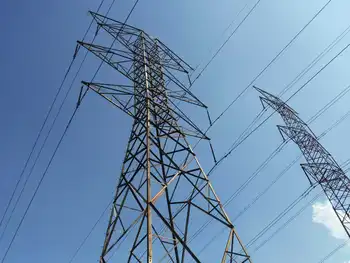
Utilities in U.S. Southeast call off grid effort

By Reuters


Electrical Testing & Commissioning of Power Systems

Our customized live online or in‑person group training can be delivered to your staff at your location.
  • Live Online
  • 12 hours Instructor-led
  • Group Training Available
Regular Price:
$599
Coupon Price:
$499
Reserve Your Seat Today
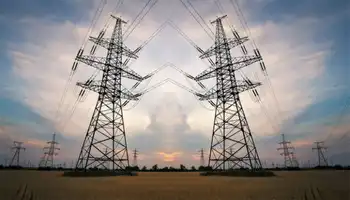
A group of huge utilities in the U.S. Southeast including Southern Co. Inc. and Entergy Corp. said recently they suspended efforts to create a regional power grid, citing regulatory concerns.

In a statement, the utilities said they had called off a plan to weave their transmission networks together to create the so-called SeTrans grid, which would have extended over eight states from South Carolina to Louisiana.

Citing conflicts between state regulators and the Federal Energy Regulatory Commission (FERC) over the agency's plan to create "regional transmission operators (RTOs)," participating utilities said they "decided unanimously to suspend the SeTrans effort."

"It is highly unlikely that consensus support and acceptance for the SeTrans RTO will be forthcoming from all applicable state and federal agencies," the utilities said in a statement. FERC proposed the rules to combine electric utilities' patchwork transmission grids into pooled networks to reduce bottlenecks, boost supplies and lower consumer costs.

Southeast utility commissioners have raised an upswell of protest. They have complained that the region already has cheap power and that FERC's new rules would saddle their ratepayers with the cost of building new transmission grids to benefit users in other states. Southern lawmakers including Republican Senators Richard Shelby of Alabama and Trent Lott of Mississippi inserted language into comprehensive energy legislation before the Senate which would delay the FERC grid plan until 2007.

Related News

Ontario’s Electricity Future: Balancing Demand and Emissions 

Ontario Electricity Transition faces surging demand, GHG targets, and federal regulations, balancing natural gas, renewables, battery storage, and grid reliability while pursuing net-zero by 2035 and cost-effective decarbonization for industry, EVs, and growing populations.


Key Points

Ontario Electricity Transition is the province's shift to a reliable, low-GHG grid via renewables, storage, and policy.

✅ Demand up 75% by 2050; procurement adds 4,000 MW capacity.

✅ Gas use rises to 25% by 2030, challenging GHG goals.

✅ Tripling wind and solar with storage can cut costs and emissions.


Ontario's electricity sector stands at a pivotal crossroads. Once a leader in clean energy, the province now faces the dual challenge of meeting surging demand while adhering to stringent greenhouse gas (GHG) reduction targets. Recent developments, including the expansion of natural gas infrastructure and proposed federal regulations, have intensified debates about the future of Ontario's energy landscape, as this analysis explains in detail.

Rising Demand and the Need for Expansion

Ontario's electricity demand is projected to increase by 75% by 2050, equivalent to adding four and a half cities the size of Toronto to the grid. This surge is driven by factors such as industrial electrification, population growth, and the transition to electric vehicles. In response, as Ontario confronts a looming shortfall in the coming years, the provincial government has initiated its most ambitious energy procurement plan to date, aiming to secure an additional 4,000 megawatts of capacity by 2030. This includes investments in battery storage and natural gas generation to ensure grid reliability during peak demand periods.

The Role of Natural Gas: A Controversial Bridge

Natural gas has become a cornerstone of Ontario's strategy to meet immediate energy needs. However, this reliance comes with environmental costs. The Independent Electricity System Operator (IESO) projects that by 2030, natural gas will account for 25% of Ontario's electricity supply, up from 4% in 2017. This shift raises concerns about the province's ability to meet its GHG reduction targets and to embrace clean power in practice. 

The expansion of gas-fired plants, including broader plans for new gas capacity, such as the Portlands Energy Centre in Toronto, has sparked public outcry. Environmental groups argue that these expansions could undermine local emissions reduction goals and exacerbate health issues related to air quality. For instance, emissions from the Portlands plant have surged from 188,000 tonnes in 2017 to over 600,000 tonnes in 2021, with projections indicating a potential increase to 1.65 million tonnes if the expansion proceeds as planned. 

Federal Regulations and Economic Implications

The federal government's proposed clean electricity regulations aim to achieve a net-zero electricity sector by 2035. However, Ontario's government has expressed concerns that these regulations could impose significant financial burdens. An analysis by the IESO suggests that complying with the new rules would require doubling the province's electricity generation capacity, potentially adding $35 billion in costs by 2050, while other estimates suggest that greening Ontario's grid could cost $400 billion over time. This could result in higher residential electricity bills, ranging from $132 to $168 annually starting in 2033.

Pathways to a Sustainable Future

Experts advocate for a diversified approach to decarbonization that balances environmental goals with economic feasibility. Investments in renewable energy sources, such as new wind and solar resources, along with advancements in energy storage technologies, are seen as critical components of a sustainable energy strategy. Additionally, implementing energy efficiency measures and modernizing grid infrastructure can enhance system resilience and reduce emissions. 

The Ontario Clean Air Alliance proposes phasing out gas power by 2035 through a combination of tripling wind and solar capacity and investing in energy efficiency and storage solutions. This approach not only aims to reduce emissions but also offers potential cost savings compared to continued reliance on gas-fired generation. 

Ontario's journey toward a decarbonized electricity grid is fraught with challenges, including balancing reliability, clean, affordable electricity, and environmental sustainability. While natural gas currently plays a significant role in meeting the province's energy needs, its long-term viability as a bridge fuel remains contentious. The path forward will require careful consideration of technological innovations, regulatory frameworks, and public engagement to ensure a clean, reliable, and economically viable energy future for all Ontarians.


Related News

View more

Vietnam Redefines Offshore Wind Power Regulations

Vietnam Offshore Wind Regulations expand coastal zones to six nautical miles, remove water depth limits, streamline permits, and boost investment, grid integration, and renewable energy capacity across deeper offshore wind resource areas.


Key Points

Policies extend sites to six nautical miles, scrap depth limits, and speed permits to scale offshore wind.

✅ Extends offshore zones to six nautical miles from shore

✅ Removes water depth limits to access stronger winds

✅ Streamlines permits, aiding grid integration and finance


Vietnam has recently redefined its regulations for offshore wind power projects, marking a significant development in the country's renewable energy ambitions. This strategic shift aims to streamline regulatory processes, enhance project feasibility, and accelerate the deployment of offshore wind energy in Vietnam's coastal regions, amid a trillion-dollar offshore wind market globally.

Regulatory Changes

The Vietnamese government has adjusted offshore wind power regulations by extending the allowable distance from shore for wind farms to six nautical miles (approximately 11 kilometers), a move that aligns with evolving global practices such as Canada's offshore wind plan announced recently by regulators. This expansion from previous limits aims to unlock new areas for development and maximize the utilization of Vietnam's vast offshore wind potential.

Scrapping Depth Restrictions

In addition to extending offshore boundaries, Vietnam has removed restrictions on water depth for offshore wind projects. This revision allows developers to explore deeper waters, where wind resources may be more abundant, thereby diversifying project opportunities and optimizing energy generation capacity.

Strategic Implications

The redefined regulations are expected to stimulate investment in Vietnam's renewable energy sector, attracting domestic and international stakeholders keen on capitalizing on the country's favorable wind resources, with World Bank support for wind underscoring the growing pipeline in developing markets. The move aligns with Vietnam's broader energy diversification goals and commitment to reducing reliance on fossil fuels.

Economic Opportunities

The expansion of offshore wind development zones creates economic opportunities across the value chain, from project planning and construction to operation and maintenance. The influx of investments is anticipated to spur job creation, technology transfer, and infrastructure development in coastal communities, as industry groups like Marine Renewables Canada shift toward offshore wind specialization.

Environmental and Energy Security Benefits

Harnessing offshore wind power contributes to Vietnam's efforts to mitigate greenhouse gas emissions and combat climate change. By integrating renewable energy sources into its energy mix, Vietnam enhances energy security, as seen in the UK offshore wind expansion, reduces dependency on imported fuels, and promotes sustainable economic growth.

Challenges and Considerations

Despite the promising outlook, offshore wind projects face challenges such as technical complexities, environmental impact assessments, and grid integration, as well as exposure to policy risk exemplified by U.S. opposition to offshore wind debates.

Future Outlook

Looking ahead, Vietnam's redefined offshore wind regulations position the country as a key player in the global renewable energy transition, a trend reinforced by progress in offshore wind in Europe elsewhere. Continued policy support, investment facilitation, and technological innovation will be critical in unlocking the full potential of offshore wind power and achieving Vietnam's renewable energy targets.

Conclusion

Vietnam's revision of offshore wind power regulations reflects a proactive approach to advancing renewable energy development and fostering a conducive investment environment. By expanding development zones and eliminating depth restrictions, Vietnam sets the stage for accelerated growth in offshore wind capacity, contributing to both economic prosperity and environmental stewardship. As stakeholders seize opportunities in this evolving landscape, collaboration and innovation will drive Vietnam towards a sustainable energy future powered by offshore wind.


Related News

View more

Ireland goes 25 days without using coal to generate electricity

Ireland Coal-Free Electricity Record: EirGrid reports 25 days without coal on the all-island grid, as wind power, renewables, and natural gas dominated generation, cutting CO2 emissions, with Moneypoint sidelined by market competitiveness.


Key Points

It is a 25-day period when the grid used no coal, relying on gas and renewables to reduce CO2 emissions.

✅ 25 days coal-free between April 11 and May 7

✅ Gas 60%, renewables 30% of generation mix

✅ Eurostat: 6.8% drop in Ireland's CO2 emissions


The island of Ireland has gone a record length of time without using coal-fired electricity generation on its power system, Britain's week-long coal-free run providing a recent comparator, Eirgrid has confirmed.

The all-island grid operated without coal between April 11th and May 7th – a total of 25 days, it confirmed. This is the longest period of time the grid has operated without coal since the all-island electricity market was introduced in 2007, echoing Britain's record coal-free stretch seen recently.

Ireland’s largest generating station, Moneypoint in Co Clare, uses coal, with recent price spikes in Ireland fueling concerns about dispatchable capacity, as do some of the larger generation sites in Northern Ireland.

The analysis coincides with the European statistics agency, Eurostat publishing figures showing annual CO2 emissions in Ireland fell by 6.8 per cent last year; partly due to technical problems at Moneypoint.

Over the 25-day period, gas made up 60 per cent of the fuel mix, while renewable energy, mainly wind, accounted for 30 per cent, echoing UK wind surpassing coal in 2016 across the market. Coal-fired generation was available during this period but was not as competitive as other methods.

EirGrid group chief executive Mark Foley said this was “a really positive development” as coal was the most carbon intense of all electricity sources, with its share hitting record lows in the UK in recent years.

“We are acutely aware of the challenges facing the island in terms of meeting our greenhouse gas emission targets, mindful that low-carbon generation stalled in the UK in 2019, through the deployment of more renewable energy on the grid,” he added.

Last year 33 per cent of the island’s electricity came from renewable energy sources, German renewables surpassing coal and nuclear offering a parallel milestone, a new record. Coal accounted for 9 per cent of electricity generation, down from 12.9 per cent in 2017.


Related News

View more

A resilient Germany is weathering the energy crunch

German Energy Price Brakes harness price signals in a market-based policy, cutting gas consumption, preserving industrial output, and supporting CO2 reduction, showcasing Germany's resilience and adaptation while protecting households and businesses across Europe.


Key Points

Fixed-amount subsidies preserving price signals to curb gas use, shield consumers, and sustain industrial output.

✅ Maintains incentives via market-based price signals

✅ Cuts gas consumption without distorting EU markets

✅ Protects households and industry while curbing CO2


German industry and society are once again proving much more resilient and adaptable than certain people feared. Horror scenarios of a dangerous energy rationing or a massive slump in our economy have often been bandied about. But we are nowhere near that. With a challenging year just behind us, this is good news — not only for Germany, but also for Europe, where France-Germany energy cooperation has strengthened solidarity.

Companies and households reacted swiftly to the sharp increases in energy prices, in line with momentum in the global energy transition seen across markets. They installed more efficient heating or production facilities, switched to alternatives and imported intermediate products. The results are encouraging: German households and businesses have reduced gas consumption significantly, despite recent cold weather. From the start of the war in Ukraine to mid-December industrial gas consumption in Germany was (temperature-adjusted) around 20 per cent lower than the average level for the preceding three years. Even if some firms have cut back production, especially in energy-intensive sectors, industrial output as a whole has only fallen by about 1 per cent since the start of 2022. Added to this, in a survey released by the Ifo institute in November, over a third of German companies saw the potential to reduce gas consumption further without endangering output.

Instead of imposing excessive laws and regulations, we have relied on price signals and the prudence of market participants to create the right incentives and reduce gas consumption, as falling costs like record-low solar power prices continue to reinforce those signals across sectors.

We will follow this approach in coming months, when energy savings will remain important, even as the EU electricity outlook anticipates sharply higher demand by 2050. Our latest relief measures will not distort price signals. To this end, the Bundestag approved gas and electricity price brakes in its final session in 2022. They are designed to function without any intervention in markets or prices. This system will pay out a fixed amount relative to previous years’ consumption and the current difference to a reference price — regardless of current consumption.

Energy price brakes are the main component of Germany’s “protective shield”, which makes up to €200bn available for measures in 2022 to 2024. Seen in relation to the German economy’s size, its past heavy reliance on Russian energy imports and the fact that the measures will expire in 2024, these are balanced and expedient mechanisms. In contrast to instruments used in other countries, our new arrangements will not affect the price formation process driven by supply and demand, or on incentives to save gas. Companies and households will continue to save the full market price when they reduce consumption by a unit of gas or electricity. In this way, the price brakes also avoid the creation of additional demand for gas at the expense of consumers in other European countries, even as Europe’s Big Oil turning electric signals broader structural shifts in energy markets. No one need fear that competition will be distorted or that gas will be bought up. Indeed, a recent IMF working paper on cushioning the impact of high energy prices on households explicitly praises the German energy price brakes.

Current developments confirm the effectiveness of a market-based approach — and show that we should also rely on price signals when it comes to reducing CO₂ emissions, as suggested by IEA CO2 trends in recent years. Last year, households and companies had only a few weeks to adapt, yet we have already seen a strong response. The effect of CO₂ prices can be even stronger, as adaptation is possible over a much longer time and they additionally affect expectations and long-term decisions. Regulatory interventions and subsidy schemes, even if well targeted, cannot compete with market co-ordination and incentives that support individual decision-making and promote innovation.

Europe and Germany can weather this crisis without a collapse in industrial production. We also have an opportunity to deal efficiently with the move to climate neutrality, aligned with Germany’s hydrogen strategy for imported low-carbon fuels. In both cases, we should have confidence in price signals as well as in the power of people and business to innovate and adapt.


Related News

View more

The Cool Way Scientists Turned Falling Raindrops Into Electricity

Raindrop Triboelectric Energy Harvesting converts falling water into electricity using Teflon (PTFE) on indium tin oxide and an aluminum electrode, forming a transient water bridge; a low frequency nanogenerator for renewable, static electricity harvesting.


Key Points

A method using PTFE, ITO, and an aluminum electrode to turn raindrop impacts into low frequency electrical power.

✅ PTFE on ITO boosts charge transfer efficiency.

✅ Water bridge links electrodes for rapid discharge.

✅ Low frequency output suits continuous energy harvesting.


Scientists at the City University of Hong Kong have used a Teflon-coated surface and a phenomenon called triboelectricity to generate a charge from raindrops. “Here we develop a device to harvest energy from impinging water droplets by using an architecture that comprises a polytetrafluoroethylene [Teflon] film on an indium tin oxide substrate plus an aluminium electrode,” they explain in their new paper in Nature as a step toward cheap, abundant electricity in the long term.

Triboelectricity itself is an old concept. The word means “friction electricity”—from the Greek tribo, to rub or wear down, which is why a diatribe tires you out—and dates back a long, long time. Static electricity is the most famous kind of triboelectric, and related work has shown electricity from the night sky can be harvested as well in niche setups. In most naturally occurring kinds, scientists have studied triboelectric in order to avoid its effects, like explosions inside of grain silos or hospital workers touching off pure oxygen. (Blowing sand causes an electric field, and NASA even worries about static when astronauts eventually land on Mars.)

One of the most studied forms of intentional and useful triboelectric is in systems such as ocean wave generators where the natural friction of waves meets nanogenerators of triboelectric energy. These even already use Teflon, which has natural conductivity that makes it ideal for this job. But triboelectricity is chaotic, and harnessing it generally involves a bunch of complicated, intersecting variables that can vary with the hourly weather. Promises of static electricity charging devices have often been, well, so much hot, sandy wind.

The scientists at City University of Hong Kong used triboelectric ideas to turn falling raindrops into energy. They say previous versions of the same idea were not very efficient, with materials that didn’t allow for high-fidelity transfer of electrical charge. (Many sources of renewable energy aren’t yet as efficient to turn into power, both because of developing technology and because their renewability means even less efficient use could be better than, for example, fossil fuels, and advances in renewable energy storage could help.)

“[A]chieving a high density of electrical power generation is challenging,” the team explains in its paper. “Traditional hydraulic power generation mainly uses electromagnetic generators that are heavy, bulky, and become inefficient with low water supply.” Diversifying how power is generated by water sources such as oceans and rivers is good for the existing infrastructure as well as new installations.

The research team found that as simulated raindrops fell on their device, the way the water accumulated and spread created a link between their two electrodes, one Teflon-coated and the other aluminum. This watery de facto wire link closes the loop and allows accumulated energy to move through the system. Because it’s a mechanical setup, it’s not limited to salty seawater, and because the medium is already water, its potential isn’t affected by ambient humidity either.

Raindrop energy is very low frequency, which means this tech joins many other existing pushes to harvest continuously available, low frequency natural energy, including underwater 'kites' that exploit steady currents. To make an interface that increases “instantaneous power density by several orders of magnitude over equivalent devices,” as the researchers say they’ve done here, could represent a major step toward feasibility in triboelectric generation.


Related News

View more

The nuclear power dispute driving a wedge between France and Germany

Franco-German Nuclear Power Divide shapes EU energy policy, electricity market reform, and decarbonization strategies, as Paris backs reactors and state subsidies while Berlin prioritizes renewables, hydrogen, and energy security after Russian gas shocks.


Key Points

A policy rift over nuclear shaping EU market reform, subsidies, and the balance between reactors and renewables.

✅ Nuclear in EU targets vs. renewables-first strategy

✅ Market design disputes over long-term power prices

✅ Energy security after Russian gas; hydrogen definitions


Near the French village of Fessenheim, facing Germany across the Rhine, a nuclear power station stands dormant. The German protesters that once demanded the site’s closure have decamped, in a sign of Europe's nuclear decline, and the last watts were produced three years ago. 

But disagreements over how the plant from 1977 should be repurposed persist, speaking to a much deeper divide over nuclear power, which Eon chief's warning to Germany underscored, between the two countries on either side of the river’s banks.

German officials have disputed a proposal to turn it into a centre to treat metals exposed to low levels of radioactivity, Fessenheim’s mayor Claude Brender says. “They are not on board with anything that might in some way make the nuclear industry more acceptable,” he adds.

France and Germany’s split over nuclear power is a tale of diverging mindsets fashioned over decades, including since the Chernobyl disaster in USSR-era Ukraine. But it has now become a major faultline in a touchy relationship between Europe’s two biggest economies.

Their stand-off over how to treat nuclear in a series of EU reforms has consequences for how Europe plans to advance towards cleaner energy. It will also affect how the bloc secures power supplies as the region weans itself off Russian gas, even though nuclear would do little for the gas issue, and how it provides its industry with affordable energy to compete with the US and China. 

“There can be squabbles between partners. But we’re not in a retirement home today squabbling over trivial matters. Europe is in a serious situation,” says Eric-André Martin, a specialist in Franco-German relations at French think-tank IFRI. 

France, which produces two-thirds of its power from nuclear plants and has plans for more reactors, is fighting for the low-carbon technology to be factored into its targets for reducing emissions and for leeway to use state subsidies to fund the sector.

For Germany, which closed its last nuclear plants this year and, having turned its back on nuclear, has been particularly shaken by its former reliance on Russian gas, there’s concern that a nuclear drive will detract from renewable energy advances.

But there is also an economic subtext in a region still reeling from an energy crisis last year, reviving arguments for a needed nuclear option for climate in Germany, when prices spiked and laid bare how vulnerable households and manufacturers could become.

Berlin is wary that Paris would benefit more than its neighbours if it ends up being able to guarantee low power prices from its large nuclear output as a result of new EU rules on electricity markets, amid talk of a possible U-turn on the phaseout, people close to talks between the two countries say.

Ministers on both sides have acknowledged there is a problem. “The conflict is painful. It’s painful for the two governments as well as for our [EU] partners,” Sven Giegold, state secretary at the German economy and climate action ministry, where debates about whether a nuclear resurgence is possible persist, tells the Financial Times. 

Agnès Pannier-Runacher, France’s energy minister, says she wants to “get out of the realm of the emotional and move past the considerable misunderstandings that have accumulated in this discussion”.

In a joint appearance in Hamburg last week, German chancellor Olaf Scholz and French president Emmanuel Macron made encouraging noises over their ability to break the latest deadlock: a disagreement over the design of the EU’s electricity market. Ministers had been due to agree a plan in June but will now meet on October 17 to discuss the reform, aimed at stabilising long-term prices.

But the French and German impasse on nuclear has already slowed down debates on key EU policies such as rules on renewable energy and how hydrogen should be produced. Smaller member states are becoming impatient. The delay on the market design is “a big Franco-German show of incompetence again”, says an energy ministry official from another EU country who requested anonymity. 


Related News

View more

Sign Up for Electricity Forum’s Newsletter

Stay informed with our FREE Newsletter — get the latest news, breakthrough technologies, and expert insights, delivered straight to your inbox.

Electricity Today T&D Magazine Subscribe for FREE

Stay informed with the latest T&D policies and technologies.
  • Timely insights from industry experts
  • Practical solutions T&D engineers
  • Free access to every issue

Download the 2025 Electrical Training Catalog

Explore 50+ live, expert-led electrical training courses –

  • Interactive
  • Flexible
  • CEU-cerified