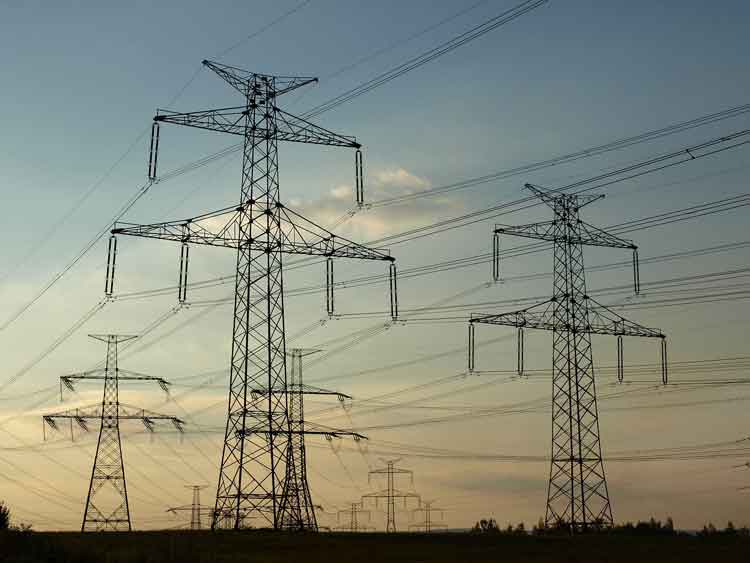
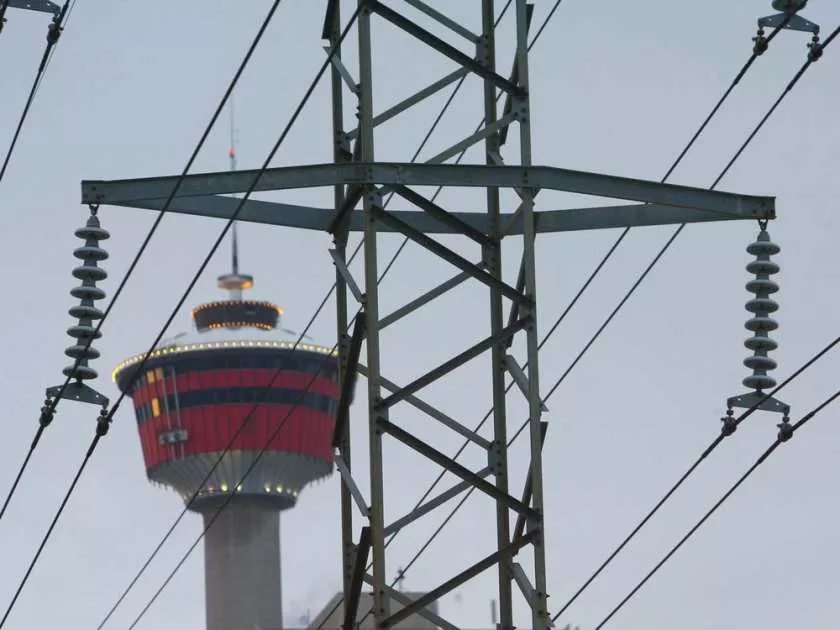
Taking the Grid for Granted

By New York Times


Substation Relay Protection Training

Our customized live online or in‑person group training can be delivered to your staff at your location.

  • Live Online
  • 12 hours Instructor-led
  • Group Training Available
Regular Price:
$699
Coupon Price:
$599
Reserve Your Seat Today
When Dennis Hastert, the speaker of the House, returns to work in January, he will find on his desk a letter from John Dingell of Michigan, a colleague wise in the ways of energy legislation. The letter asks Mr. Hastert to forget about trying to pass the omnibus energy bill and to focus instead on a narrower measure aimed at improving the reliability of the country's electrical transmission system. Mr. Dingell has the right idea.

More than four months have passed since the blackout in August 2003 that caused most of the northeastern United States and parts of Canada to go dark. Virtually nothing has been done to cut the risk of a recurrence. There have been no structural changes in the system, no investigative teams dispatched to carry out a nationwide survey of individual utilities or operating systems.

All we have seen are baby steps. An industry association called the North American Electric Reliability Council has sent out a questionnaire asking its 167 members what steps they are taking to prevent future failures, but sending out questionnaires is not the same thing as sending in auditors.

Meanwhile, the Federal Energy Regulatory Commission, which mostly oversees economic issues, has begun to explore whether it has any real authority to improve reliability. The short answer is, not much — which is where Mr. Dingell's bill comes in. It would authorize the federal commission and the industry council, working together, to impose mandatory operating standards on the industry and penalize companies that do not meet them. The standards that now exist are purely voluntary.

Mr. Dingell's bill would not address other issues — whether, for example, there should be a whole new system of regional organizations to manage the grid, or the even larger question of whether deregulation has fostered a corporate culture in which maintaining reliability is less important than maximizing profits. But it represents a common-sense first step toward a safer grid. Moreover, unlike the broader energy bill, it would be quickly approved if Mr. Hastert allowed it to come to the floor for a vote.

Related News
IEA praises Modi govt for taking electricity to every village; calls India 'star performer'

India Village Electrification hailed by the IEA in World Energy Outlook 2018 showcases rapid energy access progress, universal village power, clean cooking advances via LPG, and Modi-led initiatives, inspiring Indonesia, Bangladesh, and Sub-Saharan Africa.


Key Points

A national push to power every Indian village, praised by the IEA for boosting energy access and clean cooking.

✅ Electrified 597,464 villages ahead of schedule in April 2018.

✅ IEA hails India in World Energy Outlook 2018 as star performer.

✅ LPG connections surge via Ujjwala, aiding clean cooking access.


The global energy watchdog International Energy Agency (IEA) has called India's electrification of every village the greatest success story of 2018. In its latest report, World Energy Outlook 2018, the IEA has called India a "star performer" in terms of achieving the big milestone of the providing power to each village. "In particular, one of the greatest success stories in access to energy in 2018 was India completing the electrification of all of its villages," said the IEA. It added that countries like Indonesia and Bangladesh have also achieved the commendable electrification rate of 95% (up from 50% in 2000), and 80% (up from 20% in 2000), respectively, even as Europe's electrification push continues as part of broader transitions.

This 643-page report by the IEA says over 120 million people worldwide gained access to electricity in 2017 and charts growth in the electric car market as part of broader energy trends. For the first time ever, the total number of people without access fell below 1 billion, it said.  The mega plan of providing electricity to 597,464 villages in India was announced by Prime Minister Narendra Modi during his Independence Day speech in 2015. On April 28, 2018, PM Modi confirmed that India had achieved its goal ahead of schedule. "This is one of the greatest achievements in the history of energy," said the IEA.

Praising the Narendra Modi government for making efforts towards lighting up every village in India, the agency said: "Since 2000 around half a billion people have gained access to electricity in India, with political effort over the last five years significantly accelerating progress."

India's achievement of providing universal household electricity access will improve the lives of over 230 million people, said the IEA, even as analyses like a Swedfund report debate some poverty outcomes in electrified areas. For a start, electric lighting makes the use of candles, kerosene and other polluting fuels for lighting redundant, not only saving money (and providing more light) but also seriously improving health, it said.

Though the global energy agency has called India "a success story", and a "bright spot for energy access", it says huge challenges remain in other regions of the world where over 670 million people still live without electricity access. "90% of these people are concentrated in sub-Saharan Africa, with countries such as Nigeria facing severe shortages," said the report.

Seven decades after independence and nearly three decades after India's economic liberalisation, the Modi government achieved the historic milestone of giving power to every single village of India, 12 days ahead of the deadline set by PM Modi. Leisang in Manipur became the last village to be connected to the grid, while a Delhi energy storage project explores ways to balance supply and demand.

The agency also praised India for tackling a related problem: access to clean cooking facilities. "While an estimated 780 million people in India rely on biomass for cooking, progress is emerging, as India is one of the few countries in the world targeting this "blind spot" of energy policy," it said.

Around 36 million LPG connections have been made since Prime Minister Modi and Minister for Petroleum and Natural Gas, Dharmendra Pradhan, launched the Pradhan Mantri Ujjwala Yojana scheme in May 2016 to provide free connections to families living below the poverty line. In India, around 50 million free LPG stoves and initial refills have been provided to poor households via this scheme since 2015. The government has set a target of providing LPG connections to 80 million households by 2020.


Related News

View more

Berlin urged to remove barriers to PV

Germany Solar Cap Removal would accelerate photovoltaics, storage, and renewables, replacing coal and nuclear during phaseout with 10GW per year toward 162GW by 2030, boosting grid resilience, O&M jobs, and domestic clean energy growth.


Key Points

A policy change to scrap the 52GW limit, enabling 10GW/year PV and storage to replace coal and nuclear capacity.

✅ Scrap 52GW cap to prevent post-2020 market slump

✅ Add 10GW PV annually; scale residential, commercial, grid storage

✅ Create jobs in planning, installation, and O&M through 2030


The German Solar Association (BSW) has called on the government to remove barriers to the development of new solar power capacity in Germany and storage capacity needed to replace coal and nuclear generation that is being phased out.

A 52GW cap should be scrapped, otherwise there is a risk that a market slump will occur in the solar industry after 2020, BSW said, especially as U.S. solar expansion plans signal accelerating global demand.

BSW managing director Carsten Körnig said: “Time is running out, and further delays are irresponsible. The 52GW mark will already be reached within a few months.”
A new report from BSW, in cooperation with Bonn-based marketing and social research company EuPD Research and The smarter E Europe initiative, said 10GW a year is needed as well as an increase in battery storage capacity.

This would lead to cumulative photovoltaic capacity of 162GW and 15GW residential, commercial and grid storage systems by 2030, in line with global renewable records being set, leading to new job opportunities.

The number of jobs in the domestic photovoltaic and storage industries could increase to 78,000 by the end of the next decade from today’s level of 26,400, aligning with forecasts of wind and solar reaching 50% by mid-century, said 'The Energy Transition in the Context of the Nuclear and Coal Phaseout – Perspectives in the Electricity Market to 2040' study.

Job growth would take place for the most part in the fields of planning, installation and operations and maintenance of PV systems, as solar uptake in Poland increases, the report said.

In maintenance alone, employment would increase from 9,200 to 26,000, with additional opened up by tapping into the market potential of medium- to long-term storage systems, alongside changing electricity prices in Northern Europe that favor flexibility, it said.

The report added that industry revenue could grow from €5bn to €12.5bn in the coming decade.

The report was supported by BayWa Re E3/DC, Fronius, Goldbeck Solar, IBC Solar, Panasonic, Sharp, Siemens, Sonnen, Suntech, Tesvolt and Varta.


Related News

View more

Bruce nuclear reactor taken offline as $2.1B project 'officially' begins

Bruce Power Unit 6 refurbishment replaces major reactor components, shifting supply to hydroelectric and natural gas, sustaining Ontario jobs, extending plant life to 2064, and managing radioactive waste along Lake Huron, on-time and on-budget.


Key Points

A 4-year, $2.1B reactor overhaul within a 13-year, $13B program to extend plant life to 2064 and support Ontario jobs.

✅ Unit 6 offline 4 years; capacity shift to hydro and gas

✅ Part of 13-year, $13B program; extends life to 2064

✅ Creates jobs; manages radioactive waste at Lake Huron


The world’s largest nuclear fleet, became a little smaller Monday morning. Bruce Power has began the process to take Unit 6 offline to begin a $2.1 billion project, supported by manufacturing contracts with key suppliers, to replace all the major components of the reactor.

The reactor, which produces enough electricity to power 750,000 homes and reflects higher output after upgrades across the site, will be out of service for the next four years.

In its place, hydroelectric power and natural gas will be utilized more.

Taking Unit 6 offline is just the “official” beginning of a 13-year, $13-billion project to refurbish six of Bruce Power’s eight nuclear reactors, as Ontario advances the Pickering B refurbishment as well on its grid.

Work to extend the life of the nuclear plant started in 2016, and the company recently marked an operating record while supporting pandemic response, but the longest and hardest part of the project - the major component replacement - begins now.

“The Unit 6 project marks the next big step in a long campaign to revitalize this site,” says Mike Rencheck, Bruce Power’s president and CEO.

The overall project is expected to last until 2033, and mirrors life extensions at Pickering supporting Ontario’s zero-carbon goals, but will extend the life of the nuclear plant until 2064.

Extending the life of the Bruce Power nuclear plant will sustain 22,000 jobs in Ontario and add $4 billion a year in economic activity to the province, say Bruce Power officials.

About 2,000 skilled tradespeople will be required for each of the six reactor refurbishments - 4,200 people already work at the sprawling nuclear plant near Kincardine.

It will also mean tons of radioactive nuclear waste will be created that is currently stored in buildings on the Bruce Power site, along the shores of Lake Huron.

Bruce Power restarted two reactors back in 2012, and in later years doubled a PPE donation to support regional health partners. That project was $2-billion over-budget, and three years behind schedule.

Bruce Power officials say this refurbishment project is currently on-time and on-budget.


Related News

View more

Why Canada should invest in "macrogrids" for greener, more reliable electricity

Canadian electricity transmission enables grid resilience, long-distance power trade, and decarbonization by integrating renewables, hydroelectric storage, and HVDC links, providing backup during extreme weather and lowering costs to reach net-zero, clean energy targets.


Key Points

An interprovincial high-voltage grid that shares clean power to deliver reliable, low-cost decarbonization.

✅ Enables resilience by sharing power across weather zones

✅ Integrates renewables with hydro storage via HVDC links

✅ Lowers decarbonization costs through interprovincial trade


As the recent disaster in Texas showed, climate change requires electricity utilities to prepare for extreme events. This “global weirding” is leaving Canadian electricity grids increasingly exposed to harsh weather that leads to more intense storms, higher wind speeds, heatwaves and droughts that can threaten the performance of electricity systems.

The electricity sector must adapt to this changing climate while also playing a central role in mitigating climate change. Greenhouse gas emissions can be reduced a number of ways, but the electricity sector is expected to play a central role in decarbonization, including powering a net-zero grid by 2050 across Canada. Zero-emissions electricity can be used to electrify transportation, heating and industry and help achieve emissions reduction in these sectors.

Enhancing long-distance transmission is viewed as a cost-effective way to enable a clean and reliable power grid, and to lower the cost of meeting our climate targets. Now is the time to strengthen transmission links in Canada, with concepts like a western Canadian electricity grid gaining traction.


Insurance for climate extremes
An early lesson from the Texas power outages is that extreme conditions can lead to failures across all forms of power supply. The state lost the capacity to generate electricity from natural gas, coal, nuclear and wind simultaneously. But it also lacked cross-border transmission to other electricity systems that could have bolstered supply.

Join thousands of Canadians who subscribe to free evidence-based news.
Long-distance transmission offers the opportunity to escape the correlative clutch of extreme weather, by accessing energy and spare capacity in areas not beset by the same weather patterns. For example, while Texas was in its deep freeze, relatively balmy conditions in California meant there was a surplus of electricity generation capability in that region — but no means to get it to Texas. Building new transmission lines and connections across broader regions, including projects like a hydropower line to New York that expand access, can act as an insurance policy, providing a back-up for regions hit by the crippling effects of climate change.

A transmission tower crumpled under the weight of ice.
The 1998 Quebec ice storm left 3.5 million Quebecers and a million Ontarians, as well as thousands in in New Brunswick, without power. CP Photo/Robert Galbraith
Transmission is also vulnerable to climate disruptions, such as crippling ice storms that leave wires temporarily inoperable. This may mean using stronger poles when building transmission, or burying major high-voltage transmission links, or deploying superconducting cables to reduce losses.

In any event, more transmission links between regions can improve resilience by co-ordinating supply across larger regions. Well-connected grids that are larger than the areas disrupted by weather systems can be more resilient to climate extremes.


Lowering the cost of clean power
Adding more transmission can also play a role in mitigating climate change. Numerous studies have found that building a larger transmission grid allows for greater shares of renewables onto the grid, ultimately lowering the overall cost of electricity.

In a recent study, two of us looked at the role transmission could play in lowering greenhouse gas emissions in Canada’s electricity sector. We found the cost of reducing greenhouse gas emissions is lower when new or enhanced transmission links can be built between provinces.

Average cost increase to electricity in Canada at different levels of decarbonization, with new transmission (black) and without new transmission (red). New transmission lowers the cost of reducing greenhouse gas emissions. (Authors), Author provided
Much of the value of transmission in these scenarios comes from linking high-quality wind and solar resources with flexible zero-emission generation that can produce electricity on demand. In Canada, our system is dominated by hydroelectricity, but most of this hydro capacity is located in five provinces: British Columbia, Manitoba, Ontario, Québec and Newfoundland and Labrador.

In the west, Alberta and Saskatchewan are great locations for building low-cost wind and solar farms. Enhanced interprovincial transmission would allow Alberta and Saskatchewan to build more variable wind and solar, with the assurance that they could receive backup power from B.C. and Manitoba when the wind isn’t blowing and the sun isn’t shining.

When wind and solar are plentiful, the flow of low cost energy can reverse to allow B.C. and Manitoba the opportunity to better manage their hydro reservoir levels. Provinces can only benefit from trading with each other if we have the infrastructure to make that trade possible.

A recent working paper examined the role that new transmission links could play in decarbonizing the B.C. and Alberta electricity systems. We again found that enabling greater electricity trade between B.C. and Alberta can reduce the cost of deep cuts to greenhouse gas emissions by billions of dollars a year. Although we focused on the value of the Site C project, in the context of B.C.'s clean energy shift, the analysis showed that new transmission would offer benefits of much greater value than a single hydroelectric project.

The value of enabling new transmission links between Alberta and B.C. as greenhouse gas emissions reductions are pursued. (Authors), Author provided
Getting transmission built
With the benefits that enhanced electricity transmission links can provide, one might think new projects would be a slam dunk. But there are barriers to getting projects built.

First, electricity grids in Canada are managed at the provincial level, most often by Crown corporations. Decisions by the Crowns are influenced not simply by economics, but also by political considerations. If a transmission project enables greater imports of electricity to Saskatchewan from Manitoba, it raises a flag about lost economic development opportunity within Saskatchewan. Successful transmission agreements need to ensure a two-way flow of benefits.

Second, transmission can be expensive. On this front, the Canadian government could open up the purse strings to fund new transmission links between provinces. It has already shown a willingness to do so.

Lastly, transmission lines are long linear projects, not unlike pipelines. Siting transmission lines can be contentious, even when they are delivering zero-emissions electricity. Using infrastructure corridors, such as existing railway right of ways or the proposed Canadian Northern Corridor, could help better facilitate co-operation between regions and reduce the risks of siting transmission lines.

If Canada can address these barriers to transmission, we should find ourselves in an advantageous position, where we are more resilient to climate extremes and have achieved a lower-cost, zero-emissions electricity grid.


Related News

View more

UCP scraps electricity price cap, some will see $7 bill increase this month

Edmonton Electricity Rate Increase signals Alberta RRO changes as the UCP ends the NDP price cap; kilowatt-hour rises to 7.5 cents, raising energy bills for typical households by 3.9 percent in December.


Key Points

The end of Alberta’s RRO cap lifts kWh to 7.5 cents, raising an average Edmonton home’s bill about 3.9% in December.

✅ RRO price cap scrapped; kWh set at 7.5 cents in December.

✅ Average 600 kWh home pays about $7.37 more vs November.

✅ UCP ends NDP-era cap after stakeholder and consumer feedback.


Electricity will be more expensive for some Edmontonians in December after the UCP government scrapped a program that capped rates amid prices spiking in Alberta this year.

Effective Nov. 30, the province got rid of the consumer price cap program for Regulated Rate Option customers.

In 2017, the NDP government capped the kilowatt per hour price at 6.8 cents under a consumer price cap policy, meaning Edmontonians would pay the market rate and not more than the capped price.

In December, kWh will cost 7.5 cents amid expert warnings to lock in rates across Alberta. Typical Edmonton homes use an average of 600 kWh, increasing bills by $7.37, or 3.9 per cent, compared to November.

In Calgary, electricity bills have been rising as well, reflecting similar market pressures.

The NDP created the capacity system to bring price stability to Albertans, though a Calgary retailer urged scrapping the market overhaul at the time.

Energy Minister Sonya Savage said the UCP decided to scrap it after "overwhelming" feedback from consumers and industry stakeholders, as the province introduced new electricity rules earlier this year. 


Related News

View more

COVID-19 pandemic zaps electricity usage in Ontario as people stay home

Ontario Electricity Demand 2020 shows a rare decline amid COVID-19, with higher residential peak load, lower commercial usage, hot-weather air conditioning, nuclear baseload constraints, and smart meter data shaping grid operations and forecasting.


Key Points

It refers to 2020 power use in Ontario: overall demand fell, while residential peaks rose and commercial loads dropped.

✅ Peak load shifted to homes; commercial usage declined.

✅ Hot summers raised peaks; overall annual demand still fell.

✅ Smart meters aid forecasting; grid must balance nuclear baseload.


Demand for electricity in Ontario last year fell to levels rarely seen in decades amid shifts in usage patterns caused by pandemic measures, with Ottawa’s electricity consumption dropping notably, new data show.

The decline came despite a hot summer that had people rushing to crank up the air conditioning at home, the province’s power management agency said, even as the government offered electricity relief to families and small businesses.

“We do have this very interesting shift in who’s using the energy,” said Chuck Farmer, senior director of power system planning with the Independent Electricity System Operator.

“Residential users are using more electricity at home than we thought they would and the commercial consumers are using less.”

The onset of the pandemic last March prompted stay-home orders, businesses to close, and a shuttering of live sports, entertainment and dining out. Social distancing and ongoing restrictions, even as the first wave ebbed and some measures eased, nevertheless persisted and kept many people home as summer took hold and morphed into winter, while the province prepared to extend disconnect moratoriums for residential customers.

System operator data show peak electricity demand rose during a hot summer spell to 24,446 megawatts _ the highest since 2013. Overall, however, Ontario electricity demand last year was the second lowest since 1988, the operator said.

In all, Ontario used 132.2 terawatt-hours of power in 2020, a decline of 2.9 per cent from 2019.

With more people at home during the lockdown, winter residential peak demand has climbed 13 per cent above pre-pandemic levels, even as Hydro One made no cut in peak rates for self-isolating customers, while summer peak usage was up 19 per cent.

“The peaks are getting higher than we would normally expect them to be and this was caused by residential customers _ they’re home when you wouldn’t expect them to be home,” Farmer said.

Matching supply and demand _ a key task of the system operator _ is critical to meeting peak usage and ensuring a stable grid, and the operator has contingency plans with some key staff locked down at work sites to maintain operations during COVID-19, because electricity cannot be stored easily. It is also difficult to quickly raise or lower the output from nuclear-powered generators, which account for the bulk of electricity in the province, as demand fluctuates.

READ MORE: Ontario government extends off-peak electricity rates to Feb. 22

Life patterns have long impacted overall usage. For example, demand used to typically climb around 10 p.m. each night as people tuned into national television newscasts. Livestreaming has flattened that bump, while more energy-efficient lighting led to a drop in provincial demand over the holiday season.

The pandemic has now prompted further intra-day shifts in usage. Fewer people are getting up in the morning and powering up at home before powering down and rushing off to work or school. The summer saw more use of air conditioners earlier than normal after-work patterns.

Weather has always been a key driver of demand for power, accounting for example for the record 27,005 megawatts of usage set on a brutally hot Aug. 1, 2006. Similarly, a mild winter and summer led to an overall power usage drop in 2017.

Still, the profound social changes prompted by the COVID-19 pandemic _ and whether some will be permanent _ have complicated demand forecasting.

“Work patterns used to be much more predictable,” the agency said. “The pandemic has now added another element of variability for electricity demand forecasting.”

Some employees sent home to work have returned to their offices and other workplaces, and many others are likely do so once the pandemic recedes. However, some larger companies have indicated that working from home will be long term.

“Companies like Facebook and Shopify have already stated their intention to make work from home a more permanent arrangement,” the operator said. “This is something our near-term forecasters would take into account when preparing for daily operation of the grid.”

Aggregated data from better smart meters, which show power usage throughout the day, is one method of improving forecasting accuracy, the operator said.


Related News

View more

Sign Up for Electricity Forum’s Newsletter

Stay informed with our FREE Newsletter — get the latest news, breakthrough technologies, and expert insights, delivered straight to your inbox.

Electricity Today T&D Magazine Subscribe for FREE

Stay informed with the latest T&D policies and technologies.
  • Timely insights from industry experts
  • Practical solutions T&D engineers
  • Free access to every issue

Live Online & In-person Group Training

Advantages To Instructor-Led Training – Instructor-Led Course, Customized Training, Multiple Locations, Economical, CEU Credits, Course Discounts.

Request For Quotation

Whether you would prefer Live Online or In-Person instruction, our electrical training courses can be tailored to meet your company's specific requirements and delivered to your employees in one location or at various locations.