Toronto firm joins Shell on hydrogen

By Canadian Press


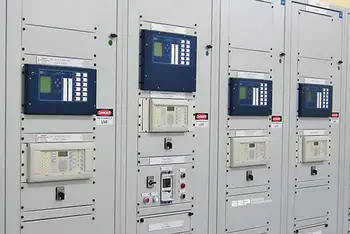
Substation Relay Protection Training

Our customized live online or in‑person group training can be delivered to your staff at your location.
  • Live Online
  • 12 hours Instructor-led
  • Group Training Available
Regular Price:
$699
Coupon Price:
$599
Reserve Your Seat Today
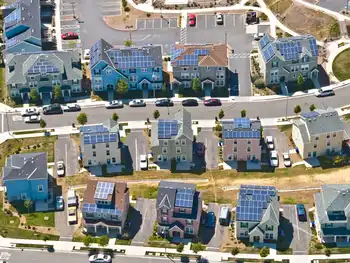
Toronto-based Stuart Energy Systems Corp. and global oil giant Shell have struck a partnership to develop technology that would enable consumers to refuel hydrogen-powered cars at home.

Shell Hydrogen, a unit of the Royal Dutch/Shell Group, announced yesterday it had signed a marketing and technology development agreement with Stuart's Vandenborre Technologies of Belgium.

Financial terms were not disclosed.

Stuart is a developer of hydrogen fuelling stations and equipment. Vandenborre, recently acquired by Stuart for $10 million, builds equipment that produces hydrogen by passing electricity through water in a process known as electrolysis.

The technology is currently sold to customers in the industrial, transportation and power markets.

Vandenborre had been working on a relationship with Shell in Europe before being acquired by Stuart, said Tony Dundas, Stuart's chief financial officer.

"They had an edge on us in terms of developing that relationship, although it's been of interest to us for a long time as well," Dundas said in an interview, noting that Stuart benefits from Vandenborre's "better positioning" in the European market.

Yesterday's agreement gives Shell Hydrogen access to Vandenborre's electrolysis technology, which holds out the promise of hydrogen-fuelled cars getting overnight refills in residential garages.

Vandenborre's equipment converts water into a slow stream of hydrogen, emitting only oxygen.

Dundas said the equipment could also be used to fuel fleets of taxis, couriers and other commercial vehicles.

Field testing of a prototype of the home-hydrogen equipment is to begin within a year, initially targeting the European market.

Stuart is counting on widespread future use of hydrogen in vehicles using either fuel cells or internal combustion engines.

However, there's no certainty vehicles that run on hydrogen will be widely available within the next decade.

Related News

FERC needs to review capacity market performance, GAO recommends

FERC Capacity Markets face scrutiny as GAO flags inconsistent data on resource adequacy and costs, urging performance goals, risk assessment, and better metrics across PJM, ISO-NE, NYISO, and MISO amid cost-recovery proposals.


Key Points

FERC capacity markets aim for resource adequacy, but GAO finds weak data and urges goals and performance reviews.

✅ GAO cites inconsistent data on resource adequacy and costs

✅ Calls for performance goals, metrics, and risk assessment

✅ Applies to PJM, ISO-NE, NYISO; MISO market is voluntary


Capacity markets may or may not be functioning properly, but FERC can't adequately make that determination, according to the GAO report.

"Available information on the level of resource adequacy ... and related costs in regions with and without capacity markets is not comprehensive or consistent," the report found. "Moreover, consistent data on historical trends in resource adequacy and related costs are not available for regions without capacity markets."

The review concluded that FERC collects some useful information in regions with and without capacity markets, but GAO said it "identified problems with data quality, such as inconsistent data."

GAO included three recommendations, including calling for FERC to take steps to improve the quality of data collected, and regularly assess the overall performance of capacity markets by developing goals for those assessments.

"FERC should develop and document an approach to regularly identify, assess, and respond to risks that capacity markets face," the report also recommended. The commission "has not established performance goals for capacity markets, measured progress against those goals, or used performance information to make changes to capacity markets as needed."

The recommendation comes as the agency is grappling with a controversial proposal to assure cost-recovery for struggling coal and nuclear plants in the power markets. So far, the proposal would only apply to power markets with capacity markets, including PJM Interconnection, the New England ISO, the New York ISO and possibly MISO. However MISO only has a voluntary capacity market, making it unclear how the proposed rule would be applied there. 


Related News

View more

Opinion: Nuclear Beyond Electricity

Nuclear decarbonization leverages low-carbon electricity, process heat, and hydrogen from advanced reactors and SMRs to electrify industry, buildings, and transport, supporting net-zero strategies and grid flexibility alongside renewables with dispatchable baseload capacity.


Key Points

Nuclear decarbonization uses reactors to supply low-carbon power, heat, and hydrogen, cutting emissions across industry.

✅ Advanced reactors and SMRs enable high-temperature process heat

✅ Nuclear-powered electrolysis and HTSE produce low-carbon hydrogen

✅ District heating from reactors reduces pollution and coal use


By Dr Henri Paillere, Head of the Planning and Economics Studies Section of the IAEA

Decarbonising the power sector will not be sufficient to achieving net-zero emissions, with assessments indicating nuclear may be essential across sectors. We also need to decarbonise the non-power sectors - transport, buildings and industry - which represent 60% of emissions from the energy sector today. The way to do that is: electrification with low-carbon electricity as much as possible; using low-carbon heat sources; and using low-carbon fuels, including hydrogen, produced from clean electricity.
The International Energy Agency (IEA) says that: 'Almost half of the emissions reductions needed to reach net zero by 2050 will need to come from technologies that have not reached the market today.' So there is a need to innovate and push the research, development and deployment of technologies. That includes nuclear beyond electricity.

Today, most of the scenario projections see nuclear's role ONLY in the power sector, despite ongoing debates over whether nuclear power is in decline globally, but increased electrification will require more low-carbon electricity, so potentially more nuclear. Nuclear energy is also a source of low-carbon heat, and could also be used to produce low-carbon fuels such as hydrogen. This is a virtually untapped potential.

There is an opportunity for the nuclear energy sector - from advanced reactors, next-gen nuclear small modular reactors, and non-power applications - but it requires a level playing field, not only in terms of financing today's technologies, but also in terms of promoting innovation and supporting research up to market deployment. And of course technology readiness and economics will be key to their success.

On process heat and district heating, I would draw attention to the fact there have been decades of experience in nuclear district heating. Not well spread, but experience nonetheless, in Russia, Hungary and Switzerland. Last year, we had two new projects. One floating nuclear power plant in Russia (Akademik Lomonosov), which provides not only electricity but district heating to the region of Pevek where it is connected. And in China, the Haiyang nuclear power plant (AP1000 technology) has started delivering commercial district heating. In China, there is an additional motivation to reducing emissions, namely to cut air pollution because in northern China a lot of the heating in winter is provided by coal-fired boilers. By going nuclear with district heating they are therefore cutting down on this pollution and helping with reducing carbon emissions as well. And Poland is looking at high-temperature reactors to replace its fleet of coal-fired boilers and so that's a technology that could also be a game-changer on the industry side.

There have also been decades of research into the production of hydrogen using nuclear energy, but no real deployment. Now, from a climate point of view, there is a clear drive to find substitute fuels for the hydrocarbon fuels that we use today, and multiple new nuclear stations are seen by industry leaders as necessary to meet net-zero targets. In the near term, we will be able to produce hydrogen with electrolysis using low-carbon electricity, from renewables and nuclear. But the cheapest source of low-carbon power is from the long-term operation of existing nuclear power plants which, combined with their high capacity factors, can give the cheapest low-carbon hydrogen of all.

In the mid to long term, there is research on-going with processes that are more efficient than low-temperature electrolysis, which is high temperature steam electrolysis or thermal splitting of water. These may offer higher efficiencies and effectiveness but they also require advanced reactors that are still under development. Demonstration projects are being considered in several countries and we at the IAEA are developing a publication that looks into the business opportunities for nuclear production of hydrogen from existing reactors. In some countries, there is a need to boost the economics of the existing fleet, especially in the electricity systems where you have low or even negative market prices for electricity. So, we are looking at other products that have higher values to improve the competitiveness of existing nuclear power plants.

The future means not only looking at electricity, but also at industry and transport, and so integrated energy systems. Electricity will be the main workhorse of our global decarbonisation effort, but through heat and hydrogen. How you model this is the object of a lot of research work being done by different institutes and we at the IAEA are developing some modelling capabilities with the objective of optimising low-carbon emissions and overall costs.

This is just a picture of what the future might look like: a low-carbon power system with nuclear lightwater reactors (large reactors, small modular reactors and fast reactors) drawing on the green industrial revolution reactor waves in planning; solar, wind, anything that produces low-carbon electricity that can be used to electrify industry, transport, and the heating and cooling of buildings. But we know there is a need for high-temperature process steam that electricity cannot bring but which can be delivered directly by high-temperature reactors. And there are a number of ways of producing low-carbon hydrogen. The beauty of hydrogen is that it can be stored and it could possibly be injected into gas networks that could be run in the future on 100% hydrogen, and this could be converted back into electricity.

So, for decarbonising power, there are many options - nuclear, hydro, variable renewables, with renewables poised to surpass coal in global generation, and fossil with carbon capture and storage - and it's up to countries and industries to invest in the ones they prefer. We find that nuclear can actually reduce the overall cost of systems due to its dispatchability and the fact that variable renewables have a cost because of their intermittency. There is a need for appropriate market designs and the role of governments to encourage investments in nuclear.

Decarbonising other sectors will be as important as decarbonising electricity, from ways to produce low-carbon heat and low-carbon hydrogen. It's not so obvious who will be the clear winners, but I would say that since nuclear can produce all three low-carbon vectors - electricity, heat and hydrogen - it should have the advantage.
We at the IAEA will be organising a webinar next month with the IEA looking at long-term nuclear projections in a net-zero world, building on IAEA analysis on COVID-19 and low-carbon electricity insights. That will be our contribution from the point of view of nuclear to the IEA's special report on roadmaps to net zero that it will publish in May.


Related News

View more

UK homes can become virtual power plants to avoid outages

Demand Flexibility Service rewards households and businesses for shifting peak-time electricity use, enhancing grid balancing, energy security, and net zero goals with ESO and Ofgem support, virtual power plants, and 2GW capacity this winter.


Key Points

A grid program paying homes and businesses to shift peak demand, boosting energy security and lowering winter costs.

✅ Pays £3,000/MWh for reduced peak-time usage

✅ Targets at least 2GW via virtual power plants

✅ Rolled out by suppliers with Ofgem and ESO


This month we published our analysis of the British electricity system this winter. Our message is clear: in the base case our analysis indicates that supply margins are expected to be adequate, however this winter will undoubtedly be challenging, with high winter energy costs adding pressure. Therefore, all of us in the electricity system operator (ESO) are working round the clock to manage the system, ensure the flow of energy and do our bit to keep costs down for consumers.

One of the tools we have developed is the demand flexibility service, designed to complement efforts to end the link between gas and electricity prices and reduce bills. From November, this new capability will reward homes and businesses for shifting their electricity consumption at peak times. And we are working with the government, businesses and energy providers to encourage as high a level of take-up as possible. We are confident this innovative approach can provide at least 2 gigawatts of power – about a million homes’ worth.

What began as an initiative to help achieve net zero and keep costs down is also proving to be an important tool in ensuring Britain’s energy security, alongside the Energy Security Bill progressing into law.

We are particularly keen to get businesses involved right across Britain. When the Guardian first reported on this service we had calls from businesses ranging from multinationals to an owner of a fish and chip shop asking how they could do their bit and get signed up.

We can now confirm our proposals for how much people and businesses can be paid for shifting their electricity use outside peak times. We anticipate paying a rate of £3,000 per megawatt hour, reflecting the dynamics of UK natural gas and electricity markets today. Businesses and homes can become virtual power plants and, crucially, get paid like one too. For a consumer that could mean a typical household could save approximately £100, and industrial and commercial businesses with larger energy usage could save multiples of this.

We are working with Ofgem to get this scheme launched in November and for it to be rolled out through energy suppliers. If you are interested in participating, or understanding what you could get paid, please contact your energy supplier.

Innovations such as these have never mattered more. Vladimir Putin’s unlawful aggression means we are facing unprecedented energy market volatility, across the continent where Europe’s worst energy nightmare is becoming reality, and pressures on energy supplies this winter.

As a result of Russia’s war in Ukraine, European gas is scarce and prices are high, prompting Europe to weigh emergency measures to limit electricity prices amid the crisis. Alongside this, France’s nuclear fleet has experienced a higher number of outages than expected. Energy shortages in Europe could have knock-on implications for energy supply in Britain.

We have put in place additional contingency arrangements for this winter. For example, the ability to call on generators to fire-up emergency coal units, even as the crisis is a wake-up call to ditch fossil fuels for many, giving Britain 2GW of additional capacity.

We need to be clear, it is possible that without these measures supply could be interrupted for some customers for limited periods of time. This could eventually force us to initiate a temporary rota of planned electricity outages, meaning that some customers could be without power for up to three hours at a time through a process called the electricity supply emergency code (ESEC).

Under the ESEC process we would advise the public the day before any disconnections. We are working with government and industry on planning for this so that the message can be spread across all communities as quickly and accurately as possible. This would include press conferences, social media campaigns, and working with influencers in different communities.


Related News

View more

Venezuela: Electricity Recovery Continues as US Withdraws Diplomatic Staff

Venezuela Power Outage cripples the national grid after a massive blackout; alleged cyber attacks at Guri Dam and Caracas, damaged transmission lines, CORPOELEC restoration, looting, water shortages, and sanctions pressure compound recovery.


Key Points

A March 2019 blackout crippling Venezuela's grid amid alleged cyber attacks, equipment failures, and slow restoration.

✅ Power restored partially after 96 hours across all states

✅ Alleged cyber attacks at Guri Dam and Caracas systems

✅ CORPOELEC urges reduced load during grid stabilization


Venezuelan authorities continue working to bring back online the electric grid following a massive outage that started on Thursday, March 7.

According to on-the-ground testimonies and official sources, power finally began to reach Venezuela’s western states, including Merida and Zulia, on Monday night, around 96 hours after the blackout started. Electricity has now been restored at least in some areas of every state, with authorities urging citizens, as seen in Ukraine's efforts to keep lights on during crisis, to avoid using heavy usage devices while efforts to restore the whole grid continue.

President Nicolas Maduro gave a televised address on Tuesday evening, offering more details about the alleged attack against the country’s electrical infrastructure. According to Maduro, both the computerized system in the Guri Dam, on Thursday afternoon, and the central electrical “brain” in Caracas, on Saturday morning, suffered cyber attacks, while recovery was delayed by physical attacks against transmission lines and electrical substations, a pattern seen in power outages in western Ukraine as well.

“The recovery has been a miracle by CORPOELEC (electricity) workers” he said, vowing that a “battle” had been won.

Maduro claimed that the attacks were directed from Chicago and Houston and that more evidence would be presented soon. The Venezuelan president had announced on Monday that two arrests were made in connection to alleged acts of sabotage against the communications system in the Guri Dam.

Venezuela’s electrical grid has suffered from poor maintenance and sabotage in recent years, with infrastructure strained by under-investment and Washington’s economic sanctions further compounding difficulties, with parallels to electricity inequality in California highlighting broader systemic challenges, though causes differ.

The extended power outage saw episodes of lootings take place, especially in the Zulia capital of Maracaibo. Food warehouses, supermarkets and a shopping mall were targeted according to reports and footage on social media.

Isolated episodes of protests and lootings were also reported in other cities, including some sectors of Caracas. A video spread on social media appeared to show a violent confrontation in the eastern city of Maturin in which a National Guardsman was shot dead.

While electricity has been gradually restored, public transportation and other services have yet to be reactivated, a contrast with U.S. grid resilience during COVID-19 where power systems remained stable, with the government suspending work and school activities until Wednesday.

In Caracas, attention has now turned to water. Shortages started to be felt after the water pumping system in the nearby Tuy valley was shut down amid the electricity blackout, underscoring that electricity is civilization in conflict zones, as interdependent systems cascade. Authorities announced on Tuesday afternoon that the system was due to resume supplying water to the capital metropolitan region.

Some communities protested the lack of water on Monday and long queues formed at water distribution points, with local authorities looking to send water tanks to supply communities and guarantee the normal functioning of hospitals.

The Venezuelan government has yet to release any information concerning casualties in hospitals, with NGO Doctors for Health reporting 24 dead as of Monday night following alleged contact with multiple hospitals. Higher figures, including claims of 80 newborns dead in Maracaibo, have been denied by local sources.

Self-proclaimed “Interim President” Juan Guaido has blamed the electricity crisis on government mismanagement and corruption, dismissing the government’s cyber attack thesis on the grounds that the system is analog, and attributing the national outage to a lack of qualified personnel needed to reactivate the grid. However, these claims have been called into question by people with knowledge of the system.

Guaido called for street protests on Tuesday afternoon which saw small groups momentarily take to streets in Caracas and other cities, or banging pots and pans from windows.

The opposition-controlled National Assembly, which has been in contempt of court since 2016, approved a decree on Monday declaring a state of “national alarm,” blaming the government for the current crisis and issuing instructions for public officials and security forces.

Likewise on Tuesday, Venezuelan Attorney General Tarek William Saab announced that an investigation was being opened against Guaido regarding his alleged responsibility for the recent power outage. Saab explained that this investigation would add to the previous one, opened on January 29, as well as determine responsibilities in instigating violence.


Related News

View more

Canadian Electricity Grids Increasingly Exposed to Harsh Weather

North American Grid Reliability faces extreme weather, climate change, demand spikes, and renewable variability; utilities, AESO, and NERC stress resilience, dispatchable capacity, interconnections, and grid alerts to prevent blackouts during heatwaves and cold snaps.


Key Points

North American grid reliability is the ability to meet demand during extreme weather while maintaining stability.

✅ Extreme heat and cold drive record demand and resource strain.

✅ Balance dispatchable and intermittent generation for resilience.

✅ Expand interconnections, capacity, and demand response to avert outages.


The recent alerts in Alberta's electricity grid during extreme cold have highlighted a broader North American issue, where power systems are more susceptible to being overwhelmed by extreme weather impacts on reliability.

Electricity Canada's chief executive emphasized that no part of the grid is safe from the escalating intensity and frequency of weather extremes linked to climate change across the sector.

“In recent years, during these extreme weather events, we’ve observed record highs in electricity demand,” he stated.

“It’s a nationwide phenomenon. For instance, last summer in Ontario and last winter in Quebec, we experienced unprecedented demand levels. This pattern of extremes is becoming more pronounced across the country.”

The U.S. has also experienced strain on its electricity grids due to extreme weather, with more blackouts than peers documented in studies. Texas faced power outages in 2021 due to winter storms, and California has had to issue several emergency grid alerts during heat waves.

In Canada, Albertans received a government emergency alert two weeks ago, urging an immediate reduction in electricity use to prevent potential rotating blackouts as temperatures neared -40°C. No blackouts occurred, with a notable decrease in electricity use following the alert, according to the Alberta Electric System Operator (AESO).

AESO's data indicates an increase in grid alerts in Alberta for both heatwaves and cold spells, reflecting dangerous vulnerabilities noted nationwide. The period between 2017 and 2020 saw only four alerts, in contrast to 17 since 2021.

Alberta's electricity grid reliability has sparked political debate, including proposals for a western Canadian grid to improve reliability, particularly with the transition from coal-fired plants to increased reliance on intermittent wind and solar power. Despite this debate, the AESO noted that the crisis eased when wind and solar generation resumed, despite challenges with two idled gas plants.

Bradley pointed out that Alberta's grid issues are not isolated. Every Canadian region is experiencing growing electricity demand, partly due to the surge in electric vehicles and clean energy technologies. No province has a complete solution yet.

“Ontario has had to request reduced consumption during heatwaves,” he noted. “Similar concerns about energy mix are present in British Columbia or Manitoba, especially now with drought affecting their hydro-dependent systems.”

The North American Electric Reliability Corporation (NERC) released a report in November warning of elevated risks across North America this winter for insufficient energy supplies, particularly under extreme conditions like prolonged cold snaps.

While the U.S. is generally more susceptible to winter grid disruptions, and summer blackout warnings remain a concern, the report also highlights risks in parts of Canada. Saskatchewan faces a “high” risk due to increased demand, power plant retirements, and maintenance, whereas Quebec and the Maritimes are at “elevated risk.”

Mark Olson, NERC’s manager of reliability assessments, mentioned that Alberta wasn't initially considered at risk, illustrating the challenges in predicting electricity demand amid intensifying extreme weather.

Rob Thornton, president and CEO of the International District Energy Association, acknowledged public concerns about grid alerts but reassured that the risk of a catastrophic grid failure remains very low.

“The North American grid is exceptionally reliable. It’s a remarkably efficient system,” he said.

However, Thornton emphasized the importance of policies for a resilient and reliable electricity system through 2050 and beyond. This involves balancing dispatchable and intermittent electricity sources, investing in extra capacity, enhancing macrogrids and inter-jurisdictional connections, and more.

“These grid alerts raise awareness, if not anxiety, about our energy future,” Thornton concluded.


Related News

View more

Canada Finalizes Clean Electricity Regulations for 2050

Canada Clean Electricity Regulations align climate policy with grid reliability, scaling renewables, energy storage, and low-carbon power to reach net-zero by 2050 while maintaining affordability through federal incentives, provincial flexibility, and investment.


Key Points

Nationwide rules to decarbonize power by 2050, capping emissions and protecting grid reliability and affordability.

✅ Net-zero electricity by 2050 with strict emissions limits

✅ Provincial flexibility and federal investments to cut costs

✅ Scales renewables, storage, and clean firm power for reliability


Canada's final Clean Electricity Regulations, unveiled in December 2024, alongside complementary provincial frameworks such as Ontario's clean electricity regulations that guide provincial implementation, represent a critical step toward ensuring a sustainable and reliable energy future. With electricity demand set to rise as the country’s population and economy grow, the Canadian government has put forward a robust plan that balances climate goals with the need for reliable, affordable power.

The regulations are designed to reduce greenhouse gas emissions from the electricity sector, which is already one of Canada's cleanest, with 85% of its electricity sourced from renewable energies like hydro, wind, and solar, and growing attention to clean grids and batteries nationwide. The target is to achieve net-zero emissions in electricity generation by 2050, a goal that will support the country’s broader climate ambitions.

One of the central goals of the Clean Electricity Regulations is to make sure that Canada’s power grid can accommodate future demand in light of a critical electrical supply crunch identified by analysts, while ensuring that emissions are cut effectively. The regulations set strict pollution limits but allow flexibility for provinces and territories to meet these goals in ways that suit their local circumstances. This approach recognizes the diverse energy resources across Canada, from the large-scale hydroelectric capacity in Quebec to the growing wind and solar projects in the West.

A key benefit of these regulations is the assurance that they will not result in higher electricity rates for most Canadians. In fact, according to government analyses, and resources like the online CER bill tool that explain how fees and usage affect charges, the regulations are expected to have a neutral or even slightly positive impact on electricity costs. This is due in part to significant federal investments in the electricity sector, totaling over $60 billion. These investments are intended to support the transition to clean electricity while minimizing costs for consumers.

The shift to clean electricity is also expected to generate significant savings for Canadian households. As energy prices continue to fluctuate, clean electricity, especially from renewable sources, is becoming more cost-competitive compared to fossil fuels. Over the next decade, this transition is expected to result in $15 billion in total savings for Canadians, with 84% of households projected to benefit from lower energy bills. The savings are a result of federal incentives aimed at encouraging the adoption of efficient electric appliances, vehicles, and heating systems.

Moreover, reducing emissions from the electricity sector will play a major role in cutting Canada’s overall greenhouse gas pollution. By 2050, it’s estimated that these regulations will reduce nearly 181 megatonnes of emissions, which is equivalent to removing over 55 million cars from the road. This is a crucial step in meeting Canada’s climate targets and mitigating the impacts of climate change, such as extreme weather events, which have already led to significant economic losses.

The economic benefits extend beyond savings on energy bills. The regulations and the broader clean electricity strategy will create substantial job opportunities. The clean energy sector, which includes jobs in wind, solar, and nuclear power, is poised for massive growth, and provinces like Alberta have outlined a path to clean electricity to support that momentum. It’s estimated that by 2030, the transition to clean electricity could create 400,000 new jobs, with further job growth projected for the years to come. These jobs are expected to include roles in both the construction and operation of new energy infrastructure, many of which will be unionized positions offering good wages and benefits.

To help meet the rising demand for clean energy, the government’s strategy emphasizes technological innovation and the integration of new energy sources, including market design updates such as proposed market changes that can enable investment. Renewable energy technologies such as wind and solar power have become increasingly cost-competitive, and their continued development is expected to reduce the overall cost of electricity generation. The regulations also encourage the adoption of energy storage solutions, which are essential for managing the intermittent nature of renewable energy sources.

In addition to the environmental and economic benefits, the Clean Electricity Regulations will help improve public health. Air pollution from fossil fuel power generation is a major contributor to respiratory illnesses and other health issues. By transitioning to clean energy sources, Canada can reduce harmful air pollutants, leading to better health outcomes and a lower burden on the healthcare system.

As Canada moves toward a net-zero electricity grid, including the federal 2035 target that some have criticized as changing goalposts in Saskatchewan, the Clean Electricity Regulations represent a comprehensive and flexible approach to managing the energy transition. With significant investments in clean energy technologies and the adoption of policies that ensure affordable electricity for all Canadians, the government is setting the stage for a cleaner, more sustainable future. These efforts will not only help Canada meet its climate goals but also create a thriving clean energy economy that benefits workers, businesses, and families across the country.


Related News

View more

Sign Up for Electricity Forum’s Newsletter

Stay informed with our FREE Newsletter — get the latest news, breakthrough technologies, and expert insights, delivered straight to your inbox.

Electricity Today T&D Magazine Subscribe for FREE

Stay informed with the latest T&D policies and technologies.
  • Timely insights from industry experts
  • Practical solutions T&D engineers
  • Free access to every issue

Live Online & In-person Group Training

Advantages To Instructor-Led Training – Instructor-Led Course, Customized Training, Multiple Locations, Economical, CEU Credits, Course Discounts.

Request For Quotation

Whether you would prefer Live Online or In-Person instruction, our electrical training courses can be tailored to meet your company's specific requirements and delivered to your employees in one location or at various locations.