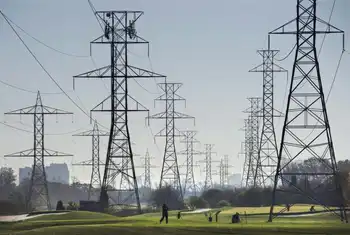
Judge stops SWEPCO coal plant construction

By PennEnergy


CSA Z463 Electrical Maintenance

Our customized live online or in‑person group training can be delivered to your staff at your location.
  • Live Online
  • 6 hours Instructor-led
  • Group Training Available
Regular Price:
$249
Coupon Price:
$199
Reserve Your Seat Today
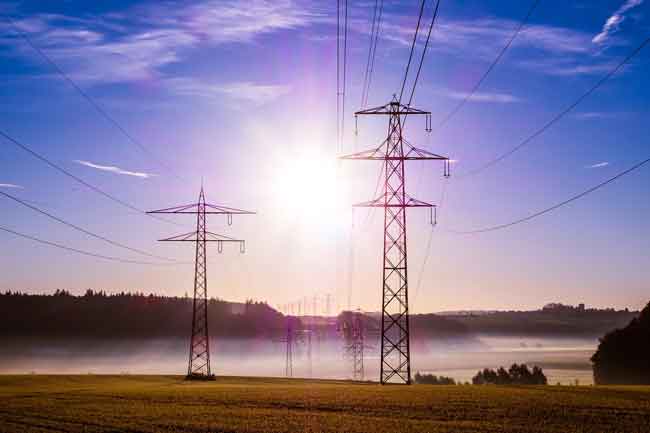
In response to a motions filed on behalf of the Sierra Club and other environmental groups, U.S. District Judge Bill Wilson has issued an injunction ceasing construction on a portion of the area where Southwestern Electric Power Co. SWEPCO is developing the $1.7 billion John W. Turk, Jr. Turk coal-fired power plant.

SWEPCO is building the Turk power plant on a 2,800-acre tract between Fulton and McNab, Arkansas. The 600-megawatt plant will utilize an advanced coal combustion technology called “ultra-supercritical,” that will be the first of its type to go into operation in the U.S.

Judge Wilson ruled that conservationist had successfully shown “a likelihood of irreparable harm to the environment” if construction was not halted citing that the U.S. Army Corps of Engineers had not properly evaluated the environmental impact of the project as its approval relied on a state permit that was overturned by the Arkansas Supreme Court that spring.

Judge WilsonÂ’s order stops work that includes the discharge of dredge or fill material into wetlands, the placement of a water-intake structure on the bank of the Little River and the spanning of transmission lines across the Little and Red rivers.

During proceedings SWEPCO argued that a delay of 12-months would cost the company more than $309 million and effect employment for 1,600 workers. SWEPCO also contested that halting the project could ultimately increase the risk of electrical power shortages as well as “higher and more volatile electricity costs” for consumers.

Judge Wilson countered by calling the arguments presented by the utility “pure conjecture” and outlining that his ruling only affected an 8 acre area of the construction site which would allow SWEPCO to easily recoup any losses if the project is completed.

SWEPCO said it would begin work to comply with the order within the next few days but that it would "exhaust all legal remedies" to allow the utility to move ahead with construction of the plant.

Related News

What 2018 Grid Edge Trends Reveal About 2019

2019 Grid Edge Trends highlight evolving demand response, DER orchestration, real-time operations, AMI data, and EV charging, as wholesale markets seek flexibility and resiliency amid tighter reserve margins and fossil baseload retirements.


Key Points

Shifts toward DER-enabled demand response and real-time, behind-the-meter flexibility.

✅ Real-time DER dispatch enhances reliability during tight reserves

✅ AMI and ICT improve forecasting, monitoring, and control of resources

✅ Demand response shifts toward aggregated behind-the-meter orchestration


Which grid edge trends will continue into 2019 as the digital grid matures and what kind of disruption is on the horizon in the coming year?

From advanced metering infrastructure endpoints to electric-vehicle chargers, grid edge venture capital investments to demand response events, hundreds of data points go into tracking new trends at the edge of the grid amid ongoing grid modernization discussions across utilities.

Trends across these variables tell a story of transition, but perhaps not yet transformation. Customers hold more power than ever before in 2019, with utilities and vendors innovating to take advantage of new opportunities behind the meter. Meanwhile, external factors can always throw things off-course, including the data center boom that is posing new power challenges, and reliability is top of mind in light of last year's extreme weather events. What does the 2018 data say about 2019?

For one thing, demand response evolved, enabled by new information and communications technology. Last year, wholesale market operators increasingly sought to leverage the dispatch of distributed energy resource flexibility in close to real time. Three independent system operators and regional transmission organizations called on demand response five times in total for relief in the summer of 2018, including the NYISO.

The demand response events called in the last 18 months send a clear message: Grid operators will continue to call events year-round. This story unfolds as reserve margins continue to tighten, fossil baseload generation retirements continue, and system operators are increasingly faced with proving the resiliency and reliability of their systems while efforts to invest in a smarter electricity infrastructure gain momentum across the country.

In 2019, the total amount of flexible demand response capacity for wholesale market participation will remain about the same. However, the way operators and aggregators are using demand response is changing as information and communications technology systems improve and utilities are using AI to adapt to electricity demands, allowing the behavior of resources to be more accurately forecasted, monitored and controlled.

These improvements are allowing customer-sited resources to offer  flexibility services closer to real-time operations and become more reactive to system needs. At the same time, traditional demand response will continue to evolve toward the orchestration of DERs as an aggregate flexible resource to better enable growing levels of renewable energy on the grid.


Related News

View more

The Haves and Have-Nots of Electricity in California

California Public Safety Power Shutoffs highlight wildfire prevention as PG&E outages disrupt schools, businesses, and rural communities, driving generator use, economic hardship, and emergency preparedness across Northern California during high-wind events.


Key Points

Utility outages to reduce wildfire risk during extreme winds, impacting homes and businesses in high-risk California.

✅ PG&E cuts power during high winds to prevent wildfires

✅ Costs rise for generators, fuel, batteries, and spoiled food

✅ Rural, low-income communities face greater economic losses


The intentional blackout by California’s largest utility this week put Forest Jones out of work and his son out of school. On Friday morning Mr. Jones, a handyman and single father, sat in his apartment above a tattoo parlor waiting for the power to come back on and for school to reopen.

“I’ll probably lose $400 or $500 dollars because of this,” said Mr. Jones, who lives in the town of Paradise, which was razed by fire last year and is slowly rebuilding. “Things have been really tough up here.”

Millions of people were affected by the blackout, which spanned the outskirts of Silicon Valley to the forests of Humboldt County near the Oregon border. But the outage, which the power company said was necessary to reduce wildfire risk across the region, also drew a line between those who were merely inconvenienced and those who faced a major financial hardship.

To have the lights on, the television running and kitchen appliances humming is often taken for granted in America, even as U.S. grid during coronavirus questions persisted. During California’s blackout it became an economic privilege.

The economic impacts of the shut-off were especially acute in rural, northern towns like Paradise, where incomes are a fraction of those in the San Francisco Bay Area.

Both wealthy and poorer areas were affected by the blackout but interviews across the state suggested that being forced off the grid disproportionately hurt the less affluent. One family in Humboldt County said they had spent $150 on batteries and water alone during the shutdown.

“To be prepared costs money,” Sue Warhaftig, a massage therapist who lives in Mill Valley, a wealthy suburb across the Golden Gate Bridge from San Francisco. Ms. Warhaftig spent around two days without electricity but said she had been spared from significant sacrifices during the blackout.

She invested in a generator to keep the refrigerator running and to provide some light. She cooked in the family’s Volkswagen camper van in her driveway. At night she watched Netflix on her phone, which she was able to charge with the generator. Her husband, a businessman, is in London on a work trip. Her two sons, both grown, live in Southern California and Seattle.

“We were inconvenienced but life wasn’t interrupted,” Ms. Warhaftig said. “But so many people’s lives were.

Pacific Gas & Electric restored power to large sections of Northern California on Friday, including Paradise, where the electricity came back on in the afternoon. But hundreds of thousands of people in other areas remained in the dark. The carcasses of burned cars still littered the landscape around Paradise, where 86 people died in the Camp Fire last year, some of them while trying to escape.

Officials at power company said that by Saturday they hoped to have restored power to 98 percent of the customers who were affected.

The same dangerous winds that spurred the shut-off in Northern California have put firefighters to work in the south. The authorities in Los Angeles County ordered the evacuation of nearly 100,000 people on Friday as the Saddleridge Fire burned nearly 5,000 acres and destroyed 25 structures. The Sandalwood Fire, which ignited Thursday in Riverside County, had spread to more than 800 acres and destroyed 74 structures by Friday afternoon.

While this week’s outage was the first time many customers in Northern California experienced a deliberate power shut-off, residents in and around Paradise have had their power cut four times in recent months, residents say.

Many use a generator, but running one has become increasingly expensive with gasoline now at more than $4 a gallon in California.

On Friday, Dennis and Viola Timmer drove up the hill to their home in Magalia, a town adjacent to Paradise, loaded with $102 dollars of gasoline for their generators. It was their second gasoline run since the power went out Tuesday night.

The couple, retired and on a fixed income after Mr. Timmer’s time in the Navy and in construction, said the power outage had severely limited their ability to do essential tasks like cooking, or to leave the house.

“You know what it feels like? You’re in jail,” said Ms. Timmer, 72. “You can’t go anywhere with the generators running.”

Since the generators are not powerful enough to run heat or air conditioning, the couple slept in their den with an electric space heater.

“It’s really difficult because you don’t have a normal life,” Ms. Timmer said. “You’re trying to survive.”

To be sure, the shutdown has affected many people regardless of economic status, and similar disruptions abroad, like a London power outage that disrupted routines, show how widespread such challenges can be. The areas without power were as diverse as the wealthy suburbs of Silicon Valley, the old Gold Rush towns of the Sierra Nevada, the East Bay of San Francisco and the seaside city of Arcata.

Ms. Cahn’s cellphone ran out of power during the blackout and even when she managed to recharge it in her car cell service was spotty, as it was in many areas hit by the blackout.

Accustomed to staying warm at night with an electric blanket, Ms. Cahn slept under a stack of four blankets.

“I’m doing what I have to do which is not doing very much,” she said.

Further south in Marin City, Chanay Jackson stood surrounded by fumes from generators still powering parts of the city.

She said that food stamps were issued on the first of the month and that many residents who had to throw away food were out of luck.

“They’re not going to issue more food stamps just because the power went out,” Ms. Jackson said. “So they’re just screwed until next month.”

Strong winds have many times in the past caused power lines to come in contact with vegetation, igniting fires that are then propelled by the gusts, and hurricanes elsewhere have crippled infrastructure with Louisiana grid rebuild after Laura according to state officials. This was the case with the Camp Fire.

Since higher elevations had more extreme winds many of the neighborhoods where power was turned off this week were in hills and canyons, including in the Sierra Nevada.

The shut-off, which by one estimate affected a total of 2.5 million people, has come under strong criticism by residents and politicians, and warnings from Cal ISO about rolling blackouts as the power grid strained. The company’s website crashed just as customers sought information about the outage. Gov. Gavin Newsom called it unacceptable. But his comments were nuanced, criticizing the way the shut-off was handled, not the rationale for it. Mr. Newsom and others said the ravages of the Camp Fire demanded preventive action to prevent a reoccurrence.

Yet the calculus of trying to avoid deadly fires by shutting off power will continue to be debated as California enters its peak wildfire season, even as electricity reliability during COVID-19 was generally maintained for most consumers.

In the city of Grass Valley, Matthew Gottschalk said he and his wife realized that a generator was essential when they calculated that they had around $500 worth of food in their fridge.

“I don’t know what we would have done,” said Mr. Gottschalk, whose power went out Tuesday night.

His neighbors are filling coolers with ice. Everyone is hoping the power will come back on soon.

“Ice is going to run out and gas is going to run out,” he said.


Related News

View more

Wind Leading Power

UK Wind Power Surpasses Gas as offshore wind and solar drive record electricity generation, National Grid milestones, and net zero progress, despite grid capacity bottlenecks, onshore planning reforms, demand from heat pumps and transport electrification.


Key Points

A milestone where wind turbines generated more UK electricity than gas, advancing progress toward a net zero grid.

✅ Offshore wind delivered the majority of UK wind generation

✅ Grid connection delays stall billions in green projects

✅ Planning reforms may restart onshore wind development


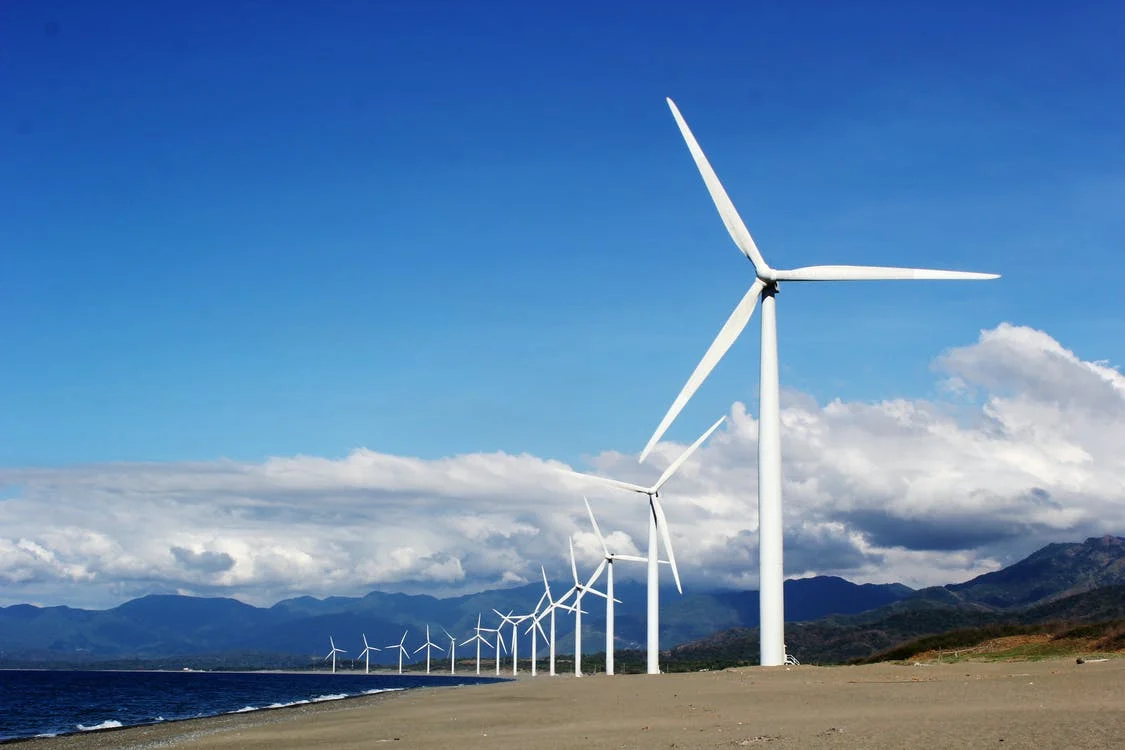
Wind turbines have generated more electricity than gas, as wind becomes the main source for the first time in the UK.

In the first three months of this year a third of the country's electricity came from wind farms, as the UK set a wind generation record that underscored the trend, research from Imperial College London has shown.

National Grid has also confirmed that April saw a record period of solar energy generation, and wind and solar outproduced nuclear in earlier milestones.

By 2035 the UK aims for all of its electricity to have net zero emissions, after a 2019 stall in low-carbon generation highlighted the challenge.

"There are still many hurdles to reaching a completely fossil fuel-free grid, but wind out-supplying gas for the first time is a genuine milestone event," said Iain Staffell, energy researcher at Imperial College and lead author of the report.

The research was commissioned by Drax Electrical Insights, which is funded by Drax energy company.

The majority of the UK's wind power has come from offshore wind farms, and the country leads the G20 for wind's electricity share according to recent analyses. Installing new onshore wind turbines has effectively been banned since 2015 in England.

Under current planning rules, companies can only apply to build onshore wind turbines on land specifically identified for development in the land-use plans drawn up by local councils. Prime Minister Rishi Sunak agreed in December to relax these planning restrictions to speed up development.

Scientists say switching to renewable power is crucial to curb the impacts of climate change, which are already being felt, including in the UK, which last year recorded its hottest year since records began.

Solar and wind have seen significant growth in the UK, with wind surpassing coal in 2016 as a milestone. In the first quarter of 2023, 42% of the UK's electricity came from renewable energy, with 33% coming from fossil fuels like gas and coal.

But BBC research revealed on Thursday that billions of pounds' worth of green energy projects are stuck on hold due to delays with getting connections to the grid, as peak power prices also climbed amid system pressures.

Some new solar and wind sites are waiting up to 10 to 15 years to be connected because of a lack of capacity in the electricity system.

And electricity only accounts for 18% of the UK's total power needs. There are many demands for energy which electricity is not meeting, such as heating our homes, manufacturing and transport.

Currently the majority of UK homes use gas for their heating - the government is seeking to move households away from gas boilers and on to heat pumps which use electricity.


Related News

View more

Ukraine has electricity reserves, no more outages planned if no new strikes

Ukraine Electricity Outages may pause as the grid stabilizes, with energy infrastructure repairs, generators, and reserves supporting supply; officials cite no rationing absent new Russian strikes, while Odesa networks recover and Ukrenergo completes restoration works.


Key Points

Planned power cuts in Ukraine paused as grid capacity, repairs, and reserves improve, barring new strikes.

✅ No rationing if Russia halts strikes on energy infrastructure

✅ Grid repairs and reserves meet demand for third straight week

✅ Odesa networks restored; Ukrenergo crews redeploy to repairs


Ukraine plans no more outages to ration electricity if there are no new strikes and has been able to amass some power reserves, the energy minister said on Saturday, as it continues to keep the lights on despite months of interruptions caused by Russian bombings.

"Electricity restrictions will not be introduced, provided there are no Russian strikes on infrastructure facilities," Energy Minister Herman Halushchenko said in remarks posted on the ministry's Telegram messaging platform.

"Outages will only be used for repairs."

After multiple battlefield setbacks and scaling down its troop operation to Ukraine's east and south, Russia in October began bombing the country's energy infrastructure, as winter loomed over the battlefront, leaving millions without power and heat for days on end.

The temperature in winter months often stays below freezing across most of Ukraine. Halushchenko said this heating season has been extremely difficult.

"But our power engineers managed to maintain the power system, and for the third week in a row, electricity generation has ensured consumption needs, we have reserves," Halushchenko said.

Ukraine, which does not produce power generators itself, has imported and received thousands of them over the past few years, with the U.S. pledging a further $10 billion on Friday to aid Kyiv's energy needs, despite ended grid restoration support reported earlier.

Separately, the chief executive of state grid operator Ukrenergo, Volodymyr Kudrytskyi, said that repair works on the damaged infrastructure in the city of Odesa suffered earlier this month, has been finished, highlighting how Ukraine has even helped Spain amid blackouts while managing its own network challenges.

"Starting this evening, there is more light in Odesa," Kudrytskyi wrote on his Facebook page. "The crews that worked on restoring networks are moving to other facilities."

A Feb. 4 fire that broke out at an overloaded power station left hundreds of thousands of residents without electricity, prompting many to adopt new energy solutions to cope with outages.


Related News

View more

Florida says no to $400M in federal solar energy incentives

Florida Solar for All Opt-Out highlights Gov. DeSantis rejecting EPA grant funds under the Inflation Reduction Act, limiting low-income households' access to solar panels, clean energy programs, and promised electricity savings across disadvantaged communities.


Key Points

Florida Solar for All Opt-Out is the state declining EPA grants, restricting low-income access to solar energy savings.

✅ EPA grant under IRA aimed at low-income solar

✅ Estimated 20% electricity bill savings missed

✅ Florida lacks PPAs and renewable standards


Florida has passed up on up to $400 million in federal money that would have helped low-income households install solar panels.

A $7 billion grant “competition” to promote clean energy in disadvantaged communities by providing low-income households with access to affordable solar energy was introduced by President Joe Biden earlier this year, and despite his climate law's mixed results in practice, none of that money will reach Florida households.

The Environmental Protection Agency announced the competition in June as part of Biden’s Inflation Reduction Act. However, Florida Gov. Ron DeSantis has decided to pass on the $400 million up for grabs by choosing to opt out of the opportunity.

Inflation Reduction Act:What is the Inflation Reduction Act? Everything to know about one of Biden's big laws

The program would have helped Florida households reduce their electricity costs by a minimum of 20% during a key time when Floridians are leaving in droves due to a rising cost of living associated with soaring insurance costs, inflation, and proposed FPL rate hikes statewide.

Florida was one of six other states that chose not to apply for the money.

President Joe Biden announced a $7 billion “competition” to promote clean energy in disadvantaged communities.

The opportunity, named “Solar for All,” was announced by the EPA in June and promised to provide up to $7 billion in grants to states, territories, tribal governments, municipalities, and nonprofits to expand the number of low-income and disadvantaged communities primed for residential solar investment — enabling millions of low-income households to access affordable, resilient and clean solar energy.

The grant is intended to help lower energy costs for families, create jobs and help reduce greenhouse effects that accelerate global climate change by providing financial support and incentives to communities that were previously locked out of investments.


How much money would Floridians save under the ‘Solar for All’ solar panel grant?

The program aims to reduce household electricity costs by at least 20%. Florida households paid an average of $154.51 per month for electricity in 2022, just over 14% of the national average of $135.25, and debates over hurricane rate surcharges continue to shape customer bills, according to the U.S. Energy Information Administration. A 20% savings would drop those bills down to around $123 per month.

On the campaign trail, DeSantis has pledged to unravel Biden’s green energy agenda if elected president, amid escalating solar policy battles nationwide, slamming the Inflation Reduction Act and what he called “a concerted effort to ramp up the fear when it comes to things like global warming and climate change.”

His energy agenda includes ending Biden’s subsidies for electric cars while pushing policies that he says would ramp up domestic oil production.

“The subsidies are going to drive inflation higher,” DeSantis said at an event in September. “It’s not going to help with interest rates, and it is certainly not going to help with our unsustainable debt levels.”

DeSantis heading to third debate:As he enters third debate, Ron DeSantis has a big Nikki Haley problem

DeSantis’ plan to curb clean energy usage in Florida seems to be at odds with the state as a whole, and the region's evolving strategy for the South underscores why it has been ranked among the top three states to go solar since 2019, according to the Solar Energy Industries Association (SEIA).

SEIA also shows, however, that Florida lags behind many other states when it comes to solar policies, as utilities tilt the solar market in ways that influence policy outcomes statewide. Florida, for instance, has no renewable energy standards, which are used to increase the use of renewable energy sources for electricity by requiring or encouraging suppliers to provide customers with a stated minimum share of electricity from eligible renewable resources, according to the EIA.

Power purchase agreements, which can help lower the cost of going solar through third-party financing, are also not allowed in Florida, with court rulings on monopolies reinforcing the existing market structure. And there have been other policies implemented that drove other potential solar investments to other states.


Related News

View more

Financial update from N.L energy corp. reflects pandemic's impact

Nalcor Energy Pandemic Loss underscores Muskrat Falls delays, hydroelectric risks, oil price shocks, and COVID-19 impacts, affecting ratepayers, provincial debt, timelines, and software commissioning for the Churchill River project and Atlantic Canada subsea transmission.


Key Points

A $171M Q1 2020 downturn linked to COVID-19, oil price collapse, and Muskrat Falls delays impacting schedules and costs.

✅ Q1 2020 profit swing: +$92M to -$171M amid oil price crash

✅ Muskrat Falls timeline slips; cost may reach $13.1B

✅ Software, workforce, COVID-19 constraints slow commissioning


Newfoundland and Labrador's Crown energy corporation reported a pandemic-related profit loss from the first quarter of 2020 on Tuesday, along with further complications to the beleaguered Muskrat Falls hydroelectric project.

Nalcor Energy recorded a profit loss of $171 million in the first quarter of 2020, down from a $92 million profit in the same period last year, due in part to falling oil prices during the COVID-19 pandemic.

The company released its financial statements for 2019 and the first quarter of 2020 on Tuesday, and officials discussed the numbers in a livestreamed presentation that detailed the impact of the global health crisis on the company's operations.

The loss in the first quarter was caused by lower profits from electricity sales and a drop in oil prices due to the pandemic and other global events, company officials said.

The novel coronavirus also added to the troubles plaguing the Muskrat Falls hydroelectric dam on Labrador's Churchill River, amid Quebec-N.L. energy tensions that long predate the pandemic.

Work at the remote site stopped in March over concerns about spreading the virus. Operations have been resuming slowly, with a reduced workforce tackling the remaining jobs.

Officials with Nalcor said it will likely be another year before the megaproject is complete.

CEO Stan Marshall estimates the months of delays could bring the total cost to $13.1 billion including financing, up from the previous estimate of $12.7 billion -- though the total impact of the coronavirus on the project's price tag has yet to be determined.

"If we're going to shut down again, all of that's wrong," Marshall said. "But otherwise, we can just carry on and we'll have a good idea of the productivity level. I'm hoping that by September we'll have a more definitive number here."

The 824 megawatt hydroelectric dam will eventually send power to Newfoundland, and later Nova Scotia, through subsea cables, even as Nova Scotia boosts wind and solar in its energy mix.

It has seen costs essentially double since it was approved in 2012, and faced significant delays even before pandemic-forced shutdowns in North America and around the world this spring.

Cost and schedule overruns were the subject of a sweeping inquiry that held hearings last year, while broader generation choices like biomass use have drawn scrutiny as well.

The commissioner's report faulted previous governments for failing to protect residents by proceeding with the project no matter what, and for placing trust in Nalcor executives who "frequently" concealed information about schedule, cost and related risks.

Some of the latest delays have come from challenges with the development of software required to run the transmission link between Labrador and Newfoundland, where winter reliability issues have been flagged in reports.

The software is still being worked out, Marshall said Tuesday, and the four units at the dam will come online gradually over the next year.

"It's not an all or nothing thing," Marshall said of the final work stages.
Nalcor's financial snapshot follows a bleak fiscal update from the province this month. The Liberal government reported a net debt of $14.2 billion and a deficit of more than $1.1 billion, even as a recent Churchill Falls deal promised new revenues for the province, citing challenges from pandemic-related closures and oil production shutdowns.

Finance Minister Tom Osborne said at the time that help from Ottawa will be necessary to get the province's finances back on track.

Muskrat Falls represents about one-third of the province's debt, and is set to produce more power than the province of about half a million people requires. Anticipated rate increases due to the ballooning costs and questions about Muskrat Falls benefits have posed a significant political challenge for the provincial government.

Ottawa has agreed to work with Newfoundland and Labrador on a rewrite of the project's financial structure, scrapping the format agreed upon in past federal-provincial loan agreements in order to ease the burden on ratepayers, while some argue independent planning would better safeguard ratepayers.

Marshall, a former Fortis CEO who was brought in to lead Nalcor in 2016, has called the project a "boondoggle" and committed to seeing it completed within four years. Though that plan has been disrupted by the pandemic, Marshall said the end is in sight.

"I'm looking forward to a year from now. And I hope to be gone," Marshall said.


Related News

View more

Sign Up for Electricity Forum’s Newsletter

Stay informed with our FREE Newsletter — get the latest news, breakthrough technologies, and expert insights, delivered straight to your inbox.

Electricity Today T&D Magazine Subscribe for FREE

Stay informed with the latest T&D policies and technologies.
  • Timely insights from industry experts
  • Practical solutions T&D engineers
  • Free access to every issue

Live Online & In-person Group Training

Advantages To Instructor-Led Training – Instructor-Led Course, Customized Training, Multiple Locations, Economical, CEU Credits, Course Discounts.

Request For Quotation

Whether you would prefer Live Online or In-Person instruction, our electrical training courses can be tailored to meet your company's specific requirements and delivered to your employees in one location or at various locations.