NFPA 70E Training - 2027 Edition - Arc Flash and Electrical Safety Course
Our customized live online or in‑person group training can be delivered to your staff at your location.

- Live Online
- 6 hours Instructor-led
- Group Training Available
Regular Price:
$199
Coupon Price:
$149
Two of the bruised and bushed combatants in the recent California electricity crisis brushed themselves off and shook hands on a renegotiated contract that will trim more than $1 billion off the future energy tab of the state.
Gov. Gray Davis, who weathered the political storm of the power crunch of 2000-2001 and won re-election this month, announced that the state had agreed on a restructuring of its $4.3 billion, 10-year supply pact with Williams Company that will reduce the state's cost by $1.4 billion.
"This is an important victory for the ratepayers," an exuberant Davis declared. "The new contract provides us with reliable power delivered at more favorable terms."
The words "win-win" weren't being bandied about the meeting, however the renegotiation does salvage something out of a messy situation for both Davis and Williams as the fallout from the sometimes desperate days of the power crunch continues to dust the political landscape in the Golden State.
For California, the renegotiation chisels away at a state budget deficit pegged at some $10 billion. Williams remains in good standing in the massive California market while at the same time settling a legal dispute with the attorneys general of California, Washington and Oregon over alleged "double selling" of power and illegal pricing practices.
"From a business perspective, we've been able to preserve the value we have for our long-term energy contracts with California," said Williams President Steve Malcolm. "Once the settlement goes into effect, it will improve our opportunity to sell or assign all or a portion of our California portfolio. Our goal is to reduce the financial risk and liquidity requirements related to our energy marketing and risk management business."
Williams is the latest of 13 contracts renegotiated at Davis' instigation in order to lower the cost of electricity purchased by California under an arrangement thrown together in the heat of the electricity battle of two summers ago.
The governor had to step into the midst of a rampaging bull market last year and take over the purchase of wholesale electricity from the state's three largest utilities after their credit was mauled by being in the wrong place at the wrong time.
Under state law, the power companies had to pay the higher costs of spot market prices for electricity, but couldn't pass the full extra cost on to the hapless ratepayers, which caught the utilities in the proverbial squeeze play position.
The only answer at the time was for the state to enter into long-term supply contracts with the power suppliers. While the 56 contracts were agreed to at prices fixed below the spot market price at the time, California was left paying above-market rates when the spot market was later thrown into reverse and prices precipitously tumbled.
While the power suppliers had a good deal going under the old agreements, election-year critics accused Davis of panicking and signing off on contracts that were a bad deal for the voting public.
Since California is a monster market that can't be ignored -- and the electricity business isn't what it was since the downfall of Enron -- the industry has been surprisingly agreeable to renegotiations.
"We came back to the table this year ready to do the right thing for everyone involved," Malcolm said in the spirit of cooperation. "Today's settlement is the result of the productive dialogue we've had with California officials since we reached an agreement in principle in July."
Davis, who narrowly won re-election by a paltry 5 percentage points to his second and final term Nov. 5, was able to claim an energy victory Monday and actually knock another $1 billion off the budget deficit. And in the immortal words of the late Sen. Everett Dirkson, "A billion here, a billion there, and pretty soon you're talking about real money."
Related News
Affordable, safe' nuclear power is key to reaching Canada's climate goals: federal minister
Canada Nuclear Power Expansion highlights SMRs, clean energy, net-zero targets, and robust regulation to deliver…
View more

Almost 500-mile-long lightning bolt crossed three US states
Longest Lightning Flash Record confirmed by WMO: a 477.2-mile megaflash spanning Mississippi, Louisiana, and Texas,…
View more
Hydro-Quebec begins talks for $185-billion strategy to wean the province off fossil fuels
Hydro-Québec $185-Billion Clean Energy Plan accelerates hydroelectric upgrades, wind power expansion, solar and battery storage,…
View more

Electricity and water do mix: How electric ships are clearing the air on the B.C. coast
Hybrid Electric Ships leverage marine batteries, LNG engines, and clean propulsion to cut emissions in…
View more
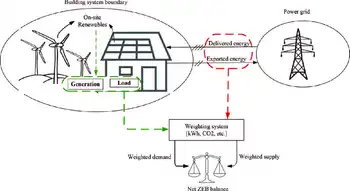
Can Canada actually produce enough clean electricity to power a net-zero grid by 2050?
Canada Clean Electricity drives a net-zero grid by 2035, scaling renewables like wind, solar, and…
View more

Nearly 600 Hong Kong families still without electricity after power supply cut by Typhoon Mangkhut
Hong Kong Typhoon Mangkhut Power Outages strain households with blackouts, electricity disruption, and humid heat,…
View more
Sign Up for Electricity Forum’s Newsletter
Stay informed with our FREE Newsletter — get the latest news, breakthrough technologies, and expert insights, delivered straight to your inbox.
Electricity Today T&D Magazine Subscribe for FREE

Stay informed with the latest T&D policies and technologies.
- Timely insights from industry experts
- Practical solutions T&D engineers
- Free access to every issue

