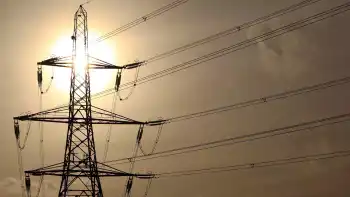
$69 million wind farm opens near Moosomin

By CBC.ca


Protective Relay Training - Basic

Our customized live online or in‑person group training can be delivered to your staff at your location.
  • Live Online
  • 12 hours Instructor-led
  • Group Training Available
Regular Price:
$699
Coupon Price:
$599
Reserve Your Seat Today
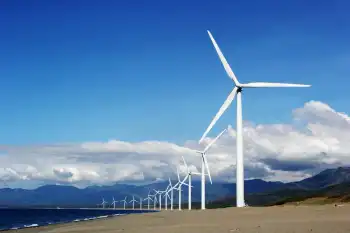
A $69-million wind power project that had been challenged in court last year is now up and running in southeast Saskatchewan.

The 26-megawatt facility built by Ontario-based Algonquin Power consists of 16 wind turbine generators located north of Moosomin, Sask.

SaskPower will be buying electricity from the wind farm under a 25-year deal that Algonquin said would mean $7.5 million in revenue this year and $8 million next year.

The project, which was more than six years in the making, was completed ahead of schedule, according to Algonquin.

That's in spite of a legal challenge last year from an area resident who said the facility was putting turbines too close to homes.

Construction was temporarily halted, but a judge eventually ruled there was no credible evidence to support the claim the turbines were dangerous.

Algonquin said it's procuring land for a second phase of Red Lily, which, if it proceeds, would add an additional 106 megawatts of generating capacity.

Related News
The nuclear power dispute driving a wedge between France and Germany

Franco-German Nuclear Power Divide shapes EU energy policy, electricity market reform, and decarbonization strategies, as Paris backs reactors and state subsidies while Berlin prioritizes renewables, hydrogen, and energy security after Russian gas shocks.


Key Points

A policy rift over nuclear shaping EU market reform, subsidies, and the balance between reactors and renewables.

✅ Nuclear in EU targets vs. renewables-first strategy

✅ Market design disputes over long-term power prices

✅ Energy security after Russian gas; hydrogen definitions


Near the French village of Fessenheim, facing Germany across the Rhine, a nuclear power station stands dormant. The German protesters that once demanded the site’s closure have decamped, in a sign of Europe's nuclear decline, and the last watts were produced three years ago. 

But disagreements over how the plant from 1977 should be repurposed persist, speaking to a much deeper divide over nuclear power, which Eon chief's warning to Germany underscored, between the two countries on either side of the river’s banks.

German officials have disputed a proposal to turn it into a centre to treat metals exposed to low levels of radioactivity, Fessenheim’s mayor Claude Brender says. “They are not on board with anything that might in some way make the nuclear industry more acceptable,” he adds.

France and Germany’s split over nuclear power is a tale of diverging mindsets fashioned over decades, including since the Chernobyl disaster in USSR-era Ukraine. But it has now become a major faultline in a touchy relationship between Europe’s two biggest economies.

Their stand-off over how to treat nuclear in a series of EU reforms has consequences for how Europe plans to advance towards cleaner energy. It will also affect how the bloc secures power supplies as the region weans itself off Russian gas, even though nuclear would do little for the gas issue, and how it provides its industry with affordable energy to compete with the US and China. 

“There can be squabbles between partners. But we’re not in a retirement home today squabbling over trivial matters. Europe is in a serious situation,” says Eric-André Martin, a specialist in Franco-German relations at French think-tank IFRI. 

France, which produces two-thirds of its power from nuclear plants and has plans for more reactors, is fighting for the low-carbon technology to be factored into its targets for reducing emissions and for leeway to use state subsidies to fund the sector.

For Germany, which closed its last nuclear plants this year and, having turned its back on nuclear, has been particularly shaken by its former reliance on Russian gas, there’s concern that a nuclear drive will detract from renewable energy advances.

But there is also an economic subtext in a region still reeling from an energy crisis last year, reviving arguments for a needed nuclear option for climate in Germany, when prices spiked and laid bare how vulnerable households and manufacturers could become.

Berlin is wary that Paris would benefit more than its neighbours if it ends up being able to guarantee low power prices from its large nuclear output as a result of new EU rules on electricity markets, amid talk of a possible U-turn on the phaseout, people close to talks between the two countries say.

Ministers on both sides have acknowledged there is a problem. “The conflict is painful. It’s painful for the two governments as well as for our [EU] partners,” Sven Giegold, state secretary at the German economy and climate action ministry, where debates about whether a nuclear resurgence is possible persist, tells the Financial Times. 

Agnès Pannier-Runacher, France’s energy minister, says she wants to “get out of the realm of the emotional and move past the considerable misunderstandings that have accumulated in this discussion”.

In a joint appearance in Hamburg last week, German chancellor Olaf Scholz and French president Emmanuel Macron made encouraging noises over their ability to break the latest deadlock: a disagreement over the design of the EU’s electricity market. Ministers had been due to agree a plan in June but will now meet on October 17 to discuss the reform, aimed at stabilising long-term prices.

But the French and German impasse on nuclear has already slowed down debates on key EU policies such as rules on renewable energy and how hydrogen should be produced. Smaller member states are becoming impatient. The delay on the market design is “a big Franco-German show of incompetence again”, says an energy ministry official from another EU country who requested anonymity. 


Related News

View more

Can California Manage its Solar Boom?

California Duck Curve highlights midday solar oversupply and steep evening peak demand, stressing grid stability. Solutions include battery storage, demand response, diverse renewables like wind, geothermal, nuclear, and regional integration to reduce curtailment.


Key Points

A mismatch between midday solar surplus and evening demand spikes, straining the grid without storage and flexibility.

✅ Midday solar oversupply forces curtailment and wasted clean energy.

✅ Evening ramps require fast, fossil peaker plants to stabilize load.

✅ Batteries, demand response, regional trading flatten the curve.


California's remarkable success in adopting solar power, including a near-100% renewable milestone, has created a unique challenge: managing the infamous "duck curve." This distinctive curve illustrates a growing mismatch between solar electricity generation and the state's energy demands, creating potential problems for grid stability and ultimately threatening to slow California's progress in the fight against climate change.


The Shape of the Problem

The duck curve arises from a combination of high solar energy production during midday hours and surging energy demand in the late afternoon and evening when solar power declines. During peak solar hours, the grid often has an overabundance of electricity, and curtailments are increasing as a result, while as the sun sets, demand surges when people return home and businesses ramp up operations. California's energy grid operators must scramble to make up this difference, often relying on fast-acting but less environmentally friendly power sources.


The Consequences of the Duck Curve

The increasing severity of the duck curve has several potential consequences for California:

  • Grid Strain: The rapid ramp-up of power sources to meet evening demand puts significant strain on the electrical grid. This can lead to higher operational costs and potentially increase the risk of blackouts during peak demand times.
  • Curtailed Energy: To avoid overloading the grid, operators may sometimes have to curtail excess solar energy during midday, as rising curtailment reports indicate, essentially wasting clean electricity that could have been used to displace fossil fuel generation.
  • Obstacle to More Solar: The duck curve can make it harder to add new solar capacity, as seen in Alberta's solar expansion challenges, for fear of further destabilizing the grid and increasing the need for fossil fuel-based peaking plants.


Addressing the Challenge

California is actively seeking solutions to mitigate the duck curve, aligning with national decarbonization pathways that emphasize practicality. Potential strategies include:

  • Energy Storage: Deploying large-scale battery storage can help soak up excess solar electricity during the day and release it later when demand peaks, smoothing out the duck curve.
  • Demand Flexibility: Encouraging consumers to shift their energy use to off-peak hours through incentives and smart grid technologies can help reduce late-afternoon surges in demand.
  • Diverse Power Sources: While solar is crucial, a balanced mix of energy sources, including geothermal, wind, and nuclear, can improve grid stability and reduce reliance on rapid-response fossil fuel plants.
  • Regional Cooperation: Integrating California's grid with neighboring states can aid in balancing energy supply and demand across a wider geographical area.


The Ongoing Solar Debate

The duck curve has become a central point of debate about the future of California's energy landscape. While acknowledging the challenge, solar advocates argue for continued expansion, backed by measures like a bill to require solar on new buildings, emphasizing the urgent need to transition away from fossil fuels. Grid operators and some utility companies call for a more cautious approach, emphasizing grid reliability and potential costs if the problem isn't effectively managed.


Balancing California's Needs and its Green Ambitions

Finding the right path forward is essential; it will determine whether California can continue to lead the way in solar energy adoption while ensuring a reliable and affordable electricity supply. Successfully navigating the duck curve will require innovation, collaboration, and a strong commitment to building a sustainable energy system, as wildfire smoke impacts on solar continue to challenge generation predictability.


Related News

View more

Wind turbine firms close Spanish factories as Coronavirus restrictions tighten

Spain Wind Turbine Factory Shutdowns disrupt manufacturing as Vestas, Siemens Gamesa, and Nordex halt Spanish plants amid COVID-19 lockdowns, straining supply chains and renewables projects across Europe, with partial operations and maintenance continuing.


Key Points

COVID-19 lockdowns pause Spanish wind factories by Vestas, Siemens Gamesa, and Nordex, disrupting supply chains.

✅ Vestas, Siemens Gamesa, Nordex halt Spanish manufacturing

✅ Service and maintenance continue under safety protocols

✅ Supply chain and project timelines face delays in Europe


Europe’s largest wind turbine makers on Wednesday said they had shut down more factories in Spain, a major hub for the continent’s renewables sector, in response to an almost total lockdown in the country to contain the coronavirus outbreak as the Covid-19 crisis disrupts the sector.

Denmark’s Vestas, the world No.1, has suspended production at its two Spanish plants, a spokesman told Reuters, adding that its service and maintenance business was still working. Vestas has also paused manufacturing and construction in India, which is under a nationwide lockdown too, he said, and similar disruptions could stall U.S. utility solar projects this year.

Top rival Siemens Gamesa, known for its offshore wind turbine lineup, suspended production at six Spanish factories on Monday, bringing total closures there to eight, a spokeswoman said.

Four components factories are still partially up and running, at Reinosa on the north coast, Cuenca near Madrid, Mungia and Siguiero, she added.

Germany’s Nordex, the No.8 globally which is 36% owned by Spain’s Acciona, has now shuttered all of its production in Spain, even as new projects like Enel’s 90MW build move ahead, including two nacelle casing factories in Barasoain and Vall d’Uixo, as well as a rotor blade site in Lumbier.

“Production is no longer active,” a spokeswoman said in response to a Reuters query.

The new closures take the number of idled wind power factories on the continent to 19, all in Spain and Italy, the European countries worst hit by the pandemic, with investments at risk across the sector.

Spain is second only to Italy in terms of numbers of coronavirus-related fatalities and restrictions have become even stricter in the country’s third week of lockdown at a time when renewables surpassed fossil fuels for the first time in Europe.

“Some factories have temporarily paused activity as a precautionary step to strengthen sanitary measures within the sites and guarantee full compliance with government recommendations,” industry association WindEurope said, noting that wind power grows in some markets despite the pandemic.


Related News

View more

More than Two-thirds of Americans Indicate Willingness to Give or Donate Part of their Income in Support of the Fight Against Climate Change

U.S. Climate Change Donation Survey reveals Americans' willingness to fund sustainability via government incentives, electrification, and renewable energy. Public opinion favors wind, solar, and decarbonization, highlighting policy support post-pandemic amid economic recovery efforts.


Key Points

A 2020 U.S. poll on climate attitudes: donation willingness, renewable support, and views on government incentives.

✅ 70% would donate income; 31% would donate nothing.

✅ 59% prefer government incentives; 47% support taxes, conservation.

✅ 85% land wind, 83% offshore wind, 90% solar support.


A new study of American consumers' attitudes toward climate change finds that more than two-thirds of respondents (70%) indicate their willingness to give or donate a percentage of their personal income to support the fight against climate change and the path to net-zero electricity emissions by mid-century. 

Twenty-eight percent indicated they were willing to provide less than 1% of their income; 33% said they would be willing to contribute 1-5% of their income; 6% said they would give between 6-10% of their income; and 3% indicated they would contribute more than 10% of their income. Just under one-third (31%) of those surveyed indicated they were unwilling to give or donate any percentage of their income to support the fight against climate change.

The U.S. findings are part of a series of surveys commissioned by Nexans in the U.S., UK and France, in order to determine public opinion on climate change and related issues in the wake of the COVID-19 pandemic. The U.S. study was conducted online by Researchscape from August 20 – 24, 2020. It had 1,013 respondents, ages 18 or older, with the results weighted to be representative of the overall population (variables available upon request).

Nexans, is headquartered in Paris with a major offshore wind cable manufacturing facility in Charleston, S.C. and an industrial cable manufacturing facility in El Dorado, Ark. The company is fully committed to fighting climate change and is helping to make sustainable electrification possible. The survey was developed as part of its celebration of the first Climate Day in Paris which included a roundtable event with world-renowned experts, the release of an unprecedented global study by Roland Berger on the challenges raised by the electrification of the world, the question of whether the global energy transition is on track, and Nexans' own commitment to be carbon neutral by 2030.

Paying the Tab to Address Climate Change

Participants were given the opportunity to choose from seven multiple responses to the question "How should the fight against climate change be paid for?" The majority (59%) replied it should be paid for by "government incentives for both businesses and consumers." It was followed by "federal, state and/or local taxes" and "conservation programs" (tied at 47%); "business investments" (42%), such as carbon-free electricity initiatives, and "consumer-driven purchases" (33%). Just 9% selected none of the above and 2% selected other.

"Through the organization of this Climate Day, Nexans is asserting itself not only as an actor but also a thought leader of the energy transition for a sustainable electrification of the world. This electrification raises a number of challenges and paradoxes that must be overcome. And it will only happen with the direct involvement of the populations concerned. These surveys provide a better understanding of the level of information and disinformation, including climate change denial, in public opinion as well as their level of acceptability of these lifestyle changes," said Christopher Guérin, CEO, Nexans.

Among other findings, 44% are dissatisfied with the job that federal and state governments are doing to address climate change, while utilities like Duke Energy face investor pressure to release climate reports, 35% are somewhat satisfied and 21% are either very satisfied or completed satisfied with government's role.

Americans expressed overwhelmingly favorable views of wind and solar renewable energy proposals, as carbon emissions fall when electricity producers move away from coal. Specifically, 85% stated being in favor of wind turbines on land (15% against), 83% in favor of wind turbines off the coast (17% against) and 90% in support of solar panel farms (10% opposed).

Those surveyed were asked about their current and changing priorities towards climate change as influenced by the coronavirus pandemic and impacts like extreme heat on electricity bills. Thirty-nine percent indicated that climate change was no more and no less a priority due to the current health emergency; just under a third (31%) indicated that climate change is more of a priority while 30% said it was less of a priority.

In similar research conducted by Nexans in the United Kingdom, nearly two thirds (65.8%) of UK respondents said they would be willing to donate part of their salary to fight climate change. Furthermore, nearly a third (29%) of the UK's consumers believe that combating climate change has become more of a priority in light of the coronavirus pandemic. The UK research was conducted online by Savanta from August 21 – 24, 2020. A total of 2210 respondents, aged 16 and above, representative of the UK population took part.


Related News

View more

Can Canada actually produce enough clean electricity to power a net-zero grid by 2050?

Canada Clean Electricity drives a net-zero grid by 2035, scaling renewables like wind, solar, and hydro, with storage, smart grids, interprovincial transmission, and electrification of vehicles, buildings, and industry to cut emissions and costs.


Key Points

Canada Clean Electricity is a shift to a net-zero grid by 2035 using renewables, storage, and smart grids to decarbonize

✅ Doubles non-emitting generation for electrified transport and heating

✅ Expands wind, solar, hydro with storage and smart-grid balancing

✅ Builds interprovincial lines and faster permitting with Indigenous partners


By Merran Smith and Mark Zacharias

Canada is an electricity heavyweight. In addition to being the world’s sixth-largest electricity producer and third-largest electricity exporter in the global electricity market today, Canada can boast an electricity grid that is now 83 per cent emission-free, not to mention residential electricity rates that are the cheapest in the Group of Seven countries.

Indeed, on the face of it, the country’s clean electricity system appears poised for success. With an abundance of sunshine and blustery plains, Alberta and Saskatchewan, the Prairie provinces most often cited for wind and solar, have wind- and solar-power potential that rivals the best on the continent. Meanwhile, British Columbia, Manitoba, Quebec, and Newfoundland and Labrador have long excelled at generating low-cost hydro power.

So it would only be natural to assume that Canada, with this solid head start and its generous geography, is already positioned to provide enough affordable clean electricity to power our much-touted net-zero and economic ambitions.

But the reality is that Canada, like most countries, is not yet prepared for a world increasingly committed to carbon neutrality, in part because demand for solar electricity has lagged, even as overall momentum grows.

The federal government’s forthcoming Clean Electricity Standard – a policy promised by the governing Liberals during the most recent election campaign and restated for an international audience by Prime Minister Justin Trudeau at the United Nations’ COP26 climate summit – would require all electricity in the country to be net zero by 2035 nationwide, setting a new benchmark. But while that’s an encouraging start, it is by no means the end goal. Electrification – that is, hooking up our vehicles, heating systems and industry to a clean electricity grid – will require Canada to produce roughly twice as much non-emitting electricity as it does today in just under three decades.

This massive ramp-up in clean electricity will require significant investment from governments and utilities, along with their co-operation on measures and projects such as interprovincial power lines to build an electric, connected and clean system that can deliver benefits nationwide. It will require energy storage solutions, smart grids to balance supply and demand, and energy-efficient buildings and appliances to cut energy waste.

While Canada has mostly relied on large-scale hydroelectric and nuclear power in the past, newer sources of electricity such as solar, wind, geothermal, and biomass with carbon capture and storage will, in many cases, be the superior option going forward, thanks to the rapidly falling costs of such technology and shorter construction times. And yet Canada added less solar and wind generation in the past five years than all but three G20 countries – Indonesia, Russia and Saudi Arabia, with some experts calling it a solar power laggard in recent years. That will need to change, quickly.

In addition, Canada’s Constitution places electricity policy under provincial jurisdiction, which has produced a patchwork of electricity systems across the country that use different energy sources, regulatory models, and approaches to trade and collaboration. While this model has worked to date, given our low consumer rates and high power reliability, collaborative action and a cohesive vision will be needed – not just for a 100-per-cent clean grid by 2035, but for a net-zero-enabling one by 2050.

Right now, it takes too long to move a clean power project from the proposal stage to operation – and far too long if we hope to attain a clean grid by 2035 and a net-zero-enabling one by 2050. This means that federal, provincial, territorial and Indigenous governments must work with rural communities and industry stakeholders to accelerate the approvals, financing and construction of clean energy projects and provide investor certainty.

In doing so, Canada can set a course to carbon neutrality while driving job creation and economic competitiveness, a transition many analyses deem practical and profitable in the long run. Our closest trading partners and many of the world’s largest companies and investors are demanding cleaner goods. A clean grid underpins clean production, just as it underpins our climate goals.

The International Energy Agency estimates that, for the world to reach net zero by 2050, clean electricity generation worldwide must increase by more than 2.5 times between today and 2050. Countries are already plotting their energy pathways, and there is much to learn from each other.

Consider South Australia. The state currently gets 62 per cent of its electricity from wind and solar and, combined with grid-scale battery storage, has not lost a single hour of electricity in the past five years. South Australia expects 100 per cent of its electricity to come from renewable sources before 2030. An added bonus given today’s high energy prices: Annual household electricity costs have declined there by 303 Australian dollars ($276) since 2018.

The transition to clean energy is not about sacrificing our way of life – it’s about improving it. But we’ll need the power to make it happen. That work needs to start now.

Merran Smith is the executive director of Clean Energy Canada, a program at the Morris J. Wosk Centre for Dialogue at Simon Fraser University in Vancouver. Mark Zacharias is a special adviser at Clean Energy Canada and visiting professor at the Simon Fraser University School of Public Policy.


Related News

View more

Trump's Order Boosts U.S. Uranium and Nuclear Energy

Uranium Critical Mineral Reclassification signals a US executive order directing USGS to restore critical status, boosting nuclear energy, domestic uranium mining, streamlined permitting, federal support, and energy security amid import reliance and supply chain risks.


Key Points

A policy relisting uranium as a critical mineral to unlock funding, speed permits, and strengthen U.S. nuclear security.

✅ Directs Interior to have USGS reconsider uranium classification

✅ Speeds permits for domestic uranium mining projects

✅ Targets import dependence and strengthens energy security


In a strategic move to bolster the United States' nuclear energy sector, former President Donald Trump issued an executive order on January 20, 2025, directing the Secretary of the Interior to instruct the U.S. Geological Survey (USGS) to reconsider classifying uranium as a critical mineral. This directive aims to enhance federal support and streamline permitting processes for domestic uranium projects, thereby strengthening U.S. energy security objectives.

Reclassification of Uranium as a Critical Mineral

The USGS had previously removed uranium from its critical minerals list in 2022, categorizing it as a "fuel mineral" that did not qualify for such designation. The recent executive order seeks to reverse this decision, recognizing uranium's strategic importance in the context of the nation's energy infrastructure and geopolitical considerations.

Implications for Domestic Uranium Production

Reclassifying uranium as a critical mineral is expected to unlock federal funding and expedite the permitting process for uranium mining projects within the United States. This initiative is particularly pertinent given the significant decline in domestic uranium production over the past two decades. According to the U.S. Energy Information Administration, domestic production has decreased by 96%, from 4.8 million pounds in 2014 to approximately 121,296 pounds in the third quarter of 2024.

Current Uranium Supply Dynamics

Despite the push for increased domestic production, the U.S. remains heavily reliant on uranium imports. In 2022, 27% of U.S. uranium purchases were sourced from Canada, with an additional 57% imported from countries including Kazakhstan, Uzbekistan, Australia, and Russia; a recent ban on Russian uranium could further disrupt these supply patterns and heighten risks. This reliance on foreign sources has raised concerns about energy security, especially in light of recent geopolitical tensions.

Challenges and Considerations

While the executive order represents a significant step toward revitalizing the U.S. nuclear energy sector, several challenges persist, and energy dominance faces constraints that will shape implementation:

  • Regulatory Hurdles: Accelerating the permitting process for uranium mining projects involves navigating complex environmental and regulatory frameworks, though recent permitting reforms for geothermal hint at potential pathways, which can be time-consuming and contentious.

  • Market Dynamics: The uranium market is subject to global supply and demand fluctuations, and domestic producers may face competition from established international suppliers.

  • Infrastructure Development: Expanding domestic uranium production necessitates substantial investment in mining infrastructure and workforce development, areas that have been underfunded in recent years.

Broader Implications for Nuclear Energy Policy

The executive order aligns with a broader strategy to revitalize the U.S. nuclear energy industry, where ongoing nuclear innovation is critical to delivering stable, low-emission power. The increasing demand for nuclear energy is driven by the global push for zero-emissions energy sources and the need to support power-intensive technologies, such as artificial intelligence servers.

Former President Trump's executive order to reclassify uranium as a critical mineral, aligning with his broader energy agenda and a prior pledge to end the 'war on coal', signifies a pivotal moment for the U.S. nuclear energy sector. By potentially unlocking federal support, including programs advanced by the Nuclear Innovation Act, and streamlining permitting processes, this initiative aims to reduce dependence on foreign uranium sources and enhance national energy security. However, realizing these objectives will require addressing regulatory challenges, market dynamics, and infrastructure needs to ensure the successful revitalization of the domestic uranium industry.


Related News

View more

Sign Up for Electricity Forum’s Newsletter

Stay informed with our FREE Newsletter — get the latest news, breakthrough technologies, and expert insights, delivered straight to your inbox.

Electricity Today T&D Magazine Subscribe for FREE

Stay informed with the latest T&D policies and technologies.
  • Timely insights from industry experts
  • Practical solutions T&D engineers
  • Free access to every issue

Live Online & In-person Group Training

Advantages To Instructor-Led Training – Instructor-Led Course, Customized Training, Multiple Locations, Economical, CEU Credits, Course Discounts.

Request For Quotation

Whether you would prefer Live Online or In-Person instruction, our electrical training courses can be tailored to meet your company's specific requirements and delivered to your employees in one location or at various locations.