By BUSINESS WIRE


NFPA 70e Training - Arc Flash

Our customized live online or in‑person group training can be delivered to your staff at your location.
  • Live Online
  • 6 hours Instructor-led
  • Group Training Available
Regular Price:
$199
Coupon Price:
$149
Reserve Your Seat Today
International Rectifier Breaks Ground on New Site in Xi'an, China

EL SEGUNDO, Calif.-- International Rectifier Corporation, a leading manufacturer of power management electronics, broke ground recently on a new manufacturing site in Xi'an, China.

The new assembly and test facility is anticipated to become operational in early 2005 for the manufacturing of key power management components needed to support the world's growing requirement for power supplies, motion control, personal computers and a broad range of other consumer electronic products.

Walt Lifsey, IR's Executive Vice-President of Operations, remarked, "Our new Xi'an facility forms a significant milestone in our business strategy. It will allow us to better serve our customers in Asia."

"We're honored that International Rectifier has chosen to build their new site here. IR's new facility will be the largest international semiconductor assembly and test factory in the area. This site will strengthen International Rectifier's already well- established commitment in China and to the Asian markets," said Sun Qing Yun, the mayor of Xi'an.

The new site will be located in the Chang'an Technology Park in Xi'an's High Technology Industrial Development Zone. In addition to the new manufacturing facility, the Company maintains design and applications centers in Xi'an, a trading company in Shanghai, and multiple sales offices throughout China. International Rectifier operates facilities in 19 other countries throughout North America, Europe and Asia. Its headquarters are located in El Segundo, California.

International Rectifier is a world leader in power management technology. IR's analog and mixed signal ICs, advanced circuit devices, integrated power systems and components enable high performance computing and eliminate energy waste from motors, the world's single largest consumer of electricity. Leading manufacturers of computers, energy efficient appliances, lighting, automobiles, satellites, aircraft and defense systems rely on IR's power management benchmarks to power their next-generation products.

Related News
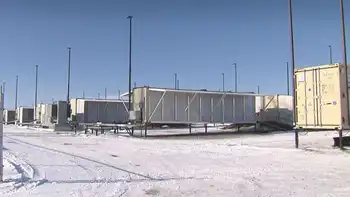
First US coal plant in years opens where no options exist

Alaska Coal-Fired CHP Plant opens near Usibelli mine, supplying electricity and district heat to UAF; remote location without gas pipelines, low wind and solar potential, and high heating demand shaped fuel choice.


Key Points

A 17 MW coal CHP at UAF producing power and campus heat, chosen for remoteness and lack of gas pipelines.

✅ 17 MW generator supplying electricity and district heat

✅ Near Usibelli mine; limited pipeline access shapes fuel

✅ Alternative options like LNG, wind, solar not cost-effective


One way to boost coal in the US: Find a spot near a mine with no access to oil or natural gas pipelines, where it’s not particularly windy and it’s dark much of the year.

That’s how the first coal-fired plant to open in the U.S. since 2015 bucked the trend in an industry that’s seen scores of facilities close in recent years. A 17-megawatt generator, built for $245 million, is set to open in April at the University of Alaska Fairbanks, just 100 miles from the state’s only coal mine.

“Geography really drove what options are available to us,” said Kari Burrell, the university’s vice chancellor for administrative services, in an interview. “We are not saying this is ideal by any means.”

The new plant is arriving as coal fuels about 25 percent of electrical generation in the U.S., down from 45 percent a decade earlier, even as some forecasts point to a near-term increase in coal-fired generation in 2021. A near-record 18 coal plants closed in 2018, and 14 more are expected to follow this year, according to BloombergNEF.

The biggest bright spot for U.S. coal miners recently has been exports to overseas power plants. At home, one of the few growth areas has been in pizza ovens.

There are a handful of other U.S. coal power projects that have been proposed, including plans to build an 850 megawatt facility in Georgia and an 895 megawatt plant in Kansas, even as a Minnesota utility reports declining coal returns across parts of its portfolio. But Ashley Burke, a spokeswoman for the National Mining Association, said she’s unaware of any U.S. plants actively under development besides the one in Alaska.


Future of power

“The future of power in the U.S. does not include coal,” Tessie Petion, an analyst for HSBC Holdings Plc, said in a research note, a view echoed by regions such as Alberta retiring coal power early in their transition.

Fairbanks sits on the banks of the Chena River, amid the vast subarctic forests in the heart of Alaska. The oil and gas fields of the state’s North slope are 500 miles north. The nearest major port is in Anchorage, 350 miles south.

The university’s new plant is a combined heat and power generator, which will create steam both to generate electricity and heat campus buildings. Before opting for coal, the school looked into using liquid natural gas, wind and solar, bio-mass and a host of other options, as new projects in Southeast Alaska seek lower electricity costs across the region. None of them penciled out, said Mike Ruckhaus, a senior project manager at the university.

The project, financed with university and state-municipal bonds, replaces a coal plant that went into service in 1964. University spokeswoman Marmian Grimes said it’s worth noting that the new plant will emit fewer emissions.

The coal will come from Usibelli Coal Mine Inc., a family-owned business that produces between 1.2 and 2 million tons per year from a mine along the Alaska railroad, according to the company’s website.

While any new plant is good news for coal miners, Clarksons Platou Securities Inc. analyst Jeremy Sussman said this one is "an isolated situation."

“We think the best producers can hope for domestically is a slow down in plant closures,” he said, even as jurisdictions like Alberta close their last coal plant entirely.


Related News

View more

Switch from fossil fuels to electricity could cost $1.4 trillion, Canadian Gas Association warns

Canada Electrification Costs: report estimates $580B-$1.4T to scale renewable energy, wind, solar, and storage capacity to 2050, shifting from natural gas toward net-zero emissions and raising average household energy spending by $1,300-$3,200 annually.


Key Points

Projected national expense to expand renewables and electrify energy systems by 2050, impacting household energy bills.

✅ $580B-$1.4T forecast for 2020-2050 energy transition

✅ 278-422 GW wind, solar, storage capacity by 2050

✅ Household costs up $1,300-$3,200 per year on average


The Canadian Gas Association says building renewable electricity capacity to replace just half of Canada's current fossil fuel-generated energy, a shift with significant policy implications for grids across provinces, could increase national costs by as much as $1.4 trillion over the next 30 years.

In a report, it contends, echoing an IEA report on net-zero, that growing electricity's contribution to Canada's energy mix from its current 19 per cent to about 60 per cent, a step critical to meeting climate pledges that policymakers emphasize, will require an expansion from 141 gigawatts today to between 278 and 422 GW of renewable wind, solar and storage capacity by 2050.

It says that will increase national energy costs by between $580 billion and $1.4 trillion between 2020 and 2050, a projection consistent with recent reports of higher electricity prices in Alberta amid policy shifts, translating into an average increase in Canadian household spending of $1,300 to $3,200 per year.

The study, prepared by consulting firm ICF for the association, assumes electrification begins in 2020 and is applied in all feasible applications by 2050, with investments in the electricity system, guided by the implications of decarbonizing the grid for reliability and cost, proceeding as existing natural gas and electric end use equipment reaches normal end of life.

Association CEO Tim Egan says the numbers are "pretty daunting" and support the integration of natural gas with electric, amid Canada's race to net-zero commitments, instead of using an electric-only option as the most cost-efficient way for Canada to reach environmental policy goals.

But Keith Stewart, senior energy strategist with Greenpeace Canada, says scientists are calling for the world to get to net-zero emissions by 2050, and Canada's net-zero by 2050 target underscores that urgency to avoid "catastrophic" levels of warming, so investing in natural gas infrastructure to then shut it down seems a "very expensive option."


Related News

View more

IEA praises Modi govt for taking electricity to every village; calls India 'star performer'

India Village Electrification hailed by the IEA in World Energy Outlook 2018 showcases rapid energy access progress, universal village power, clean cooking advances via LPG, and Modi-led initiatives, inspiring Indonesia, Bangladesh, and Sub-Saharan Africa.


Key Points

A national push to power every Indian village, praised by the IEA for boosting energy access and clean cooking.

✅ Electrified 597,464 villages ahead of schedule in April 2018.

✅ IEA hails India in World Energy Outlook 2018 as star performer.

✅ LPG connections surge via Ujjwala, aiding clean cooking access.


The global energy watchdog International Energy Agency (IEA) has called India's electrification of every village the greatest success story of 2018. In its latest report, World Energy Outlook 2018, the IEA has called India a "star performer" in terms of achieving the big milestone of the providing power to each village. "In particular, one of the greatest success stories in access to energy in 2018 was India completing the electrification of all of its villages," said the IEA. It added that countries like Indonesia and Bangladesh have also achieved the commendable electrification rate of 95% (up from 50% in 2000), and 80% (up from 20% in 2000), respectively, even as Europe's electrification push continues as part of broader transitions.

This 643-page report by the IEA says over 120 million people worldwide gained access to electricity in 2017 and charts growth in the electric car market as part of broader energy trends. For the first time ever, the total number of people without access fell below 1 billion, it said.  The mega plan of providing electricity to 597,464 villages in India was announced by Prime Minister Narendra Modi during his Independence Day speech in 2015. On April 28, 2018, PM Modi confirmed that India had achieved its goal ahead of schedule. "This is one of the greatest achievements in the history of energy," said the IEA.

Praising the Narendra Modi government for making efforts towards lighting up every village in India, the agency said: "Since 2000 around half a billion people have gained access to electricity in India, with political effort over the last five years significantly accelerating progress."

India's achievement of providing universal household electricity access will improve the lives of over 230 million people, said the IEA, even as analyses like a Swedfund report debate some poverty outcomes in electrified areas. For a start, electric lighting makes the use of candles, kerosene and other polluting fuels for lighting redundant, not only saving money (and providing more light) but also seriously improving health, it said.

Though the global energy agency has called India "a success story", and a "bright spot for energy access", it says huge challenges remain in other regions of the world where over 670 million people still live without electricity access. "90% of these people are concentrated in sub-Saharan Africa, with countries such as Nigeria facing severe shortages," said the report.

Seven decades after independence and nearly three decades after India's economic liberalisation, the Modi government achieved the historic milestone of giving power to every single village of India, 12 days ahead of the deadline set by PM Modi. Leisang in Manipur became the last village to be connected to the grid, while a Delhi energy storage project explores ways to balance supply and demand.

The agency also praised India for tackling a related problem: access to clean cooking facilities. "While an estimated 780 million people in India rely on biomass for cooking, progress is emerging, as India is one of the few countries in the world targeting this "blind spot" of energy policy," it said.

Around 36 million LPG connections have been made since Prime Minister Modi and Minister for Petroleum and Natural Gas, Dharmendra Pradhan, launched the Pradhan Mantri Ujjwala Yojana scheme in May 2016 to provide free connections to families living below the poverty line. In India, around 50 million free LPG stoves and initial refills have been provided to poor households via this scheme since 2015. The government has set a target of providing LPG connections to 80 million households by 2020.


Related News

View more

Electric Ferries Power Up B.C. with CIB Help

BC Ferries Electrification accelerates zero-emission vessels, Canada Infrastructure Bank financing, and fast charging infrastructure to cut greenhouse gas emissions, lower operating costs, and reduce noise across British Columbia's Island-class routes.


Key Points

BC Ferries Electrification is the plan to deploy zero-emission ferries and charging, funded by CIB, to reduce emissions.

✅ $75M CIB loan funds four electric ferries and chargers

✅ Cuts 9,000 tonnes CO2e annually on short Island-class routes

✅ Quieter service, lower operating costs, and redeployed hybrids


British Columbia is taking a significant step towards a cleaner transportation future with the electrification of its ferry fleet. BC Ferries, the province's ferry operator, has secured a $75 million loan from the Canada Infrastructure Bank (CIB) to fund the purchase of four zero-emission ferries and the necessary charging infrastructure to support them.

This marks a turning point for BC Ferries, which currently operates a fleet reliant on diesel fuel. The new Island-class electric ferries will be deployed on shorter routes, replacing existing hybrid ships on those routes. These hybrid ferries will then be redeployed on routes that haven't yet been converted to electric, maximizing their lifespan and efficiency.

Environmental Benefits

The transition to electric ferries is expected to deliver significant environmental benefits. The new vessels are projected to eliminate an estimated 9,000 tonnes of greenhouse gas emissions annually, and electric ships on the B.C. coast already demonstrate similar gains, contributing to British Columbia's ambitious climate goals. Additionally, the quieter operation of electric ferries will create a more pleasant experience for passengers and reduce noise pollution for nearby communities.

Economic Considerations

The CIB loan plays a crucial role in making this project financially viable. The low-interest rate offered by the CIB will help to keep ferry fares more affordable for passengers. Additionally, the long-term operational costs of electric ferries are expected to be lower than those of diesel-powered vessels, providing economic benefits in the long run.

Challenges and Opportunities

While the electrification of BC Ferries is a positive development, there are some challenges to consider. The upfront costs of electric ferries and charging infrastructure are typically higher than those of traditional options, though projects such as the Kootenay Lake ferry show growing readiness. However, advancements in battery technology are constantly lowering costs, making electric ferries a more cost-effective choice over time.

Moreover, the transition presents opportunities for job creation in the clean energy sector, with complementary initiatives like the hydrogen project broadening demand. The development, construction, and maintenance of electric ferries and charging infrastructure will require skilled workers, potentially creating a new avenue for economic growth in British Columbia.

A Pioneering Example

BC Ferries' electrification initiative sets a strong precedent for other ferry operators worldwide, including Washington State Ferries pursuing hybrid-electric upgrades. This project demonstrates the feasibility and economic viability of transitioning to cleaner marine transportation solutions. As battery technology and charging infrastructure continue to develop, we can expect to see more widespread adoption of electric ferries across the globe.

The collaboration between BC Ferries and the CIB paves the way for a greener future for BC's transportation sector, where efforts like Harbour Air's electric aircraft complement marine electrification. With cleaner air, quieter operation, and a positive impact on climate change, this project is a win for the environment, the economy, and British Columbia as a whole.


Related News

View more

Ireland and France will connect their electricity grids - here's how

Celtic Interconnector, a subsea electricity link between Ireland and France, connects EU grids via a high-voltage submarine cable, boosting security of supply, renewable integration, and cross-border trade with 700 MW capacity by 2026.


Key Points

A 700 MW subsea link between Ireland and France, boosting security, enabling trade, and supporting renewables.

✅ Approx. 600 km subsea cable from East Cork to Brittany

✅ 700 MW capacity; powers about 450,000 homes

✅ Financed by EIB, banks, CEF; Siemens Energy and Nexans


France and Ireland signed contracts on Friday to advance the Celtic Interconnector, a subsea electricity link to allow the exchange of electricity between the two EU countries. It will be the first interconnector between continental Europe and Ireland, as similar UK interconnector plans move forward in parallel. 

Representatives for Ireland’s electricity grid operator EirGrid and France’s grid operator RTE signed financial and technical agreements for the high-voltage submarine cable, mirroring developments like Maine’s approved transmission line in North America for cross-border power. The countries’ respective energy ministers witnessed the signing.

European commissioner for energy Kadri Simson said:

In the current energy market situation, marked by electricity price volatility, and the need to move away from imports of Russian fossil fuels, European energy infrastructure has become more important than ever.

The Celtic Interconnector is of paramount importance as it will end Ireland’s isolation from the Union’s power system, with parallels to Cyprus joining the electricity highway in the region, and ensure a reliable high-capacity link improving the security of electricity supply and supporting the development of renewables in both Ireland and France.

EirGrid and RTE signed €800 million ($827 million) worth of financing agreements with Barclays, BNP Paribas, Danske Bank, and the European Investment Bank, similar to the Lake Erie Connector investment that blends public and private capital.

In 2019, the project was awarded a Connecting Europe Facility (CEF) grant worth €530.7 million to support construction works and align with a broader push for electrification in Europe under climate strategies. The CEF program also provided €8.3 million for the Celtic Interconnector’s feasibility study and initial design and pre-consultation.

Siemens Energy will build converter stations in both countries, and Paris-based global cable company Nexans will design and install a 575-km-long cable for the project.

The cable will run between East Cork, on Ireland’s southern coast, and northwestern France’s Brittany coast and will connect into substations at Knockraha in Ireland and La Martyre in France.

The Celtic Interconnector, which is expected to be operational by 2026, will be approximately 600 km (373 miles) long and have a capacity of 700 MW, similar to cross-border initiatives such as Quebec-to-New York power exports expected in 2025, which is enough to power 450,000 households.


Related News

View more

Germany turns to coal for a third of its electricity

Germany's Coal Reliance reflects an energy crisis, soaring natural gas prices, and a nuclear phase-out, as Destatis data show higher coal-fired electricity despite growing wind and solar generation, impacting grid stability and emissions.


Key Points

Germany's coal reliance is more coal power due to gas spikes and a nuclear phase-out, despite wind and solar growth.

✅ Coal share near one-third of electricity, per Destatis

✅ Gas-fired output falls as prices soar after Russia's invasion

✅ Wind and solar rise; grid stability and recession risks persist


Germany is relying on highly-polluting coal for almost a third of its electricity, as the impact of government policies, reflecting an energy balancing act for the power sector, and the war in Ukraine leads producers in Europe’s largest economy to use less gas and nuclear energy.

In the first six months of the year, Germany generated 82.6 kWh of electricity from coal, up 17 per cent from the same period last year, according to data from Destatis, the national statistics office, published on Wednesday. The leap means almost one-third of German electricity generation now comes from coal-fired plants, up from 27 per cent last year. Production from natural gas, which has tripled in price to €235 per megawatt hour since Russia’s invasion in late February, fell 18 per cent to only 11.7 per cent of total generation.

Destatis said that the shift from gas to coal was sharper in the second quarter. Coal-fired electricity increased by an annual rate of 23 per cent in the three months to June, while electricity generation from natural gas fell 19 per cent.

The figures highlight the challenge facing European governments in meeting clean energy goals after the Kremlin announced this week that the Nordstream 1 pipeline that takes Russian gas to Germany would remain closed until Europe removed sanctions on the country’s oil.

Germany has been trying to reduce its reliance on coal, which releases almost twice as many emissions as gas and more than 60 times those of nuclear energy, according to estimates from the Intergovernmental Panel on Climate Change, though grid expansion challenges have slowed renewable build-out in recent years.

Chancellor Olaf Scholz said the opposition CDU bore “complete responsibility” for the exit from coal and nuclear power that formed part of his predecessor Angela Merkel’s Energiewende policies, amid a continuing nuclear option debate in climate policy, which in turn raised reliance on Russian gas. At the beginning of this year, more than 50 per cent of Germany’s gas imports came from Russia, a figure that fell slightly over the opening half of 2022.

But CDU leader Friedrich Merz accused the government of “madness” over its decision to idle the country’s three remaining nuclear power stations from the end of this year, though officials have argued that nuclear would do little to solve the gas issue in the short term.

Electricity generation from nuclear energy has already halved after three of the six nuclear power plants that were still in operation at the end of 2021 were closed during the first half of this year. Berlin said on Monday it would keep on standby two of its remaining three nuclear power stations, a move to extend nuclear power during the energy crisis, which were all due to close at the end of the year.

The German government has warned of the risk of electricity shortages this winter. “We cannot be sure that, in the event of grid bottlenecks in neighbouring countries, there will be enough power plants available to help stabilise our electricity grid in the short term,” said German economy minister Robert Habeck on Monday.

However Scholz said that, after raising gas storage levels to 86 per cent of capacity, Germany would “probably get through this winter, despite all the tension”.

One bright spot from the data was the increase in use of renewable energy, highlighting a recent renewables milestone in Germany. The proportion of electricity generated from wind power generation rose by 18 per cent to 25 per cent of all electricity generation, while solar energy production increased 20 per cent.

Ángel Talavera, head of Europe economics at the consultancy Oxford Economics, said that the success in moving away from gas towards other energy sources “means that the risks of hard energy rationing over the winter are less severe now, even with little to no Russian gas flows”.

However, economists still expect a recession in the eurozone’s largest economy, amid a deteriorating German economy outlook over the near term, as a large part of the impact comes via higher prices and because industries and households still rely on gas for heating.

Separate official data also published on Wednesday showed that German industrial production slid 0.3 per cent between June and July. Production at Germany’s most energy intensive industries fell almost 7 per cent in the five months after Russia’s invasion of Ukraine.

“The demand destruction caused by the surge in prices will still send the German economy into recession over the winter,” said Talavera.


Related News

View more

Sign Up for Electricity Forum’s Newsletter

Stay informed with our FREE Newsletter — get the latest news, breakthrough technologies, and expert insights, delivered straight to your inbox.

Electricity Today T&D Magazine Subscribe for FREE

Stay informed with the latest T&D policies and technologies.
  • Timely insights from industry experts
  • Practical solutions T&D engineers
  • Free access to every issue

Download the 2025 Electrical Training Catalog

Explore 50+ live, expert-led electrical training courses –

  • Interactive
  • Flexible
  • CEU-cerified