Protective Relay Training - Basic
Our customized live online or in‑person group training can be delivered to your staff at your location.
- Live Online
- 12 hours Instructor-led
- Group Training Available
Regular Price:
$699
Coupon Price:
$599
United Kingdom
—
LightHouse Smart Grid Sensors advance waveform analytics and real-time monitoring to improve DSO grid visibility, power quality insight, fault detection, and predictive maintenance across European distribution networks integrating renewables and bi-directional flows.
Essential Takeaways
-
LightHouse sensors give DSOs real-time network visibility
-
Waveform analytics flag line disturbances as outage precursors
-
UK DNOs use the platform for planning and active management
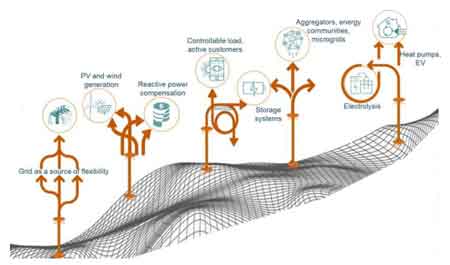
LightHouse Smart Grid Sensors are being deployed to give distribution system operators clearer visibility beyond the substation and into the medium-voltage network, where most service interruptions originate. The platform combines field-deployed smart grid sensors with analytics to produce actionable intelligence in near real time, helping operators move from reactive fault response toward proactive maintenance and planning. This direction aligns with regional modernization initiatives and policy frameworks captured under eu smart grid programs across Europe today.
Utilities have long faced limited observability on distribution feeders, even as demand, electrification, and distributed generation add complexity. The article underscores that roughly 90 percent of outages occur on the distribution network, reinforcing the need for continuous monitoring and faster diagnosis. In parallel, utilities are transitioning to a data-driven operating model that mirrors trends in other industries, leveraging software-defined tools and upgradeable devices typical of a digital grid to shrink blind spots and speed decision-making.
The LightHouse approach centers on precise voltage and current measurements and the capture of detailed fault waveforms. Rather than issuing basic alarms, the analytics engine applies waveform analysis and pattern recognition to classify events, distinguish hazardous from non-hazardous conditions, and elevate raw data into practical work orders. Because the system is over-the-air upgradeable, operators can adapt functionality without truck rolls, preserving operating budgets while expanding the scope of condition monitoring and predictive maintenance over time.
European network operators are applying the platform to advance use cases such as network planning, capacity monitoring, and active network management. As more wind and solar resources connect, bi-directional power flows and power quality challenges make real-time visibility increasingly important. In that context, the ability to pinpoint disturbances and validate hosting capacity complements ongoing renewable integration efforts; readers tracking interconnection topics can explore additional context in solar into grid coverage for related considerations in distribution planning.
Waveform analytics are highlighted as a practical early-warning tool. LightHouse deployments have identified recurring line disturbances that correlate strongly with outage risk, enabling crews to address failing assets before they cause customer interruptions. By trending these signatures and mapping them to specific locations, grid teams can prioritize inspections, target repairs, and reduce customer minutes interrupted while improving safety outcomes. For adjacent measurement modernization themes, readers may also track synchrophasors developments for grid visibility across wider networks.
Field results demonstrate how this plays out in operations. In one example, LightHouse notifications on a 34.5 kV circuit escalated over several hours, enabling engineers to pinpoint a failing voltage regulator in time to prevent an outage that would have affected more than 2,000 customers and avoided an estimated 360,000 Customer Minutes Interrupted. The environmental risk from a potential oil spill was also averted. For a broader, system-level lens on infrastructure transformation beyond distribution, see ongoing europe hvdc discussions for context around transmission upgrades complementing local observability.
Related News
Related News
UK Electricity prices hit 10-year high as cheap wind power wanes
UK Electricity Price Surge driven by wholesale gas costs, low wind output, and higher gas-fired…
View more
The Rise of Data Centers in Alberta
Alberta Data Centers fuel the digital economy with cloud computing, AI, and streaming, leveraging renewable…
View more
Americans Keep Using Less and Less Electricity
U.S. Electricity Demand Decoupling signals GDP growth without higher load, driven by energy efficiency, LED…
View more
Florida Power & Light Faces Controversy Over Hurricane Rate Surcharge
FPL Hurricane Surcharge explained: restoration costs, Florida PSC review, rate impacts, grid resilience, and transparency…
View more
Illinois electric utility publishes online map of potential solar capacity
ComEd Hosting Capacity Map helps Illinois communities assess photovoltaic capacity, distributed energy resources, interconnection limits,…
View more

Dewa in China to woo renewable energy firms
Dewa-China Renewable Energy Partnership advances solar, clean energy, smart grid, 5G, cloud, and Big Data,…
View more
Sign Up for Electricity Forum’s Newsletter
Stay informed with our FREE Newsletter — get the latest news, breakthrough technologies, and expert insights, delivered straight to your inbox.
Electricity Today T&D Magazine Subscribe for FREE

Stay informed with the latest T&D policies and technologies.
- Timely insights from industry experts
- Practical solutions T&D engineers
- Free access to every issue
