Latest Asset Intelligence & Predictive Maintenance Articles
Utility Network Device Management for Distribution Control
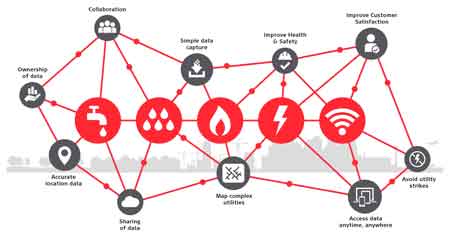
Utility Network Device Management integrates AMI, GIS, and SCADA into a validated digital twin that governs device state, topology accuracy, load flow integrity, outage localization, and predictive maintenance across distribution systems.
Utility Network Device Management governs the operational state of transformers, reclosers, regulators, switches, meters, and protection assets across modern distribution systems. It integrates AMI, GIS, and SCADA into a continuously verified digital twin that functions as a structural control boundary for operational decisions.
In high-density distribution environments where millions of endpoints stream interval data, device-level topology accuracy determines whether switching sequences, overload assessments, and outage localization actions are based…
View more
Sign Up for Electricity Forum’s Asset Intelligence & Predictive Maintenance Newsletter
Stay informed with our FREE Asset Intelligence & Predictive Maintenance Newsletter — get the latest news, breakthrough technologies, and expert insights, delivered straight to your inbox.
Predictive Grid Intelligence Gives Utilities Advance Warning
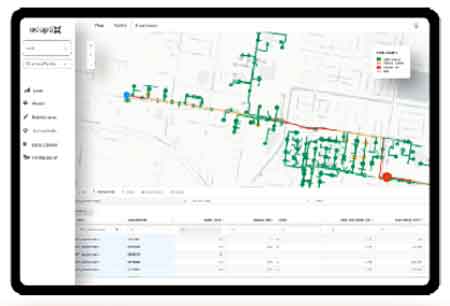
Predictive grid intelligence transforms AMI, GIS, and SCADA telemetry into a continuously validated digital grid model that forecasts asset overloads, topology errors, outage risk, and voltage instability. This operational intelligence enables utilities to anticipate failures, optimize restoration sequencing, and improve reliability before physical infrastructure reaches failure thresholds.
Distribution utilities operate vast electrical networks in which most assets function without direct telemetry. Transformers, switches, and feeder segments often operate for years without revealing their internal stress or connectivity condition. Predictive grid intelligence changes this reality by converting meter data, topology models, and operational telemetry into a continuously evolving electrical model that…
View more
Grid Edge Sensors for Lateral Monitoring and Distribution Control
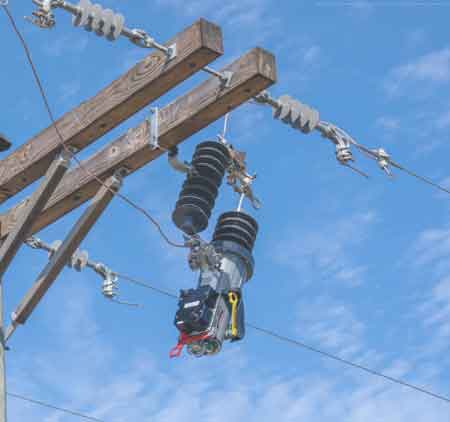
Grid edge sensors deliver lateral monitoring, oscillography, GPS time stamping, and secure cellular connectivity to support distribution automation, DER visibility, wildfire mitigation, and fleet-level control decisions at scale.
Most sustained distribution faults originate beyond the main feeder protection zone. Yet automation investment has historically concentrated at substations and feeder reclosers, leaving the majority of lateral circuits electrically blind. That imbalance now creates measurable reliability, wildfire, and safety exposure.
A single feeder may support 20 to 50 laterals. Multiply that across a service territory, and the visibility gap becomes exponential. The engineering question is no longer whether lateral sensing is technically…
View more
Distribution Line Monitoring for OT Fault Visibility
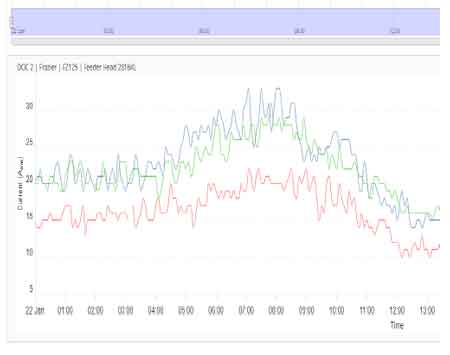
Distribution line monitoring eliminates structural search delay in feeder restoration. When a breaker trips without downstream visibility, patrol distance dictates outage duration. Each mile walked from the substation multiplies customer minutes of interruption and increases exposure on high-risk circuits.
On a mid-line fault, crews traditionally begin at the substation and work outward. A 185-minute interruption affecting 20 customers produces 3,700 customer minutes of interruption. That outcome is not a protection failure. It is a visibility failure.
Distribution line monitoring shifts patrol origin. When line sensors report fault magnitude and direction in near real time, crews deploy directly to the faulted…
View more
Distribution Oscillography in Lateral Protection
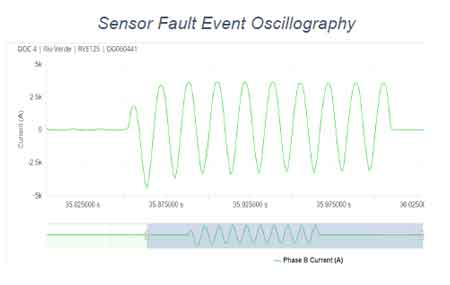
Distribution oscillography captures high-resolution fault waveforms, GPS time stamps, load profiles, and sequences of events at lateral devices, giving OT engineers precise visibility into feeder disturbances, DER backfeed, and protection miscoordination before outages escalate.
Distribution oscillography is no longer a post-event reporting function. At the lateral edge, waveform capture becomes an operational control input that shapes how protection engineers interpret disturbance origin, relay sequence, and restoration timing. When laterals remain uninstrumented, feeder-level telemetry masks localized electrical behavior that directly influences protection settings.
Most distribution faults originate on laterals. That structural fact means missing oscillographic evidence at those points creates blind…
View more
Intelligent Asset Management in Power Systems
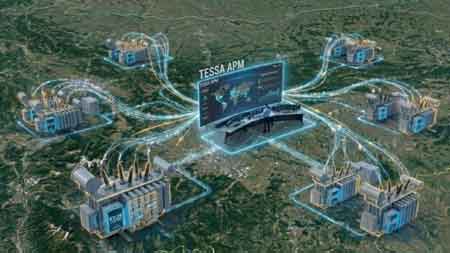
Intelligent asset management converts transformer condition data into prioritized maintenance decisions using asset analytics, automated diagnostics, and fleet risk evaluation, allowing utilities to identify emerging failure risk early, optimize maintenance timing, and manage asset lifecycle reliability based on actual operating condition rather than fixed schedules.
For decades, utilities relied on inspection schedules and historical failure rates to guide maintenance planning. While effective in stable operating environments, this approach cannot account for the highly variable stresses modern transformers experience. Load growth, fluctuating demand patterns, and aging infrastructure create conditions where identical transformers can age at dramatically different rates.
Asset Intelligence…
View more
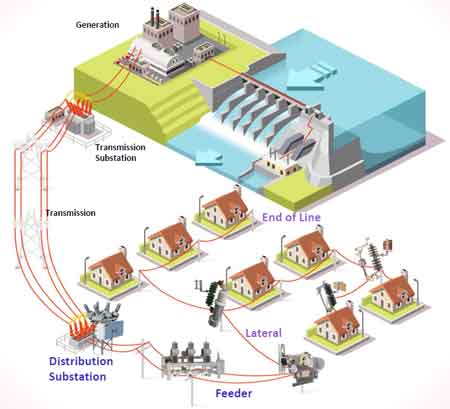
Lateral Fault Detection for Distribution Automation Intelligence
Lateral fault detection enhances feeder protection by combining oscillography, GPS time stamping, DER visibility, and synchronized event records to isolate branch faults faster, reduce wildfire exposure, and restore service with higher operational certainty.
Lateral fault detection enhances feeder protection by combining oscillography, GPS time stamping, DER visibility, and synchronized event records to isolate branch faults faster, reduce wildfire exposure, and restore service with higher operational certainty.
Most distribution automation investments have concentrated at substations and mainline feeders. Yet fault frequency is not distributed evenly across the circuit. Laterals account for the highest number of protective interruptions and represent the largest…
View more