Drone Utility Inspection for Grid Asset Intelligence
By Michael Li, Solutions Engineer, DJI, Stanley McHann, Clear Horizon Energy
By Michael Li, Solutions Engineer, DJI, Stanley McHann, Clear Horizon Energy
Request for Quotation Service
Buyers Submit Free RFQs to top suppliers, no obligation.
Suppliers Browse real project RFQs directly from buyers.
Trust Electricity Forum 40 years connection buyers and suppliers.
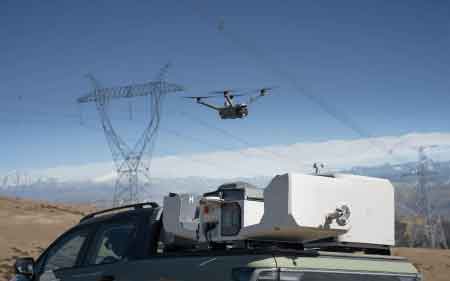
Drone utility inspection is the use of unmanned aerial systems (UAS) and inspection drones to inspect power lines, substations, towers, vegetation corridors, and other grid infrastructure so utilities can assess asset condition without sending crews into hazardous locations.
Drone utility inspection helps utilities evaluate infrastructure that is too dispersed, too elevated, or too hazardous to assess efficiently with ground patrols alone. The inspection scope extends beyond a single line segment and includes substations, transmission structures, distribution poles, vegetation corridors, and storm damaged assets across wide service territories.
For utility operations teams, the value lies in the ability to gather inspection evidence without placing personnel near energized equipment, unstable structures, or difficult terrain. This changes how quickly a utility can confirm asset condition, classify risk, and decide whether an issue belongs in routine maintenance, urgent repair, or emergency response.
This broader scope is what separates drone utility inspection from line specific inspection programs. A utility drone program may inspect conductors and insulators, but it may also document substation connections, evaluate tower hardware, verify vegetation clearance, review flood or fire exposure, and assess storm damage before crews are dispatched into uncertain field conditions.
Utilities use drones across both transmission and distribution systems because the inspection need is rarely isolated to one asset type. A corridor patrol may begin with conductor clearance concerns, then shift to damaged crossarms, leaning poles, inaccessible tower foundations, or vegetation encroachment near a feeder tie point. In substations, the same program may be used to review bus connections, transformer radiators, switches, and perimeter conditions from a safer inspection distance.
Think you know Vision AI, Inspection & Field Intelligence? Take our quick, interactive quiz and test your knowledge in minutes.
Thermal imaging expands that value because visible damage is not always the first sign of trouble. A connector may appear intact while carrying abnormal heat. A splice may show rising temperature before failure is visible to the eye. In storm restoration, thermal review can also help determine whether equipment that appears intact has developed abnormal heating after fault stress or switching events.
Utilities use drone inspection programs to capture high resolution images of transmission structures, substations, and vegetation corridors using high resolution cameras that allow engineers to review asset condition in detail without sending crews into hazardous environments.
For large area inspection zones such as long transmission corridors or remote distribution networks, these aerial surveys allow utility companies to document structural condition, vegetation clearance, and hardware damage while maintaining safe inspection distances.
When deployed as part of a structured inspection program, drone surveys can also be a cost-effective method of collecting infrastructure data because they reduce the number of field patrols required and create cost savings in routine asset monitoring and storm damage assessment.
A mature utility infrastructure inspection program is usually process driven before it becomes scale driven. Routine flights are useful for recurring asset classes and known risk zones. Event driven flights are different. After storms, wildfire exposure, or switching incidents, utilities need real time inspection data that can confirm access conditions, broken conductors, damaged structures, flooded yards, or vegetation contact before crews are sent in.
That near real time visibility improves dispatch quality, but it also reduces the chance of sending field personnel toward the wrong location or the wrong repair priority. This broader page, therefore, differs from Drone Power Line Inspection, which focuses specifically on overhead line defects and wildfire exposure rather than the full inspection program across utility infrastructure.
Utilities can expand coverage only when flight operations, safety controls, and data handling are engineered together. That is why beyond-visual-line-of-sight operations matter. Long transmission corridors, remote terrain, and dispersed substations make repeated launch and recovery cycles inefficient. A broader operating envelope allows a utility to inspect more infrastructure with fewer repositioning delays, but it also raises the importance of waiver strategy, day to day safety controls, and clear human oversight rules.
Automation helps only when the use case is stable. Repetitive corridor scans, substation perimeter reviews, and scheduled site checks are easier to standardize than complex post storm scenes. If a utility automates beyond what its review workflow can absorb, it creates a new failure mode. Crews receive more imagery than engineers can classify, maintenance queues expand, and operational efficiency declines rather than rises.
Drone utility inspection becomes operationally useful only when inspection data analysis is tied to maintenance and control workflows. A flight may produce thermal images, geolocated video, close visual evidence, and condition notes, but none of that changes reliability until the findings are categorized by severity, asset type, and system consequence.
A hot connector inside a substation does not carry the same decision weight as storm debris in a lightly loaded corridor. A cracked insulator on a redundant structure does not carry the same urgency as erosion near a tower foundation in a critical transmission path. The defect matters, but network context matters more.
Utilities strengthen this process when drone evidence is paired with Power Grid Monitoring Systems, because electrical signals and aerial evidence answer different parts of the same reliability question.

Inspection results become more actionable when they support Intelligent Asset Management and Predictive Maintenance For Utilities, where maintenance timing depends on actual field condition rather than interval based assumptions.
For distribution operations, Distribution Automation Data Integration matters when drone findings need to align with feeder state, outage events, switching activity, and restoration logic.
Utilities also benefit when drone findings strengthen Grid Observability, because sensors may indicate abnormal behavior while aerial evidence explains the physical cause.
Wildfire prone systems add another layer, since Ai Wildfire Detection can identify environmental exposure while drone inspection confirms the condition of poles, hardware, vegetation clearance, and ignition risk along specific assets.
The safety benefit is real, but it is often oversimplified. Keeping crews at a safer distance from energized conductors, steep terrain, damaged structures, and restricted substation areas is valuable. Yet the larger safety gain comes from sequencing. Drone inspection allows utilities to see first, classify second, and expose personnel third, only when the work scope is understood.
If an early drone review misclassifies a damaged structure as serviceable, crews may be sent with the wrong equipment, the wrong switching assumptions, or the wrong repair priority. A drone flight that creates false confidence is worse than no flight at all. For that reason, utilities need threshold discipline for image quality, thermal interpretation, and escalation criteria when asset condition remains uncertain.
This page should own the broad utility inspection topic, not continuous monitoring, not aircraft patrol, and not line only defect review. Aerial Utility Inspection should remain the aircraft based counterpart for wider area patrol, while Aerial Power Line Inspection For Grid Reliability should remain focused on aircraft line patrol over overhead systems.
Drone utility inspection is the broader category within the OT field of intelligence. It explains how utilities use drones to inspect multiple asset classes, improve asset condition assessment, reduce exposure, support storm response, and convert inspection evidence into maintenance and restoration decisions across the grid.
Explore 50+ live, expert-led electrical training courses –