What Are The Limits of Building Automation Systems?
By Howard WIlliams, Associate Editor
By Howard WIlliams, Associate Editor
Request for Quotation Service
Buyers Submit Free RFQs to top suppliers, no obligation.
Suppliers Browse real project RFQs directly from buyers.
Trust Electricity Forum 40 years connection buyers and suppliers.
The limits of building automation systems are the point at which automation logic stops delivering reliable outcomes because it depends on incomplete data, constrained integration, aging infrastructure, and human operating realities that software alone cannot resolve.
These limits are not design flaws or implementation mistakes. They are structural boundaries inherent to how building automation systems interact with physical equipment, networked controls, and human decision-making over time. They emerge most clearly after occupancy, when real schedules, real loads, and real behavior replace assumptions made during design and commissioning.
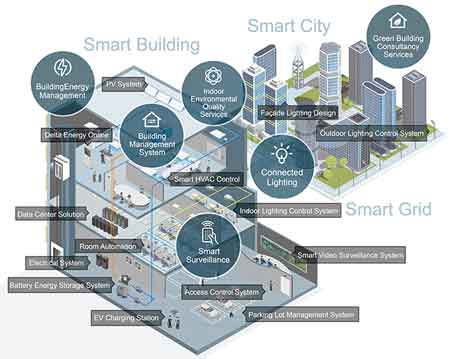
The promise of centralized control over HVAC, lighting, security, and energy flows often collides with these boundaries in practice. Systems behave predictably in isolation, yet reveal constraints when components interact under changing conditions. Data arrives late or incomplete, control sequences conflict, and automation logic struggles to reconcile competing priorities across a live operating environment within a modern Building Automation System.
A building automation system can only operate within the limits of its sensors, controllers, and networks. Data gaps, inconsistent sensor quality, and imperfect trend histories introduce ambiguity into sequences that were assumed to be deterministic during design. Real schedules override assumptions, occupants intervene, and seasonal dynamics expose behaviors that were never visible in testing. These constraints help explain why many facilities encounter the performance patterns examined in Why Building Automation Systems Underperform.
Building automation thrives on data, yet data availability and quality are its first real constraints. Systems often collect vast quantities of sensor points, but raw volume is not the same as usable insight. Without reliable trend histories, clear mapping of data semantics, and consistent point naming, operators struggle to make sense of machine output in ways that support judgment rather than fuel alarm fatigue.
Think you know Building Automation? Take our quick, interactive quiz and test your knowledge in minutes.
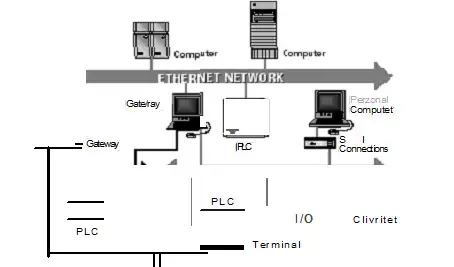
Equally constraining is interoperability. Building systems rarely arrive as a homogeneous environment. Mechanical systems, fire and life safety platforms, access control, and third-party subsystems may use different communication protocols or proprietary interfaces. Bringing these disparate components into a unified automation strategy requires not just technical bridges but careful orchestration, especially when control logic depends on timing and interaction across subsystems, as explored in Control Sequences in Building Automation.
Automation may feel futuristic, but many of the buildings it controls are not new. Legacy systems present a practical limit: older controllers, proprietary architectures, and unsupported software can become barriers to effective modernization. Integrating new automation layers with legacy hardware often introduces complexity rather than clarity, requiring gateways, protocol converters, or custom middleware simply to maintain basic functionality.
This dynamic intersects with the reality of vendor dependency. Systems that are deeply tied to a single manufacturer’s software stack or proprietary tools limit flexibility and can trap facility teams into specific upgrade paths. When the platform reaches end-of-life, the building faces a costly and disruptive migration rather than a smooth evolution, a failure pattern frequently seen in real-world Building Automation Failures.
Modern building automation increasingly leans on cloud connectivity for remote access, analytics, and cross-site coordination. Yet cloud integration introduces a new class of constraint: security and privacy risk. Without robust authentication, encryption, and a segmented network architecture, automation systems can expose sensitive operational controls and occupant data to unauthorized access or disruption.
This tension between the desire for ubiquitous visibility and the reality of vulnerability is a limit that facility managers must reconcile. Automation can extend operational reach, but only if the underlying security posture is sufficiently mature to support it, particularly as systems grow more interconnected and externally accessible.
Many of these performance shortfalls are not caused solely by configuration errors, but by structural and contextual constraints explored in greater detail in the Limits of Building Automation Systems, where automation logic meets physical, data, and human boundaries.
No matter how capable the technology, building automation ultimately operates within the context of human judgment. Operators make choices when sequences misalign with actual use patterns, they override logic when comfort complaints spike, and they adjust setpoints when automation does not anticipate nuanced occupant behavior. These interventions reflect the limits of any automated system: it cannot fully anticipate human decisions, changing occupancy patterns, or evolving organizational priorities.
This human element becomes especially apparent when automation is treated as a substitute for expertise rather than a complement to it. The difference between constrained and responsive systems often lies in how effectively automation supports the Role of the Building Automation Operator, rather than attempting to replace operator judgment altogether.
The boundaries of building automation are not just technical curiosities. They accumulate as operational debt, which shows up as recurring overrides, unexplained comfort variance, mismatched sequences, or energy performance that drifts over time. These are not one-off glitches. They represent the cumulative effect of design assumptions, data quality issues, integration gaps, and the lived reality of a building that never behaves exactly as its digital twin predicted.
Understanding these limitations is not about rejecting automation. It is about grounding expectations in real-world interactions among technology, physical systems, and people. This perspective aligns closely with the system-level judgment explored in How BAS Systems Succeed or Fail, where success depends less on capability and more on alignment.
Download our FREE Electrical Training Catalog and explore a full range of expert-led electrical training courses.

Explore 50+ live, expert-led electrical training courses –