Distribution Automation Data Integration for Operational Control Integrity
By Ilia Alexeev, Director, Customer Solutions, Trilliant
By Ilia Alexeev, Director, Customer Solutions, Trilliant
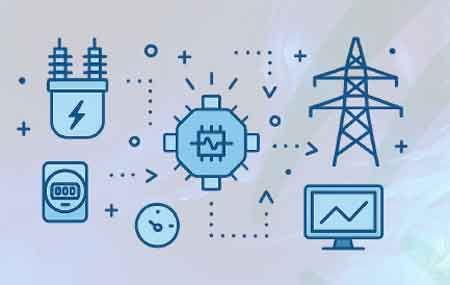

Distribution automation data integration governs how AMI, SCADA, DER, and FLISR telemetry are synchronized into a control grade feeder model, preventing misoperation, load misallocation, and protection errors under high DER penetration.
Distribution automation failures rarely originate in hardware. They emerge when feeder state estimation drifts from physical reality. That drift begins in the integration layer, where topology, voltage magnitude, DER injection, and outage signals must be reconciled into one operational frame of reference.
In high speed automation environments, switching devices execute in sub second intervals while telemetry ingestion, normalization, and validation occur across heterogeneous systems with uneven latency and accuracy constraints. When those constraints are not engineered deliberately, automation decisions become probabilistic rather than deterministic.
The engineering decision is structural. Distribution automation data integration must function as an OT control integrity boundary with defined validation gates, latency ceilings, and device identity enforcement. Without that discipline, small data errors propagate into system level consequences.
Distribution automation data integration must establish a unified feeder context that reconciles AMI events, line sensor inputs, breaker status, DER telemetry, and environmental conditions. This context feeds FLISR, volt VAR optimization, and dynamic feeder reconfiguration. It is not a reporting layer. It is the operational substrate of automation.
AMI extends situational awareness beyond traditional substation telemetry. When structured through an AMI Operational Sensor Network, interval energy data, voltage deviations, and outage events can refine feeder state estimation. However, AMI operates at different sampling intervals than SCADA. Without normalization, temporal misalignment creates switching risk.
Automation logic is commonly executed within an ADMS. If feeder topology models inside the ADMS are not continuously reconciled with DER injection points and AMI voltage endpoints, switching sequences can redistribute load into unverified segments. That is not a configuration error. It is an integration boundary failure.

Utilities deploying broader Grid Management Solutions must define acceptable data freshness thresholds. A feeder state model updated every two seconds may be adequate under steady load, but during fault isolation events, latency exceeding 500 milliseconds can influence the selection of alternate paths.
Feeder automation depends on synchronized confidence levels across heterogeneous devices. Line sensors may report with tight voltage tolerances, while inverter telemetry may carry higher uncertainty margins. If integration logic treats all data as equally reliable, voltage and loading calculations drift beyond acceptable planning margins without triggering alarms.
Threshold discipline requires weighting logic, plausibility checks, and topology validation before data is promoted to control grade. If these filters are too permissive, automation amplifies noise. If too restrictive, valid fault indicators are suppressed. The acceptable boundary is a design decision tied to feeder criticality and DER penetration.
A cascading operational consequence emerges when unsynchronized data drives FLISR. An incorrect isolation decision shifts load to an adjacent feeder, causing thermal stress on downstream transformers. Protective settings operate within design parameters, but cumulative loading increases failure probability over time. The outage impact is not immediate. It compounds across assets.
One utility integrating more than 1,000,000 AMI endpoints into feeder state estimation reduced manual fault-location time by approximately 30 percent after enforcing synchronized event correlation between AMI last gasp signals and line sensors. The performance improvement was attributable to integration discipline rather than algorithmic novelty.
A universal head end and a unified data model reduce schema conflicts and the need for translation layers. This architecture supports hardware interoperability and consistent enforcement of device identity. However, migration to a unified model requires refactoring legacy SCADA integrations and retraining operators on revised feeder representations.
Incremental interface layering preserves legacy stability but increases long term maintenance complexity and schema drift. Each additional interface introduces mapping logic that must be validated under fault conditions. In feeders where DER exceeds 40 percent of peak load, fragmented integration materially increases switching uncertainty.
This deployment tradeoff is not purely financial. It defines how rapidly automation logic can adapt to topology change and DER volatility.
A critical edge case occurs when distributed energy resources remain energized during restoration after fault isolation. If DER telemetry lags behind feeder topology updates, automation logic may assume de-energized segments that are, in fact, backfeeding.
Coordination between distribution automation and a Distributed Energy Resource Management System must be deterministic. Curtailment commands, feeder switching, and inverter status confirmation must operate within defined timing windows. Without strict synchronization, the risk of protective misoperation and field crew exposure increases.
This is not a theoretical condition. High DER neighborhoods routinely exhibit voltage rise and reverse power flow during partial restoration sequences.
Data integration expands the attack surface. Device identity validation, encryption, and behavioral anomaly detection must be embedded at the ingestion stage. Encryption overhead introduces processing latency, creating another threshold discipline decision. Increased security depth can affect sub second automation timing.
If telemetry injection or spoofed device data enters the automation model, reconfiguration logic may execute unnecessary switching. The consequence chain includes load redistribution, voltage deviation, and potential regulatory reporting exposure.
Utilities evaluating ADMS Software often emphasize visualization and analytics. The operational determinant is upstream data integrity. Software cannot compensate for misaligned integration boundaries.
Download our FREE Electrical Training Catalog and explore a full range of expert-led electrical training courses.

Distribution automation data integration defines the boundary between predictive automation and automated error propagation. When integration governance is assigned to generic IT data management rather than OT control engineering, operational nuance is diluted.
This introduces a governance tradeoff that directly affects reliability metrics and compliance exposure. Once automation actions execute without human review, the integration layer becomes the operational gatekeeper. If its validation thresholds are poorly defined, automation accelerates errors at machine speed.
The decision is structural. Treat integration as infrastructure or accept that feeder automation performance will fluctuate with data quality variability.
Explore 50+ live, expert-led electrical training courses –