Protective Relay Testing: Verifying Protection Before It Matters
By William Conklin, Associate Editor
By William Conklin, Associate Editor
Our customized live online or in‑person group training can be delivered to your staff at your location.
Request for Quotation Service
Buyers Submit Free RFQs to top suppliers, no obligation.
Suppliers Browse real project RFQs directly from buyers.
Trust Electricity Forum 40 years connection buyers and suppliers.
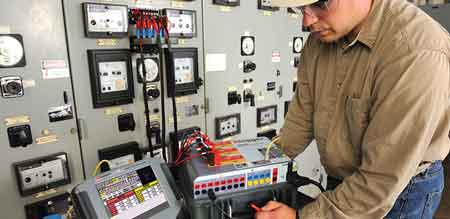
Protective relay testing verifies that installed relays will trip correctly under real fault conditions, confirming settings, timing, and logic so protection schemes operate as intended during commissioning, maintenance, and after system changes.
It is the final safeguard between a protection design that looks correct on paper and one that actually performs under fault conditions. A relay that is installed but never verified can fail silently, leaving equipment and personnel exposed when it matters most.
Protective relays occupy a strange position in electrical systems. They are trusted implicitly, yet they operate almost invisibly, waiting for conditions that may never occur during normal operation. That invisibility is exactly why testing exists. Relay testing is not about learning how protection works or proving theoretical correctness. It is about confirming that a protection system will behave as intended when real fault energy is present, and decisions must be made in milliseconds.
In practice, many protection failures trace back not to poor design, but to unverified assumptions. Settings drift. Logic changes during upgrades. Communication paths degrade quietly. Protective relay testing exists to expose those risks before a fault forces the system to reveal them.
A relay being powered, communicating, and reporting normal status does not mean it will trip correctly. Field experience shows that relays can pass visual inspection and still fail under stress. Misapplied settings, firmware updates, or wiring changes can all compromise expected behavior without producing obvious alarms.
This is especially true where relays interact with upstream devices. A protection scheme that appears sound in isolation can misoperate if timing or coordination assumptions are wrong, which is why testing is closely tied to the realities discussed in relay and circuit breaker coordination. Testing does not redesign coordination, but it confirms that coordination assumptions still hold in the field.

Protective relay testing is most effective when viewed as a lifecycle activity. Commissioning tests establish a baseline, but they are only the starting point. Periodic testing confirms that protection has not degraded over time. Event-driven testing, triggered by a fault or system modification, verifies that protection remains intact under abnormal stress.
This lifecycle view matters because protection environments evolve. Available fault current can change as sources are added or removed, which alters how relays experience system conditions. When fault levels shift, assumptions embedded in relay behavior deserve renewed scrutiny, particularly in systems where available fault current approaches equipment limits.
At its core, relay testing answers a narrow but critical question: will this relay issue the correct output at the correct time for the conditions it is expected to encounter?
That verification spans several dimensions. Timing must align with the coordination intent. Logic must respond properly to input conditions. Output contacts must operate reliably. In more complex systems, communication-assisted functions must be confirmed end-to-end. None of this requires re-explaining what a relay is; that uncertainty is already resolved by what is a protective relay. Testing focuses on behavior, not definition.
One of the most dangerous outcomes in protection systems is false confidence. When testing is reduced to cursory checks or skipped entirely, systems appear protected while quietly accumulating risk. This is particularly problematic in installations that rely on layered protection, where a single relay failure can cascade into broader outages.
Testing also helps distinguish nuisance operations from legitimate protection events. Without verification, operators may misinterpret relay actions, leading to inappropriate adjustments that weaken protection. Understanding how testing fits into the broader context of power system protection helps prevent reactive changes that solve one symptom while introducing another.
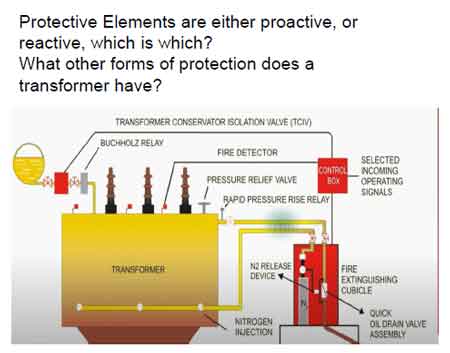
Some applications leave little margin for error. Transformer protection schemes often rely on differential or restraint logic that can be sensitive to wiring errors, CT polarity issues, or ratio mismatches. In these cases, testing is not merely confirmatory; it is diagnostic. That distinction becomes clearer when viewed alongside transformer protection, where a single misoperation can result in severe equipment damage.
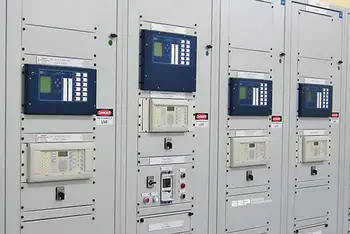
Similarly, installations using metal-clad switchgear introduce mechanical and interlocking realities that influence how protection behaves during fault conditions. Relay testing cannot correct mechanical issues, but it can reveal mismatches between electrical intent and physical execution, particularly in environments described by metal-clad switchgear.
Relay testing is often confused with instruction. This page intentionally avoids procedural steps, test equipment selection, or certification pathways. Those topics belong elsewhere and serve a different intent. The focus here is on why testing exists, what risks it mitigates, and how it supports protection reliability.
If the reader’s uncertainty concerns how relays function internally, that belongs to protective relay fundamentals, not to a testing discussion.
Protection decisions are layered. Design defines intent. Coordination aligns behavior. Installation implements the plan. Testing verifies reality. Skipping any layer weakens the entire system.
Relay testing sits at the intersection of abstract protection philosophy and real-world behavior. It does not replace sound design, and it does not guarantee perfect outcomes. What it does provide is evidence — evidence that protection is not merely present, but functional.
A relay that has never been tested is not protection. It is an assumption.
Once protective relay testing is clearly understood as a verification discipline rather than a design or troubleshooting shortcut, attention naturally shifts toward implementation depth. At that stage, professionals move beyond confirming that protection operates and begin examining how relay functions behave under varied system conditions, how testing methods differ by application, and how device-level behavior interacts with real installations.
Download our FREE Electrical Training Catalog and explore a full range of expert-led electrical training courses.

Trying to compress protection philosophy, verification logic, and device mechanics into a single explanation usually weakens all three. A clearer path is to establish testing intent and boundaries first, then develop practical competence separately through focused study and applied environments such as basic protective relay training, where relay behavior, settings, and testing practices can be explored without blurring the purpose of system-level protection testing.
Explore 50+ live, expert-led electrical training courses –