Distributed Energy Resource Management System Enables Real-time DER Coordination
By R.W. Hurst, Editor
By R.W. Hurst, Editor
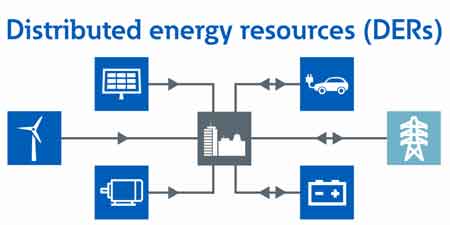
A distributed energy resource management system (DERMS) enables utilities to forecast grid conditions, dispatch DERs automatically, manage load flexibility, and maintain distribution system stability, allowing operators to increase asset utilization while preventing overloads and improving reliability.
Utilities once treated distributed energy resources as passive additions to the network. Solar installations, battery systems, and controllable loads connected at the grid edge, but their behavior remained largely independent of distribution operations. That model no longer holds. When Distributed Energy Resources (DER) penetration increases, unmanaged output can create voltage instability, overload transformers, and reduce operational certainty.
The distributed energy resource management system changes that dynamic by enabling utilities to actively coordinate distributed resources and maintain real-time operational control. The operational relationship between DER coordination and centralized control authority is further clarified in ADMS vs DERMS, where DERMS supports grid flexibility while ADMS retains switching and stability authority.
The defining function of a distributed energy resource management system is orchestration. It continuously evaluates distribution system conditions and determines when distributed resources should adjust output, charge, discharge, or reduce load. This operational coordination relies on accurate electrical models created through Grid Modeling, ensuring that DER dispatch decisions reflect actual feeder topology, load conditions, and system constraints.
This ability to dispatch resources in response to real grid conditions fundamentally alters how distribution infrastructure is utilized. Instead of building new infrastructure to meet peak demand, utilities can use DERMS to temporarily increase available capacity by coordinating flexible resources already connected to the network. Batteries discharge during peak loading periods, electric vehicle charging can be shifted or reduced, and distributed generation can be controlled to prevent feeder overload.
Stay informed with our FREE Grid Optimization, DER & Flexibility Newsletter — get the latest news, breakthrough technologies, and expert insights, delivered straight to your inbox.
This coordination transforms DERs from isolated, customer-owned devices into controllable grid-support resources.
Effective coordination begins with accurate awareness of grid conditions. The distributed energy resource management system continuously monitors feeder loading, network topology, and DER availability. It forecasts load growth and identifies emerging constraints before they cause service disruptions. This forecasting capability enables operators to intervene early, adjusting the behavior of distributed resources to maintain safe operating conditions.
Visibility extends beyond feeder-level awareness. DERMS integrates telemetry and operational data to maintain a continuous operational model of the distribution system. This real-time awareness is supported by advanced data streams such as AMI Data, which provides granular load visibility and real-time voltage and consumption measurements across the network.
Without this level of visibility, distributed energy resources remain operationally disconnected from system needs. With it, they become responsive grid participants.
One of the most consequential benefits of a distributed energy resource management system is its ability to reduce physical strain on the distribution infrastructure. Traditional grid planning assumes infrastructure must be sized to accommodate peak demand, even if that peak occurs only briefly. DERMS allows utilities to actively manage peak demand by coordinating distributed resources.
Demand flexibility, battery dispatch, and controlled charging reduce peak loading on feeders and transformers. This flexibility delays or eliminates the need for costly infrastructure expansion. These capabilities form part of broader Grid Management Solutions, where distributed resource coordination strengthens overall operational efficiency and grid stability.
This operational flexibility becomes increasingly important as electrification accelerates and load growth becomes less predictable.
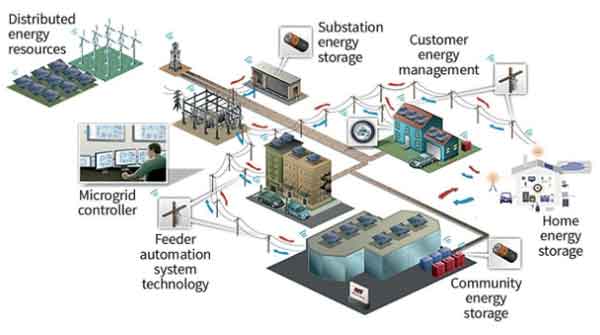
Distribution infrastructure is traditionally underutilized for much of its operating life. Transformers, feeders, and substations must be sized for peak demand, even though average utilization remains significantly lower. DERMS enables utilities to safely increase utilization by dynamically managing the behavior of distributed resources.
When DERMS identifies available capacity, utilities can safely connect additional loads or generation without compromising reliability. This improves infrastructure efficiency and accelerates customer interconnection timelines. The coordination of distributed resources alongside centralized operational control provided by Advanced Distribution Management System (ADMS) ensures that flexibility does not compromise grid stability.
This capability improves both operational efficiency and customer service outcomes.
Grid conditions change continuously due to load variation, distributed generation output, and switching operations. DERMS provides automated response capabilities that enhance grid resilience. When the system detects overload risk or instability, it can dispatch distributed resources to reduce load or inject generation to stabilize grid conditions.
These automated coordination capabilities directly improve Power System Reliability by ensuring that distributed resources actively support system stability rather than introduce uncontrolled variability.
By coordinating distributed resources continuously rather than episodically, DERMS strengthens overall system reliability.
A distributed energy resource management system relies on standardized communication protocols to coordinate diverse distributed resources. Modern implementations allow resources from multiple manufacturers and technologies to operate within a unified coordination framework. This interoperability ensures utilities can scale DER coordination as distributed energy adoption accelerates.
Secure coordination is essential because DERMS operates across thousands of connected grid-edge devices. Protecting these communication pathways is part of broader DER Cybersecurity strategies that ensure coordinated resources remain secure while maintaining operational responsiveness.
Download our FREE Electrical Training Catalog and explore a full range of expert-led electrical training courses.

This scalable architecture ensures DERMS remains effective as distributed energy adoption accelerates.
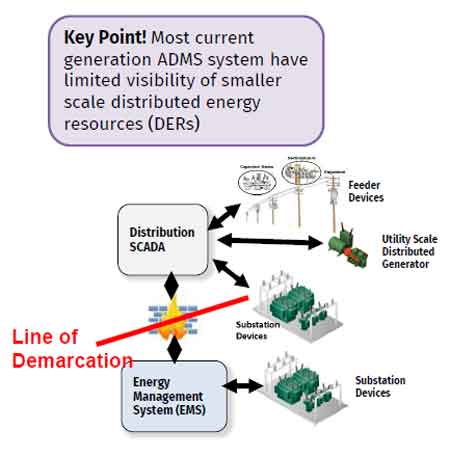
DERMS does not replace centralized distribution control systems. It operates alongside them, providing resource coordination while centralized systems maintain switching authority, voltage regulation, and fault restoration control. This coordination framework is supported by modern ADMS Software, which ensures operators maintain full operational authority while DERMS coordinates distributed resource behavior.
This division of responsibility preserves operational safety while enabling flexible resource coordination.
Together, these systems provide the operational intelligence and execution capability required for modern distribution systems.
Distribution systems are undergoing a structural transformation. Distributed energy resources are no longer peripheral technologies. They are becoming central components of grid operation. Without coordination, their variability introduces operational risk. With DERMS, they become controllable assets that strengthen grid stability.
The distributed energy resource management system provides the operational framework for managing this transition. By forecasting conditions, coordinating distributed resources, and maintaining operational flexibility, DERMS allows utilities to operate distribution networks with greater precision, efficiency, and reliability.
Explore 50+ live, expert-led electrical training courses –