Grid Resiliency In T&D Performance And Recovery
By Jason Strawbridge, Mississippi Power Company
By Jason Strawbridge, Mississippi Power Company

Grid resiliency is the ability of a power grid to withstand, adapt to, and recover from disruptions by leveraging system visibility, localized data, and network flexibility, while minimizing outage duration, customer impact, and restoration time.
Grid resiliency is the ability of an electrical power system to withstand, adapt to, and recover from disruptive events such as storms, wildfires, equipment failures, and cyber incidents, while minimizing the impact of outages and restoration time.
This definition describes system behavior when operating conditions exceed design limits. A resilient grid does not eliminate outages. It limits their spread, maintains partial service where possible, and restores functionality in a controlled sequence.
Resiliency emerges from how infrastructure, data visibility, and network configuration interact during disruption. Transmission paths, distribution feeders, substations, and sensing layers collectively determine whether a disturbance remains localized or escalates across the system.
Grid resiliency and reliability describe different performance conditions within the same system.
Reliability reflects expected performance under normal conditions. It measures how often outages occur and how long they last within standard operating limits. These characteristics are formalized through metrics within Grid Reliability and broader service expectations in Utility Reliability.
Resiliency applies when those limits are exceeded. It reflects how the system behaves during high-impact events involving multiple failures or environmental stress beyond normal design thresholds.
A system can perform well under steady conditions yet fail to maintain control during disruption. Resiliency determines whether failures remain contained or propagate through interconnected network elements.
Resiliency depends on how accurately the system can observe its own condition during an event. In practice, disruption often degrades visibility before restoration begins.

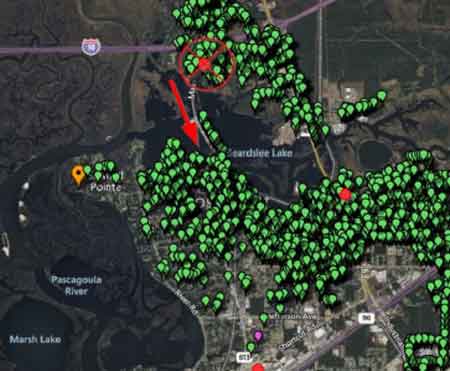
The presentation demonstrates how localized environmental data improves system awareness during disruption. Utility-owned weather sensors and air quality monitors provide high-frequency data across service territories, capturing parameters such as wind speed, temperature, humidity, and particulate levels.
This localized data fills gaps left by regional weather sources. In one example, sensor placement near critical infrastructure enabled operators to observe environmental conditions that directly affected outage locations, rather than relying on distant weather stations.
When disruption occurs, this visibility changes the system response. Operators can correlate outages with real-time environmental conditions, improving fault isolation and restoration sequencing. Without this data, system behavior appears uniform even when conditions vary significantly across the network.
Resiliency becomes measurable during large-scale events. A storm affecting a distribution network can damage multiple feeders and degrade communication infrastructure.
In this condition, the system transitions from normal operation to adaptive response. Faulted sections are isolated, alternate supply paths are used where available, and restoration efforts focus on stabilizing the network before full recovery.
In the presentation example, a tornado disrupted communication nodes, while elevated network devices, such as streetlight controllers, maintained connectivity in affected areas. This allowed operators to confirm restoration progress in sections of the network that would otherwise have remained unobservable.
Outage impact during these events can affect tens of thousands of customers, with restoration timelines ranging from several hours to multiple days, depending on damage density. The difference between resilient and non-resilient systems is the speed at which situational awareness is restored and used to guide recovery.
Operational coordination during these events is supported by systems such as an Outage Management System, but these systems rely on data accuracy and network structure to function effectively.
Resiliency depends on how infrastructure adapts when conditions change. Systems with sectionalizing capability, alternate feeds, and distributed sensing maintain control even as parts of the network fail.
Localized sensing and communication layers extend this capability. Data collected at short intervals allows operators to detect environmental changes and system response in near real time. This improves coordination across reliability, restoration, and field operations.
This adaptive behavior aligns with strategies discussed in Power Grid Resilience and hazard-focused approaches such as Wildfire Resilience.
However, resiliency is constrained by physical and informational limits. Severe events can simultaneously damage equipment, interrupt communication, and reduce system visibility.
A critical limitation is that increased system complexity can introduce new failure conditions. Additional sensing, automation, and communication layers improve adaptability but increase dependence on accurate data. If system inputs are incorrect or delayed, restoration actions may be misaligned with actual field conditions.
Designing for grid resiliency requires balancing visibility, redundancy, and system complexity.
Expanding sensing infrastructure improves awareness but increases dependence on data management and communication. Increasing redundancy improves recovery pathways but raises capital and maintenance requirements.
Utilities must evaluate these trade-offs while aligning with risk-reduction strategies, such as Wildfire Risk Reduction, and structured planning approaches, such as Utility Wildfire Mitigation Plans.
These decisions influence how effectively the system adapts under disruption rather than whether disruption occurs.
When grid resiliency is insufficient, disruption events propagate beyond initial failure points and expand across interconnected system elements.
Loss of visibility, delayed fault isolation, and incomplete system awareness extend outage duration and increase restoration complexity.
Stay informed with our FREE Storm, Risk & Grid Resilience Newsletter — get the latest news, breakthrough technologies, and expert insights, delivered straight to your inbox.
This condition is critical because it transforms a localized disturbance into a system-wide operational problem, in which recovery depends on manual intervention and extended field deployment rather than a controlled system response.
Advantages To Instructor-Led Training – Instructor-Led Course, Customized Training, Multiple Locations, Economical, CEU Credits, Course Discounts.
Request For QuotationWhether you would prefer Live Online or In-Person instruction, our electrical training courses can be tailored to meet your company's specific requirements and delivered to your employees in one location or at various locations.