Utility Reliability in Electric Power System Performance
By Lenaig Le Gall, Smart Grid Program Manager, EDF Innovation Lab
By Lenaig Le Gall, Smart Grid Program Manager, EDF Innovation Lab
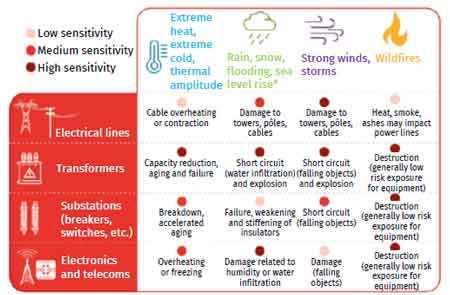
Utility reliability measures how consistently electric power is delivered based on outage frequency, duration, and restoration performance. Poor reliability increases interruptions, equipment stress, and operational risk across distribution systems.
Utility reliability is the ability of an electric utility system to deliver continuous electrical service under normal operating conditions, defined by outage frequency and outage duration across the network. It reflects how often interruptions occur, how long they persist, and how effectively the system restores service. Poor reliability increases customer exposure to interruptions, raises operational stress on equipment, and signals underlying weaknesses in system design, maintenance, or field execution.
Utility reliability is not a measure of how a system recovers from major events. It represents steady-state performance, where most customer experience is determined. A system can be structurally sound yet operationally unreliable if faults occur frequently or restoration processes are slow.
Utility reliability is the consistent delivery of electrical power without interruption across a defined service area. It is governed by two measurable behaviors: how often faults occur and how quickly service is restored. These behaviors are shaped by system design, material selection, environmental exposure, and operational response.
In practice, reliability emerges from a continuous lifecycle. It is engineered during planning, validated through electrical, thermal, mechanical, and physical considerations, and maintained through field operations. This lifecycle aligns with how utilities design, build, and operate both overhead and underground systems, where failure prevention and restoration capability are equally important.
Utility reliability includes two distinct dimensions. Adequacy refers to whether the system has sufficient capacity to meet expected demand. This includes generation supply, transformer loading, and feeder capacity.

Operational reliability refers to how the system performs in real time. It includes protection coordination, switching capability, equipment condition, and crew response. Most customer outages result from operational reliability issues rather than capacity shortages.
A system may meet all adequacy requirements and still deliver poor service if fault exposure is high or restoration performance is limited.
Outage frequency reflects how often customers experience interruptions. It is driven by exposure to faults such as vegetation contact, insulation breakdown, conductor damage, or wildlife interaction. High frequency indicates that the system is vulnerable to recurring disturbances.
Outage duration is the time customers remain without service after a fault occurs. It depends on system visibility, switching capability, and crew response time. Long durations often indicate limited automation or complex feeder configurations.
These two dimensions must be evaluated together. Reducing frequency without improving restoration may not significantly improve overall service performance.
Utility reliability is commonly expressed through three indices. SAIDI represents the average total outage duration experienced by customers over a year. SAIFI represents the average number of interruptions per customer. CAIDI represents the average restoration time per outage.
These metrics summarize system behavior but do not explain its causes. A low SAIDI value may result from infrequent but long outages, while a low SAIFI value may hide extended restoration times. Interpretation requires linking metrics to actual system conditions and operational performance. For deeper analysis and calculation methods, refer to electric utility reliability metrics.
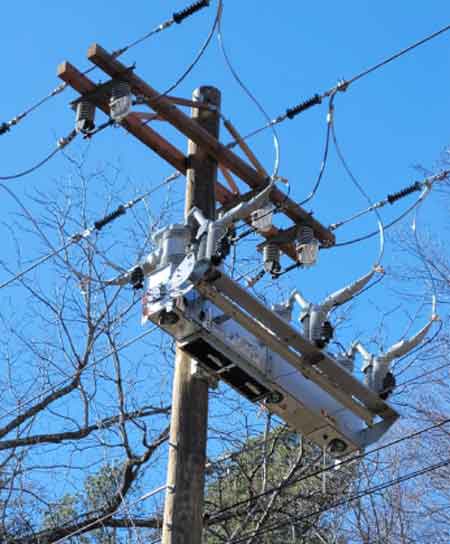
Utility reliability is strongly influenced by physical system conditions. Overhead systems are exposed to environmental stress, including wind, vegetation, and contamination. Conductor contact with trees can cause arcing and flashover, leading to faults that increase outage frequency. Covered conductors and insulation improvements can reduce these events by limiting exposure and preventing ignition.
Material selection also affects reliability. Corrosion of aluminum conductors in coastal environments can increase failure rates, while alternative materials such as copper improve durability. Mechanical damage, thermal stress, and insulation degradation further contribute to system vulnerability.
Underground systems reduce exposure to external faults but introduce different risks such as insulation failure and water ingress. Reliability depends on balancing these risks through design and maintenance practices.
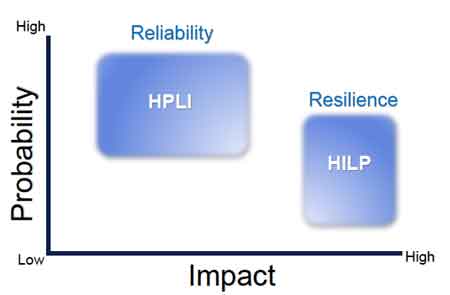
Utility reliability is distinct from grid resiliency, which focuses on how the system withstands and recovers from major disturbances. It also differs from power grid resilience, which includes system adaptation and infrastructure hardening.
Utility reliability operates in the steady-state domain, where performance is driven by routine faults and operational execution rather than extreme events.
Consider a distribution feeder serving a mixed residential and commercial load. A conductor contacts vegetation during moderate wind conditions, creating a fault that trips the feeder. Protection systems correctly isolate the fault, but the feeder lacks automated sectionalizing.
All downstream customers lose power until a crew locates the fault and performs manual switching. In this case, outage frequency is driven by environmental exposure, while outage duration is extended due to limited automation.
This failure mode is difficult to detect in real time because the protection system operates correctly while restoration performance remains constrained by system configuration.
Improving utility reliability requires balancing cost and performance. Installing automated switching devices can reduce outage duration by enabling faster isolation and restoration, but the capital investment must be justified by load density and outage history.
Similarly, replacing bare conductors with covered conductors can reduce fault frequency in vegetation-heavy areas, but increases material and installation costs. These tradeoffs define how utilities prioritize reliability improvements within constrained budgets.
Download our FREE Electrical Training Catalog and explore a full range of expert-led electrical training courses.

Programs such as utility wildfire mitigation plans address fault reduction by targeting ignition sources and exposure risks.
A typical distribution system may experience 1 to 2 interruptions per customer annually. If the average restoration time is 120 minutes, the total outage duration ranges from 120 to 240 minutes per year. Reducing restoration time by 30 minutes per event can lower annual outage duration by up to 25 percent.
Operational tools such as outage management system platforms improve visibility, fault location, and crew coordination, directly reducing outage duration.
If utility reliability is not actively managed through design, material selection, and operational execution, recurring faults and delayed restoration will accumulate into measurable customer impact, regulatory pressure, and accelerated equipment stress, even when system capacity remains adequate.
Utility reliability is influenced by environmental risk mitigation and system hardening practices. Strategies such as wildfire risk reduction reduce ignition-related faults, while broader approaches like wildfire resilience improve system survivability during extreme conditions.
These strategies reduce fault exposure and improve service continuity, but reliability remains defined by everyday system performance.
Explore 50+ live, expert-led electrical training courses –