Protective Relay Training - Basic
Our customized live online or in‑person group training can be delivered to your staff at your location.
- Live Online
- 12 hours Instructor-led
- Group Training Available
Regular Price:
$699
Coupon Price:
$599
Saskatchewan Renewable Energy Plan outlines cost-effective alternatives to nuclear power, combining small hydro, wind power, biomass, cogeneration, waste heat, and energy efficiency to meet demand, lower emissions, create jobs, and provide baseload with coordinated hydro.
What This Means
A portfolio of efficiency, hydro, wind, waste heat, and cogeneration to meet demand while cutting costs and emissions.
- 125 MW small hydro with First Nations and Metis partnerships
- 50 MW biomass using forest and wood waste feedstocks
- 300 MW efficiency upgrades across industry, farms, and homes
Following is the viewpoint of the writer, director of energy and water policy for the Saskatchewan Environmental Society.
Bruce Power is seeking government approval to build a 2,200 megawatt nuclear power plant in Saskatchewan, following the Bruce Power study released earlier.
It says there will be demand for at least another 1,000 megawatts of electricity in our province by 2020, a figure first explored when the nuclear feasibility study began under provincial review. The additional power created by its nuclear plant would be exported to Alberta.
Bruce Power's proposal is a big financial gamble for Saskatchewan taxpayers. Ontario just received a bid from Atomic Energy of Canada on a slightly bigger nuclear power plant of 2,400 MW, amid talk of a nuclear renaissance involving the two provinces. The estimated cost was $26 billion.
Ontario wisely declined to proceed, even as a report urged Saskatchewan to build a reactor during the same period. Consumers there are still paying a monthly levy on their power bills to cover the huge cost overruns on nuclear reactors built in the 1980s and 1990s.
What would a better alternative to a nuclear power plant look like? My suggestion is that SaskPower opt for a range of electricity efficiency and renewable electricity measures, with progress toward doubling renewable electricity by 2030 already underway, that have low greenhouse gas emissions.
If we need another 1,000 megawatts of extra power by 2020 to supply our own needs, here is what the package could look like:
1) 125 MW of low-impact, small-scale hydro. SaskPower could approach First Nations and Métis communities in Northern Saskatchewan and offer to develop such hydro facilities jointly with them, providing good jobs and real economic benefits;
2) 50 mW of biomass generation (burning wood wastes to generate electricity), with new jobs for communities along the forest fringe;
3) 25 mW from waste heat recovery at natural gas compressor stations and installation of landfill gas at large city landfills;
4) 300 mW from efficiency measures. For example, as existing electric motors wear out, incentives would be offered to industry to install the most efficient ones on the market. Restaurants would be encouraged to install super energy efficient refrigeration units and farmers would be supported in installing the most energy efficient irrigation systems available. Every electricity consumer in Saskatchewan would get financial help to become more efficient in using electricity.
Vermont and California have done this for years and proven that energy efficiency creates many new jobs and is the cheapest option for achieving additional capability from your electricity system;
5) 200 mW from co-generation. We already have a 228 mW co-generation plant at the Cory potash mine, where both electricity and steam for industrial processing are produced on-site. Co-generation is a much more efficient way to use natural gas, operating at more than 56 per cent efficiency versus 33 per cent for a conventional power plant;
6) 300 mW of wind power, geographically dispersed across southern Saskatchewan. This could take the form of joint ventures between SaskPower, which seeks green power initiatives, and wind farm co-operatives owned by farmers. The wind power output should be coordinated with hydro from Saskatchewan and Manitoba.
As Denmark and the state of Washington have demonstrated, the cost is very low to co-ordinate wind power and hydro power to provide reliable base load electricity.
This package creates jobs all across Saskatchewan rather than jobs only where a nuclear power plant is built. It is greenhouse gas-friendly. These smaller projects can be constructed as needed, rather than come on line all at once in 2020. Finally, this package is a lot cheaper than a nuclear power plant.
At best, a nuclear plant will cost 15 cents a kW hour. Our renewable energy and energy efficiency package will cost no more than 10 cents a kW hour. The energy efficiency measures can be done by SaskPower for less than seven cents per kW hour.
We in Saskatchewan don't need a nuclear power plant, especially since the province scrapped its nuclear power plan after widespread consultation. We are blessed with much better alternatives.
Related News
Related News
Electricity Prices Surge to Record as Europe Struggles to Keep Lights on
France Electricity Crisis drives record power prices as nuclear outages squeeze supply, forcing energy imports,…
View more
British Columbia Accelerates Clean Energy Shift
BC Hydro Grid Modernization accelerates clean energy and electrification, upgrading transmission lines, substations, and hydro…
View more
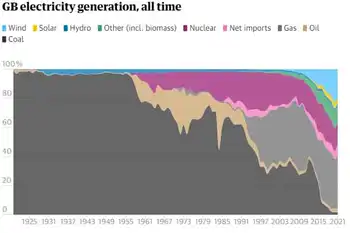
Energy dashboard: how is electricity generated in Great Britain?
Great Britain electricity generation spans renewables and baseload: wind, solar, nuclear, gas, and biomass, supported…
View more
Wartsila to Power USA’s First Battery-Electric High-Speed Ferries
San Francisco Battery-Electric Ferries will deliver zero-emission, high-speed passenger service powered by Wartsila electric propulsion,…
View more
Wasteful air conditioning adds $200 to summer energy bills, reveals BC Hydro
BC Hydro Air Conditioning Efficiency Tips help cut energy bills as HVAC use rises. Avoid…
View more
More red ink at Manitoba Hydro as need for new power generation looms
Manitoba NDP Energy Financing Strategy outlines public ownership of renewables, halts private wind farms, stabilizes…
View more
Sign Up for Electricity Forum’s Newsletter
Stay informed with our FREE Newsletter — get the latest news, breakthrough technologies, and expert insights, delivered straight to your inbox.
Electricity Today T&D Magazine Subscribe for FREE

Stay informed with the latest T&D policies and technologies.
- Timely insights from industry experts
- Practical solutions T&D engineers
- Free access to every issue
