CSA Z462 Arc Flash Training – Electrical Safety Compliance Course
Our customized live online or in‑person group training can be delivered to your staff at your location.

- Live Online
- 6 hours Instructor-led
- Group Training Available
Regular Price:
$249
Coupon Price:
$199
Kemper County Clean Coal Lawsuit challenges DOE funding and NEPA review for Mississippi Power's IGCC gasification plant, citing carbon capture claims, CCPI grants, loan guarantees, IRS tax credits, and Earthjustice, Sierra Club litigation.
What's Behind the News
A legal challenge alleging DOE violated NEPA in funding Mississippi Power's IGCC coal gasification plant.
- Sierra Club suit filed via Earthjustice
- Claims NEPA ignored in DOE funding decisions
- IGCC plant to convert coal to synthesis gas
- DOE grants, IRS tax credits, loan guarantees
- Project targets 65% carbon capture; critics doubt
The Sierra Club has filed a federal lawsuit against the U.S. Department of Energy accusing the agency of providing incentives for a $2 billion coal plant in Mississippi without conducting an adequate environmental review of the project.
Mississippi Power Co. is building the 582-megawatt plant near the Liberty community in Kemper County, in a state where energy projects in Mississippi are being newly promoted.
It will use a process that converts coal into a synthesis gas that can generate electricity with fewer emissions than existing pulverized coal power plants.
The suit filed on behalf of the San Francisco-based environmental group alleges DOE ignored the National Environmental Policy Act NEPA to consider other clean-energy alternatives amid the ongoing power plant debate over clean air and cost concerns that have been a focus of the Obama administration.
"The Department of Energy didn't play by the rules or the law in issuing the funding and financing for the Kemper County plant, given the risk of failed experimental plants elsewhere today. It think it's unconscionable the U.S. taxpayer is being asked to pony up $600 million guarantee up to $2 billion," said Louie Miller, director of the Mississippi Sierra Club. "Why are we subsidizing a Fortune 500 company?"
The complaint names as defendants the agency its director Steven Chu Carol M. Borgstrom, director of DOE's Office of NEPA Policy and Compliance and Richard A. Hargis, Jr., the NEPA document manager for DOE's National Energy Technology Laboratory.
Tiffany Edwards, a DOE spokeswoman, said the agency officials "will review the complaint and we are confident we acted lawfully."
According to Mississippi Power's website, the coal plant project will receive a $270 million grant from the DOE to offset the cost of constructing the facility. The company said it also will receive $133 million in investment tax credits approved by the IRS provided under the National Energy Policy Act of 2005, and loan guarantees from the federal government as the Mississippi PSC rates decisions shape project economics across the state. Mississippi Power has also applied for an additional $279 million in IRS tax credits, according to the site.
A spokeswoman for Mississippi Power didn't immediately respond to requests for comment.
"They're getting a lot of help from a lot of different places," said Abigail Dillen, an attorney with Earthjustice on coal plants, a nonprofit law firm that filed the suit on behalf of the Sierra Club.
In the complaint, the Sierra Club said President Obama has set a target date of 2035 for the country to get 80 percent of its electricity from clean energy technology. However, in administering federal grant and loan guarantee programs, the agency isn't challenging the industry to propose cutting-edge projects that rely on clean energy resources, the complaint said.
The Sierra Club has alleged the plant will emit 5.7 million tons and year.
Verdell Hawkins, Mississippi Power spokesman, said the facility will use technology that will capture 65 percent of the carbon emissions, reflecting moves like Oklahoma coal plant cleanups announced regionally, which is the equivalent of a similarly sized natural gas plant.
The lawsuit said the DOE's selection process wasn't subject to public comment, even as state attorneys general in other states have opposed coal plants in related debates. The DOE opened its second of three rounds of solicitations for the Clean Coal Power Initiative in 2004. After receiving 13 applications, DOE prepared a summary environmental "critique" of eleven of the proposals based on information provided by the applicants, the suit said.
All the information in the environmental critique, including the identity of the applicants and the nature of the projects submitted, remains confidential, the suit said.
In late 2004, four projects were selected to receive CCPI funding. Among those, was the Kemper County plant, which was awarded $293 million, including a $23 million grant it had earlier received. The others included another coal-fired plant and two projects focused on pollution control technology for coal-fired power plants, according to the suit.
Dillen said the DOE received a "fairly unambitious array of projects" and decided to select among them rather than push companies to pursue more innovative plans that were in line with the clean energy initiative.
Related News
Related News

3-layer non-medical masks now recommended by Canada's top public health doctor
Canada Three-Layer Mask Recommendation advises non-medical masks with a polypropylene filter layer and tightly woven…
View more

Notley announces plans to move Alberta's electricity grid to net-zero by 2035 if elected
Alberta NDP Net-Zero Electricity Plan targets a 2035 clean grid, expands renewable energy, cuts emissions,…
View more
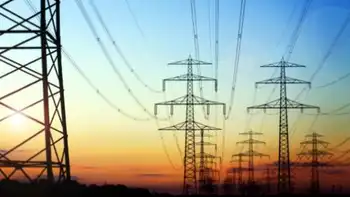
Canada Faces Critical Crunch in Electrical Supply
Canada Electricity Supply Crunch underscores grid reliability risks, aging infrastructure, and rising demand, pushing upgrades…
View more
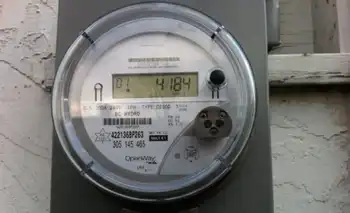
B.C. Commercial electricity consumption plummets during COVID-19 pandemic
BC Hydro COVID-19 Relief Fund enables small businesses to waive electricity bills for commercial properties…
View more
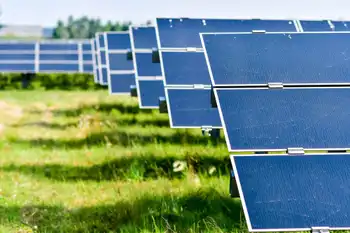
'That can keep you up at night': Lessons for Canada from Europe's power crisis
Canada Net-Zero Grid Lessons highlight Europe's energy transition risks: Germany's power prices, wind and solar…
View more
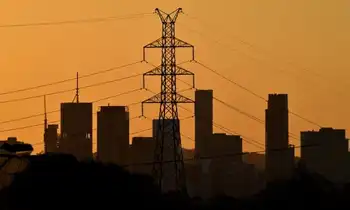
California's Next Electricity Headache Is a Looming Shortage
California Electricity Reserve Mandate requires 3.3 GW of new capacity to bolster grid reliability amid…
View more
Sign Up for Electricity Forum’s Newsletter
Stay informed with our FREE Newsletter — get the latest news, breakthrough technologies, and expert insights, delivered straight to your inbox.
Electricity Today T&D Magazine Subscribe for FREE

Stay informed with the latest T&D policies and technologies.
- Timely insights from industry experts
- Practical solutions T&D engineers
- Free access to every issue

