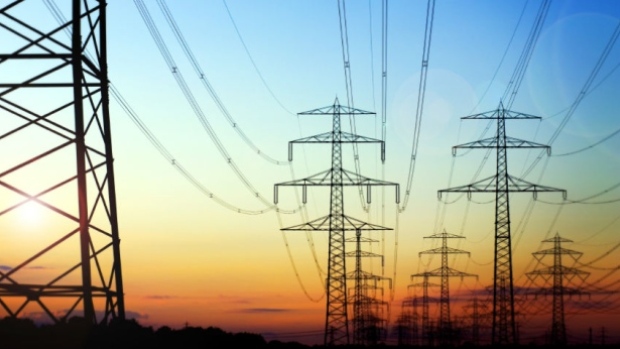
Substation Relay Protection Training
Our customized live online or in‑person group training can be delivered to your staff at your location.
- Live Online
- 12 hours Instructor-led
- Group Training Available
Regular Price:
$699
Coupon Price:
$599
OTTAWA
—
Canada Grid Doubling Plan outlines a path to expand generation, upgrade transmission, partner with Indigenous communities, and drive widespread electrification while targeting long-term affordability and reliability across provinces through 2050.
Inside the Issue
-
Target to double national grid capacity by 2050
-
Natural gas to play a larger role under new rules
-
More than C$1 trillion in expected construction costs
-
Workforce needs are estimated at 130,000 additional workers
Canada set a long-term target to double national electricity capacity by 2050, positioning clean power as the backbone of affordability, competitiveness, and emissions reduction. Announced on May 14, 2026, the clean electricity strategy frames an economy-wide push toward electrification while emphasizing reliability and cost control for most households. The plan calls for a broad supply mix and a coordinated build-out sized to future demand, with federal direction intended to align provincial utilities, regulators, and project developers around shared objectives.
Implementation would rely on multiple technologies and fuels. New federal regulations are expected to give natural gas a larger role in building out capacity, alongside hydro, nuclear, wind, solar, carbon capture, and geothermal resources. Policymakers underscore that partnerships with Indigenous communities are essential to project siting, participation, and benefits sharing. Early estimates place construction outlays at more than C$1 trillion, reflecting the combined needs of generation, interconnections, and grid modernization over the next two decades.
Labor supply is pivotal: the government forecasts the sector will need about 130,000 additional workers to meet construction and operations requirements through mid-century. The strategy also signals a shift from earlier clean electricity regulations advanced under the previous government, which focused on unit-level carbon limits by 2050. To support end-use savings, the plan references tax credits and a potential return of home energy retrofits that could reach up to one million households, reinforcing the affordability objective alongside supply-side additions.
Policy stakeholders have welcomed the directional clarity but emphasized that execution will hinge on specifics. Success depends on how quickly governments and utilities expand clean generation capacity, strengthen transmission, and enable widespread electrification, including demand growth in industry and transport. With a short timeline and a complex resource mix, the strategy acknowledges that rules alone will not suffice, and that practical delivery, permitting, and capital mobilization will determine outcomes.
System reliability and capital sequencing remain central concerns for planners. For additional context on investment priorities that underpin dependable service, see canada grid reliability investment for sector background. Long-range resource outlooks to 2050 will shape procurement and intertie decisions; readers may also refer to canada electricity production 2050 for broader planning themes relevant to provincial portfolios.
Regional collaboration and community resilience will influence how projects advance. Maritime coordination is a continuing focus, as reflected in discussions around atlantic electricity integration opportunities that can balance variable output and share reserves, an issue that resonates across the national build-out. At the distribution edge, industry conversations frequently explore the role of flexible, community-scale solutions; see canada microgrid future for additional perspective on resilience topics. Provinces are already moving to accelerate cleaner supply, including initiatives highlighted in bc accellerates clean energy shift, as utilities prepare for the scale and timing required through 2050.
Related News
Related News
Hydro One investor overview spotlights smart-grid, storage and digital investments
Hydro One Smart Grid Investments leads the utility's post-1st quarter 2026 investor overview, highlighting grid…
View more
Ontario electricity boom raises grid capacity and connection concerns
Ontario Grid Connection Risks are emerging as demand growth drives generation, transmission, storage and data-centre…
View more
Hydro One wants to spend another $6-million to redesign bills
Hydro One Bill Redesign Spending sparks debate over Ontario Energy Board regulation, rate applications, privatization,…
View more

UK Power Networks Opens Smart Grid System to IDNO-Connected Projects
UK Power Networks Smart Grid access will extend DERMS capabilities to IDNO-connected renewable projects, aiming…
View more
Five EU states push back on Commission's grid plans, warn on higher costs
EU Grids Package pushback intensifies as Bulgaria, Finland, France, Poland and Sweden warn that centralised…
View more
G20 energy ministers back infrastructure and supply-chain initiatives
G20 Energy Consensus delivers four outcomes on energy access, permitting reform, water reuse and critical…
View more
Sign Up for Electricity Forum’s Newsletter
Stay informed with our FREE Newsletter — get the latest news, breakthrough technologies, and expert insights, delivered straight to your inbox.
Electricity Today T&D Magazine Subscribe for FREE

Stay informed with the latest T&D policies and technologies.
- Timely insights from industry experts
- Practical solutions T&D engineers
- Free access to every issue
