By Vancouver Sun


Protective Relay Training - Basic

Our customized live online or in‑person group training can be delivered to your staff at your location.

  • Live Online
  • 12 hours Instructor-led
  • Group Training Available
Regular Price:
$699
Coupon Price:
$599
Reserve Your Seat Today
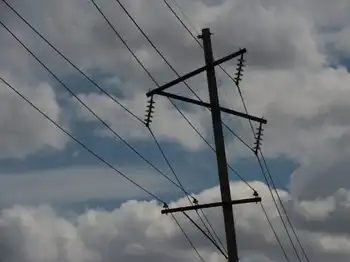
--A coalition of union members and private individuals filed a class-action lawsuit Wednesday to try and stop the privatization of B.C. Hydro.

The group B.C. Citizens for Public Power is seeking an injunction against the provincial government and B.C. Hydro to stop the sale or transfer of assets.

Lawyer Leo McGrady said if the B.C. Supreme Court certifies the lawsuit, more than 1.5 million Hydro customers may be included.

That would make it the largest class-action suit in Canadian history.

The lawsuit claims the government is breaking a trust with British Columbians by breaking up B.C. Hydro and privatizing key functions.

Accenture, a management consulting company with its head office in Bermuda, has signed a memorandum of understanding with B.C. Hydro to create a new company, which could be a B.C. subsidiary of Accenture or a partnership between Hydro and Accenture.

The new company will take over customer service, computing services, human resources, financial systems, purchasing, property services and office services.

It will then offer those same kinds of services to other utilities across North America.

The new entity is expected to employ about 2,000 people who now work for Hydro when it is up and running next year.

Related News

California's future with income-based flat-fee utility bills is getting closer

California Income-Based Utility Fees would overhaul electricity bills as CPUC weighs fixed charges tied to income, grid maintenance costs, AB 205 changes, and per-kilowatt-hour rates, shifting from pure usage pricing to hybrid utility rate design.


Key Points

Income-based utility fees are fixed monthly charges tied to earnings, alongside per-kWh rates, to help fund grid costs.

✅ CPUC considers fixed charges by income under AB 205

✅ Separates grid costs from per-kWh energy charges

✅ Could shift rooftop solar and EV charging economics


Electricity bills in California are likely to change dramatically in 2026, with major changes under discussion statewide.

The California Public Utilities Commission (CPUC) is in the midst of an unprecedented overhaul of the way most of the state’s residents pay for electricity, as it considers revamping electricity rates to meet grid and climate goals.

Utility bills currently rely on a use-more pay-more system, where bills are directly tied to how much electricity a resident consumes, a setup that helps explain why prices are soaring for many households.

California lawmakers are asking regulators to take a different approach, and some are preparing to crack down on utility spending as oversight intensifies. Some of the bill will pay for the kilowatt hours a customer uses and a monthly fixed fee will help pay for expenses to maintain the electric grid: the poles, the substations, the batteries, and the wires that bring power to people’s homes.

The adjustments to the state’s public utility code, section 739.9, came about because of changes written into a sweeping energy bill passed last summer, AB 205, though some lawmakers now aim to overturn income-based charges in subsequent measures.

A stroke of a pen, a legislative vote, and the governor’s signature created a move toward unprecedented income-based fixed charges across the state.

“This was put in at the last minute,” said Ahmad Faruqui, a California economist with a long professional background in utility rates. “Nobody even knew it was happening. It was not debated on the floor of the assembly where it was supposedly passed. Of course, the governor signed it.”

Faruqui wonders who was responsible for legislation that was added to the energy bill during the budget writing process. That process is not transparent.

“It’s a very small clause in a very long bill, which is mostly about other issues,” Faruqui said.

But that small adjustment could have a massive impact on California residents, because it links the size of a monthly flat fee for utility service to a resident’s income. Earn more money and pay a higher flat fee.

That fee must be paid even before customers are charged for how much power they draw.

Regulators interpreted legislative change as a mandate, but Faruqui is not sold.

“They said the commission may consider or should consider,” Faruqui said. “They didn’t mandate it. It’s worth re-reading it.”

In fact, the legislative language says the commission “may” adopt income-based flat fees for utilities. It does not say the commission “should” adopt them.

Nevertheless, the CPUC has already requested and received nine proposals for how a flat fee should be implemented, as regulators face calls for action amid soaring electricity bills.

The suggestions came from consumer groups, environmentalists, the solar industry and utilities.


Related News

View more

Strong Winds Knock Out Power Across Miami Valley

Miami Valley Windstorm Power Outages disrupted thousands as 60 mph gusts toppled trees, downed power lines, and damaged buildings. Utility crews and emergency services managed debris, while NWS alerts warned of extended restoration.


Key Points

Region-wide power losses from severe winds in the Miami Valley, causing damage, debris, and restoration.

✅ 60 mph gusts downed trees, snapped lines, blocked roads

✅ Crews from DP&L worked extended shifts to restore service

✅ NWS issued wind advisories; schools, businesses closed


On a recent day, powerful winds tore through the Miami Valley, causing significant disruption across the region. The storm, which was accompanied by gusts reaching dangerous speeds, led to windstorm power outages affecting thousands of homes and businesses. As trees fell and power lines were snapped, many residents found themselves without electricity for hours, and in some cases, even days.

The high winds, which were part of a larger weather system moving through the area, left a trail of destruction in their wake. In addition to power outages, there were reports of storm damage to buildings, vehicles, and other structures. The force of the wind uprooted trees, some of which fell on homes and vehicles, causing significant property damage. While the storm did not result in any fatalities, the destruction was widespread, with many communities experiencing debris-filled streets and blocked roads.

Utility companies in the Miami Valley, including Dayton Power & Light, quickly mobilized crews, similar to FPL's storm response in major events, to begin restoring power to the affected areas. However, the high winds presented a challenge for repair crews, as downed power lines and damaged equipment made restoration efforts more difficult. Many customers were left waiting for hours or even days for their power to be restored, and some neighborhoods were still experiencing outages several days after the storm had passed.

In response to the severe weather, local authorities issued warnings to residents, urging them to stay indoors and avoid unnecessary travel. Wind gusts of up to 60 miles per hour were reported, making driving hazardous, particularly on bridges and overpasses, similar to Quebec windstorm outages elsewhere. The National Weather Service also warned of the potential for further storm activity, advising people to remain vigilant as the system moved eastward.

The impact of the storm was felt not only in terms of power outages but also in the strain it placed on emergency services. With trees blocking roads and debris scattered across the area, first responders were required to work quickly and efficiently to clear paths and assist those in need. Many residents were left without heat, refrigeration, and in some cases, access to medical equipment that relied on electricity.

Local schools and businesses were also affected by the storm. Many schools had to cancel classes, either due to power outages or because roads were impassable. Businesses, particularly those in the retail and service sectors, faced disruptions in their operations as they struggled to stay open without power amid extended outages that lingered, or to address damage caused by fallen trees and debris.

In the aftermath of the storm, Miami Valley residents are working to clean up and assess the damage. Many homeowners are left dealing with the aftermath of tree removal, property repairs, and other challenges. Meanwhile, local governments are focusing on restoring infrastructure, as seen after Toronto's spring storm outages in recent years, and ensuring that the power grid is secured to prevent further outages.

While the winds have died down and conditions have improved, the storm’s impact will be felt for weeks to come, reflecting Florida's weeks-long restorations after severe storms. The region will continue to recover from the damage, but the event serves as a reminder of the power of nature and the resilience of communities in the face of adversity. For residents affected by the power outages, recovery will require patience as utility crews and local authorities work tirelessly to restore normalcy.

Looking ahead, experts are urging residents to prepare for the next storm season by ensuring that they have emergency kits, backup generators, and contingency plans in place. As climate change contributes to more extreme weather events, it is likely that storms of this magnitude will become more frequent. By taking steps to prepare in advance, communities across the Miami Valley can better handle whatever challenges come next.


Related News

View more

The crisis in numbers: How COVID-19 has reshaped Saskatchewan

Saskatchewan COVID-19 economic impact: real-time data shows drops in electricity demand, oil well licensing, traffic and tickets, plus spikes in internet usage, government site visits, remote work, and alcohol wholesale volumes.


Key Points

COVID-19 reduced energy use, drilling and traffic, while pushing activity online; jobs, rents and sales show strain.

✅ Electricity demand down 6.7%; residential usage up

✅ Oil well license applications fell 15-fold in April

✅ Internet traffic up 16%-46%; wireless LTE up 34%


We’re only just beginning to grasp how COVID-19 has upended Saskatchewan’s economy, its government and all of our lives.

The numbers that usually make headlines — job losses, economic contraction, bankruptcies — are still well behind the pace of the virus and its toll.

But other numbers change more quickly. Saskatchewan people are using less power, and the power industry is adopting on-site staffing plans to ensure reliability as conditions evolve. We’re racking up fewer speeding tickets. And as new restrictions come, we’re clicking onto Saskatchewan.ca as much as 10,000 times per minute.

Here’s some data that provides a first glimpse into how much our province has changed in just six weeks.

Electricity use tends to rise and fall in tandem with the health of the economy, and the most recent data from SaskPower suggests businesses are powering down, while regional utilities such as Manitoba Hydro seek unpaid days off to trim costs.

Peak load requirements between March 15 and April 26 were 220 MW lower than during the same period in 2019, and elsewhere BC Hydro is posting COVID-19 updates at Site C as it manages project impacts. That’s a decrease of 6.7 per cent, with total load on April 29 at 2,551 MW. A megawatt is enough electricity to power about 1,000 homes.

Separate from pandemic impacts, an external investigation at Manitoba Hydro has drawn attention to workplace conduct issues.

But it’s not homes that are turning off the lights. SaskPower spokesman Joel Cherry said commercial and industrial usage is down, while residential demand is up, with household electricity bills rising as more people stay home.

The timing of power demand has also shifted, a pattern seen as residential electricity use rises during work-from-home routines. Peak load would usually come around 8 or 9 p.m. in April. Now it’s coming earlier, typically between 5 and 6 p.m.

Oil well applications fall 15-fold
Oil prices have cratered since late February, and producers in Saskatchewan have reacted by pulling back on drilling plans, while neighbouring Alberta provides transition support for coal workers amid broader energy shifts.

Applications for well licences fell from 242 in January to 203 in February (including nine potash and one helium operations), before dropping to 84 in March. April, the month benchmark oil prices went negative for one day, producers submitted just 15 applications.

That’s 15 times fewer than the 231 applications the Ministry of Energy and Resources received in April 2019.

Well licences are needed for drilling, operating, injecting, producing or exploring an oil and gas or potash well in the province.

There has been no clear trend in well abandonment, however. There were 176 applications for abandonment in March and 155 in April, roughly in line with figures from the year before.

SGI spokesman Tyler McMurchy believes the lower numbers might stem from a combination of lower traffic volumes during part of the month, possibly combined with a shift in police priorities. The March 2020 numbers are also well below January and February figures.

Indeed, the Ministry of Highways and infrastructure reported a 16 per cent decrease in average daily traffic last month compared to March 2019, through its traffic counts at 11 different spots on highways across the province.

In Regina, traffic counts at 16 locations dropped from a high of 2.1 million in the first week of March to a low of 1.3 million during the week of March 22. That’s a 44 per cent decrease.

Counts have gradually recovered to 1.6 million in the weeks since. The data was fairly consistent at all 16 spots, which are largely major intersections, though the city cautioned they may not be representative of Regina as a whole.

Tickets for cellphone use while driving also fell, dropping from 562 in February to 314 in March. McMurchy noted that distracted driving numbers in general have been falling since November as stiffer penalties were announced. Impaired driving tickets were up, by contrast, but still within a typical range.

Internet traffic shoots up 16 per cent, far more for rural high speed
You may be spending a lot more time on Netflix and Facebook in the age of social distancing, and SaskTel has noticed.

From late February to late April, SaskTel has seen “very significant increases in provincial data traffic.” DSL and fibre optic networks have handled a 16 per cent increase in traffic, while demand on the wireless LTE network is up 34 per cent.

Usage on the Fusion network up 46 per cent. That network serves rural areas that don’t have access to other high-speed options.

The specific reference dates for comparison were February 24 and April 27.

“We attribute these changes in data usage to the pandemic and not expected seasonal or yearly shifts in usage patterns,” said spokesman Greg Jacobs.

Saskatchewan.ca was attracting just 70 page views per minute on average in February. But page views jumped over 10,000 per minute at 2:38 p.m. on March 18, as Moe was still announcing the new measures.

That’s a 14,000 per cent increase.

For all of March, visitor sessions on the site clocked in at 3,905,061, almost four times the 944,904 recorded for February.

Bureaucracy has increasingly migrated to cyberspace, with 62 per cent of civil servants now working from home. Government Skype calls, both audio and video, have tripled from 12,000 sessions per day to 35,000.Telephone conference calls increased by a factor of 14 from the first week of February to the second full week of April, with 25 times more weekly call participants. 

The Ministry of Central Services reported a 17 per cent jump in emails received by government over the past two months, excluding the Ministry of Health.

But as civil servants spend more time on their computers, the government’s fleet is spending a lot less time on the road. The ministry has purchased 40 per cent fewer litres of fuel for its vehicles over the past four weeks, compared to the same time last year.

Alcohol wholesale volumes up 22 per cent, then fall back to normal
Retailers bought more alcohol from the Saskatchewan Liquor and Gaming Authority (SLGA) last month, just as the government began tightening pandemic restrictions.

Wholesale sales volumes were up 22 per cent over March 15 to 28, compared to the same period in 2019. SLGA spokesman David Morris said the additional demand “was likely the result of retailers stocking-up as restrictions related to COVID-19 took effect.”

But the jump didn’t last. Wholesale volumes were back to normal for the first two weeks of April. SLGA did notice a very slight uptick last week, however, with volumes out of its distribution centre up three per cent. The numbers do not include Brewer’s Distributors Ltd.

It’s unclear how much more alcohol consumers actually purchased, since province-wide retail numbers were not available.

There was no discernible trend in March for anti-anxiety medication, however. The number of prescriptions filled for benzodiazepines like Valium, Xanax and Ativan see-sawed over March, according to data provided by the College of Physicians and Surgeons, but its associate registrar does not believe the trends are statistically relevant.

One-fifth of tenants miss April rent
About 20 per cent of residential rent went totally unpaid in the first six days of April, according to the Saskatchewan Landlord Association (SLA).

The precise number is 19.7 per cent, but there’s some uncertainty due to the survey method, which is based on responses from 300 residential landlords with 14,000 units. An additional 12 per cent of tenants paid a portion of their rent, but not the full amount. The figures do not include social housing.

Cameron Choquette, the association’s executive officer, partly blames the province’s decision to suspend most landlord tenant board hearings for evictions, saying it “allows more people to take advantage of landlords by not paying their rent and not facing any consequences.”

The government has defended the suspension by saying it’s needed to ensure everyone has a safe place to self-isolate if needed during the pandemic.

March’s jobs numbers were bad, with almost 21,000 fewer Saskatchewan people employed compared to February.

April’s labour force survey is expected on Friday. But new April numbers released Wednesday show that two-thirds of the province’s businesses managed to avoid laying off staff almost entirely.

According to Statistics Canada, 66.2 per cent of businesses reported laying off between zero and one per cent of their employees due to COVID-19. That was better than any other province. Just 7.6 per cent laid off all of their employees, again the best number outside the territories. The survey period was April 3 to 24.

Some businesses are even hiring. Walmart, for instance, has hired 300 people in Saskatchewan since mid-March.

Trade and Export Development Minister Jeremy Harrison chalked the data up to a relatively more optimistic business outlook in Saskatchewan, combined with “very targeted” restrictions and a support program for small and medium businesses.

That support program, which provides $5,000 grants to qualifying businesses affected by government restrictions, has only been around for three weeks. But it’s already been bombarded with 6,317 applications.

The total value of those applications would be $24,178,000, according to Harrison. Of them, 3,586 have been approved with a value of $11,755,000.

Businesses are coming to Harrison’s ministry with thousands of questions. Since it opened in March, the Business Response Team has received 4,125 calls and 1,758 emails.

The kinds of questions have changed over the course of the pandemic. Many are now asking when they can open their doors, according to Harrison, as they wonder about “grey areas” in the Re-Open Saskatchewan plan.


Related News

View more

How the dirtiest power station in western Europe switched to renewable energy

Drax Biomass Conversion accelerates renewable energy by replacing coal with wood pellets, sustainable forestry feedstock, and piloting carbon capture and storage, supporting the UK grid, emissions cuts, and a net-zero pathway.


Key Points

Drax Biomass Conversion is Drax's shift from coal to biomass with CCS pilots to cut emissions and aid UK's net-zero.

✅ Coal units converted to biomass wood pellets

✅ Sourced from sustainable forestry residues

✅ CCS pilots target lifecycle emissions cuts


A power station that used to be the biggest polluter in western Europe has made a near-complete switch to renewable energy, mirroring broader shifts as Denmark's largest energy company plans to end coal by 2023.

The Drax Power Station in Yorkshire, England, used to spew out millions of tons of carbon dioxide a year by burning coal. But over the past eight years, it has overhauled its operations by converting four of its six coal-fired units to biomass. The plant's owners say it now generates 15% of the country's renewable power, as Britain recently went a full week without coal power for the first time.

The change means that just 6% of the utility's power now comes from coal, as the wider UK coal share hits record lows across the national electricity system. The ultimate goal is to stop using coal altogether.

"We've probably reduced our emissions more than any other utility in the world by transforming the way we generate power," Will Gardner, CEO of the Drax Group, told CNN Business.

Subsidies have helped finance the switch to biomass, which consists of plant and agricultural matter and is viewed as a promising substitute for coal, and utilities such as Nova Scotia Power are also increasing biomass use. Last year, Drax received £789 million ($1 billion) in government support.


Is biomass good for the environment?

While scientists disagree over the extent to which biomass as a fuel is environmentally friendly, and some environmentalists urge reducing biomass use amid concerns about lifecycle emissions, Drax highlights that its supplies come from from sustainably managed and growing forests.

Most of the biomass used by Drax consists of low-grade wood, sawmill residue and trees with little commercial value from the United States. The material is compressed into sawdust pellets.

Gardner says that by purchasing bits of wood not used for construction or furniture, Drax makes it more financially viable for forests to be replanted. And planting new trees helps offset biomass emissions.

Forests "absorb carbon as they're growing, once they reach maturity, they stop absorbing carbon," said Raphael Slade, a senior research fellow at Imperial College London.

But John Sterman, a professor at MIT's Sloan School of Management, says that in the short term burning wood pellets adds more carbon to the atmosphere than burning coal.

That carbon can be absorbed by new trees, but Sterman says the process can take decades.

"If you're looking at five years, [biomass is] not very good ... If you're looking at a century-long time scale, which is the sort of time scale that many foresters plan, then [biomass] can be a lot more beneficial," says Slade.


Carbon capture

Enter carbon capture and storage technology, which seeks to prevent CO2 emissions from entering the atmosphere and has been touted as a possible solution to the climate crisis.

Drax, for example, is developing a system to capture the carbon it produces from burning biomass. But that could be 10 years away.


The Coal King is racing to avoid bankruptcy

The power station is currently capturing just 1 metric ton of CO2 emissions per day. Gardner says it hopes to increase this to 10,000 metric tons per day by the mid to late 2020s.

"The technology works but scaling it up and rolling it out, and financing it, are going to be significant challenges," says Slade.

The Intergovernmental Panel on Climate Change shares this view. The group said in a 2018 report that while the potential for CO2 capture and storage was considerable, its importance in the fight against climate change would depend on financial incentives for deployment, and whether the risks of storage could be successfully managed. These include a potential CO2 pipeline break.

In the United Kingdom, the government believes that carbon capture and storage will be crucial to reaching its goal of achieving net-zero greenhouse gas emissions by 2050, even as low-carbon generation stalled in 2019 according to industry analysis.

It has committed to consulting on a market-based industrial carbon capture framework and in June awarded £26 million ($33 million) in funding for nine carbon capture, usage and storage projects, amid record coal-free generation on the British grid.


Related News

View more

Electric vehicles to transform the aftermarket … eventually

Heavy-Duty Truck Electrification is disrupting the aftermarket as diesel declines: fewer parts, regenerative braking, emissions rules, e-drives, gearboxes, and software engineering needs reshape service demand, while ICE fleets persist for years.


Key Points

Transition of heavy trucks to EV systems, reducing parts and emissions while reshaping aftermarket service and skills.

✅ 33% fewer parts; regenerative braking slashes brake wear

✅ Diesel share declines; EVs and natural gas slowly gain

✅ Aftermarket shifts to e-drives, gearboxes, software and service


Those who sell parts and repair trucks might feel uneasy when reports emerge about a coming generation of electric trucks.

There are reportedly about 33% fewer parts to consider when internal combustion engines and transmissions are replaced by electric motors. Features such as regenerative braking are expected to dramatically reduce brake wear. As for many of the fluids needed to keep components moving? They can remain in their tanks and drums.

Think of them as disruptors. But presenters during the annual Heavy Duty Aftermarket Dialogue are stressing that the changes are not coming overnight. Chris Patterson, a consultant and former Daimler Trucks North America CEO, noted that the Daimler electrification plan underscores the shift as he counts just 50 electrified heavy trucks in North America.

About 88% of today’s trucks run on diesel, with the remaining 12% mostly powered by gasoline, said John Blodgett, MacKay and Company’s vice-president of sales and marketing. Five years out, even amid talk of an EV inflection point, he expects 1% to be electric, 2% to be natural gas, 12% to be gasoline, and 84% on diesel.

But a decade from now, forecasts suggest a split of 76% diesel, 11% gasoline, 7% electric, and 5% natural gas, with a fraction of a percent relying on hydrogen-electric power. Existing internal combustion engines will still be in service, and need to be serviced, but aftermarket suppliers are now preparing for their roles in the mix, especially as Canada’s EV opportunity comes into focus for North American players.

“This is real, for sure,” said Delphi Technologies CEO Rick Dauch.

Aftermarket support is needed
“As programs are launched five to six years from now, what are the parts coming back?” he asked the crowd. “Braking and steering. The fuel injection business will go down, but not for 20-25 years.” The electric vehicles will also require a gear box and motor.

“You still have a business model,” he assured the crowd of aftermarket professionals.

Shifting emissions standards are largely responsible for the transformation that is occurring. In Europe, Volkswagen’s diesel emissions scandal and future emissions rules of Euro 7 will essentially sideline diesel-powered cars, even as electric buses have yet to take over transit systems. Delphi’s light-duty diesel business has dropped 70% in just five years, leading to plant closures in Spain, France and England.

“We’ve got a billion-dollar business in electrification, last year down $200 million because of the downturn in light-duty diesel controllers,” Dauch said. “We think we’re going to double our electrification business in five years.”

That has meant opening five new plants in Eastern European markets like Turkey, Romania and Poland alone.

Deciding when the market will emerge is no small task, however. One new plant in China offered manufacturing capacity in July 2019, but it has yet to make any electric vehicle parts, highlighting mainstream EV challenges tied to policy shifts, because the Chinese government changed the incentive plans for electric vehicles.

‘All in’ on electric vehicles
Dana has also gone “all in” on electrification, said chairman and CEO Jim Kamsickas, referring to Dana’s work on e-drives with Kenworth and Peterbilt. Its gasket business is focusing on the needs of battery cooling systems and enclosures.

But he also puts the demand for new electric vehicle systems in perspective. “The mechanical piece is still going to be there.”

The demand for the new components and systems, however, has both companies challenged to find enough capable software engineers. Delphi has 1,600 of them now, and it needs more.

“Just being a motor supplier, just being an inverter supplier, just being a gearbox supplier itself, yes you’ll get value out of that. But in the longhaul you’re going to need to have engineers,” Kamsickas said of the work to develop systems.

Dauch noted that Delphi will leave the capital-intensive work of producing batteries to other companies in markets like China and Korea. “We’re going to make the systems that are in between – inverters, chargers, battery management systems,” he said.

Difficult change
But people working for European companies that have been built around diesel components are facing difficult days. Dauch refers to one German village with a population of 1,200, about 800 of whom build diesel engine parts. That business is working furiously to shift to producing gasoline parts.

Electrification will face hurdles of its own, of course. Major cities around the world are looking to ban diesel-powered vehicles by 2050, but they still lack the infrastructure needed to charge all the cars and truck fleet charging at scale, he added.

Kamsickas welcomes the disruptive forces.

“This is great,” he said. “It’s making us all think a little differently. It’s just that business models have had to pivot – for you, for us, for everybody.”

They need to be balanced against other business demands, including evolving cross-border EV collaboration dynamics, too.

Said Kamsickas: “Working through the disruption of electrification, it’s how do you financially manage that? Oh, by the way, the last time I checked there are [company] shareholders and stakeholders you need to take care of.”

“It’s going to be tough,” Dauch agreed, referring to the changes for suppliers. “The next three to four years are really going to be game changes. “There’ll be some survivors and some losers, that’s for sure.”


Related News

View more

27 giant parts from China to be transported to wind farm in Saskatchewan

Port of Vancouver Wind Turbine Blades arrive from China for a Saskatchewan wind farm, showcasing record oversized cargo logistics, tandem crane handling, renewable energy capacity, and North America's longest blades from Goldwind.


Key Points

Record-length blades for a Canadian wind farm, boosting renewable energy and requiring heavy-lift logistics at the port.

✅ 27 blades unloaded via tandem cranes with cage supports

✅ 50 turbines headed to Assiniboia over 21 weeks

✅ Largest 250 ft blades to arrive; reduced CO2 vs coal


A set of 220-foot-long wind turbine blades arrived at the Port of Vancouver from China over the weekend as part a shipment bound for a wind farm in Canada, alongside BC generating stations coming online in the region.

They’re the largest blades ever handled by the port, and this summer, even larger blades will arrive as companies expand production such as GE’s blade factory in France to meet demand — the largest North America has ever seen.

Alex Strogen described the scene as crews used two tandem cranes to unload 27 giant white blades from the MV Star Kilimanjaro, which picked up the wind turbine assemblies in China. They were manufactured by Goldwind Co.

“When you see these things come off and put onto these trailers, it’s exceptional in the sheer length of them,” Strogen said. “It looks as long as an airplane.”

In fact, each blade is about as long as the wingspan of a Boeing 747.

Groups of longshoremen attached the cranes to each blade and hoisted it into the air and onto a waiting truck. Metal cage-like devices on both ends kept the blades from touching the ground. Once loaded onto the trucks, the blades and shaft parts head to a terminal to be unloaded by another group of workers.

Another fleet of trucks will drive the wind turbines, towers and blades to Assiniboia, Saskatchewan, Canada, over the course of 21 weeks. Potentia Renewables of Toronto is erecting the turbines on 34,000 acres of leased agriculture land, amid wind farm expansion in PEI elsewhere in the country, according to a news release from the Port of Vancouver.

Potentia’s project, called the Golden South Wind Project, will generate approximately 900,000 megawatt-hours of electricity. It also has greatly reduced CO2 emissions compared with a coal-fired plant, and complements tidal power in Nova Scotia in Canada’s clean energy mix, according to the news release.

The project is expected to be operating in 2021, similar to major UK offshore wind additions coming online.

The Port of Vancouver will receive 50 full turbines of two models for the project, as Manitoba invests in new turbines across Canada. In August, the larger of the models, with blades measuring 250 feet, will arrive. They’ll be the longest blades ever imported into any port in North America.

“It’s an exciting year for the port,” said Ryan Hart, chief external affairs officer.

The Port of Vancouver is following all the recommended safety precautions during the COVID-19 pandemic, including social distancing and face masks, Strogen said, with support from initiatives like Bruce Power’s PPE donation across Canada.
As for crews onboard the ships, the U.S. Coast Guard is the agency in charge, and it is monitoring the last port-of-call for all vessels seeking to enter the Columbia River, Hart wrote in an email.

Vessel masters on each ship are responsible for monitoring the health of the crew and are required to report sick or ill crew members to the USCG prior to arrival or face fines and potential arrest.


Related News

View more

Sign Up for Electricity Forum’s Newsletter

Stay informed with our FREE Newsletter — get the latest news, breakthrough technologies, and expert insights, delivered straight to your inbox.

Electricity Today T&D Magazine Subscribe for FREE

Stay informed with the latest T&D policies and technologies.
  • Timely insights from industry experts
  • Practical solutions T&D engineers
  • Free access to every issue

Live Online & In-person Group Training

Advantages To Instructor-Led Training – Instructor-Led Course, Customized Training, Multiple Locations, Economical, CEU Credits, Course Discounts.

Request For Quotation

Whether you would prefer Live Online or In-Person instruction, our electrical training courses can be tailored to meet your company's specific requirements and delivered to your employees in one location or at various locations.