
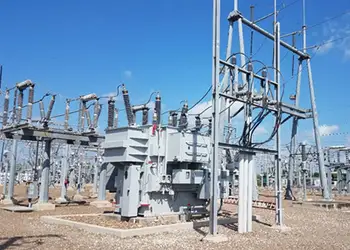
Substation Relay Protection Training
Our customized live online or in‑person group training can be delivered to your staff at your location.
- Live Online
- 12 hours Instructor-led
- Group Training Available
Regular Price:
$699
Coupon Price:
$599
PARIS
—
European Grid Build-Out faces supply chain pressure as electrification, renewable generation and data-center demand strain transmission networks, transformer capacity and delivery timelines across Europe, pressing utilities to accelerate infrastructure deployment.
Essential Takeaways
-
Electrification and data centers are raising grid capacity needs.
-
Transmission upgrades face planning, supply and access risks.
-
Transformer output and testing capacity are critical constraints.
-
Operators seek more capacity from existing grid assets.
-
Earlier supplier engagement can help shorten delivery timelines.
Europe's electricity networks are facing a delivery test as electrification, renewable generation, data centers and shifting demand patterns increase pressure on both transmission and distribution systems. Grid investment is accelerating, but the ability to translate plans into energized infrastructure depends on equipment availability, manufacturing throughput and the time required to bring projects from specification to installation. The issue reaches far beyond construction schedules, affecting the transformers, conductors, electrical steel, insulation, monitoring equipment and skilled capacity needed across the supply chain.
The challenge is particularly visible in the United Kingdom, where an assessment published on September 11 concluded that delivering all required transmission upgrades by 2030 will be very challenging. Planning, supply-chain and system-access risks remain, with some projects already forecast to be completed after that date. This creates the prospect that new generation could connect before the network required to carry its output is ready, extending the risk of added project and constraint costs. The policy implications echo the issues covered in eu grids package states oppose central planning, where grid governance and delivery choices remain central to expansion.
For manufacturers and grid operators, demand can move faster than factory capacity. Transformer production is dependent on materials, machinery, testing capability and trained teams, while network projects require equipment specifications and manufacturing lead times to be considered much earlier in planning. The need to connect planning with practical delivery is also relevant to eu grids package ireland permitting cross border, especially where permitting and cross-border work can influence project sequencing.
Building new lines and substations is not the only response. Eight transmission system operators have launched an open call focused on reducing congestion and extracting more capacity from existing infrastructure. Their stated focus includes monitoring, sensors and forecasting; intelligent transmission management and load-flow control; improving the capacity and performance of installed assets; and approaches from outside the energy sector. Selected technology providers may develop solutions with participating operators and test them through proof-of-concept projects. Those measures reflect the operational pressure behind transmission upgrade delays pjm network queues, where delayed upgrades can shape connection outcomes.
The resulting European Grid Build-Out agenda combines new infrastructure with stronger use of current assets. For transformer original equipment manufacturers, factory throughput, testing capacity, material security and standardized designs are moving higher on the priority list. For transmission and distribution system operators, earlier engagement with manufacturers and suppliers can make specifications, available capacity and lead times part of grid planning before projects reach critical stages. Broader market context is available in eu electricity trends, while demand growth patterns also connect with booming us clean energy across the electrical sector. Europe's next phase of grid expansion will depend not only on the volume of infrastructure planned, but on how effectively the industry can manufacture, deliver and operate it.
Related News
Related News
Why Is Georgia Importing So Much Electricity?
Georgia Electricity Imports October 2017 surged as hydropower output fell and thermal power plants underperformed;…
View more
Hydro One investor overview spotlights smart-grid, storage and digital investments
Hydro One Smart Grid Investments leads the utility's post-1st quarter 2026 investor overview, highlighting grid…
View more

Electric Utilities Plot Bullish Course for EV Charging Infrastructure
EV Charging Infrastructure Incentives are expanding as utilities fund public chargers, Level 2 networks, DC…
View more
BLM Approves GridLiance West Transmission Upgrades to Strengthen Nevada Grid
GridLiance West Transmission Upgrades received federal approval to modernize 155 miles of 230-kV infrastructure in…
View more

Advanced Technologies Drive Grid Hardening and Smart Grid Resilience
Grid Hardening Technologies are reshaping the smart grid as utilities deploy AI, sensors, automation, and…
View more
Power Outage Affects 13,000 in North Seattle
North Seattle Power Outage disrupts 13,000 in Ballard, Northgate, and Lake City as Seattle City…
View more
Sign Up for Electricity Forum’s Newsletter
Stay informed with our FREE Newsletter — get the latest news, breakthrough technologies, and expert insights, delivered straight to your inbox.
Electricity Today T&D Magazine Subscribe for FREE

Stay informed with the latest T&D policies and technologies.
- Timely insights from industry experts
- Practical solutions T&D engineers
- Free access to every issue

