Protective Relay Training - Basic
Our customized live online or in‑person group training can be delivered to your staff at your location.
- Live Online
- 12 hours Instructor-led
- Group Training Available
Regular Price:
$699
Coupon Price:
$599
PARIS
—
Grid Climate Resilience guidance details undergrounding, higher poles, low-sag conductors, and software-based dynamic line rating to protect overhead lines from heatwaves, storms, wet snow, and lightning, while balancing costs, maintenance, and timelines.
Essential Takeaways
-
Advisory updates T and D options for extreme weather
-
Undergrounding cuts outage risk but raises capital costs
-
Heat measures: taller poles, low-sag conductors, rating software
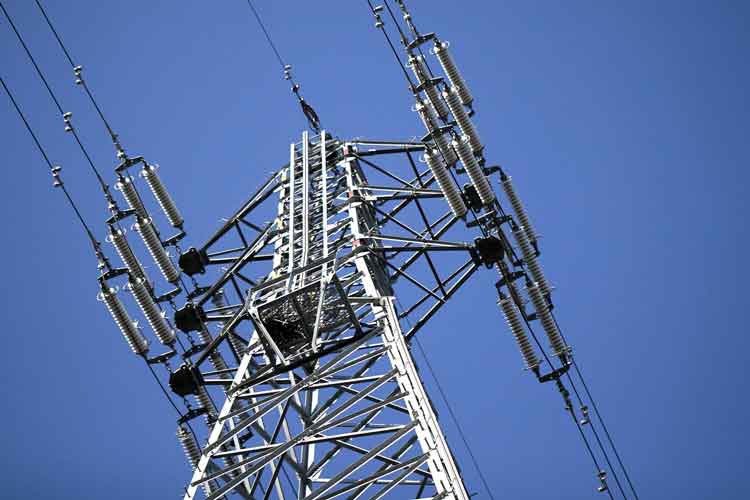
A newly updated 2026 advisory profile outlines how electricity transmission and distribution networks can adapt to intensifying climate hazards. The document centers on the operational and safety risks posed by storms, lightning, wet snow accretion, and high temperatures, which can drive conductor sag, clearance violations, and equipment de-rating. These conditions also coincide with higher cooling demand, compounding peak loads and outage risks. In this context, sector planning increasingly treats the grid climate change challenge as a core design input for both new assets and reinforcements across service territories today.
Underground cabling is highlighted as a principal adaptation for weather exposure, shielding assets from precipitation and windstorms and thereby reducing weather-related outages and long-run maintenance needs. Once installed, underground lines also present lower visual and land-use impacts than overhead routes. Trade-offs are material: undergrounding typically entails higher capital costs, specialized insulation, heat dissipation or cooling provisions, and in some cases larger or multiple cables to manage electrical losses. Fault location and repair can be more complex and time-consuming than for overhead lines, and excavation damage is a key risk that can be mitigated through digitalization and GIS mapping. Broader system stresses during extreme heat are discussed in our world heat electricity coverage for additional industry context beyond the technical measures summarized here.
For overhead networks operating through heatwaves, the guidance points to a suite of measures: taller line supports to maintain safe clearances; conductors engineered for higher operating temperatures or low-sag performance; and raising the minimum design temperature for new routes, which typically increases wood pole height by about 0.5 meters. It also calls out software to optimize overhead line ratings, commonly known as dynamic line rating, to squeeze safe, weather-aware capacity from existing circuits. Related approaches to flexibility and situational awareness are examined in us grid heat resilience aar dlr vpps discussions across different markets and operating contexts.
The profile underscores that investment decisions should be grounded in high-resolution, locally relevant climate scenarios to determine when overhead solutions remain viable, where routing can lower exposure, and when a switch to undergrounding is warranted. Implementing infrastructure works requires close engagement with communities, landowners, and local authorities to maintain social acceptance and deployment speed, while coordinated construction with other utilities can cut costs and limit disruption. The emphasis on data, mapping, and permitting interfaces complements the themes explored in european grids package permits digital tools as planners update standards and processes for a changing risk baseline today.
Implementation timelines for underground lines are generally longer than for overhead alternatives, so owners are encouraged to sequence projects with life-cycle horizons in mind. Typical design lives for both underground and overhead cables are on the order of 60 years, while wood poles can span roughly 40-60 years depending on context and specification. These parameters, together with system risk, cost, and community factors, inform how utilities prioritize near-term reinforcements versus deeper rebuilds. The broader context of connection queues and project staging is also reflected in european grid backlog delays renewables storage, which intersects with adaptation scheduling and resource allocation across portfolios.
Related News

Bucharest completes removal of 3,000 km of illegal overhead cables
Bucharest illegal overhead cables removal advances citywide telecommunications cleanup by shifting services into underground conduits…
View more

Ford announces an all-electric Transit cargo van
Ford Electric Transit is an all electric cargo van for US and Canada, launching 2021,…
View more
Report: Solar ITC Extension Would Be ‘Devastating’ for US Wind Market
Solar ITC Impact on U.S. Wind frames how a 30% solar investment tax credit could…
View more

Opinion: The dilemma over electricity rates and innovation
Canadian Electricity Innovation drives a customer-centric, data-driven grid, integrating renewable energy, EVs, storage, and responsive…
View more

All-electric home sports big windows, small footprint
Cold-Climate Heat Pumps deliver efficient heating and cooling for Northern B.C. Net Zero Ready homes,…
View more
Competition in Electricity Has Been Good for Consumers and Good for the Environment
Electricity Market Competition drives lower wholesale prices, stable retail rates, better grid reliability, and faster…
View more
Sign Up for Electricity Forum’s Newsletter
Stay informed with our FREE Newsletter — get the latest news, breakthrough technologies, and expert insights, delivered straight to your inbox.
Electricity Today T&D Magazine Subscribe for FREE

Stay informed with the latest T&D policies and technologies.
- Timely insights from industry experts
- Practical solutions T&D engineers
- Free access to every issue
