
Substation Protection Training - Protect Transformers, Buses and Lines
Our customized live online or in‑person group training can be delivered to your staff at your location.
- Live Online
- 12 hours Instructor-led
- Group Training Available
Regular Price:
$799
Coupon Price:
$699
TORONTO
—
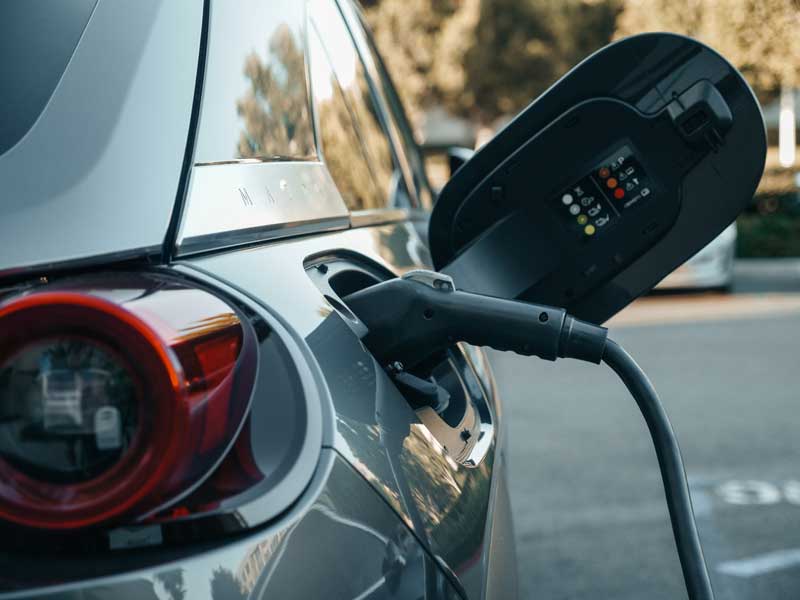
Ontario’s energy regulator will introduce a discounted charging-station electricity rate in 2026, cutting delivery costs for public EV chargers by roughly 83 percent compared with standard transmission rates, a move expected to boost charging network growth in underserved areas and attract more investment.
At A Glance
-
Ontario’s electricity regulator will launch a new EV Charging (EVC) rate effective Jan 1, 2026.
-
Eligible public EV charging stations pay only 17% of the standard transmission fee.
-
Discount aims to support the deployment of charging infrastructure in underserved and low-uptake regions.
-
Reduced costs could attract more investment and speed up the expansion of public charging networks.
Ontario Rate for Public EV Charge Operators
Ontario’s energy regulator is set to launch a new discounted rate for public electric-vehicle charging operators in 2026, a major policy shift aimed at boosting EV infrastructure across the province. Under the upcoming Electric Vehicle Charging (EVC) rate, qualifying commercial charging sites will pay just 17 percent of the base transmission service rate, rather than the full general service transmission cost—a significant reduction designed for stations with sporadic, high-powered demand rather than constant load.
The new EV charging rate builds on the province’s past efforts at rate relief described in Ontario Rate Relief, reinforcing Ontario’s push to make power more affordable for all customers.
“What was happening,” says Mike Frisina, director of policy at SWTCH Canada, “is that the rate structure was adapted from one better suited to small commercial and industrial buildings, which have more predictable and flat load profiles.” In contrast, public chargers draw intermittent bursts of power and are nearly idle otherwise, making the new EVC structure far fairer and more efficient for those operators.
As electricity pricing has evolved under Ontario Electricity Rates Updated, the shift toward a dedicated EV charging tariff reflects changing consumption patterns and a need for fairer billing for intermittent loads.
Under the plan, electricity demand must meet certain criteria: usage must be mostly tied to EV charging, peak demand between 50 and 5,000 kW/month, and a monthly average load factor below 20 percent. Home chargers or mostly fleet-use stations are excluded from eligibility.
The development echoes aspects of Ontario TOU Rates, where time-of-use structures were introduced to better match pricing with demand, suggesting EVC is another step toward demand-sensitive electricity pricing.
Industry groups, including Alectra Utilities and the Canadian Charging Infrastructure Council, say the new pricing could reshape where charging networks are built, making projects in early-stage or underserved regions more feasible. As Travis Allan, CEO of the Council, notes, “Ontario is starting to make more economic sense, so we’re going to devote more capital to deploying stations in that jurisdiction.”
The move toward flexible billing for high-load users is similar to reforms described in Hydro One Flexibility, which highlighted utility adaptation to shifting load demands as a way to support new energy uses without compromising grid reliability.
By slashing transmission fees for public charging, the EVC rate may accelerate infrastructure rollout, reduce barriers to entry, and encourage investment, all ahead of the expected adoption surge as EVs become mainstream.
Related Articles
Related News

Record numbers of solar panels were shipped in the United States during 2021
U.S. Solar Panel Shipments 2021 surged to 28.8 million kW of PV modules, tracking utility-scale…
View more
Solar panel sales double in the UK as homeowners look to cut soaring bills
UK Home Solar Panel Installation drives self-consumption as PV panels, hybrid inverters, and smart meters…
View more

Alectra is 'leading the charge' when it comes to electric vehicles
Alectra EV Leadership Award highlights Plug'n Drive and CEA recognition for AlectraDrive, GridExchange, smart charging,…
View more
UK leads G20 for share of electricity sourced from wind
UK Wind Power Leadership in 2020 highlights record renewable energy growth, G20-leading wind share, rapid…
View more
4 European nations to build North Sea wind farms
North Sea Offshore Wind Farms will deliver 150 GW by 2050 as EU partners scale…
View more
Hydro-Quebec posts record investments to strengthen grid and EV readiness
Hydro-Québec Q1 2026 Investments climb as the utility reports $1.85B net income, accelerating grid upgrades,…
View more
Sign Up for Electricity Forum’s Newsletter
Stay informed with our FREE Newsletter — get the latest news, breakthrough technologies, and expert insights, delivered straight to your inbox.
Electricity Today T&D Magazine Subscribe for FREE

Stay informed with the latest T&D policies and technologies.
- Timely insights from industry experts
- Practical solutions T&D engineers
- Free access to every issue

