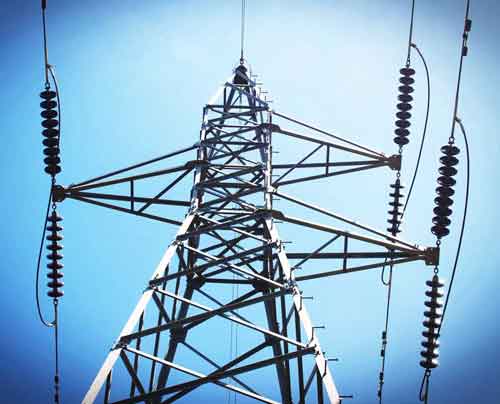
Back-door renationalisation of British Energy well under way

By


CSA Z463 Electrical Maintenance -

Our customized live online or in‑person group training can be delivered to your staff at your location.

  • Live Online
  • 6 hours Instructor-led
  • Group Training Available
Regular Price:
$249
Coupon Price:
$199
Reserve Your Seat Today
-- BRITISH Energy (BE), the financially-crippled nuclear power generator, was yesterday thrown another lifeline by the government as it agreed to extend the firm's (pounds) 650m emergency loan facility until next March while the company undergoes wide-ranging restructuring.

The government has agreed to pick up the multi-billion-pound bill for the company's nuclear clean-up costs, but has forced BE's banks and bondholders to convert their debt into shares and new bonds which will not mature for more than 30 years.

Robin Jeffrey has been sacked as executive chairman and replaced by Adrian Montague, a former merchant banker who helped the government to bring the rail network back into public ownership. City analysts described the deal as renationalisation by stealth, and BE's battered shares immediately lost more than half their remaining value, dropping 9.5p to 7.5p. The government's commitment to underwrite BE's nuclear decommissioning costs is likely to cost taxpayers between (pounds) 150m and (pounds) 200m a year for the next 10 years, but will give the Exchequer 65% of any future income from BE, which produces 20% of all Britain's power.

Mark Durling, energy analyst at Brewin Dolphin, said: "It is the renationalisation of British Energy, but done privately." Brian Wilson, energy minister, described it as "a private sector restructuring". He said: "This is the most pragmatic and responsible way forward. It offers British Energy the opportunity to restructure as a more robust business with fewer historic burdens."

Montague is a key City adviser to chancellor Gordon Brown and has played major roles in setting up Railtrack replacement Network Rail. He has also contributed to the part-privatisation of the London Underground and the shaping of the Treasury's private finance initiative. His appointment has added to City suspicions that the deal has been structured to effectively renationalise the utility, which was sold by the government to private shareholders for (pounds) 1.4bn in 1996.

Under the terms of the restructuring deal, BE will issue new bonds and shares to the value of (pounds) 700m to "significant creditors." These are mostly banks and bondholders who are presently owed more than (pounds) 1.2bn. The company was unable to say how much new stock would be issued as part of the restructuring, but warned it would mean the "significant dilution" of existing shareholders.

BE, which is no longer able to sell electricity from its nuclear power stations for more than the cost of production, will, meanwhile, get help from the government to reduce its fuel reprocessing bills. Its annual payment of (pounds) 300m to state- owned British Nuclear Fuels will be reduced by about (pounds) 120m. The government is also proposing to underwrite most of the estimated (pounds) 2.1bn cost of decommissioning BE's eight nuclear power stations through a newly-created nuclear liability fund. The process of closing down the aged plant could take as long as 80 years. There would be a smaller charge each year after the initial high-cost ten. BE will surrender 65% of its available cash each year to the fund which in turn could end up owning 65% of the com-pany's shares. BE is based in East Kilbride and employs 5200 staff.

Related News
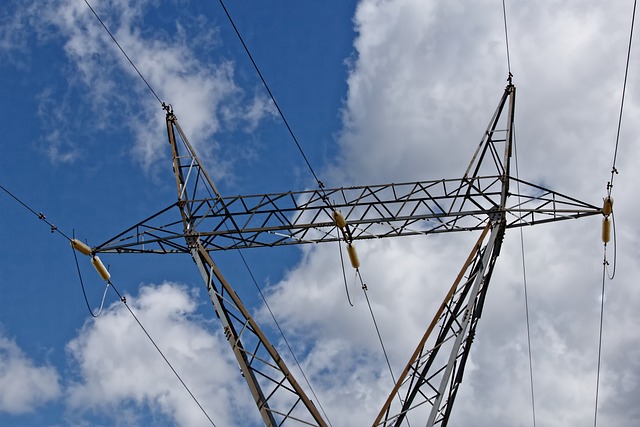
Tesla reduces Solar + home battery pricing following California blackouts

Tesla Solar and Powerwall Discount offers a ~10% installation price cut amid PG&E blackouts, helping California homeowners with solar panels, battery storage, and backup power, while supporting renewable energy and resilient Supercharger infrastructure.


Key Points

A ~10% installation discount on Tesla solar panels and Powerwall batteries to boost backup power during PG&E blackouts.

✅ ~10% off installation for solar plus Powerwall

✅ Helps during PG&E shutoffs and wildfire mitigation

✅ Supports resilience, backup power, and EV charging


Pacific Gas & Electric’s (PG&E) shutoff of electric supply to residents in California’s Bay Area has caught the attention of Tesla and SpaceX CEO Elon Musk, who, while highlighting a huge future for Tesla Energy in coming years, has announced that he would be offering a price reduction of approximately 10% for a solar panel and Tesla Powerwall battery installation. The discount will be available to anyone interested in powering their homes with solar energy, not just the 800,000 affected homes in the Bay Area.

After initially tweeting a link to Tesla’s Solar page on Tesla.com, Musk added that he would be offering a “~10% price reduction” in installation price for solar panels and Powerwall batteries for anyone, as California explores EVs for grid stability during emergencies, including those who have lost power in response to PG&E’s power shutoff. The blackout induced by the California-based power company is a part of an effort to reduce the possibility of wildfires. PG&E lines were the cause of multiple fires in the past, so the company is taking every necessary precaution to reduce the probability of its lines causing another fire in the future.

Tesla Solar recently offered a subscription program that would allow homeowners to lease panels for a fraction of the cost. The service is available to both residential and commercial customers, and costs as little as $45 a month in some states, particularly appealing in California where EV sales top 20% recently. The option to lease solar panels carries no long-term contracts that would tie down customers to a lengthy commitment.

Wildfires have always been an issue in California. Currently, fires are ripping through Los Angeles county, presumably caused by the winds of the Autumn season. The effort to reduce the environmental impact of forest fires in the state has been increasingly more prevalent over the years. But 2019 is a different story, underscoring that California may need a much bigger grid to support electrification, considering the previous year was noted as the deadliest wildfire season in California’s history. Over 8,500 fires destroyed over 1.89 million acres of land burned due to fires, causing the California Department of Forestry and Fire Protection to spend $432 million through the end of August 2018, according to the Associated Press.

In reaction to the news of the power shutoffs, Tesla added words of advice to vehicle affected owners on its app. The company posted a message encouraging drivers to keep their vehicles charged to 100% and highlighted that EVs can power homes for up to three days during outages, in order to prevent interruptions in driving. Those who are driving ICE vehicles are feeling the effects of the blackout too, as gas stations in California’s affected region have begun to shut down. Musk also tweeted that he would be installing Tesla Powerpacks at all Supercharger stations in the affected region, a move that can help ease strain on state power grids during outages, in order to allow owners to charge their vehicles.

In addition to the efforts that Tesla has already put into place, Musk plans to transition all Supercharger stations to solar power as soon as possible. But the sunny climate of California offers residents a great opportunity to move from gas and electric, even as some warn of a looming green car wreck in the state, to a more eco-friendly, sun-powered option. Tesla solar will completely eliminate power blackouts that are used to control wildfires in California.


Related News

View more

Nigeria's Electricity Crisis

Nigeria Electricity Crisis undermines energy access as aging grid, limited generation, and transmission losses cause power outages, raising costs for businesses and public services; renewables, microgrids, and investment offer resilient, inclusive solutions.


Key Points

A nationwide power gap from weak infrastructure, low generation, and grid losses that disrupt services and growth.

✅ Aging grid and underinvestment drive frequent power outages

✅ Businesses face higher costs, lost productivity, weak competitiveness

✅ Renewables, microgrids, and regulatory reform can expand access


In Nigeria, millions of residents face persistent challenges with access to reliable electricity, a crisis that has profound implications for businesses, public services, and overall socio-economic development. This article explores the root causes of Nigeria's electricity deficit, drawing on 2021 electricity lessons to inform analysis, its impact on various sectors, and potential solutions to alleviate this pressing issue.

Challenges with Electricity Access

The issue of inadequate electricity access in Nigeria is multifaceted. The country's electricity generation capacity falls short of demand due to aging infrastructure, inadequate maintenance, and insufficient investment in power generation and distribution, a dynamic echoed when green energy supply constraints emerge elsewhere as well. As a result, many Nigerians, particularly in rural and underserved urban areas, experience frequent power outages or have limited access to electricity altogether.

Impact on Businesses

The unreliable electricity supply poses significant challenges to businesses across Nigeria. Manufacturing industries, small enterprises, and commercial establishments rely heavily on electricity to operate machinery, maintain refrigeration for perishable goods, and power essential services. Persistent power outages disrupt production schedules, increase operational costs, and, as grids prepare for new loads from electric vehicle adoption worldwide, hinder business growth and competitiveness in both domestic and international markets.

Public Services Strain

Public services, including healthcare facilities, schools, and government offices, also grapple with the consequences of Nigeria's electricity crisis. Hospitals rely on electricity to power life-saving medical equipment, maintain proper sanitation, and ensure patient comfort. Educational institutions require electricity for lighting, technological resources, and administrative functions. Without reliable power, the delivery of essential public services is compromised, impacting the quality of education, healthcare outcomes, and overall public welfare.

Socio-economic Impact

The electricity deficit in Nigeria exacerbates socio-economic disparities and hampers poverty alleviation efforts, even as debates continue over whether access alone reduces poverty in every context. Lack of access to electricity limits economic opportunities, stifles entrepreneurship, and perpetuates income inequality. Rural communities, where access to electricity is particularly limited, face greater challenges in accessing educational resources, healthcare services, and economic opportunities compared to urban counterparts.

Government Initiatives and Challenges

The Nigerian government has implemented various initiatives to address the electricity crisis, including privatization of the power sector, investment in renewable energy projects, and regulatory reforms aimed at improving efficiency and accountability, while examples like India's village electrification illustrate rapid expansion potential too. However, progress has been slow, and challenges such as corruption, bureaucratic inefficiencies, and inadequate funding continue to impede efforts to expand electricity access nationwide.

Community Resilience and Adaptation

Despite these challenges, communities and businesses in Nigeria demonstrate resilience and adaptability in navigating the electricity crisis. Some businesses invest in alternative power sources such as generators, solar panels, or hybrid systems to mitigate the impact of power outages, while utilities weigh shifts signaled by EVs' impact on utilities for future planning. Community-led initiatives, including local cooperatives and microgrids, provide decentralized electricity solutions in underserved areas, promoting self-sufficiency and resilience.

Path Forward

Addressing Nigeria's electricity crisis requires a concerted effort from government, private sector stakeholders, and international partners, informed by UK grid transformation experience as well. Key priorities include increasing investment in power infrastructure, enhancing regulatory frameworks to attract private sector participation, and promoting renewable energy deployment. Improving energy efficiency, reducing transmission losses, and expanding electricity access to underserved communities are critical steps towards achieving sustainable development goals and improving quality of life for all Nigerians.

Conclusion

The electricity crisis in Nigeria poses significant challenges to businesses, public services, and socio-economic development. Addressing these challenges requires comprehensive strategies that prioritize infrastructure investment, regulatory reform, and community empowerment. By working together to expand electricity access and promote sustainable energy solutions, Nigeria can unlock its full economic potential, improve living standards, and create opportunities for prosperity and growth across the country.


Related News

View more

Gov. Greg Abbott touts Texas power grid's readiness heading into fall, election season

ERCOT Texas Fall Grid Forecast outlines ample power supply, planned maintenance outages, and grid reliability, citing PUC oversight and Gov. Abbott's remarks, with seasonal assessment noting mild demand yet climate risks and conservation alerts.


Key Points

ERCOT's seasonal outlook for Texas on fall power supply, outages, and reliability expectations under PUC oversight.

✅ Projects sufficient supply in October and November

✅ Many plants scheduled offline for maintenance

✅ Notes PUC oversight and Abbott's confidence


Gov. Greg Abbott said Tuesday that the Texas power grid is prepared for the fall months and referenced a new seasonal forecast by the state’s grid operator, which typically does not draw much attention to its fall and spring grid assessments because of the more mild temperatures during those seasons.

Tuesday’s new forecast by the Electric Reliability Council of Texas showed that there should be plenty of power supply to meet demand in October and November. It also showed that many Texas power plants are scheduled to be offline this fall for maintenance work. Texas power plants usually plan to go down in the fall and spring for repairs to improve reliability ahead of the more extreme temperatures in winter and summer, when Texans crank up their heat and air conditioning and raise demand for power.

ERCOT for at least a decade announced its seasonal forecasts, but did not do so on Tuesday. The grid operator stopped announcing the reports after the 2021 winter storm event. A spokesperson for the grid operator, which posted the report to its website midday without notifying the public or power industry stakeholders, said there were no plans to discuss the latest forecast and referred questions about it to the Public Utility Commission, which oversees ERCOT. Abbott appoints the board of the PUC.

Abbott on Tuesday expressed his confidence about the grid in a news release, which included photos of the governor sitting at a table with incoming ERCOT CEO Pablo Vegas, outgoing interim CEO Brad Jones and Public Utility Commission Chair Peter Lake.

“The State of Texas continues to monitor the reliability of our electric grid, and I thank ERCOT and PUC for their hard work to implement bipartisan reforms we passed last year and for their proactive leadership to ensure our grid is stronger than ever before,” Abbott said in the release.

Abbott has not previously shared or called attention to ERCOT’s forecasts as he did on Tuesday.

Up for reelection this fall, Abbott has faced continued criticism, including from the Sierra Club over his handling of the 2021 deadly power grid disaster, when extended freezing temperatures shut down natural gas facilities and power plants, which rely on each other to keep electricity flowing. The resulting blackouts left millions of Texans without power for days in the cold, and hundreds of people died.

ERCOT’s forecasts for fall and spring are typically the least worrisome seasonal forecasts, energy experts said, because temperatures are usually milder in between summer and winter, even as ERCOT has issued an RFP to procure winter capacity to address shortages, so demand for power usually does not skyrocket like it does during extreme temperatures.

But they’ve warned that climate change could potentially lead to more extreme temperatures during times when Texas hasn’t experienced such weather in the past. For example, in early May six power plants unexpectedly broke down when a spring heat wave drove power demand up and highlighted broader heat-related blackout risks across the grid. ERCOT asked Texans to conserve electricity at home at the time.

Abbott released the seasonal report at a time when he has asserted unprecedented control over ERCOT. Although he had no formal role in ERCOT’s search for a new permanent CEO, he put a stranglehold on the process, The Texas Tribune previously reported. Since the winter storm, Abbott’s office has also dictated what information about the power grid ERCOT has released to the public.


Related News

View more

New Hydro One CEO aims to repair relationship with Ontario government — and investors

Hydro One CEO Mark Poweska aims to rebuild ties with Ontario's provincial government, investors, and communities, stabilize the executive team, boost earnings and dividends, and reset strategy after the scrapped Avista deal and regulatory setbacks.


Key Points

He plans to mend government and investor relations, rebuild the C-suite, and refocus growth after the failed Avista bid.

✅ Rebuild ties with Ontario government and regulators

✅ Stabilize executive team and governance

✅ Refocus growth after Avista deal termination


The incoming chief executive officer of Hydro One Ltd. said Thursday that he aims to rebuild the relationship between the Ontario electrical utility and the provincial government, as seen in COVID-19 support initiatives, as well as ties between the company and its investors.

Mark Poweska, the former executive vice-president of operations at BC Hydro, was announced as Hydro One’s new president and CEO in March. His hiring followed a turbulent period for Toronto-based Hydro One, Ontario’s biggest distributor and transmitter of electricity, with large-scale storm restoration efforts underscoring its role.

Hydro One’s former CEO and board of directors departed last year under pressure from a new Ontario government, the utility’s biggest shareholder. Earlier this year, the company’s plan for a $6.7-billion takeover fell apart over concerns of political interference and the utility clashed with the new provincial government and Progressive Conservative Premier Doug Ford over executive compensation levels, amid rate policy debates such as no peak rate cuts for self-isolating customers.

Hydro One facing $885 million charge as regulator upholds tax decision forcing it to share savings with customers

Shares of Hydro One were up more than eight per cent year-to-date on Wednesday, closing at $21.74. However, the stock price was up only six per cent from Hydro One’s 2015 initial public offering price, something its incoming CEO seems set on changing.

“One of my first priorities will be to solidify the executive team and build relationships with the Government of Ontario, our customers, informed by customer flexibility research, and communities, indigenous leaders, investors, and our partners across the electricity sector,” Poweska said Thursday on a conference call outlining Hydro One’s first-quarter results. “At the same time, I will be working to earn the trust and confidence of the investment community.”

Hydro One reported a profit of $171 million for the three months ended March 31, while peers such as Hydro-Québec reported pandemic-related losses as the sector adapted. Net income for the first quarter was down from $222 million a year earlier, which was due to $140 million in costs related to the scrapping of Hydro One’s proposed acquisition of U.S. energy company Avista Corp.

Hydro One Ltd. appointed Mark Poweska as President and CEO.

In January, Hydro One said the proposed takeover of Spokane, Wash.-headquartered Avista, an approximately $6.7-billion deal announced in July 2017, was being called off. As a result, Hydro One said it would pay Avista a US$103 million break fee.

Revenues net of purchased power for the first quarter rose to $952 million, up by 15.4 per cent compared to last year, Hydro One said, helped by higher distribution revenues. Adjusted profit for the quarter, which removes the Avista-related costs, was $311 million, up from $210 million a year ago.

The company is hiking its quarterly dividend to 24.15 cents per share, up five per cent from the last increase in May 2018, while also launching a pandemic relief fund for customers.

Poweska is taking over for acting president and CEO Paul Dobson this month, and the new executive will be charged with revamping Hydro One’s C-suite.

The company’s chief operating officer, chief legal officer, and chief corporate development officer have all departed this year. The company’s chief human resource officer has retired as well, although Poweska did announce Thursday that he had appointed acting chief financial officer Chris Lopez as CFO.

“Hydro One’s significant bench strength and management depth will ensure stability and continuity during this period of transition, as the sector pursues Hydro-Québec energy transition as well,” the company said in its first-quarter earnings press release.

Ontario remains Hydro One’s biggest shareholder, owning approximately 47 per cent of the company.


Related News

View more

Marine Renewables Canada shifts focus towards offshore wind

Marine Renewables Canada Offshore Wind integrates marine renewables, tidal and wave energy, advancing clean electricity, low-carbon power, supply chain development, and regulatory alignment to scale offshore wind energy projects across Canada's coasts and global markets.


Key Points

An initiative to grow offshore wind using Canada's marine strengths, shared supply chains, and regulatory synergies.

✅ Leverages tidal and wave energy expertise for offshore wind

✅ Aligns supply chain, safety, and regulatory frameworks

✅ Supports low-carbon power and clean electricity goals


With a growing global effort to develop climate change solutions and increase renewable electricity production, including the UK offshore wind growth in recent years, along with Canada’s strengths in offshore and ocean sectors, Marine Renewables Canada has made a strategic decision to grow its focus by officially including offshore wind energy in its mandate.

Marine Renewables Canada plans to focus on similarities and synergies of the resources in order to advance the sector as a whole and ensure that clean electricity from waves, tides, rivers, and offshore wind plays a significant role in Canada’s low-carbon future.

“Many of our members working on tidal energy and wave energy projects also have expertise that can service offshore wind projects both domestically and internationally,” says Tim Brownlow, Chair of Marine Renewables Canada. “For us, offshore wind is a natural fit and our involvement will help ensure that Canadian companies and researchers are gaining knowledge and opportunities in the offshore wind sector as it grows.”

Canada has the longest coastlines in the world, giving it huge potential for offshore wind energy development. In addition to the resource, Canada has significant capabilities from offshore and marine industries that can contribute to offshore wind energy projects. The global offshore wind market is estimated to grow by over 650% by 2030 and presents new opportunities for Canadian business.

“The federal government’s recent inclusion of offshore renewables in legislation, including a plan for regulating offshore wind developed by the government, and support for emerging renewable energy technologies are important steps toward building this industry,” says Elisa Obermann, executive director of Marine Renewables Canada. “There are still challenges to address before we’ll see offshore wind energy development in Canada, but we see a great opportunity to get more involved now, increase our experience, and help inform future development.”

Like wave and tidal energy, offshore wind projects operate in harsh marine environments and development presents many of the same challenges and benefits as it does for other marine renewable energy resources. Marine Renewables Canada has recognized that there is significant overlap between offshore wind and wave and tidal energy when it comes to the supply chain, regulatory issues, and the operating environment. The association plans to focus on similarities and synergies of the resources in order to advance the sector as a whole, leveraging Canada’s opportunity in the global electricity market to ensure that clean electricity from waves, tides, rivers, and offshore wind plays a significant role in Canada’s low-carbon future.


Related News

View more

The gloves are off - Alberta suspends electricity purchase talks with B.C.

Alberta-BC Pipeline Dispute centers on Trans Mountain expansion, diluted bitumen shipments, federal approval, spill response capacity, and electricity trade, as Alberta suspends power talks and Ottawa insists the Kinder Morgan project proceeds in national interest.


Key Points

Dispute over Trans Mountain expansion, bitumen limits, and jurisdiction between Alberta, B.C., and Canada.

✅ Alberta suspends BC electricity talks as leverage

✅ Ottawa affirms federal approval and spill response

✅ BC plans advisory panel on diluted bitumen risks


Alberta Premier Rachel Notley says her government is suspending talks with British Columbia on the purchase of electricity from the western province.

It’s the first step in Alberta’s fight against the B.C. government’s proposal to obstruct the Kinder Morgan oil pipeline expansion project by banning increased shipments of diluted bitumen to the province’s coast.

Up to $500 million annually for B.C.’s coffers from electricity exports hangs in the balance, Notley said.

“We’re prepared to do what it takes to get this pipeline built — whatever it takes,” she told a news conference Thursday after speaking with Prime Minister Justin Trudeau on the phone.

Notley said she told Trudeau, who’s in Edmonton for a town-hall meeting, that the federal government needs to act decisively to end the dispute.

Speaking on Edmonton talk radio station CHED earlier in the day, Trudeau said the pipeline expansion is in the national interest and will go ahead, even as the federal government undertakes a study on electrification across sectors.

“That pipeline is going to get built,” Trudeau said. “We will stand by our decision. We will ensure that the Kinder Morgan pipeline gets built.”

B.C.’s environment minister has said his minority government plans to ban increased shipments until it can determine that shippers are prepared and able to properly clean up a spill, and, separately, has implemented an electricity rate freeze affecting consumers. He said he will establish an independent scientific advisory panel to study the issue.

The move infuriated Notley, who has accused B.C. of trying to change the rules after the federal government gave the project the green light. B.C. has the right to regulate how any spills would be cleaned up, but can’t dictate what flows through pipelines, she said.

Trudeau said Canada needs to get Alberta’s oil safely to markets other than the U.S. energy market today. He said the federal government did the research and has spent billions on spill response.

“The Kinder Morgan pipeline is not a danger to the B.C. coast,” he said.

Notley said she thanked Trudeau for his assurance that the project will go ahead, but the federal government has to do more to ensure the pipeline’s expansion.

“This is not an Alberta-B.C. issue. This is a Canada-B.C. issue,” she said. “This kind of uncertainty is bad for investment and bad for working people

“Enough is enough. We need to get these things built.”

B.C. Premier John Horgan said his government consulted Alberta and Ottawa about his province’s intentions, noting that Columbia River Treaty talks also shape regional electricity policy.

“I don’t see what the problem is,” Horgan said Thursday at a school opening north of Kelowna, B.C. “It’s within our jurisdiction to put in place regulations to protect the public interest.

“That’s what we are doing.”

He downplayed any possibility of court action or sanctions by Alberta.

“There’s nothing to take to court,” Horgan said. “We are consulting with the people of B.C. It’s way too premature to talk about those sorts of issues.

“Sabre-rattling doesn’t get you very far.”

Speaking in Ottawa, Natural Resources Minister Jim Carr wouldn’t say what Canada might do if British Columbia implements its regulation.

“That’s speculative,” said Carr.

He noted at this point, B.C. has just pledged to consult. He said the federal government heard from thousands of people before the pipeline was approved.

“That’s what they have announced — an intention to consult. We have already consulted.”

B.C.’s proposal creates more uncertainty for Kinder Morgan’s already-delayed Trans Mountain expansion project that would nearly triple the capacity of its pipeline system to 890,000 barrels a day.


Related News

View more

Sign Up for Electricity Forum’s Newsletter

Stay informed with our FREE Newsletter — get the latest news, breakthrough technologies, and expert insights, delivered straight to your inbox.

Electricity Today T&D Magazine Subscribe for FREE

Stay informed with the latest T&D policies and technologies.
  • Timely insights from industry experts
  • Practical solutions T&D engineers
  • Free access to every issue

Download the 2025 Electrical Training Catalog

Explore 50+ live, expert-led electrical training courses –

  • Interactive
  • Flexible
  • CEU-cerified