South Dakota approves gas-fired plant

By Associated Press


NFPA 70e Training

Our customized live online or in‑person group training can be delivered to your staff at your location.
  • Live Online
  • 6 hours Instructor-led
  • Group Training Available
Regular Price:
$199
Coupon Price:
$149
Reserve Your Seat Today
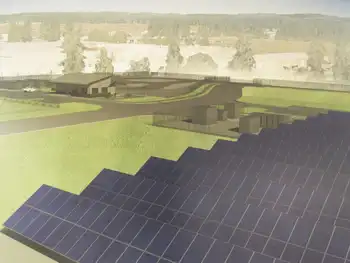
South Dakota regulators approved two permits to allow Basin Electric Power Cooperative to build a $400 million gas-fired, combined-cycle power plant near Brookings.

The Public Utilities Commission's three members voted unanimously to approve the Deer Creek Station power plant and a natural gas pipeline to bring fuel to the plant.

"This is $400 million worth of investment and 30 full-time jobs. It is a nice benefit that can accrue from building a safe, reliable and affordable energy supply," PUC Chairman Dusty Johnson said.

Basin Electric, based in Bismarck, North Dakota, still has an environmental impact study pending with a federal agency. The company hopes to begin construction in July and have the plant operating in 2012.

The plant, located about 12 miles east of Brookings in eastern South Dakota, could generate up to 300 megawatts of power. It would use natural gas to fire one turbine. Heat from the gas turbine's exhaust would be used to heat water and create steam to run the second turbine.

The permits approved include conditions negotiated by Basin Electric and the commission's staff. The PUC's hearing on the issue lasted only about a half hour because no one appeared at the meeting to oppose the project.

Basin Electric has addressed all issues raised by a review committee of area residents, said Elkton School Superintendent Tony Simons, a member of that local panel.

Basin Electric proposed the plant to meet growing demand from its member electric systems.

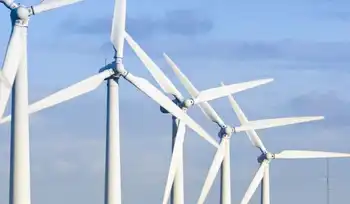
Commissioners said the plant could work in coordination with wind farms in the area. Project manager Gavin McCollam said the Deer Creek Station's power generation could be adjusted quickly according to the availability of wind-generated power.

In response to questions from the PUC, McCollam said the plant's use of natural gas should have little or no effect on the price of gas in the area.

Related News

Brazil tax strategy to bring down fuel, electricity prices seen having limited effects

Brazil ICMS Tax Cap limits state VAT on fuels, natural gas, electricity, communications, and transit, promising short-term price relief amid inflation, with federal compensation to states and potential legal challenges affecting investments and ANP auctions.


Key Points

A policy capping state VAT at 17-18 percent on fuels, electricity, and services to temper prices and inflation.

✅ Caps VAT to 17-18% on fuels, power, telecom, transit

✅ Short-term relief; medium-long term impact uncertain

✅ Federal compensation; potential court challenges, investment risk


Brazil’s congress approved a bill that limits the ICMS tax rate that state governments can charge on fuels, natural gas, electricity, communications, and public transportation. 

Local lawyers told BNamericas that the measure may reduce fuel and power prices in the short term, similar to Brazil power sector relief loans seen during the pandemic, but it is unlikely to produce any major effects in the medium and long term. 

In most states the ceiling was set at 17% or 18% and the federal government will pay compensation to the states for lost tax revenue until December 31, via reduced payments on debts that states owe the federal government.

The bill will become law once signed by President Jair Bolsonaro, who pushed strongly for the proposal with an eye on his struggling reelection campaign for the October presidential election. Double-digit inflation has turned into a major election issue and fuel and electricity prices have been among the main inflation drivers, as seen in EU energy-driven inflation across the bloc this year. Congress’ approval of the bill is seen by analysts as political victory for the Brazilian leader.

How much difference will it make?

Marcus Francisco, tax specialist and partner at Villemor Amaral Advogados, said that in the formation of fuel and electricity prices there are other factors, including high natural gas prices, that drive increases.

“In the case of fuels, if the barrel of oil [price] increases, automatically the final price for the consumer will go up. For electricity, on the other hand, there are several subsidies and policy choices such as Florida rejecting federal solar incentives that are part of the price and that can increase the rate [paid],” he said. 

There is also a possibility that some states will take the issue to the supreme court since ICMS is a key source of revenue for them, Francisco added.

Tiago Severini, a partner at law firm Vieira Rezende, said the comparison between the revenue impact and the effective price reduction, based on the estimates made by the states and the federal government, seems disproportionate, and, as seen in Europe, rolling back European electricity prices is often tougher than it appears. 

“In other words, a large tax collection impact is generated, which is quite unequal among the different states, for a not so strong price reduction,” he said.

“Due to the lack of clarity regarding the precision of the calculations involved, it’s difficult even to assess the adequacy of the offsets the federal government has been considering, and international cases such as France's new electricity pricing scheme illustrate how complex it can be to align fiscal offsets with regulatory constraints, to cover the cost it would have with the compensation for the states” Severini added.

The compensation ideas that are known so far include hiking other taxes, such as the social contribution on net profits (CSLL) that is paid by oil and gas firms focused on exploration and production.

“This can generate severe adverse effects, such as legal disputes, reduced investments in the country, and reduced attractiveness of the new auctions by [sector regulator] ANP, and costly interventions like the Texas electricity market bailout after extreme weather events,” Severini said. 


Related News

View more

Warren Buffett’s Secret To Cheap Electricity: Wind

Berkshire Hathaway Energy Wind Power drives cheap electricity rates in Iowa via utility-scale wind turbines, integrated transmission, battery storage, and grid management, delivering renewable energy, stable pricing, and long-term rate freezes through 2028.


Key Points

A vertically integrated wind utility lowering Iowa rates via owned generation, transmission, and advanced grid control.

✅ Owned wind assets meet Iowa residential demand

✅ Integrated transmission lowers costs and losses

✅ Rate freeze through 2028 sustains cheap power


In his latest letter to Berkshire Hathaway shareholders, Warren Buffett used the 20th anniversary of Berkshire Hathaway Energy to tout its cheap electricity bills for customers.

When Berkshire purchased the majority share of BHE in 2000, the cost of electricity for its residential customers in Iowa was 8.8 cents per kilowatt-hour (kWh) on average. Since then, these electricity rates have risen at a paltry <1% per year, with a freeze on rate hikes through 2028. As anyone who pays an electricity bill knows, that is an incredible deal.  

As Buffett himself notes with alacrity, “Last year, the rates [BHE’s competitor in Iowa] charged its residential customers were 61% higher than BHE’s. Recently, that utility received a rate increase that will widen the gap to 70%.”


The Winning Strategy

So, what’s Buffett’s secret to cheap electricity? Wind power.

“The extraordinary differential between our rates and theirs is largely the result of our huge accomplishments in converting wind into electricity,” Buffett explains. 

Wind turbines in Iowa that BHE owns and operates are expected to generate about 25.2 million megawatt-hours (MWh) of electricity for its customers, as projects like Building Energy operations begin to contribute. By Buffett’s estimations, that will be enough to power all of its residential customers’ electricity needs in Iowa.  


The company has plans to increase its renewable energy generation in other regions as well. This year, BHE Canada is expected to start construction on a 117.6MW wind farm in Alberta, Canada with its partner, Renewable Energy Systems, that will provide electricity to 79,000 homes in Canada’s oil country.

Observers note that Alberta is a powerhouse for both green energy and fossil fuels, underscoring the region's unique transition.

But I would argue that the secret to BHE’s success perhaps goes deeper than transitioning to sources of renewable energy. There are plenty of other utility companies that have adopted wind and solar power as an energy source. In the U.S., where renewable electricity surpassed coal in 2022, at least 50% of electricity customers have the option to buy renewable electricity from their power supplier, according to the Department of Energy. And some states, such as New York, have gone so far as to allow customers to pick from providers who generate their electricity.

What differentiates BHE from a lot of the competition in the utility space is that it owns the means to generate, store, transmit and supply renewable power to its customers across the U.S., U.K. and Canada, with lessons from the U.K. about wind power informing policy.

In its financial filings for 2019, the company reported that it owns 33,600MW of generation capacity and has 33,400 miles of transmission lines, as well as a 50% interest in Electric Transmission Texas (ETT) that has approximately 1,200 miles of transmission lines. This scale and integration enables BHE to be efficient in the distribution and sale of electricity, including selling renewable energy across regions.

BHE is certainly not alone in building renewable-energy fueled electricity dominions. Its largest competitor, NextEra, built 15GW of wind capacity and has started to expand its utility-scale solar installations. Duke Energy owns and operates 2,900 MW of renewable energy, including wind and solar. Exelon operates 40 wind turbine sites across the U.S. that generate 1,500 MW.


Integrated Utilities Power Ahead

It’s easy to see why utility companies see wind as a competitive source of electricity compared to fossil fuels. As I explained in my previous post, Trump’s Wrong About Wind, the cost of building and generating wind energy have fallen significantly over the past decade. Meanwhile, improvements in battery storage and power management through new technological advancements have made it more reliable (Warren Buffett bet on that one too).

But what is also striking is that integrated power and transmission enables these utility companies to make those decisions; both in terms of sourcing power from renewable energy, as well as the pricing of the final product. Until wind and solar power are widespread, these utility companies are going to have an edge of the more fragmented ends of the industry who can’t make these purchasing or pricing decisions independently. 

Warren Buffett very rarely misses a beat. He’s not the Oracle of Omaha for nothing. Berkshire Hathaway’s ownership of BHE has been immensely profitable for its shareholders. In the year ended December 31, 2019, BHE and its subsidiaries reported net income attributable to BHE shareholders of $2.95 billion.

There’s no question that renewable energy will transform the utility industry over the next decade. That change will be led by the likes of BHE, who have the power to invest, control and manage their own energy generation assets.


Related News

View more

B.C. Streamlines Regulatory Process for Clean Energy Projects

BCER Renewable Energy Permitting streamlines single-window approvals for wind, solar, and transmission projects in BC, cutting red tape, aligning with CleanBC, and accelerating investment, Indigenous partnerships, and low-carbon infrastructure growth provincewide.


Key Points

BC's single-window framework consolidates approvals for wind, solar, and transmission to accelerate energy projects.

✅ Single-window permits via BC Energy Regulator (BCER)

✅ Covers wind, solar, and high-voltage transmission lines

✅ Aligns with CleanBC, supports Indigenous partnerships


In a decisive move to bolster clean energy initiatives, the government of British Columbia (B.C.) has announced plans to overhaul the regulatory framework governing renewable energy projects. This initiative aims to expedite the development of wind, solar, and other renewable energy sources, positioning B.C. as a leader in sustainable energy production.

Transitioning Regulatory Authority to the BC Energy Regulator (BCER)

Central to this strategy is the proposed legislation, set to be introduced in spring 2025, which will transfer the permitting and regulatory oversight of renewable energy projects, aligning with offshore wind regulation plans at the federal level, from multiple agencies to the BC Energy Regulator (BCER). This transition is designed to create a "single-window" permitting process, simplifying approvals and reducing bureaucratic delays for developers.

Expanding BCER's Mandate

Historically known as the British Columbia Oil and Gas Commission, the BCER's mandate has evolved to encompass a broader range of energy projects. The upcoming legislation will empower the BCER to oversee renewable energy projects, including wind and solar, as well as high-voltage transmission lines like the North Coast Transmission Line (NCTL), in step with renewable transmission planning efforts elsewhere in North America. This expansion aims to streamline the regulatory process, providing developers with a single point of contact throughout the project lifecycle.

Economic and Environmental Implications

The restructuring is expected to unlock significant economic opportunities. Projections suggest that the streamlined process could attract between $5 billion and $6 billion in private investment and complement recent federal grid modernization funding initiatives, generating employment opportunities and fostering economic growth. Moreover, by facilitating the rapid deployment of renewable energy projects, B.C. aims to enhance its clean energy capacity, contributing to global sustainability goals.

Strengthening Partnerships with Indigenous Communities

A pivotal aspect of this initiative is the emphasis on collaboration with Indigenous communities. The government has highlighted the importance of engaging First Nations in the development process, ensuring that projects are not only environmentally sustainable but also socially responsible. This approach seeks to honor Indigenous rights and knowledge, fostering partnerships that benefit all stakeholders.

Supporting Infrastructure Development

The acceleration of renewable energy projects necessitates corresponding infrastructure enhancements. The NCTL, for instance, is crucial for meeting the increased electricity demand from sectors such as mining, port electrification, and hydrogen production, and for addressing regional grid constraints that limit renewable integration. By improving the transmission infrastructure, B.C. aims to support the growing energy needs of these industries while promoting clean energy solutions.

Aligning with CleanBC Objectives

This regulatory overhaul aligns seamlessly with B.C.'s CleanBC initiative, which sets ambitious targets for reducing greenhouse gas emissions and promoting energy efficiency, and supports Canada's goal of zero-emissions electricity by 2035 under active consideration. By removing regulatory barriers and expediting project approvals, the government aims to accelerate the transition to a low-carbon economy, positioning B.C. as a hub for clean energy innovation.

Addressing Potential Challenges

While the initiative has been lauded for its potential, experts caution that careful consideration must be given to environmental assessments and Indigenous consultation processes, as well as to lessons from Alberta's solar expansion challenges on land use and grid impacts. Ensuring that projects meet environmental standards and respect Indigenous rights is crucial for the long-term success and acceptance of renewable energy developments.

The proposed changes mark a significant shift in B.C.'s approach to energy development, reflecting a commitment to sustainability and economic growth. As the legislation moves through the legislative process, stakeholders across the energy sector are closely monitoring developments, particularly as Alberta ends its renewables moratorium and resumes project approvals across the Prairies, anticipating a more efficient and transparent regulatory environment that supports the rapid expansion of renewable energy projects.

B.C.'s plan to streamline the regulatory process for clean energy projects represents a bold step toward a sustainable and prosperous energy future. By consolidating regulatory authority under the BCER, fostering Indigenous partnerships, and aligning with broader environmental objectives, the province is setting a precedent for effective governance in the transition to renewable energy.


Related News

View more

Electricity users in Newfoundland have started paying for Muskrat Falls

Muskrat Falls rate mitigation offsets Newfoundland Power's rate stabilization decrease as NL Hydro begins cost recovery; Public Utilities Board approval enables collections while Labrador-Island Link nears commissioning, stabilizing electricity rates despite megaproject delays, overruns.


Key Points

Muskrat Falls rate mitigation is NL Hydro's cost recovery via power rates to stabilize bills as commissioning nears.

✅ Offsets 6.4% decrease with a 6.1% rate increase

✅ About 6% now funds NL Hydro's rate mitigation

✅ Collections begin as Labrador-Island Link nears commissioning


With their July electricity bill, Newfoundland Power customers have begun paying for Muskrat Falls, though a lump-sum credit was also announced to offset costs and bills haven't significantly increased — yet.

In a July newsletter, Newfoundland Power said electricity bills were set to decrease by 6.4 per cent as part of the annual rate stabilization adjustment, which reflects the cost of electricity generation.

Instead, that decrease has been offset by a 6.1 increase in electricity rates so Newfoundland and Labrador Hydro can begin recovering the cost of Muskrat Falls, with a $5.2-billion federal package also underpinning the project, the $13-billion hydroelectric megaproject that is billions over budget and years behind schedule.

That means for residential customers, electricity rates will decrease to 12.346 cents per kilowatt, though the basic customer charge will go up slightly from $15.81 to $15.83. According to an N.L. Hydro spokesperson, about six per cent of electricity bills will now go toward what it calls a "rate mitigation fund." 

N.L. Hydro claims victory in Muskrat Falls arbitration dispute with Astaldi
Software troubles blamed for $260M Muskrat Falls cost increase, with N.L. power rates stable for now
The spokesperson said N.L. Hydro is expecting the rate increase to result in $43 million this year, according to a recent financial update from the energy corporation — a tiny fraction of the project's cost. 

N.L. Hydro asked the Public Utilities Board to approve the rate increase, a process similar to Nova Scotia's recent 14% approval by its regulator, in May. In a letter, Energy, Industry and Technology Minister Andrew Parsons supported the increase, though he asked N.L. Hydro to keep electricity rates "as close to current levels as possible. 

Province modifies order in council
Muskrat Falls is not yet fully online — largely due to software problems with the Labrador-Island Link transmission line — and an order in council dictated that ratepayers on the island of Newfoundland would not begin paying for the project until the project was fully commissioned. 

The provincial government modified that order in council so N.L. Hydro can begin collecting costs associated with Muskrat Falls once the project is "nearing" commissioning.

In June, N.L. Hydro said the project was expected to finally be completed by the end of the year.

In an interview with CBC News, Progressive Conservative interim leader David Brazil said the decision to begin recovering the cost of Muskrat Falls from consumers should have been delayed.

"There was an opportunity here for people to get some reprieve when it came to their electricity bills and this administration chose not to do that, not to help the people while they're struggling," he said.

In a statement, Parsons said reducing the rate was not an option, and would have resulted in increased borrowing costs for Muskrat Falls.

"Reducing the rate for one year to have it increase significantly the following year is not consistent with rate mitigation and also places an increased financial burden on taxpayers one year from now," Parsons said.

Decision 'reasonable': Consumer advocate
Brazil said his party didn't know the payments from Muskrat Falls would start in July, and criticized the government for not being more transparent.

A person wearing a blue shirt and black blazer stands outside on a lawn.
N.L. consumer advocate Dennis Browne says it makes sense to begin recouping the cost of Muskrat Falls. (Garrett Barry/CBC)
Newfoundland and Labrador consumer advocate Dennis Browne said the decision to begin collecting costs from consumers was "reasonable."

"We're into a financial hole due to Muskrat Falls, and what has happened is in order to stabilize rates, we have gone into rate stabilization efforts," he said.

In February, the provincial and federal governments signed a complex agreement to shield ratepayers aimed at softening the worst of the financial impact from Muskrat Falls. Browne noted even with the agreement, the provincial government will have to pay hundreds of millions in order to stabilize electricity rates.

"Muskrat Falls would cost us $0.23 a kilowatt, and that is out of the range of affordability for most people, and that's why we're into rate mitigation," he said. "This was part of a rate mitigation effort, and I accepted it as part of that."


Related News

View more

Reconciliation and a Clean Electricity Standard

Clean Electricity Standard (CES) sets utility emissions targets, uses tradable credits, and advances decarbonization via technology-agnostic benchmarks, carbon capture, renewable portfolio standards, upstream methane accounting, and cap-and-trade alternatives in reconciliation policy.


Key Points

CES sets utility emissions targets using tradable credits and benchmarks to drive power-sector decarbonization.

✅ Annual clean energy targets phased to 2050

✅ Tradable credits for compliance across utilities

✅ Includes upstream methane and lifecycle emissions


The Biden Administration and Democratic members of Congress have supported including a clean electricity standard (CES) in the upcoming reconciliation bill. A CES is an alternative to pricing carbon dioxide through a tax or cap-and-trade program and focuses on reducing greenhouse gas emissions produced during electricity generation by establishing targets, while early assessments show mixed results so far. In principle, it is a technology-agnostic approach. In practice, however, it pushes particular technologies out of the market.

The details of the CES are still being developed, but recent legislation may provide insight into how the CES could operate. In May, Senator Tina Smith and Representative Ben Ray Luján introduced the Clean Energy Standard Act of 2019 (CESA), while Minnesota's 100% carbon-free mandate offers a state-level parallel, and in January 2020, the House Energy and Commerce Committee released a discussion draft of the Climate Leadership and Environmental Action for our Nation’s (CLEAN) Future Act. Both bills increase the clean energy target annually until 2050 in order to phase out emissions. Both bills also create a credit system where clean sources of electricity as determined by a benchmark, carbon dioxide emitted per kilowatt-hour, receive credits. These credits may be transferred, sold, and auctioned so utilities that fail to meet targets can procure credits from others, as large energy customers push to accelerate clean energy globally.

The bills’ benchmarks vary, and while the CLEAN Future Act allows natural gas-fired generators to receive partial credits, CESA does not. Under both bills, these generators would be expected to install carbon capture technology to continue meeting increasing targets for clean electricity generation. Both bills go beyond considering the emissions resulting from generation and include upstream emissions for natural gas-fired generators. Natural gas, a greenhouse gas, that is leaked upstream of a generator during transportation is to be included among its emissions. The CLEAN Future Act also calls for newly constructed hydropower generators to account for the emissions associated with the facility’s construction despite producing clean electricity. These additional provisions demonstrate not only the CES’s inability to fully address the issue of emissions but also the slippery slope of expanding the program to include other markets, echoing cost and reliability concerns as California exports its energy policies across the West.

A majority of states have adopted clean energy, electricity, or renewable portfolio standards, with some considering revamping electricity rates to clean the grid, leaving legislators with plenty of examples to consider. As they weigh their options, legislators should consider if they are effectively addressing the problem at hand, economy-wide emissions reductions, and at what cost, drawing on examples like New Mexico's 100% clean electricity bill to inform trade-offs.


Related News

View more

Sustainable Marine now delivering electricity to Nova Scotia grid from tidal energy

Sustainable Marine tidal energy delivers in-stream power to Nova Scotia's grid from Grand Passage, proving low-impact, renewable generation and advancing a floating tidal array at FORCE and Minas Passage in the Bay of Fundy.


Key Points

The first in-stream tidal project supplying clean power to Nova Scotia's grid, proven at Grand Passage.

✅ First to deliver in-stream tidal power to Canada's grid

✅ Demonstration at Grand Passage informs FORCE deployments

✅ Low-impact design and environmental monitoring validated


Sustainable Marine has officially powered up its tidal energy operation in Canada and is delivering clean electricity to the power system in Nova Scotia, on the country’s Atlantic coast, as the province moves to increase wind and solar projects in the years ahead. The company’s system in Grand Passage is the first to deliver in-stream tidal power to the grid in Canada, following provincial approval to harness Bay of Fundy tides that is spurring further development.

The system start-up is the culmination of more than a decade of research, development and testing, including lessons from Scottish tidal projects in recent years and a powerful tidal turbine feeding onshore grids, managing the technical challenges associated with operating in highly energetic environments and proving the ultra-low environmental impact of the tidal technology.

Sustainable Marine is striving to deliver the world’s first floating tidal array at FORCE (Fundy Ocean Research Centre for Energy). This project will be delivered in phases, drawing upon the knowledge gained and lessons learned in Grand Passage, and insights from offshore wind pilots like France’s first offshore wind turbine in Europe. In the coming months the company will continue to operate the platform at its demonstration site at Grand Passage, gradually building up power production, while New York and New England clean energy demand continues to rise, to further prove the technology and environmental monitoring systems, before commencing deployments in the Minas Passage – renowned as the Everest of tidal energy.

The Bay of Fundy’s huge tidal energy resource contains more than four times the combined flow of every freshwater river in the world, with the potential to generate approximately 2,500 MW of green energy, underscoring why independent electricity planning will be important for integrating marine renewables.


Related News

View more

Sign Up for Electricity Forum’s Newsletter

Stay informed with our FREE Newsletter — get the latest news, breakthrough technologies, and expert insights, delivered straight to your inbox.

Electricity Today T&D Magazine Subscribe for FREE

Stay informed with the latest T&D policies and technologies.
  • Timely insights from industry experts
  • Practical solutions T&D engineers
  • Free access to every issue

Live Online & In-person Group Training

Advantages To Instructor-Led Training – Instructor-Led Course, Customized Training, Multiple Locations, Economical, CEU Credits, Course Discounts.

Request For Quotation

Whether you would prefer Live Online or In-Person instruction, our electrical training courses can be tailored to meet your company's specific requirements and delivered to your employees in one location or at various locations.