By --Source Reuters


Protective Relay Training - Basic

Our customized live online or in‑person group training can be delivered to your staff at your location.

  • Live Online
  • 12 hours Instructor-led
  • Group Training Available
Regular Price:
$699
Coupon Price:
$599
Reserve Your Seat Today
WASHINGTON - The Department of Energy on Thursday said it will formally recommended Nevada's Yucca Mountain as the final resting place for the nation's radioactive waste, an Energy Department official said.

Energy Secretary Spencer Abraham called Nevada Governor Kenny Guinn around 2 p.m EST to inform him of the decision, the official said.

Abraham will forward the formal recommendation to President Bush in 30 days -- the time allotted for Guinn to review the proposal, the official said.

"He told the governor that he has decided to recommend to the president that the Yucca Mountain site is suitable and sound for the nation's repository for nuclear waste," the official said.

The site in the Nevada desert would store 70,000 tons of radioactive materials from the nation's 103 nuclear power plants for an estimated 10,000 years.

Related News

Avista Commissions Largest Solar Array in Washington

Adams Nielson Solar Array, a 28 MW DC utility-scale project in Lind, WA, spans 200 acres with 81,700 panels, powering about 4,000 homes, supporting Avista’s Solar Select program and renewable energy, sustainability, and carbon reduction.


Key Points

Adams Nielson Solar Array is a 28 MW DC facility in Lind, WA, powering ~4,000 homes via Avista’s Solar Select.

✅ 81,700 panels across 200 acres in Eastern Washington

✅ Offsets emissions equal to removing 7,300 cars annually

✅ Collaboration by Avista, Strata Solar, WUTC, WSU Energy


Official commissioning of the Adams Nielson solar array located in Lind, WA occurred today. The 28 Megawatt DC array is comprised of 81,700 panels that span 200 acres and generates enough electricity to supply the equivalent of approximately 4,000 homes annually, similar to a new co-op solar project serving South Metro members.

“Avista’s interest in the development of Solar Select, a voluntary commercial solar program reflecting broader corporate adoption such as a corporate solar power plant commissioned by Arvato, is consistent with the Company’s ongoing commitment to provide customers with renewable energy choices at reasonable cost,” said Dennis Vermillion, president, Avista Corporation. “In recent years, an increasing number of Avista customers have expressed their expectations and challenges in acquiring renewable energy. Avista is pleased to lead this effort and develop renewable energy products that meet our customers’ needs today and into the future.” This interest is being generated by a mix of local and national customers across a variety of industries, including Huckleberry’s, Gonzaga University, Community Colleges of Spokane, Hotstart, Central Pre-Mix Concrete, a CRH Co., independently owned McDonald's franchise locations, Spokane City, Main Market and Community Building and VA Medical Center.

Jim Simon, director of sustainability at Gonzaga University said, “The Solar Select program helps Gonzaga University move even closer to achieving its goal of climate neutrality by 2050 by continuing to prioritize renewables in our energy portfolio, as other communities add projects like a municipal solar project to boost local supply. We are grateful for Avista’s leadership in this project and look forward to other opportunities to reduce our greenhouse gas emissions.”

Spokane Mayor David Condon said, “The City of Spokane is pleased to partner with Avista through the Solar Select Program, as we continue to seek out opportunities that are both environmentally and financially responsible. The City already is a net producer of energy, generating more clean, green energy than our use of electricity, natural gas, and fuel, a milestone also seen with North Carolina's first wind farm now fully operational. We are excited to add even more clean energy to power City Hall.”

The Solar Select program created a cost-effective structure to bring solar energy to large business customers in Eastern Washington, allowing them to advance their desired sustainability goals and benefiting from industry service innovations led by companies like Omnidian expanding their global reach. The array is projected to deliver the environmental benefit equivalent of more than 7,300 cars removed from the road each year. This renewable energy program was made possible through a collaboration of Avista, Strata Solar, the Washington Utilities and Transportation Commission, and the WSU Energy Program. 


Related News

View more

B.C. politicians must focus more on phasing out fossil fuels, report says

BC Fossil Fuel Phase-Out outlines a just transition to a green economy, meeting climate targets by mid-century through carbon budgets, ending subsidies for fracking, capping production, and investing in renewable energy, remediation, and resilient infrastructure.


Key Points

A strategic plan to wind down oil and gas, end subsidies, and achieve climate targets with a just transition in BC.

✅ End new leases, phase out subsidies, cap fossil production

✅ Carbon budgets and timelines to meet mid-century climate targets

✅ Just transition: income supports, retraining, site remediation jobs


Politicians in British Columbia aren't focused enough on phasing out fossil fuel industries, a new report says.

The report, authored by the left-leaning Canadian Centre for Policy Alternatives, says the province must move away from fossil fuel industries by mid-century in order to meet its climate targets, with B.C. projected to fall short of 2050 targets according to recent analysis, but adds that the B.C. government is ill prepared to transition to a green economy.

"We are totally moving in the wrong direction," said economist Marc Lee, one of the authors of the report, on The Early Edition Wednesday. 

He said most of the emphasis of B.C. government policy has been on slowing reductions in emissions from transportation or emissions from buildings, even though Canada will need more electricity to hit net-zero according to the IEA, while still subsidizing fossil fuel extraction, such as fracking projects, that Lee said should be phased out.

"What we are putting on the table is politically unthinkable right now," said Lee, adding that last month's provincial budget called for a 26 per cent increased gas production over the next three years, even though electrified LNG facilities could boost demand for clean power.

B.C.'s $830M in fossil fuel subsidies undermines efforts to fight climate crisis, report says
He said B.C. needs to start thinking instead about how its going to wind down its dependence on fossil fuel industries.


'Greener' job transition needed
The report said the provincial government's continued interest in expanding production and exporting fossil fuels, even as Canada's race to net-zero intensifies across the energy sector, suggests little political will to think about a plan to move away from them.

It suggests the threat of major job losses in those industries is contributing to the political inaction, but cited several examples of ways governments can help move workers into greener jobs, as many fossil-fuel workers are ready to support the transition according to recent commentary. 

Lee said early retirement provisions or income replacement for transitioning workers are options to consider.

"We actually have seen a lot of real-world policy around transition starting to happen, including in Alberta, which brought in a whole transition package for coal workers producing coal for electricity generation, and regional cooperation like bridging the electricity gap between Alberta and B.C. could further support reliability," Lee said.

Give cities the power to move more quickly on the environment, say Metro Van politicians
Make it easier for small businesses to go green, B.C. Chamber of Commerce urges government
Lee also said well-paying jobs could be created by, for example, remediating old coal mines and gas wells and building green infrastructure and renewable electricity projects in affected areas.

The report also calls for a moratorium on new fossil fuel leases and ending fossil fuel subsidies, as well as creating carbon budgets and fossil fuel production limits.

"Change is coming," said Lee. "We need to get out ahead of it."


Related News

View more

IEA: Asia set to use half of world's electricity by 2025

Asia Electricity Consumption 2025 highlights an IEA forecast of surging global power demand led by China, lagging access in Africa, rising renewables and nuclear output, stable emissions, and weather-dependent grids needing flexibility and electrification.


Key Points

An IEA forecast that Asia will use half of global power by 2025, led by China, as renewables and nuclear drive supply.

✅ Asia to use half of global electricity; China leads growth

✅ Africa just 3% consumption despite rapid population growth

✅ Renewables, nuclear expand; grids must boost flexibility


Asia will for the first time use half of the world’s electricity by 2025, even as global power demand keeps rising and Africa continues to consume far less than its share of the global population, according to a new forecast released Wednesday by the International Energy Agency.

Much of Asia’s electricity use will be in China, a nation of 1.4 billion people whose China's electricity sector is seeing shifts as its share of global consumption will rise from a quarter in 2015 to a third by the middle of this decade, the Paris-based body said.

“China will be consuming more electricity than the European Union, United States and India combined,” said Keisuke Sadamori, the IEA’s director of energy markets and security.

By contrast, Africa — home to almost a fifth of world’s nearly 8 billion inhabitants — will account for just 3% of global electricity consumption in 2025.

“This and the rapidly growing population mean there is still a massive need for increased electrification in Africa,” said Sadamori.

The IEA’s annual report predicts that low-emissions sources will account for much of the growth in global electricity supply over the coming three years, including nuclear power and renewables such as wind and solar. This will prevent a significant rise in greenhouse gas emissions from the power sector, it said.

Scientists say sharp cuts in all sources of emissions are needed as soon as possible to keep average global temperatures from rising 1.5 degrees Celsius (2.7 Fahrenheit) above pre-industrial levels. That target, laid down in the 2015 Paris climate accord, appears increasingly doubtful as temperatures have already increased by more than 1.1 C since the reference period.

One hope for meeting the goal is a wholesale shift away from fossil fuels such as coal, gas and oil toward low-carbon sources of energy. But while some regions are reducing their use of coal and gas for electricity production, in others, soaring electricity and coal use are increasing, the IEA said.

The 134-page also report warned that surging electricity demand and supply are becoming increasingly weather dependent, a problem it urged policymakers to address.

“In addition to drought in Europe, there were heat waves in India (last year),” said Sadamori. “Similarly, central and eastern China were hit by heatwaves and drought. The United States, where electricity sales projections continue to fall, also saw severe winter storms in December, and all those events put massive strain on the power systems of these regions.”

“As the clean energy transition gathers pace, the impact of weather events on electricity demand will intensify due to the increased electrification of heating, while the share of weather-dependent renewables poised to eclipse coal will continue to grow in the generation mix,” the IEA said. “In such a world, increasing the flexibility of power systems while ensuring security of supply and resilience of networks will be crucial.”


Related News

View more

Energy authority clears TEPCO to restart Niigata nuclear plant

TEPCO Kashiwazaki-Kariwa restart plan clears NRA fitness review, anchored by a seven-point safety code, Niigata consent, Fukushima lessons, seismic risk analysis, and upgrades to No. 6 and No. 7 reactors, each rated 1.35 GW.


Key Points

TEPCO's plan to restart Kashiwazaki-Kariwa under NRA rules, pending Niigata consent and upgrades to Units 6 and 7.

✅ NRA deems TEPCO fit; legally binding seven-point safety code

✅ Local consent required: Niigata review of evacuation and health impacts

✅ Initial focus on Units 6 and 7; 1.35 GW each, seismic upgrades


Tokyo Electric Power Co. cleared a major regulatory hurdle toward restarting a nuclear power plant in Niigata Prefecture, but the utility’s bid to resume its operations still hangs in the balance of a series of political approvals.

The government’s nuclear watchdog concluded Sept. 23 that the utility is fit to operate the plant, based on new legally binding safety rules TEPCO drafted and pledged to follow, even as nuclear projects worldwide mark milestones across different regulatory environments today. If TEPCO is found to be in breach of those regulations, it could be ordered to halt the plant’s operations.

The Nuclear Regulation Authority’s green light now shifts the focus over to whether local governments will agree in the coming months to restart the Kashiwazaki-Kariwa plant.

TEPCO is keen to get the plant back up and running. It has been financially reeling from the closure of its nuclear plants in Fukushima Prefecture following the triple meltdown at the Fukushima No. 1 nuclear plant in 2011 triggered by the earthquake and tsunami disaster.

In parallel, Japan is investing in clean energy innovations such as a large hydrogen system being developed by Toshiba, Tohoku Electric Power and Iwatani.

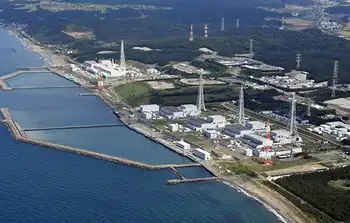
The company plans to bring the No. 6 and No. 7 reactors back online at the Kashiwazaki-Kariwa nuclear complex, which is among the world’s largest nuclear plants, amid China’s nuclear energy continuing on a steady development track in the region.

The two reactors each boast 1.35 gigawatts in output capacity, while Kenya’s nuclear plant aims to power industry as part of that country’s expansion. They are the newest of the seven reactors there, first put into service between 1996 and 1997.

TEPCO has not revealed specific plans yet on what to do with the older five reactors.

In 2017, the NRA cleared the No. 6 and No. 7 reactors under the tougher new reactor regulations established in 2013 in response to the Fukushima nuclear disaster, while jurisdictions such as Ontario support continued operation at Pickering under strict oversight.

It also closely scrutinized the operator’s ability to run the Niigata Prefecture plant safely, given its history as the entity responsible for the nation’s most serious nuclear accident.

After several rounds of meetings with top TEPCO managers, the NRA managed to hold the utility’s feet to the fire enough to make it pledge, in writing, to abide by a new seven-point safety code for the Kashiwazaki-Kariwa plant.

The creation of the new code, which is legally binding, is meant to hold the company accountable for safety measures at the facility.

“As the top executive, the president of TEPCO will take responsibility for the safety of nuclear power,” one of the points reads. “TEPCO will not put the facility’s economic performance above its safety,” reads another.

The company promised to abide by the points set out in writing during the NRA’s examination of its safety regulations.

TEPCO also vowed to set up a system where the president is directly briefed on risks to the nuclear complex, including the likelihood of earthquakes more powerful than what the plant is designed to withstand. It must also draft safeguard measures to deal with those kinds of earthquakes and confirm whether precautionary steps are in place.

The utility additionally pledged to promptly release public records on the decision-making process concerning crucial matters related to nuclear safety, and to preserve the documents until the facility is decommissioned.

TEPCO plans to complete its work to reinforce the safety of the No. 7 reactor in December. It has not set a definite deadline for similar work for the No. 6 reactor.

To restart the Kashiwazki-Kariwa plant, TEPCO needs to obtain consent from local governments, including the Niigata prefectural government.

The prefectural government is studying the plant’s safety through a panel of experts, which is reviewing whether evacuation plans are adequate as off-limits areas reopen and the health impact on residents from the Fukushima nuclear disaster.

Niigata Governor Hideyo Hanazumi said he will not decide on the restart until the panel completes its review.

The nuclear complex suffered damage, including from fire at an electric transformer, when an earthquake it deemed able to withstand hit in 2007.


Related News

View more

PG&E's bankruptcy plan wins support from wildfire victims

PG&E Bankruptcy Plan outlines wildfire victims compensation via a $13.5B trust funded by cash and stock, aiming CPUC and court approval before June 30 to access the state wildfire insurance fund and finalize settlement.


Key Points

A regulator-approved plan funding a $13.5B wildfire victims trust with cash and PG&E stock to exit bankruptcy.

✅ $13.5B trust split between cash and PG&E shares

✅ Targets CPUC and court approval to meet June 30 deadline

✅ Accesses state wildfire insurance fund for future risks


Pacific Gas & Electric's plan for getting out of bankruptcy has won overwhelming support from the victims of deadly Northern California wildfires ignited by the utility's fraying electrical grid, while some have pursued mega-fire lawsuits through the courts as well, despite concerns that they will be shortchanged by a $13.5 billion fund that's supposed to cover their losses.

The company announced the preliminary results of the vote on Monday without providing a specific tally. Those numbers are supposed to be filed with U.S. Bankruptcy Judge Dennis Montali by Friday.

The backing of the wildfire victims keeps PG&E on track to meet a June 30 deadline to emerge from bankruptcy in time to qualify for a coverage from a California wildfire insurance fund created to help protect the utility from getting into financial trouble again.

The current bankruptcy case, which began early last year, will require PG&E to pay out about $25.5 billion to cover the devastation caused by its neglect, including a Camp Fire guilty plea that underscored liabilities in court proceedings. It's the second time in less than 20 years that PG&E has filed for bankruptcy.

The backing for PG&E's plan isn't a surprise, even though some of the roughly 80,000 wildfire victims had been trying to rally resistance to what they consider to be a deeply flawed plan. The misgivings mostly center on the massive debt that the utility will take on to finance the plan and uncertainties about the fluctuating value of the $6.75 billion in company stock that comprises half of the $13.5 billion promised them.

As it became apparent that the COVID-19 pandemic would drive the economy into a deep recession, PG&E's shares plunged along with the rest of the stock market during March, even as it announced pandemic response measures for customers and employees during that period. That led one financial expert to estimate the PG&E stock earmarked for the wildfire victims' trust would be worth only $4.85 billion, a nearly 30% markdown.

But PG&E's stock price has rebounded in recent weeks and it's now worth more than it was when the deal setting up the victims' trust was struck last December. The shares surged more than 8% to $12.28 in Monday's late afternoon trading. The stock stood at $9.65 when PG&E reached its settlement the wildfire victims.

Critics of the utility's plan also are upset because the company still hasn't specified when the fire victims will be able to sell the shares. It now seems likely the victims will have to hold the stock through the upcoming wildfire season in Northern California, raising the specter that another calamity caused by the utility's badly outdated equipment, as power line fire reports have underscored, could cause the shares to plummet before they can cash out.

A petition signed by more than 3,100 wildfire victims recently urged Gov. Gavin Newsom to consider pushing back the deadline for qualifying for the state's wildfire from June 30 to late August to allow for more time to revise PG&E's plan, as many also turn to a wildfire assistance program for interim aid while they wait. Newsom's office hasn't responded to inquiry about the plan from The Associated Press.

But the lawyers representing the wildfire victims advised their clients to vote in favor of PG&E's plan, contending that it's the best deal they are going to get.

PG&E still must get its plan approved by the judge supervising its case, and a recent judge order on dividend use underscores the focus on wildfire mitigation. The confirmation hearings are scheduled to begin May 27. The judge, though, has indicated he will give great weight to the wishes of the wildfire victims.

California state regulators also must approve PG&E's plan, amid projections that rates will stabilize in 2025 for customers. A vote on that is scheduled Thursday before the Public Utilities Commission.


Related News

View more

Covid-19: Secrets of lockdown lifestyle laid bare in electricity data

Lockdown Electricity Demand Trends reveal later mornings, weaker afternoons, and delayed peaks as WFH, streaming, and video conferencing reshape energy demand curves, grid forecasting, and residential electricity usage across Europe, New York, Tokyo, and Singapore.


Key Points

Shifts in power use during lockdowns: later ramps, weaker afternoons, and higher, delayed evening peaks.

✅ Morning ramp starts later; midday demand dips

✅ Evening peak shifts 1-2 hours; higher late-night usage

✅ WFH and streaming raise residential load; industrial demand falls


Life in lockdown means getting up late, staying up till midnight and slacking off in the afternoons.

That’s what power market data in Europe show in the places where restrictions on activity have led to a widespread shift in daily routines of hundreds of millions of people.

It’s a similar story wherever lockdowns bite. In New York City electricity use has fallen as much as 18% from normal times at 8am. Tokyo and three nearby prefectures had a 5% drop in power use during weekdays after Japan declared a state of emergency on April 7, according to Tesla Asia Pacific, an energy forecaster.

Italy’s experience shows the trend most clearly since the curbs started there on March 5, before any other European country. Data from the grid operator Terna SpA gives a taste of what other places are also now starting to report, with global daily demand dips observed in many markets as well.


1. People are sleeping later

With no commute to the office people can sleep longer. Normally, electricity demand began to pick up between 6 a.m. and 8 a.m. Now in Germany, it’s clear coffee machines don’t go on until between 8 a.m. and 9 a.m., said Simon Rathjen, founder of the trading company MFT Energy A/S.

Germany, France and Italy -- which between them make up almost two thirds of the euro-zone economy -- all have furlough measures that allow workers to receive a salary while temporarily suspended from their jobs. The U.K. also has a support package. Many of these workers will be getting up later.

"Now I have quite a relaxed start to the morning,” said David Freeman, an analyst in financial services from London. "I don’t get up until about half an hour before I need to start work.”

2. Less productive afternoons

There is a deeper dip in electricity use in the afternoons. Previously, power use rose between 2pm and 5pm. Now it dips as people head out for a walk or some air, according to UK demand data from National Grid Plc

It’s "as though we are living through a month of Sundays”, said Iain Staffell, senior lecturer in sustainable energy at Imperial College London.

3. Evenings in

From 6pm electricity use begins to rise steeply as people finish work and start chores. Restrictions like work and home schooling that prevent much daytime TV watching lifts in the early evening. This following chart for Germany shows the evening peak for power use coming during later hours.

The evening is when electricity use is highest, with most people confined to their homes. Netflix Inc reported a record 15.8 million paid subscribers – almost double the figure forecast by Wall Street analysts. Video-streaming services like Netflix and YouTube have found a captive audience. The new Disney+ service surpassed 50 million subscribers in just five months, a faster pace than predicted.

Internet traffic is skyrocketing, with a surge in bandwidth-intensive applications like streaming services and Zoom. This may mean that monthly broadband consumption of as much as 600 gigabytes, about 35% higher than before, according to Bloomberg Intelligence.

In Singapore, electricity use has dropped off significantly since the country’s "circuit-breaker” efforts to keep people at home began April 7. Electricity use has fallen and stayed low during the day. But late at night is a different story, as power demand fell sharply immediately after the lockdown began, it has steadily crept back in the past two weeks, perhaps a sign that Tiger King and The Last Dance have been finding late-night fans in the city state.

In Ottawa, COVID-19 closures made it seem as if the city had fallen off the electricity grid, according to local reports.

4. Staying up late

We’re going to bed later too. Demand doesn’t start to drop off until 10pm to 12am, at least an hour later than before.

"My children are definitely going to bed later,” said Liz Stevens, a teaching assistant from London. "Our whole routine is out the window.”

It’s challenging for those that need to predict behaviour – power grids and electricity traders. Forecasting is based on historical data, and there isn’t anything to go into the models gauging use now.

The closest we can get is looking at big events like football World Championships when people are all sitting down at the same time, according to Rathjen at MFT.

"Forecasting demand right now is very tricky,” said Chris Kimmett, director of power grids at Reactive Technologies Ltd. "A global pandemic is uncharted territory."

What normal looks like when the crisis passes is also an open question. Different countries are set to unravel their measures in their own ways, and global power demand has already surged above pre-pandemic levels in some analyses, with Germany and Austria loosening restrictions first and Italy remaining under tight control. Some changes may be permanent, with both workers and employers becoming more comfortable with working from home.

5. Different sectors consume more

In China, which is further along recovering from the pandemic than Europe or the US, the sharp contraction in overall power output masks a shift in daily routines.

Eating habits have changed. Restaurants are expanding delivery and even offering grocery services as the preference for dining at home persists. Household electricity consumption in China probably increased from activities such as cooking and heating, according to IHS Markit, which said that residential demand rose by 2.4% in the first two months as people stayed in.

The increase in technology use also drove China’s power demand from the telecom and web-service sectors to rise by 27%, the consultancy said.

Overall, China power demand in the first quarter of the year fell 6.5% from the same period in 2019 to 1.57 trillion kilowatt-hours, China’s National Energy Administration said last week. Industry uses about 70% of the country’s electricity, while the commercial sector and households account for 14% each. – Bloomberg


Related News

View more

Sign Up for Electricity Forum’s Newsletter

Stay informed with our FREE Newsletter — get the latest news, breakthrough technologies, and expert insights, delivered straight to your inbox.

Electricity Today T&D Magazine Subscribe for FREE

Stay informed with the latest T&D policies and technologies.
  • Timely insights from industry experts
  • Practical solutions T&D engineers
  • Free access to every issue

Download the 2025 Electrical Training Catalog

Explore 50+ live, expert-led electrical training courses –

  • Interactive
  • Flexible
  • CEU-cerified