Goose Protocol IEC 61850 for Substation Protection
By Steven Kunsman, Hitachi Energy USA
By Steven Kunsman, Hitachi Energy USA
Request for Quotation Service
Buyers Submit Free RFQs to top suppliers, no obligation.
Suppliers Browse real project RFQs directly from buyers.
Trust Electricity Forum 40 years connection buyers and suppliers.
GOOSE protocol IEC 61850 enables high-speed peer-to-peer messaging for substation protection and control via multicast Ethernet, publisher-subscriber logic, and event-driven communication, delivering millisecond response times and improving grid reliability.
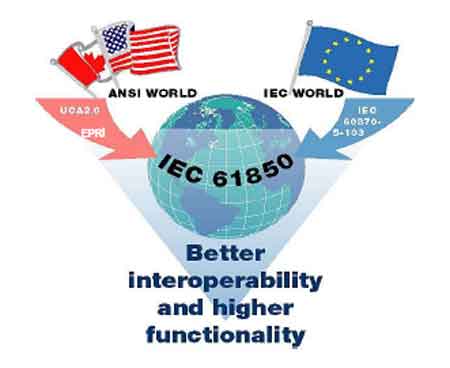
The GOOSE protocol, IEC 61850, is used in digital substations to transmit protection and control signals between intelligent electronic devices without relying on hardwired connections. It replaces physical wiring with Ethernet-based communication designed for fast event delivery.
In conventional substations, protection trips, interlocks, and status signals are exchanged through copper wiring between relays and control panels. This approach increases installation complexity and limits flexibility when schemes change. GOOSE replaces these fixed connections with network-based messaging.
The protocol operates on an event driven model where messages are transmitted only when a status change occurs. This allows protection systems to respond immediately to faults, rather than waiting for polling cycles or supervisory control updates.
GOOSE messaging follows a publisher and subscriber model within the substation network. A protection relay or controller publishes a dataset that represents status changes, such as breaker position or trip signals. Other devices subscribe to that dataset and act on the information they receive.
When a state change occurs, the publisher sends a burst of messages onto the network. These messages are received simultaneously by all subscribing devices using multicast Ethernet addressing. This allows multiple protection functions to respond simultaneously without additional communication overhead.
After the initial event, the publisher continues to retransmit the message at increasing intervals. This retransmission pattern ensures that subscribers maintain a consistent view of the system state even if individual packets are lost.
Think you know Smart Grid? Take our quick, interactive quiz and test your knowledge in minutes.
This communication model supports the transition toward a Smart Substation where signal exchange is handled digitally rather than through hardwired circuits.
GOOSE messaging also changes how protection schemes are tested and validated in the field. Because multiple signals are transmitted simultaneously over the network, engineers can observe and verify several protection interactions at once rather than testing each circuit individually. Time measurement between status changes can be captured directly, allowing precise validation of protection response performance and coordination timing without relying on manual wiring checks.
GOOSE operates directly on Layer 2 Ethernet, which removes the delays associated with higher level protocols. Because it does not rely on TCP or IP routing, message delivery remains deterministic within the substation local area network.
Multicast communication allows a single message to reach multiple devices simultaneously, but it also introduces network design constraints. Excessive multicast traffic can lead to congestion if the network is not engineered correctly.
Typical protection schemes require message delivery in the range of 3 to 4 milliseconds to ensure proper fault clearing coordination. Achieving this level of performance depends on switch configuration, network loading, and prioritization of protection traffic.
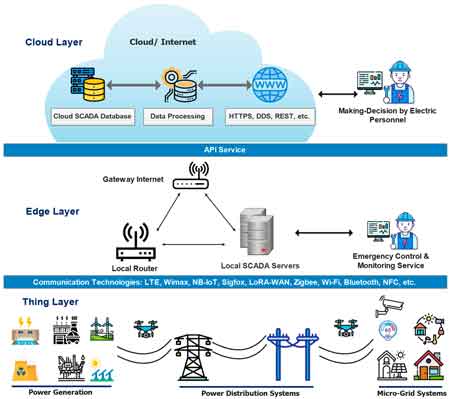
These constraints must be considered alongside broader Smart Grid Communication strategies that include both operational and enterprise data flows.
GOOSE is primarily used for high speed protection and control functions such as interlocking, transfer tripping, and breaker failure schemes. Because messages are distributed simultaneously, it enables coordinated action across multiple devices.
In contrast to SCADA based control, which is designed for monitoring and supervisory commands, GOOSE is intended for immediate operational response. It functions within the protection layer rather than the control center layer.
This distinction is critical when comparing it with architectures described in SCADA Architecture or implementations such as Substation SCADA, where communication latency is not suitable for protection timing requirements.
Because GOOSE messages are broadcast on the network, any device within the same network segment can potentially receive or inject messages if controls are not properly implemented. This creates a risk of unintended operations or malicious signal injection.
Unlike traditional hardwired systems, where physical access is required to alter signals, network-based messaging introduces exposure to configuration errors and cybersecurity threats. Protection schemes must therefore include network segmentation, access control, and monitoring.
Utilities addressing these risks often align their designs with broader Grid Cybersecurity Strategy requirements to ensure that communication integrity is maintained.
The use of GOOSE introduces a tradeoff between speed, reliability, and network complexity. While it enables faster signal delivery than hardwired systems, it also requires careful engineering of network switches, redundancy schemes, and traffic prioritization.
GOOSE is typically limited to the substation local area network and is not intended for wide area communication. Attempting to extend it beyond this boundary introduces latency and reliability concerns that can compromise protection performance.
Integration of GOOSE within modern Smart Grid Technologies requires coordination between protection engineers and network engineers to ensure that system behavior remains predictable under fault conditions.
If GOOSE messaging is delayed or lost, protection coordination can fail, resulting in incorrect breaker operation or delayed fault clearing.
An important edge case occurs when GOOSE messages are lost or received out of sequence during network congestion or device failure. The retransmission mechanism helps mitigate this risk, but improper configuration can still lead to inconsistent state awareness among devices.
Stay informed with our FREE Smart Grid Newsletter — get the latest news, breakthrough technologies, and expert insights, delivered straight to your inbox.
For example, if a subscriber misses the initial event message but receives a later retransmission, it must rely on sequence numbering and state validation to determine whether the event is current. Failure to manage this correctly can result in delayed or incorrect protection actions.
This highlights the importance of network reliability and redundancy, often addressed in broader discussions of Grid Connectivity.
The decision to deploy GOOSE messaging is not only a protocol selection but a system design choice that affects protection performance, network architecture, and operational risk.
Engineers must evaluate whether the network can consistently deliver sub-4-millisecond performance under all conditions, whether redundancy mechanisms are sufficient, and whether cybersecurity controls prevent unintended operations.
When implemented correctly, GOOSE enables a shift from static wiring to flexible digital communication. When implemented incorrectly, it introduces failure modes that are less visible and harder to diagnose than traditional systems.
 How Circuit Breaker Monitoring Helps Detect Problems Before Failure
Article
How Circuit Breaker Monitoring Helps Detect Problems Before Failure
Article
 Coordinated Protection, Control Automation Schemes
Catalog
Coordinated Protection, Control Automation Schemes
Catalog
 Very Low Frequency Ac Hipot Test Sets - Vlf Series&E-Series Product Catalog
Product
Very Low Frequency Ac Hipot Test Sets - Vlf Series&E-Series Product Catalog
Product
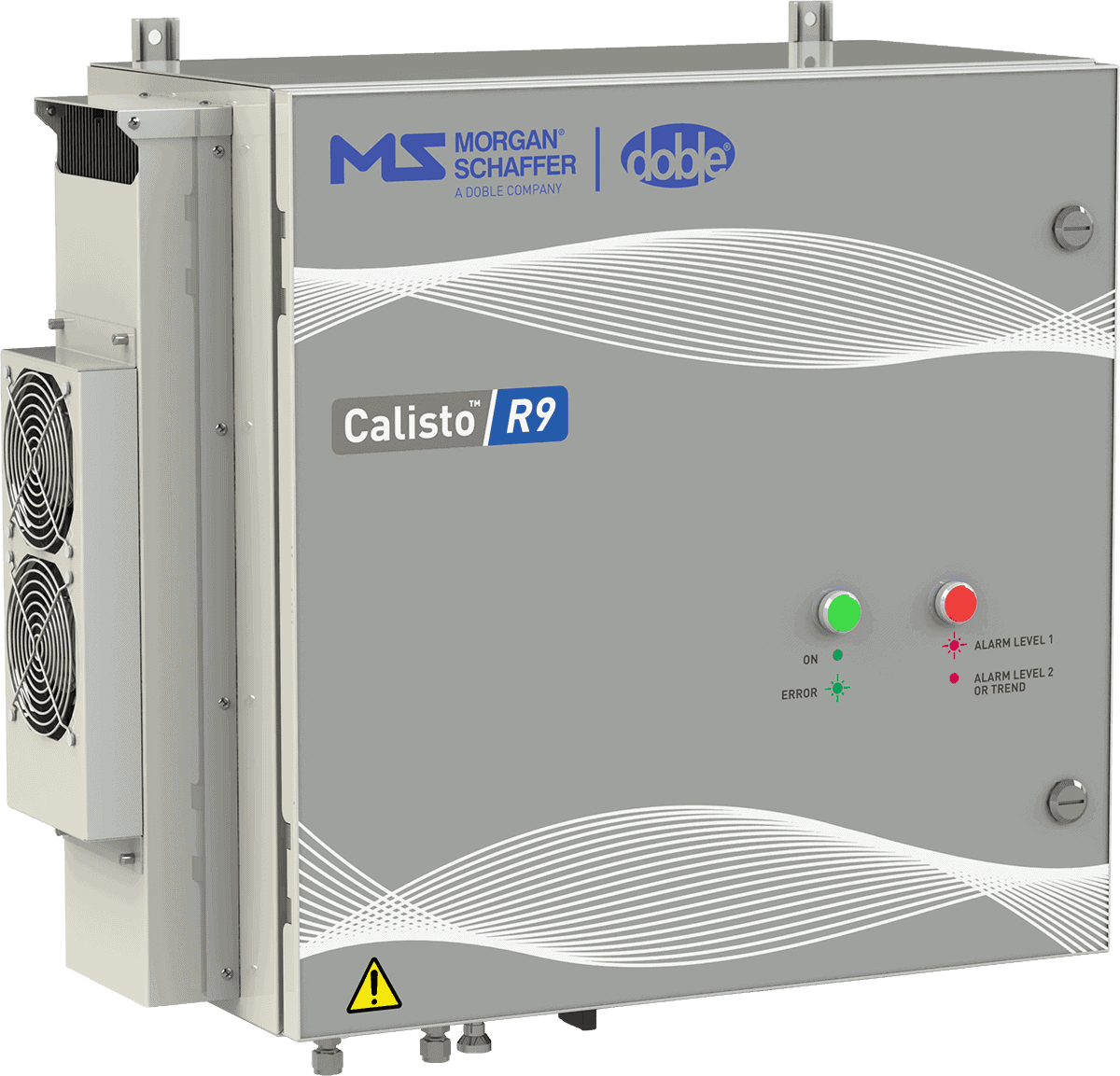 Calisto R9 - High-accuracy & low-maintenance dissolved gas analysis (DGA) monitor built for years of service
Advantages To Instructor-Led Training – Instructor-Led Course, Customized Training, Multiple Locations, Economical, CEU Credits, Course Discounts.
Request For QuotationWhether you would prefer Live Online or In-Person instruction, our electrical training courses can be tailored to meet your company's specific requirements and delivered to your employees in one location or at various locations.