Condition Based Asset Strategy in Utility OT Risk Planning
By Ilia Alexeev, Director, Customer Solutions, Trilliant
By Ilia Alexeev, Director, Customer Solutions, Trilliant
Condition Based Asset Strategy determines whether utilities allocate capital before failure or after disruption. When AMI data and DA asset health signals drive enforceable asset risk scoring, predictive asset prioritization becomes a reliability containment decision.
Condition Based Asset Strategy reframes asset management from age driven replacement toward telemetry informed risk governance. In regulated utility environments, capital deployment is no longer justified by calendar cycles alone. It is justified by measured degradation, probabilistic exposure to failure, and operational consequences under load.
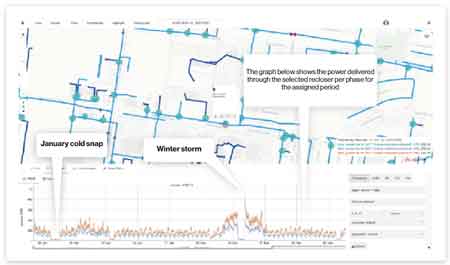
Utilities now possess interval voltage, outage event, and switching telemetry that historically remained siloed. AMI data for asset management and DA data asset health signals create a distributed sensor fabric across feeders, transformers, voltage regulators, and protective devices. The engineering decision is whether that data is structured into enforceable risk prioritization logic or left as informational.
When telemetry is converted into asset risk scoring utility models, capital planning shifts from reactive correction to predictive asset prioritization. That shift alters outage exposure curves, crew allocation models, and regulatory defensibility. The choice to deploy or delay such strategy carries system level consequence.
Condition Based Asset Strategy formalizes the translation of distributed telemetry into ranked intervention decisions. It does not duplicate predictive maintenance analytics. It governs which asset receives capital attention first under constrained budget and reliability targets.
AMI interval voltage deviations, momentary outage counts, and sustained outage patterns indicate emerging conductor fatigue, transformer overloading, and regulator instability. When integrated with feeder switching data from Distribution Automation Data Integration, these signals enable prioritization at circuit scale rather than device scale.
Stay informed with our FREE Asset Intelligence & Predictive Maintenance Newsletter — get the latest news, breakthrough technologies, and expert insights, delivered straight to your inbox.
The deployment tradeoff emerges immediately. Increasing sensitivity of failure thresholds improves early detection but inflates false positive maintenance dispatch. Lowering sensitivity preserves crew efficiency but increases the probability of latent failure. Threshold discipline must therefore be explicitly defined at the feeder and asset class level.
In one multi feeder pilot, integrating AMI voltage deviation clustering with DA switching frequency reduced unexpected transformer failures by 18 percent over 24 months while avoiding a 9 percent increase in unnecessary replacements. That quantified authority signal reflects calibrated threshold governance rather than blind algorithmic escalation.
Condition based governance fails if data latency or integrity is misread. AMI telemetry may be interval based at 15 minute resolution, while DA data asset health signals operate near real time. Temporal misalignment can distort risk scoring logic.
Integration into an ADMS enables correlation of outage clustering, feeder reconfiguration, and voltage stability patterns. However, data quality uncertainty remains a model constraint. Missing packets, meter firmware inconsistencies, and switching timestamp drift introduce ambiguity.
If asset risk scoring utility models assume perfect synchronization, risk inflation occurs. If they assume too much uncertainty, prioritization becomes conservative, and capital allocation reverts toward age based heuristics. The decision boundary between acceptable telemetry confidence and actionable intervention defines operational accountability.
A transformer operating with marginal thermal headroom under high DER backfeed may exhibit repeated voltage variations in AMI data. If ignored, insulation degradation accelerates. A single failure can shift feeder load, deepening voltage imbalance on adjacent circuits. Protective miscoordination can follow, expanding the outage footprint beyond the initial asset.
That cascading operational consequence illustrates why predictive asset prioritization is not an optimization exercise. It is a containment strategy. A delayed replacement decision can propagate through switching sequences, increasing restoration complexity and customer minutes interrupted.
Condition based models require architectural clarity. AMI functions as an operational sensor network rather than a billing platform when integrated through AMI Operational Sensor Network. DA telemetry enhances fault isolation and visibility into reconfiguration.
Feeder topology alignment through Geospatial ADMS allows spatial clustering of degradation patterns. Risk scoring outputs must then align with capital planning workflows governed by Grid Management Solutions.
The tradeoff surfaces again at the governance level. Centralized analytics ensure model consistency but slow the field's response to adaptation. Decentralized feeder level risk scoring improves agility but introduces model drift across territories. Utilities must define whether uniformity or responsiveness dominates their reliability mandate.
An operational edge case arises in which DER penetration distorts asset stress indicators. Reverse power flow may reduce apparent transformer loading during certain intervals while increasing tap changer operations. AMI data for asset management may indicate stable voltage averages, while DA data for asset health may reveal excessive mechanical cycling.
Without correlation inside ADMS Software, asset risk scoring utility outputs may understate wear accumulation. DER volatility also complicates feeder reconfiguration strategies, particularly where integration with Distributed Energy Resource Management System modifies dispatch patterns.
The decision gravity is clear. Capital misallocation under distorted telemetry conditions does not merely waste budget. It increases systemic fragility under peak or storm stress.
Threshold discipline defines when telemetry transitions from advisory to mandatory intervention. If the voltage deviation frequency exceeds the predefined bands but remains below the outage triggering levels, does capital replacement proceed, or does monitoring intensify?
Think you know Asset Intelligence & Predictive Maintenance? Take our quick, interactive quiz and test your knowledge in minutes.
Excessively aggressive intervention inflates the rate base pressure. An excessively conservative posture exposes utilities to post failure scrutiny. Condition Based Asset Strategy, therefore, functions as a regulatory shield only when risk scoring logic is documented, auditable, and tied to measurable feeder level outcomes.
The unresolved boundary remains intentional. No universal threshold exists for all asset classes, climates, and DER penetration levels. The strategy succeeds only when utilities define that boundary explicitly and revisit it as load dynamics evolve.
Explore 50+ live, expert-led electrical training courses –