
Protective Relay Training - Basic
Our customized live online or in‑person group training can be delivered to your staff at your location.
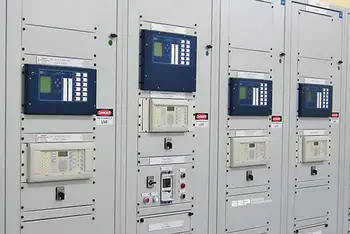
- Live Online
- 12 hours Instructor-led
- Group Training Available
Regular Price:
$699
Coupon Price:
$599
WASHINGTON
—
DOE GRIP Program directs billions in competitive grants to smart grid projects that harden infrastructure, add grid capacity, and deploy advanced controls, improving reliability and resilience nationwide amid rising load growth and extreme weather.
What You Need to Know
-
$10.5B program to boost flexibility and resilience
-
Round 2: about $4.2B for 46 projects in 47 states plus DC
-
105 selected projects total $7.6B across 50 states and DC
-
Smart grid tools include advanced conductors and self-healing devices
-
Over $600M targets hurricane-impacted Southeastern communities
The DOE GRIP Program is accelerating grid modernization at national scale by channeling federal investment into projects that strengthen resilience, expand capacity, and deploy smart grid technologies. Administered by the Office of Electricity, the $10.5 billion initiative focuses on improving flexibility and reliability so communities can depend on affordable, secure power even as threats from extreme weather and rising demand intensify. This push aligns with broader sector priorities discussed in energize america as utilities prepare for sustained load growth.
The program is organized across three complementary tracks: Grid Resilience Utility and Industry Grants, Smart Grid Grants, and the Grid Innovation Program. Together, these pathways support advanced conductors, modern controls, distribution automation, and other digital capabilities that enable faster fault isolation and restoration. They also help integrate distributed energy resources and variable generation, a theme explored in solar into grid for utilities evaluating new operational strategies.
As of October 18, 2024, federal selections under Round 2 total about $4.2 billion for 46 projects spanning 47 states plus the District of Columbia. The portfolio is designed to harden infrastructure against extreme weather, lower costs for communities, and unlock additional grid capacity needed to support manufacturing, data centers, and electrification trends. These selection waves build on ongoing federal actions highlighted in does announces grid improvements, reflecting a sustained focus on reliability and affordability objectives.
Across Rounds 1 and 2, the Office of Electricity reports $7.6 billion in announced funding for 105 selected projects covering all 50 states and the District of Columbia. Investments emphasize field-deployable solutions such as advanced conductors, reclosers, feeder automation, and modern protection and control systems. Enhanced situational awareness is also a priority, with growing interest in wide-area measurement and control, including technologies like synchrophasors that improve system visibility and coordination across regions.
Targeted grid hardening is advancing in areas repeatedly hit by severe storms. In October 2024, more than $600 million was directed to communities affected by Hurricanes Helene and Milton across the Southeastern U.S., supporting activities such as installing advanced conductors and controls, deploying self-healing devices, and building, rebuilding, or reconductoring transmission and distribution lines. These measures are expected to reduce outage frequency, speed restoration, and increase operational resilience for millions of customers across vulnerable service territories. Comparable state-level efforts are reflected in doe washington state grant initiatives, illustrating how utilities tailor deployments to local conditions and planning horizons.
Collectively, the GRIP framework is shaping a multi-year pipeline of smart grid and resilience projects that scale from pilots to fleetwide deployments. By pairing capital investment with operational upgrades, the program aims to cut outage impacts, improve situational awareness, accommodate new load, and better integrate generation resources. The resulting capabilities complement utility resource plans and interconnection queues while creating a foundation for advanced applications such as topology-aware protection and distributed energy orchestration. As these projects move from selection to construction and commissioning, stakeholders will be watching key performance indicators such as restoration times, hosting capacity, and customer reliability metrics to quantify benefits in the years ahead.
Related News
Russians hacked into US electric utilities: 6 essential reads
U.S. power grid cyberattacks expose critical infrastructure to Russian hackers, DHS warns, targeting SCADA, smart…
View more
Illinois electric utility publishes online map of potential solar capacity
ComEd Hosting Capacity Map helps Illinois communities assess photovoltaic capacity, distributed energy resources, interconnection limits,…
View more
Maryland opens solar-power subscriptions to all
Maryland Community Solar Program enables renters and condo residents to subscribe to offsite solar, earn…
View more

EU Smart Meters Spur Growth in the Customer Analytics Market
EU Smart Meter Analytics integrates AMI data with grid edge platforms, enabling back-office efficiency, revenue…
View more
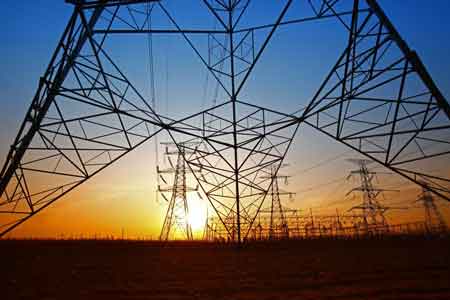
Grid-forming inverters take center stage as Europe seeks system resilience
Grid-Forming Inverters are being trialed and deployed across Europe to deliver synthetic inertia, fault current,…
View more
Russian hackers had 'hundreds of victims' as they infiltrated U.S. power grid
Russian cyberattacks on U.S. power grid exposed DHS warnings: Dragonfly/Energetic Bear breached control rooms, ICS…
View more
Sign Up for Electricity Forum’s Newsletter
Stay informed with our FREE Newsletter — get the latest news, breakthrough technologies, and expert insights, delivered straight to your inbox.
Electricity Today T&D Magazine Subscribe for FREE

Stay informed with the latest T&D policies and technologies.
- Timely insights from industry experts
- Practical solutions T&D engineers
- Free access to every issue
