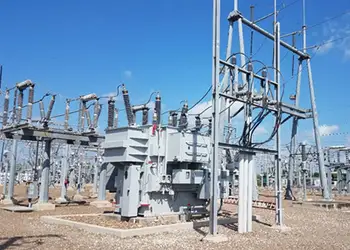
Substation Relay Protection Training
Our customized live online or in‑person group training can be delivered to your staff at your location.
- Live Online
- 12 hours Instructor-led
- Group Training Available
Our customized live online or in‑person group training can be delivered to your staff at your location.
Houston Power Outage Heatwave intensifies a prolonged blackout, straining the grid and infrastructure resilience; emergency response, cooling centers, and power restoration efforts race to protect vulnerable residents amid extreme temperatures and climate risks.
A multi-day blackout and heatwave straining Houston's grid, limiting cooling, and prompting emergency response.
✅ Fourth day without power amid dangerous heat
✅ Grid failures expose infrastructure vulnerabilities
✅ Cooling centers, aid groups support vulnerable residents
Houston is enduring significant frustration and hardship as a power outage stretches into its fourth day amid a sweltering heatwave. The extended blackout has exacerbated the challenges faced by residents in one of the nation’s largest and most dynamic cities, underscoring the critical need for reliable infrastructure and effective emergency response systems.
The power outage began early in the week, coinciding with a severe heatwave that has driven temperatures to dangerous levels. With the city experiencing some of the highest temperatures of the year, the lack of electricity has left residents without essential cooling, contributing to widespread discomfort and health risks. The heatwave has placed an added strain on Houston's already overburdened power grid, which has struggled to cope with the soaring demand for air conditioning and cooling.
The prolonged outage has led to escalating frustration among residents. Many households are grappling with sweltering indoor temperatures, leading to uncomfortable living conditions and concerns about the impact on vulnerable populations, including the elderly, young children, and individuals with pre-existing health conditions. The lack of power has also disrupted daily routines, as morning routine disruptions in London demonstrate, including access to refrigeration for food, which has led to spoilage and further complications.
Emergency services and utility companies have been working around the clock to restore power, but progress has been slow, echoing how Texas utilities struggled to restore power during Hurricane Harvey, as crews contended with access constraints. The complexity of the situation, combined with the high demand for repairs and the challenging weather conditions, has made it difficult to address the widespread outages efficiently. As the days pass, the situation has become increasingly dire, with residents growing more impatient and anxious about when they might see a resolution.
Local officials and utility providers have been actively communicating with the public, providing updates on the status of repairs and efforts to restore power. However, the communication has not always been timely or clear, leading to further frustration among those affected. The sense of uncertainty and lack of reliable information has compounded the difficulties faced by residents, who are left to manage the impacts of the outage with limited guidance.
The situation has also raised questions about the resilience of Houston’s power infrastructure. The outage has highlighted vulnerabilities in the city's energy grid, similar to how a recent windstorm caused significant outages elsewhere, which has faced previous challenges but has not experienced an extended failure of this magnitude in recent years. The inability of the grid to withstand the extreme heat and maintain service during a critical time underscores the need for infrastructure improvements and upgrades to better handle similar situations in the future.
In response to the crisis, community organizations and local businesses have stepped up to provide support to those in need, much like Toronto's cleanup after severe flooding mobilized volunteers and services, in order to aid affected residents. Cooling centers have been established to offer relief from the heat, providing a respite for individuals who are struggling to stay cool at home. Additionally, local food banks and charitable organizations are distributing essential supplies to those affected by food spoilage and other challenges caused by the power outage.
The power outage and heatwave have also sparked broader discussions about climate resilience and preparedness. Extreme weather events and prolonged heatwaves are becoming increasingly common due to climate change, as strong winds knocked out power across the Miami Valley recently, raising concerns about how cities and infrastructure systems can adapt to these new realities. The current situation in Houston serves as a stark reminder of the importance of investing in resilient infrastructure and developing comprehensive emergency response plans to mitigate the impacts of such events.
As the outage continues, there is a growing call for improved strategies to manage power grid failures, with examples like the North Seattle outage affecting 13,000 underscoring the need, and better support for residents during crises. Advocates are urging for a reevaluation of emergency response protocols, increased investment in infrastructure upgrades, and enhanced communication systems to ensure that the public receives timely and accurate information during emergencies.
In summary, Houston's power outage, now extending into its fourth day amid extreme heat, has caused significant frustration and hardship for residents. The prolonged disruption has underscored the need for more resilient energy infrastructure, as seen when power outages persisted for hundreds in Toronto, and effective emergency response measures. With temperatures soaring and the situation continuing to unfold, the city faces a critical challenge in restoring power, managing the impacts on its residents, and preparing for future emergencies. The crisis highlights broader issues related to infrastructure resilience and climate adaptation, emphasizing the need for comprehensive strategies to address and mitigate the effects of extreme weather events.
Summerside Wind Power reached 61% in May, blending renewable energy, municipal utility operations, and P.E.I. wind farms, driving city revenue, advancing green city goals, and laying groundwork for smart grid integration.
Summerside Wind Power is the city utility's wind supply, 61% in May, generating revenue that supports local services.
✅ 61% of electricity in May from wind; annual target 45%.
✅ Mix of city-owned farm and West Cape Wind Farm contract.
✅ Revenues projected at $2.9M; funds municipal budget and services.
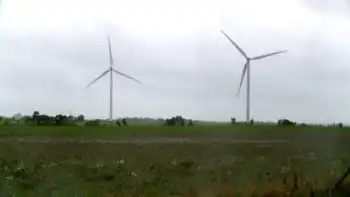
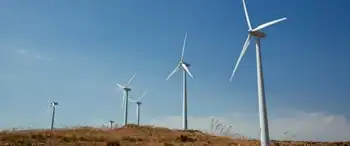
During the month of May, 61 per cent of the electricity Summerside's homes, businesses and industries used came from wind power sources.
25 per cent was purchased from the West Cape Wind Farm in West Point, P.E.I. — the city has had a contract with it since 2007. The other 36 per cent came from the city's own wind farm, which was built in 2009.
"One of the strategic goals that was planned for by the city back in 2005 was to try to become a 100 per cent green city," said Greg Gaudet, Summerside's director of municipal services.
"The city started looking at ways it could adopt green practices into its operations on everything it owns and operates and provides services to the community."
Summerside Electric powers about 6,200 residential, 970 commercial and 30 industrial customers and also sells to NB Power, while Nova Scotia Power now generates 30 per cent of its electricity from renewables.
The Summerside Wind Farm is owned by the City of Summerside, which then sells the electricity to Summerside Electric, which it also owns, for profit.
For the months of April and May, the wind farm generated $630,000 for the city. Last year, it was $507,000 over the same time frame, which does not include a 2 per cent rate increase imposed this year.
"We had a lot of good, strong days of wind for the month of May over other years. So normally we'd be on average somewhere in the range of the 45 per cent range for those months," said Gaudet.
The city's annual target for wind generation is also 45 per cent, which aligns with the view that more energy sources make better projects. Gaudet said it balances out over the year, with winter being the best and production dropping as low as 25 per cent in the summer months.
At Summerside council's monthly meeting on Monday, May's 61 per cent figure was touted as one of the highest months on record.
"To have one at 61 per cent means we had great production from our wind facilities and contracts, though communities such as Portsmouth have raised turbine noise and flicker concerns in other contexts," Gaudet said.
The utility also owns and provides power through a diesel generation plant.
Municipal money maker
The municipality projects its wind energy production will generate $2.9 million for the city in its current fiscal year, which began April 1, paralleling job gains seen in Alberta's renewables surge this year.
"Any revenues that are received from the wind farm facility goes into the City of Summerside budget," Gaudet said. "Then the council decides on how that money is accrued and where it goes and what it supports in the community."
Wind power generated $2.89 million for the city in the 2019-2020 fiscal year. The budget originally projected $3.2 million in revenue, but blade damage sustained during post-tropical storm Dorian put two turbines out of commission for a few weeks.
Gaudet called this their "only bad year" and officials said they see this year's target to be a bit more conservative and achievable regardless of hiccups and uncontrollable forces, such as the wind they're harnessing.
"It's performed outstandingly well," said Gaudet of the operation.
"There's been no huge, major cost factors with the wind farm to date ... its production has been fairly consistent from year to year."
Gaudet said the technology has already been piloted at a smaller operation at Credit Union Place, aligning with municipal solar power projects elsewhere.
The goal of the project is to bring Summerside's renewable portfolio up to a yearly average of 62 per cent. Gaudet said it's expected to be commissioned by May 2022 at the latest and after that, the city hopes to focus on smart grid technology.
"It's a long-term goal and I think it's the right [investment] to make," he said. "You have to be environmentally conscious and a steward of your community.
"I think Summerside is that and does that ... a model for North America to look at how a city can work a relationship with an electric utility for the betterment."
UK Marine Energy and Climate Resilience can counter sea level rise and storm surge with tidal power, subsea turbines, heat pumps, and flood barriers, delivering renewable electricity, stability, and coastal protection for the United Kingdom.
Integrated use of tidal power, barriers, and heat pumps to curb sea level rise, manage storms, and green the UK grid.
✅ Tidal bridges and subsea turbines enhance baseload renewables
✅ Integrated barriers cut storm surge and river flood risk
✅ Heat pumps and marine heat networks decarbonize coastal cities
IN concentrating on electrically driven cars, the UK’s new ten-point energy plans, and recent UK net zero policies, ignores the elephant in the room.
It fails to address the forecast six-metre sea level rise from global warming rapidly melting the Greenland ice sheet.
Rising sea levels and storm surge, combined with increasingly heavy rainfall swelling our rivers, threaten not only hundreds of coastal communities but also much unprotected strategic infrastructure, including electricity systems that need greater resilience.
New nuclear power stations proposed in this United Kingdom plan would produce radioactive waste requiring thousands of years to safely decay.
This is hardly the solution for the Green Energy future, or the broader global energy transition, that our overlooked marine energy resource could provide.
Sea defences and barrier design, built and integrated with subsea turbines and heat pumps, can deliver marine-driven heat and power to offset the costs, not only of new Thames Barriers, but also future Severn, Forth and other barrages, while reducing reliance on high-GWP gases such as SF6 in switchgear across the grid.
At the Pentland Firth, existing marine turbine power could be enhanced by turbines deployed from new tidal bridges to provide much of UK’s electricity needs, as nations chart an electricity future that replaces fossil fuels, from its estimated 60 gigawatt capability.
Energy from Bluemull Sound could likewise be harvested and exported or used to enhance development around UK’s new space station at Unst.
The 2021 Climate Change Summit gives Glasgow the platform to secure Scotland’s place in a true green, marine energy future and help build an electric planet for the long term.
We must not waste this opportunity.
THERE is no vaccine for climate change.
It is, of course, wonderful news that such progress is being made in the development of Covid-19 vaccines but there is a risk that, no matter how serious the Covid crisis is, it is distracting attention, political will and resources from the climate crisis, a much longer term and more devastating catastrophe.
They are intertwined. As climate and ecological systems change, vectors and pathogens migrate and disease spreads.
What lessons can be learned from one to apply to the other?
Prevention is better than cure. We need to urgently address the climate crisis, charting a path to net zero electricity by the middle of the century, to help prevent future pandemics.
We are only as safe as the most vulnerable. Covid immunisation will protect the most vulnerable; to protect against the effects of climate change we need to look far more deeply. Global challenges require systemic change.
Neither Covid or climate change respect national borders and, for both, we need to value and trust science and the scientific experts and separate them from political posturing.
Canada EV Tariffs weigh protectionism, import duties, and trade policy against affordable electric vehicles, climate goals, and consumer costs, balancing domestic manufacturing, critical minerals, battery supply chains, and China relations amid US-EU actions.
Canada EV Tariffs are proposed duties on Chinese EV imports to protect jobs vs. prices, climate goals, and trade risks.
✅ Shield domestic automakers; counter subsidies
✅ Raise EV prices; slow adoption, climate targets
✅ Spark China retaliation; hit exports, supply chains
Canada, a rising star in critical EV battery minerals, finds itself at a crossroads. The question: should they follow the US and EU and impose tariffs on Chinese electric vehicles (EVs), after the U.S. 100% tariff on Chinese EVs set a precedent?
The Allure of Protectionism
Proponents see tariffs as a shield for Canada's auto industry, supported by recent EV assembly deals that put Canada in the race, a vital job creator. They argue that cheaper Chinese EVs, potentially boosted by government subsidies, threaten Canadian manufacturers. Tariffs, they believe, would level the playing field.
Consumer Concerns and Environmental Impact
Opponents fear tariffs will translate to higher prices, deterring Canadians from buying EVs, especially amid EV shortages and wait times already affecting the market. This could slow down Canada's transition to cleaner transportation, crucial for meeting climate goals. A slower EV adoption could also impact Canada's potential as an EV leader.
The Looming Trade War Shadow
Tariffs risk escalating tensions with China, Canada's second-largest trading partner. China might retaliate with tariffs on Canadian exports, jeopardizing sectors like oil and lumber. This could harm the Canadian economy and disrupt critical mineral and battery development, areas where Canada is strategically positioned, even as opportunities to capitalize on the U.S. EV pivot continue to emerge across North America.
Navigating a Charged Path
The Canadian government faces a complex decision. Protecting domestic jobs is important, but so is keeping EVs affordable for a greener future and advancing EV sales regulations that shape the market. Canada must carefully consider the potential benefits of tariffs against the risks of higher consumer costs and a potential trade war.
This path forward could involve exploring alternative solutions. Canada could invest in its domestic EV industry, providing incentives for both consumers and manufacturers. Additionally, collaborating with other countries, including Canada-U.S. collaboration as companies turn to EVs, to address China's alleged unfair trade practices might be a more strategic approach.
Canada's decision on EV tariffs will have far-reaching consequences. Striking a balance between protecting its domestic industry and fostering a robust, environmentally friendly transportation sector, and meeting ambitious EV goals set by policymakers, is crucial. Only time will tell which path Canada chooses, but the stakes are high, impacting not just jobs, but also the environment and Canada's position in the global EV race.
2040 Energy Outlook projects a shifting energy mix as renewables scale, EV adoption accelerates, and IEA forecasts plateauing oil demand alongside rising natural gas, highlighting policy, efficiency, and decarbonization trends that shape global consumption.
A data-driven view of future energy mix, covering renewables, fossil fuels, EVs, oil demand, and policy impacts.
✅ Renewables reach 16-30% by 2040, higher with strong policy support.
✅ Fossil fuels remain dominant, with oil flat and natural gas rising.
✅ EV share surges, cutting oil use; efficiency curbs demand growth.
Which is more plausible: flying taxis, wind turbine arrays stretching miles into the ocean, and a solar roof on every house--or a scorched-earth, flooded post-Apocalyptic world?
We have no way of peeking into the future, but we can certainly imagine it. There is plenty of information about where the world is headed and regardless of how reliable this information is—or isn’t—we never stop wondering. Will the energy world of 20 years from now be better or worse than the world we live in now?
The answer may very well lie in the observable trends.
A Growing Population
The global population is growing, and it will continue to grow in the next two decades. This will drive a steady growth in energy demand, at about 1 percent per year, according to the International Energy Agency.
This modest rate of growth is good news for all who are concerned about the future of the planet. Parts of the world are trying to reduce their energy consumption, and this should have a positive effect on the carbon footprint of humanity. The energy thirst of most parts of the world will continue growing, however, hence the overall growth.
The world’s population is currently growing at a rate of a little over 1 percent annually. This rate of growth has been slowing since its peak in the 1960s and forecasts suggest that it will continue to slow. Growth in energy demand, on the other hand, may at some point stop moving in tune with population growth trends as affluence in some parts of the world grows. The richer people get, the more energy they need. So, to the big question: where will this energy come from?
The Rise of Renewables
For all the headline space they have been claiming, it may come as a disappointing surprise to many that renewable energy, excluding hydropower, to date accounts for just 14 percent of the global primary energy mix.
Certainly, adoption of solar and wind energy has been growing in leaps and bounds, with their global share doubling in five years in many markets, but unless governments around the world commit a lot more money and effort to renewable energy, by 2040, solar and wind’s share in the energy mix will still only rise to about 16 to 17 percent. That’s according to the only comprehensive report on the future of energy that collates data from all the leading energy authorities in the world, by non-profit Resources for the Future.
The growth in renewables adoption, however, would be a lot more impressive if governments do make serious commitments. Under that scenario, the share of renewables will double to over 30 percent by 2040, echoing milestones like over 30% of global electricity reached recently: that’s the median rate of all authoritative forecasts. Amongst them, the adoption rates of renewables vary between 15 percent and 61 percent by 2040.
Even the most bullish of the forecasts on renewables is still far below the 100-percent renewable future many would like to fantasize about, although BNEF’s 50% by 2050 outlook points to what could be possible in the power sector.
But in 2040, most of the world’s energy will still come from fossil fuels.
EV Energy
Here, forecasters are more optimistic. Again, there is a wide variation between forecasts, but in each and every one of them the share of electric vehicles on the world’s roads in 2040 is a lot higher than the meagre 1 percent of the global car fleet EVs constitute today.
Related: Gas Prices Languish As Storage Falls To Near-Record Lows
Government policy will be the key, as U.S. progress toward 30% wind and solar shows how policy steers the power mix that EVs ultimately depend on. Bans of internal combustion engines will go a long way toward boosting EV adoption, which is why some forecasters expect electric cars to come to account for more than 50 percent of cars on the road in 2040. Others, however, are more guarded in their forecasts, seeing their share of the global fleet at between 16 percent and a little over 40 percent.
Many pin their hopes for a less emission-intensive future on electric cars. Indeed, as the number of EVs rises, they displace ICE vehicles and, respectively, the emission-causing oil that fuels for ICE cars are made from. It should be a no brainer that the more EVs we drive, the less emissions we produce. Unfortunately, this is not necessarily the case: China is the world’s biggest EV market, and its solar PV expansion has been rapid, it has the most EVs—including passenger cars and buses—but it is also one of the biggest emitters.
Still, by 2040, if the more optimistic forecasts come true, the world will be consuming less oil than it is consuming now: anywhere from 1.2 million bpd to 20 million bpd less, the latter case envisaging an all-electric global fleet in 2040.
This Ain’t Your Daddy’s Oil
No, it ain’t. It’s your grandchildren’s oil, for good or for bad. The vision of an oil-free world where renewable power is both abundant and cheap enough to replace all the ways in which crude oil and natural gas are used will in 2040 still be just that--a vision, with practical U.S. grid constraints underscoring the challenges. Even the most optimistic energy scenarios for two decades from now see them as the dominant source of energy, with forecasts ranging between 60 percent and 79 percent. While these extremes are both below the over-80 percent share fossil fuels have in the world’s energy mix, they are well above 50 percent, and in the U.S. renewables are projected to reach about one-fourth of electricity soon, even as fossil fuels remain foundational.
Still, there is good news. Fuel efficiency alone will reduce oil demand significantly by 2040. In fact, according to the IEA, demand will plateau at a little over 100 million bpd by the mid-2030s. Combined with the influx of EVs many expect, the world of 20 years from now may indeed be consuming a lot less oil than the world of today. It will, however, likely consume a lot more natural gas. There is simply no way around fossil fuels, not yet. Unless a miracle of politics happens (complete with a ripple effect that will cost millions of people their jobs) in 2040 we will be as dependent on oil and gas as we are but we will hopefully breathe cleaner air.
By Irina Slav for Oilprice.com
Alberta Electricity Rate Cap stays despite carbon tax repeal, keeping the Regulated Rate Option at 6.8 cents/kWh. Levy funds cover market gaps as the UCP reviews NDP policies to maintain affordable utility bills.
Program capping RRO power at 6.8 cents/kWh, using levy funds to offset market prices while the UCP reviews policy.
✅ RRO cap fixed at 6.8 cents/kWh for eligible customers
✅ Levy funds pay generators when market prices exceed the cap
✅ UCP reviewing NDP policies to ensure affordable rates
Alberta's carbon tax has been cancelled, but a consumer price cap on electricity — which the levy pays for — is staying in place for now.
June electricity rates are due out on Monday, about four days after the new UCP government did away with the carbon charge on natural gas and vehicle fuel.
Part of the levy's revenue was earmarked by the previous NDP government to keep power prices at or below 6.8 cents per kilowatt hour under new electricity rules set by the province.
"The Regulated Rate Option cap of 6.8 cents/kWh was implemented by the previous government and currently remains in effect. We are reviewing all policies put in place by the former government and will make decisions that ensure more affordable electricity rates for job-creators and Albertans," said a spokesperson for Alberta's energy ministry in an emailed statement.
Albertans with regulated rate contracts and all City of Medicine Hat utility customers only pay that amount or less, though some Alberta ratepayers have faced deferral-related arrears.
If the actual market price rises above that, the difference is paid to generators directly from levy funds, a buffer that matters as experts warn prices are set to soar later this year.
The government has paid more than $55 million to utilities over the past year ending in March 2019, due to that electricity price cap being in place.
Alberta Energy says the price gap program will continue, at least for the time being, amid electricity policy changes being considered.
Stay informed with our FREE Newsletter — get the latest news, breakthrough technologies, and expert insights, delivered straight to your inbox.
Explore 50+ live, expert-led electrical training courses –