
NFPA 70E Training - 2027 Edition - Arc Flash Safety Compliance
Our customized live online or in‑person group training can be delivered to your staff at your location.

- Live Online
- 6 hours Instructor-led
- Group Training Available
Regular Price:
$199
Coupon Price:
$149
NEW MEXICO
—
Transmission Tax Credit legislation would offer a 30% incentive for qualifying high-voltage lines, upgrades and grid-enhancing technologies, aiming to expand capacity, support interconnection, strengthen reliability and lower customer electricity costs.
The Core Facts
-
Bill proposes a 30% credit for qualifying transmission investments.
-
Eligible projects include large lines, upgrades and grid technologies.
-
Credit would support projects placed in service starting in 2026.
Sen. Martin Heinrich has introduced the Grid Resiliency Tax Credit Act, a proposal intended to encourage private investment in major electric transmission infrastructure as electricity demand grows and grid reliability remains a central concern. The legislation would establish a targeted 30% investment tax credit for large-scale transmission projects and grid-enhancing technologies designed to deliver lower-cost, reliable electricity.
The proposal focuses on qualifying transmission lines and line upgrades that cross specified geographic jurisdictions or extend at least 100 miles. To qualify, projects would need capacity of at least 500 MW and operate at 345 kV AC or 200 kV DC or higher. The measure would also cover generator-tie lines and network upgrades used to connect additional generation and storage resources to the grid.
Advanced transmission conductors and other grid-enhancing technologies would be eligible under the bill. That technology-neutral approach places the emphasis on infrastructure performance, capacity, efficiency and resilience, rather than on the type of generation resource using the system. The policy discussion has implications for new mexico green planning as utilities and developers assess how new resources can reach customers.
The tax credit would run for 10 years. Under the proposal, qualifying projects placed in service beginning in 2026 could receive the credit, while projects that begin construction before December 31, 2036, could claim it. Eligible investment would include new transmission facilities, modifications to existing projects, interconnection equipment, subcomponents and qualifying grid-enhancing technologies.
Heinrich said the measure is intended to help the transmission system keep pace with rising demand while reducing electricity costs for households and businesses. Supporters of the legislation argued that a durable incentive could bring private capital into projects that often require lengthy planning, permitting and construction periods. The proposal also frames transmission development as a way to improve reliability while supporting additional electricity supply and storage. Those issues are also central to wires senate testimony discussions on the future of grid infrastructure.
The announcement cited potential nationwide employment and customer-bill benefits associated with a transmission investment tax credit. It also drew support from electric cooperative, public power, labor, utility, manufacturing, energy-development and environmental organizations. Public power utilities could access the incentive through elective pay, an approach supporters said could help retain benefits locally while reducing transmission investment expenses.
For transmission owners and electrical contractors, the proposed credit could influence the economics of high-voltage line construction, network upgrades, substations and related equipment. It could also affect how developers evaluate projects facing long development timelines and large upfront capital needs. The bill's emphasis on added capacity and interconnection aligns with concerns reflected in senators back energy tax incentives coverage, where federal policy can shape infrastructure investment decisions.
Transmission expansion remains a practical issue for regions managing congestion, new generation connections and changing load patterns. The legislation identifies both new construction and upgrades to existing assets as pathways for improving system performance. Similar investment pressures are visible in uk transmission investment nao grid upgrades, while transmission upgrade delays pjm network queues illustrates the operational importance of timely network development.
Related News
Related News

Hydro One extends ban on electricity disconnections until further notice
Hydro One Disconnection Ban Extension keeps Ontario electricity customers connected during COVID-19, extending the moratorium…
View more
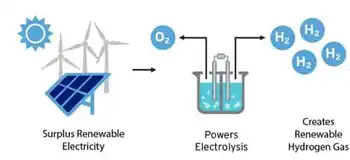
What can we expect from clean hydrogen in Canada
Canadian Clean Hydrogen is surging, driven by net-zero goals, tax credits, and exports. Fuel cells,…
View more
Renewable growth drives common goals for electricity networks across the globe
Energy Transition Grid Reforms address transmission capacity, interconnection, congestion management, and flexibility markets, enabling renewable…
View more

Elon Musk could help rebuild Puerto Rico with solar-powered electricity grid
Puerto Rico Tesla Solar Power enables resilient microgrids using batteries, renewable energy, and energy storage…
View more

Daimler Details Gigantic Scope of Its Electrification Plan
Daimler Electric Strategy drives EV adoption with global battery factories, Mercedes-Benz electrified models, battery cells…
View more

Nissan accepting electricity from EVs as payment for parking
Nissan V2G Parking lets EV drivers pay with electricity via bidirectional charging at the Yokohama…
View more
Sign Up for Electricity Forum’s Newsletter
Stay informed with our FREE Newsletter — get the latest news, breakthrough technologies, and expert insights, delivered straight to your inbox.
Electricity Today T&D Magazine Subscribe for FREE

Stay informed with the latest T&D policies and technologies.
- Timely insights from industry experts
- Practical solutions T&D engineers
- Free access to every issue
