UK Power-Forwards drift up, focus on tighter supply

By Reuters


Arc Flash Training CSA Z462 - Electrical Safety Essentials

Our customized live online or in‑person group training can be delivered to your staff at your location.

  • Live Online
  • 6 hours Instructor-led
  • Group Training Available
Regular Price:
$249
Coupon Price:
$199
Reserve Your Seat Today
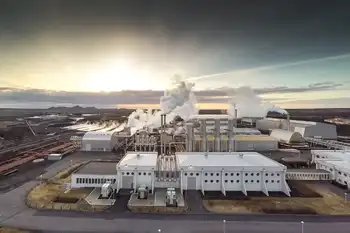
Sept 8 - British forward electricity prices ticked higher on Monday with traders reluctant to sell because of forecasts of tighter supply this winter. Prices slid sharply early last week, after rallying for much of August, but then found support and started drifting upwards again on Friday.

"Because capacity is quite tight this year, the natural tendency is up," said one trader, adding volume was light. Winter 03 rose to 23.05 pounds a megawatt hour, up about 10 pence from Friday but 70 pence below a two-year high seen last Monday. Summer 04 gained about 15 pence to 17.95 pounds while winter 04 was up a similar amount at 23.10 pounds. One trader said summer contracts from 2005 onwards had risen more than winter recently, partly because companies may shut down coal-fired plants in summer to comply with Europe Union emissions rules due to come into force in early 2005. "From beyond 2005, people will be thinking about not running their coal-fired plant in summer and save it for winter," said the trader, who works at a large generator.

He pegged summer 05 at 20.65/20.70 pounds, a premium of 2.75 pounds to summer 04, and winter 05 at 26.65 pounds. In the prompt market, prices were soft with day ahead at 15.00 pounds, down a pound on the forward price for Monday, and the rest of the week at 15.50 pounds. Prices reflect low gas prices caused by the closure on Monday of the UK/Belgiun gas pipeline for two weeks maintenance which will halt exports and leave extra gas in the UK market. Next week was well traded at the 18.25 pound mark, reflecting forecasts of tighter supply. Traders said the contract had fallen in recent days on the back of lower gas prices.

Traders took advantage of the low UK prompt prices to export the maximum amount of power to France. All 500 megawatts available in day ahead auctions on the UK/France interconnector was sold at 140 euros a megawatt. No day ahead capacity was sold in the opposite direction. In France, day ahead baseload was trading at 32 euros, or about 22.37 pounds.

Related News
Nuclear alert investigation won't be long and drawn out, minister says

Pickering Nuclear False Alert Investigation probes Ontario's emergency alert system after a provincewide cellphone, radio, and TV warning, assessing human error, Pelmorex safeguards, Emergency Management Ontario oversight, and communication delays.


Key Points

An Ontario probe into the erroneous Pickering nuclear alert, focusing on human error, system safeguards, and oversight.

✅ Human error during routine testing suspected

✅ Pelmorex safeguards and EMO protocols under review

✅ Two-hour all-clear delay prompts communication fixes


An investigation into a mistaken Pickering alert warning of an incident at the Pickering Nuclear Generating Station will be completed fairly quickly, Ontario's solicitor general said.

Sylvia Jones tapped the chief of Emergency Management Ontario to investigate how the alert warning of an unspecified problem at the facility was sent in error to cellphones, radios and TVs across the province at about 7:30 a.m. Sunday.

"It's very important for me, for the people of Ontario, to know exactly what happened on Sunday morning," said Jones. "Having said that, I do not anticipate this is going to be a long, drawn-out investigation. I want to know what happened and equally important, I want some recommendations on insurances and changes we can make to the system to make sure it doesn't happen again."


Initial observations suggest human error was responsible for the alert that was sent out during routine tests of the emergency alert, Jones said.

"This has never happened in the history of the tests that they do every day, twice a day, but I do want to know exactly all of the issues related to it, whether it was one human error or whether it was a series of things."

Martin Belanger, the director of public alerting for Pelmorex, a company that operates the alert system, said there are a number of safeguards built in, including having two separate platforms for training and live alerts.

"The software has some steps and some features built in to minimize that risk and to make sure that users will be able to know whether or not they're sending an alert through the...training platform or whether they're accessing the live system in the case of a real emergency," he said.

Only authorized users have access to the system and the province manages that, Belanger said. Once in the live system, features make the user aware of which platform they are using, with various prompts and messages requiring the user's confirmation. There is a final step that also requires the user to confirm their intent of issuing an alert to cellphones, radio and TVs, Belanger said.

On Sunday, a follow-up alert was sent to cellphones nearly two hours after the original notification, and similar grid alerts in Alberta underscore timing and public expectations.

NDP energy critic Peter Tabuns is critical of that delay, noting that ongoing utility scam warnings can further erode public trust.

"That's a long time for people to be waiting to find out what's really going on," he said. "If people lose confidence in this system, the ability to use it when there is a real emergency will be impaired. That's dangerous."

Treasury Board President Peter Bethlenfalvy, who represents the riding of Pickering-Uxbridge, said getting that alert Sunday morning was "a shock to the system," and he too wants the investigation to address the reason for the all-clear delay.

"We all have a lot of questions," he said. "I think the public has every right to know exactly what went on and we feel exactly the same way."

People in the community know the facility is safe, Bethlenfalvy said.

"We have some of the safest nuclear assets in the world -- the safest -- at 60 per cent of Ontario's electricity," he said.

A poll released Monday found that 82 per cent of Canadians are concerned about spills from nuclear reactors contaminating drinking water and 77 per cent are concerned about neighbourhood safety and security risks for those living close to nuclear plants. Oraclepoll Research surveyed 2,094 people across the country on behalf of Friends of the Earth between Jan. 2 and 12, the day of the false alert. The have a margin of error of plus or minus 2.1 per cent, 19 times out of 20.

The wording of Sunday's alert caused much initial confusion, and events like a power outage in London show how morning disruptions can amplify concern, warning residents within 10 kilometres of the plant of "an incident," though there was no "abnormal" release of radioactivity and residents didn't need to take protective steps, but emergency crews were responding.

In the event of a real emergency, the wording would be different, Jones said.

"There are a number of different alerts that are already prepared and are ready to go," she said. "We have the ability to localize it to the communities that are impacted, but because this was a test, it went provincewide."

Jones said she expects the results of the probe to be made public.

The Pickering nuclear plant has been operating since 1971, and had been scheduled to be decommissioned this year, but the former Liberal government -- and the current Progressive Conservative government -- committed to keeping it open until 2024. Decommissioning is now set to start in 2028.

It operates six CANDU reactors, generates 14 per cent of Ontario's electricity and is responsible for 4,500 jobs across the region, according to OPG, and OPG's credit rating remains stable.

During the COVID-19 pandemic, Hydro One employees supported the Province of Ontario in the fight against COVID-19.

The Green party is calling on the province to use this opportunity to review its nuclear emergency response plan, including pandemic staffing contingencies, last updated in 2017 and subject to review every five years.

Toronto Mayor John Tory praised Ontario for swiftly launching an investigation, but said communication between city and provincial officials wasn't what it should have been under the circumstances.

"It was a poor showing and I think everybody involved knows that," he said. "We've got to make sure it's not repeated."


Related News

View more

Germany considers U-turn on nuclear phaseout

Germany Nuclear Power Extension debated as Olaf Scholz weighs energy crisis, gas shortages from Russia, slow grid expansion in Bavaria, and renewables delays; stress test results may guide policy alongside coal plant reactivations.


Key Points

A proposal to delay Germany's nuclear phaseout to stabilize power supply amid gas cuts and slow grid upgrades.

✅ Driven by Russia gas cuts and Nord Stream 1 curtailment

✅ Targets Bavaria grid bottlenecks; renewables deployment delays

✅ Decision awaits grid stress test; coalition parties remain split


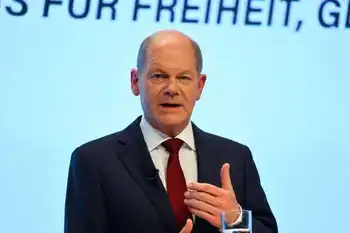
The German chancellor on Wednesday said it might make sense to extend the lifetime of Germany's three remaining nuclear power plants.

Germany famously decided to stop using atomic energy in 2011, and the last remaining plants were set to close at the end of this year.

However, an increasing number of politicians have been arguing for the postponement of the closures amid energy concerns arising from Russia's invasion of Ukraine. The issue divides members of Scholz's ruling traffic-light coalition.

What did the chancellor say?
Visiting a factory in western Germany, where a vital gas turbine is being stored, Chancellor Olaf Scholz was responding to a question about extending the lifetime of the power stations.

He said the nuclear power plants in question were only relevant for a small proportion of electricity production. "Nevertheless, that can make sense," he said.

The German government has previously said that renewable energy alternatives are the key to solving the country's energy problems.

However, Scholz said this was not happening quickly enough in some parts of Germany, such as Bavaria.

"The expansion of power line capacities, of the transmission grid in the south, has not progressed as quickly as was planned," the chancellor said.

"We will act for the whole of Germany, we will support all regions of Germany in the best possible way so that the energy supply for all citizens and all companies can be guaranteed as best as possible."

The phaseout has been planned for a long time. Germany's Social Democrat government, under Merkel's predecessor Gerhard Schröder, had announced that Germany would stop using nuclear power by 2022 as planned.

Schröder's successor Angela Merkel — herself a former physicist — had initially sought to extend to life of existing nuclear plants to as late as 2037. She viewed nuclear power as a bridging technology to sustain the country until new alternatives could be found.

However, Merkel decided to ditch atomic energy in 2011, after the Fukushima nuclear disaster in Japan, setting Germany on a path to become the first major economy to phase out coal and nuclear in tandem.

Nuclear power accounted for 13.3% of German electricity supply in 2021. This was generated by six power plants, of which three were switched off at the end of 2021. The remaining three — Emsland, Isar and Neckarwestheim — were due to shut down at the end of 2022. 

Germany's energy mix 1st half of 2022
The need to fill an energy gap has emerged after Russia dramatically reduced gas deliveries to Germany through the Nord Stream 1 pipeline, though nuclear power would do little to solve the gas issue according to some officials. Officials in Berlin say the Kremlin is seeking to punish the country — which is heavily reliant on Moscow's gas — for its support of Ukraine and sanctions on Russia.

Germany has already said it will temporarily fire up mothballed coal and oil power plants in a bid to solve the looming power crisis.

Social Democrat Scholz and Germany's energy minister, Robert Habeck, from the Green Party, a junior partner in the three-way coalition government, had previously ruled out any postponement of the nuclear phasout, despite debate over a possible resurgence of nuclear energy among some lawmakers. The third member of Scholz's coalition, the neoliberal Free Democrats, has voiced support for the extension, as has the opposition conservative CDU-CSU bloc.

Berlin has said it will await the outcome of a new "stress test" of Germany's electric grid before deciding on the phaseout.


Related News

View more

Australia to head huge electricity and internet project in PNG

Australia-PNG Infrastructure Rollout delivers electricity and broadband expansion across PNG, backed by New Zealand, the US, Japan, and South Korea, enhancing telecom capacity, digital connectivity, and regional development ahead of the APEC summit.


Key Points

A multi-billion-dollar plan to expand power and broadband in PNG, covering 70% of users with allied support.

✅ Delivers internet to 70% of PNG households and communities

✅ Expands electricity grid, boosting reliability and access

✅ Backed by NZ, US, Japan, and S. Korea; complements APEC investments


Australia will lead a new multi-billion-dollar electricity and internet rollout in Papua New Guinea, with the PM rules out taxpayer-funded power plants stance underscoring its approach to energy policy.

The Australian newspaper reported New Zealand, the US, Japan, whose utilities' offshore wind deal in the UK signaled expanding energy interests, and South Korea are supporting the project, which will be PNG's largest ever development investment.

The project will deliver internet to 70 percent of PNG and improve access to power, even as clean energy investment in developing nations has slipped sharply, according to a recent report.

Both China and the US are also expected to announce new investments in the region at the APEC summit this week, and recent China-Cambodia nuclear energy cooperation underscores those energy ties.

Beijing will announce new mining and energy investments in PNG, echoing projects such as the Chinese-built electricity poles plant in South Sudan, and two Confucius Insitutes to be housed at PNG universities.


Related News

View more

Power Demand Seen Holding Firm In Europe’s Latest Lockdown

European Power Demand During Second Lockdowns remains resilient as winter heating offsets commercial losses; electricity consumption tracks seasonal norms, with weather sensitivity, industrial activity, natural gas shielding, and coal decline shaping dynamics under COVID-19 restrictions.


Key Points

It is expected to remain near seasonal norms, driven by heating, industry activity, and weather sensitive consumption.

✅ Winter heating offsets retail and hospitality closures

✅ Demand sensitivity rises with colder weather in France

✅ Gas generation shielded; coal likely to curtail first


European power demand is likely to hold up in the second round of national lockdown restrictions, with fluctuations most likely driven by changes in the weather.

Traders and analysts expect normal consumption this time around as home heating during the chilly season replaces commercial demand.

Last week electricity consumption in France, Germany and the U.K. was close to business-as-usual levels for the time of year, according to BloombergNEF data. By contrast, power demand had dropped 16% in the first seven days of the springtime lockdown, as reflected by the U.K.’s 10% daily decline reported then.

How power demand performs has significance outside the sector. It’s often seen as a proxy for economic growth and during lockdowns earlier this year, electricity use slumped along with GDP, and stunted hydro and nuclear output could further hobble recovery. For Western Europe, annual demand is expected to be 5% lower than the previous year, a bigger decline than after the global financial crisis in 2008, according to S&P Global Platts.

The Covid-19 limits are lighter than those from earlier in the year “with an explicit drive to preserve economic activity, particularly at the more energy-intensive industrial end of the spectrum,” said Glenn Rickson, head of European power analysis at S&P Global Platts.

Higher levels of working from home will offset some of the losses from shop and hospitality closures, “but also increase the temperature sensitivity of overall gas and power demand, as heat-driven demand records have shown in recent summers,” he said.

The latest wave of national lockdowns began in France, Germany, Spain, Italy and Britain, with Spain having seen April demand plummet earlier in the year, as coronavirus cases surged and officials struggled to keep the spread of the virus under control.

Much of the manufacturing industry remains working for now despite additional restrictions to contain the coronavirus. With the peak of the second wave yet to be reached, “it seems almost inevitable that the fourth quarter will prove economically challenging,” analysts at Alfa Energy said.

There will initially be significantly less of an impact on demand compared with this spring when global daily demand dipped about 15% and electricity consumption in Europe was down 30%, Johan Sigvardsson, power price analyst at Swedish utility Bixia AB said.

The prevalence of electric heating systems in France means that power demand is particularly sensitive to cold weather. A cold spell would significantly boost demand and drive record electricity prices in tight markets.

Similar to the last round of shutdowns, it’s use of coal that will probably be hit first if power demand sags, as transition-focused responses gather pace, leaving natural gas mostly shielded from fluctuations in the market.

“We expect that another drop in power demand would again impact coal-fired generation and shield gas power to some extent,” said Carlos Torres Diaz, an analyst at Rystad Energy.


Related News

View more

US January power generation jumps 9.3% on year: EIA

US January power generation climbed to 373.2 TWh, EIA data shows, with coal edging natural gas, record wind output, record nuclear generation, rising hydro, and stable utility-scale solar amid higher Henry Hub prices.


Key Points

US January power generation hit 373.2 TWh; coal led gas, wind and nuclear set records, with solar edging higher.

✅ Coal 31.8% share; gas 29.4%; coal output 118.7 TWh, gas 109.6 TWh.

✅ Wind hit record 26.8 TWh; nuclear record 74.6 TWh.

✅ Total generation 373.2 TWh, highest January since 2014.


The US generated 373.2 TWh of power in January, up 7.9% from 345.9 TWh in December and 9.3% higher than the same month in 2017, Energy Information Administration data shows.

The monthly total was the highest amount in January since 377.3 TWh was generated in January 2014.

Coal generation totaled 118.7 TWh in January, up 11.4% from 106.58 TWh in December and up 2.8% from the year-ago month, consistent with projections of a coal-fired generation increase for the first time since 2014. It was also the highest amount generated in January since 132.4 TWh in 2015.

For the second straight month, more power was generated from coal than natural gas, as 109.6 TWh came from gas, up 3.3% from 106.14 TWh in December and up 19.9% on the year.

However, the 118.7 TWh generated from coal was down 9.6% from the five-year average for the month, due to the higher usage of gas and renewables and a rising share of non-fossil generation in the overall mix.

#google#

Coal made up 31.8% of the total US power generation in January, up from 30.8% in December but down from 33.8% in January 2017.

Gas` generation share was at 29.4% in the latest month, with momentum from record gas-fired electricity earlier in the period, down from 30.7% in December but up from 26.8% in the year-ago month.

In January, the NYMEX Henry Hub gas futures price averaged $3.16/MMBtu, up 13.9% from $2.78/MMBtu averaged in December but down 4% from $3.29/MMBtu averaged in the year-ago month.


WIND, NUCLEAR GENERATION AT RECORD HIGHS

Wind generation was at a record-high 26.8 TWh in January, up 29.3% from 22.8 TWh in December and the highest amount on record, according to EIA data going back to January 2001. Wind generated 7.2% of the nation`s power in January, as an EIA summer outlook anticipates larger wind and solar contributions, up from 6.6% in December and 6.1% in the year-ago month.

Utility-scale solar generated 3.3 TWh in January, up 1.3% from 3.1 TWh in December and up 51.6% on the year. In January, utility-scale solar generation made up 0.9% of US power generation, during a period when solar and wind supplied 10% of US electricity in early 2018, flat from December but up from 0.6% in January 2017.

Nuclear generation was also at a record-high 74.6 TWh in January, up 1.3% month on month and the highest monthly total since the EIA started tracking it in January 2001, eclipsing the previous record of 74.3 TWh set in July 2008. Nuclear generation made up 20% of the US power in January, down from 21.3% in December and 21.4% in the year-ago month.

Hydro power totaled 25.4 TWh in January, making up 6.8% of US power generation during the month, up from 6.5% in December but down from 8.2% in January 2017.


Related News

View more

Electricity retailer Griddy's unusual plea to Texas customers: Leave now before you get a big bill

Texas wholesale electricity price spike disrupts ERCOT markets as Griddy and other retail energy providers face surge pricing; customers confront spot market exposure, fixed-rate plan switching, demand response appeals, and deep-freeze grid constraints across Texas.


Key Points

An extreme ERCOT market surge sending real-time rates to caps, exposing Griddy users and driving provider-switch pleas.

✅ Wholesale index plans pass through $9,000/MWh scarcity pricing.

✅ Retailers urge switching; some halt enrollments amid volatility.

✅ Demand response incentives and conservation pleas reduce load.


Some retail power companies in Texas are making an unusual plea to their customers amid a winter storm that has sent electricity prices skyrocketing: Please, leave us.

Power supplier, Griddy, told all 29,000 of its customers that they should switch to another provider as spot electricity prices soared to as high as $9,000 a megawatt-hour. Griddy’s customers are fully exposed to the real-time swings in wholesale power markets, so those who don’t leave soon will face extraordinarily high electricity bills.

“We made the unprecedented decision to tell our customers — whom we worked really hard to get — that they are better off in the near term with another provider,” said Michael Fallquist, chief executive officer of Griddy. “We want what’s right by our consumers, so we are encouraging them to leave. We believe that transparency and that honesty will bring them back” once prices return to normal.

Texas is home to the most competitive electricity market in America. Homeowners and businesses shopping for electricity churn power providers there like credit cards. In the face of such cutthroat competition, retail power providers in the region have grown accustomed to offering new customers incredibly low rates, incentives and, at least in Griddy’s case, unusual plans that allow customers to pay wholesale power prices as opposed to fixed ones.

The ruthless nature of the business has power traders speculating over which firms might have been caught short this week in the most dramatic run-up in spot power prices they’ve ever seen, and even talk of a market bailout has surfaced.

Not all companies are asking customers to leave. Others are just pleading for them to cut back to reduce blackout risks during extreme weather.

Pulse Power, based in The Woodlands, Texas, is offering customers a chance to win a Tesla Model 3, or free electricity for up to a year if they reduce their power usage by 10% in the coming days. Austin-based Bulb is offering $2 per kilowatts-hour, up to $200, for any energy customers save.

Griddy, however, is in a different position. Its service is simple — and controversial. Members pay a $9.99 monthly fee and then pay the cost of spot power traded on Texas’s power grid based on the time of day they use it. Earlier this month, that meant customers were saving money — and at times even getting paid — to use electricity at night. But in recent days, the cost of their power has soared from about 5 to 6 cents a kilowatt-hour to $1 or more. That’s when Fallquist knew it was time to urge his customers to leave.

“I can tell you it was probably one of the hardest decisions we’ve ever made,” he said. “Nobody ever wants to see customers go.”

Griddy isn’t the only one out there actively encouraging its customers to leave. People were posting similar pleas on Twitter over the holiday weekend from other Texas utilities and retail power providers offering everything from $100 rebates to waived cancellation fees as incentives to switch.

Customers may not even be able to switch. Rizwan Nabi, president of energy consultancy Riz Energy in Houston, said several power providers in Texas have told him they aren’t accepting new customers due to this week’s volatile prices, while grid improvements are debated statewide.

Hector Torres, an energy trader in Texas, who is a Griddy customer himself, said he tried to switch services over the long weekend but couldn’t find a company willing to take him until Wednesday, when the weather is forecast to turn warmer.


Related News

View more

Sign Up for Electricity Forum’s Newsletter

Stay informed with our FREE Newsletter — get the latest news, breakthrough technologies, and expert insights, delivered straight to your inbox.

Electricity Today T&D Magazine Subscribe for FREE

Stay informed with the latest T&D policies and technologies.
  • Timely insights from industry experts
  • Practical solutions T&D engineers
  • Free access to every issue

Live Online & In-person Group Training

Advantages To Instructor-Led Training – Instructor-Led Course, Customized Training, Multiple Locations, Economical, CEU Credits, Course Discounts.

Request For Quotation

Whether you would prefer Live Online or In-Person instruction, our electrical training courses can be tailored to meet your company's specific requirements and delivered to your employees in one location or at various locations.