Grid Cybersecurity in Modern Utilty Systems
By Grant Gilchrist, P.Eng. Systems Engineer, Grid Modernization Tesco Automation
By Grant Gilchrist, P.Eng. Systems Engineer, Grid Modernization Tesco Automation
Request for Quotation Service
Buyers Submit Free RFQs to top suppliers, no obligation.
Suppliers Browse real project RFQs directly from buyers.
Trust Electricity Forum 40 years connection buyers and suppliers.
Grid cybersecurity protects operational technology systems, SCADA networks, and control devices from cyber threats that disrupt grid reliability. It addresses OT security, network segmentation, and real-time system integrity across utilities.
Grid cybersecurity is the protection of operational technology systems, communication paths, control applications, and intelligent field assets that keep the power system operating safely and reliably. It applies to the grid as a whole, not just to a firewall, a substation, or a single device.
The core issue is operational trust. Utilities must know that measurements are real, commands are authorized, and system behavior matches actual field conditions. When cybersecurity fails, the grid can continue running while operators and automation systems make decisions on incorrect data. That is what makes grid cybersecurity an operations problem, not just an IT problem.
Traditional enterprise security models were built around protecting information systems, user accounts, and business networks. Utility operations require something different. Grid environments must preserve visibility, integrity, and availability across control centers, substations, remote devices, and communications infrastructure without disrupting the timing and continuity that operations depend on.
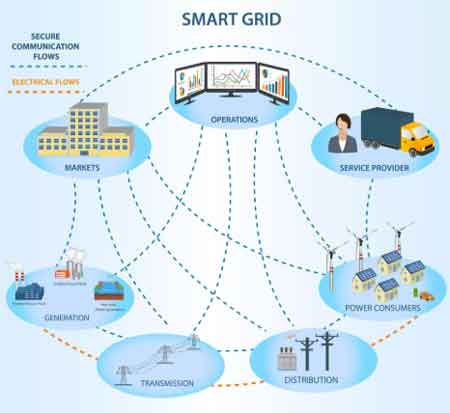
Perimeter security assumes the trusted side of the network is safe once the boundary is protected. That assumption breaks down in the modern grid. Utilities now operate distributed systems with remote assets, third party links, cloud connections, and field intelligence spread across large service territories. Digital Grid Solutions reflect this broader operating model, where connectivity expands capability but also increases the number of paths through which cyber risk can enter the system.
The weakness in the old model is that it treats internal traffic as lower risk than it really is. In utility operations, a compromised relay, gateway, engineering workstation, or communications path can inject bad data into trusted systems. The network may still appear healthy even as the control logic operates on false assumptions.

That is why grid cybersecurity must secure the whole system. It has to account for devices, applications, protocols, users, and connections across operational zones rather than assuming the main problem is stopping traffic at the outer boundary.
IT security usually prioritizes confidentiality first. OT security places far more weight on availability and integrity because utilities cannot afford to lose control or operate on altered data. A billing database and a feeder control system do not carry the same operational consequences when something goes wrong.
In a utility environment, the question is not simply whether access is blocked. The real question is whether operators can trust the status, alarms, and command paths they are using. Smart Electric Grid environments exacerbate this challenge because operational dependencies span digital infrastructure, field assets, and centralized applications.
This difference changes how controls are applied. Measures that work well in enterprise networks can create problems in OT systems if they add delay, break interoperability, or interfere with real time communications. Security that protects data but disrupts control performance is not a complete solution for the grid.
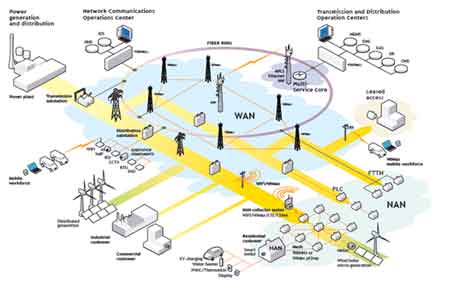
Grid cybersecurity spans control centers, substations, communications networks, field devices, and distributed resources. SCADA and ADMS platforms depend on trustworthy telemetry and command exchange. Intelligent electronic devices, gateways, remote terminal units, and network components all become part of the cyber exposure surface.
Understanding how those systems interact is essential. How Does SCADA Work explains the relationship between field signals and operator action, while SCADA Architecture shows how control hierarchies and data paths shape operational visibility.
DER connections increase this exposure because more endpoints, protocols, and access paths must be managed across the system. A grid with growing digital dependency cannot treat cybersecurity as a separate overlay. It is part of the operating environment itself.
One of the hardest constraints in grid cybersecurity is that utilities cannot secure what they have not fully characterized. Accurate protection requires current knowledge of devices, ports, protocols, software versions, interfaces, and communication dependencies. In practice, that is difficult to maintain across legacy assets, vendor tools, patch cycles, and evolving network designs.
As these systems expand, Grid Connectivity becomes both an operational benefit and a security constraint. More connected infrastructure improves awareness and control, but it also creates more trust relationships that must be validated and defended.
This is where invisible holes emerge. An undocumented connection, an outdated configuration, or an engineering access path that remains open longer than intended can create a weakness that bypasses the controls operators assume are in place.
Consider a compromised device or intermediary system that sends incorrect voltage or status data to the control environment. Operators see values that appear normal, so no corrective action is initiated. Automation also accepts those inputs as valid and continues to make decisions on the same false condition.
As loading changes, the system moves farther from safe operating limits. Because the telemetry still appears credible, alarms may not reflect the real state of the network. Smart Grid Monitoring depends on data integrity, and once that integrity is lost, visibility becomes misleading rather than helpful.
The result is a cascading problem. Operators do not just lose data. They lose the ability to distinguish real conditions from manipulated ones, which can lead to delayed response, misoperation, equipment stress, and avoidable outages.
Grid cybersecurity always involves tradeoffs. Stronger authentication, encryption, inspection, and logging improve protection, but they also consume processing resources and can affect timing, bandwidth, and maintainability. Older field equipment may not handle additional security functions as easily as newer platforms.
Think you know Smart Grid? Take our quick, interactive quiz and test your knowledge in minutes.
Utilities, therefore, have to balance security depth with operational performance. In a Grid Modernization context, this is a practical deployment problem, not a theoretical one. Security controls that are too weak leave critical paths exposed. Controls that are too heavy can interfere with the very operations they are meant to protect.
The right objective is not maximum security at any cost. It is risk reduction that preserves safe and reliable grid control under real operating constraints.
A difficult edge case occurs when a remote asset continues operating locally after losing synchronization with upstream systems. Once communications are restored, delayed or altered data may be accepted as current if the system lacks sufficient validation. That creates a false sense of normal operation because the communications path is back, but the state information is wrong.
This is especially important in highly distributed environments characterized by Smart Grid Communication, where multiple devices and applications rely on a shared understanding of system conditions. The failure mode is hard to detect in real time because automation may still appear to function correctly while using incorrect inputs.
Grid cybersecurity is the discipline that determines whether the utility can trust its own operating environment. It is not limited to device hardening, security testing, or automated response. It sits above those tasks because it governs whether data, control, and communications remain dependable across the entire grid.
If the utility cannot trust the integrity of its measurements, the authorization of its commands, or the availability of its control paths, then secure operation becomes uncertain even before an outage occurs. Smart Grid Technologies increase digital capability, but they also make cybersecurity a direct condition of reliable grid performance.
A utility can recover from many kinds of equipment failure. Operating on false system conditions is harder to detect and more dangerous to manage. That is why grid cybersecurity belongs at the system level. It protects the utility’s ability to see the grid accurately, decide accurately, and act accurately.
Explore 50+ live, expert-led electrical training courses –