AMI Operational Sensor Network for Grid Telemetry
By Ilia Alexeev, Director, Customer Solutions, Trilliant
By Ilia Alexeev, Director, Customer Solutions, Trilliant
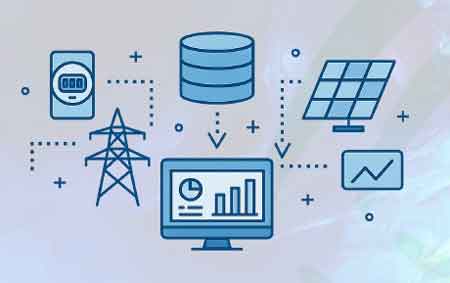
An AMI operational sensor network becomes operationally decisive when interval meters transition from billing endpoints to distributed telemetry nodes influencing switching, voltage control, and DER integration decisions.
The engineering boundary is not deployment scale. It is whether the network produces time synchronized, trustworthy voltage and event data at latency levels compatible with distribution control workflows.
Utilities that treat AMI as a passive data system create observational blind spots at the feeder edge. Utilities that treat it as structured telemetry create an operational sensor layer dense enough to influence protection, restoration, and hosting capacity strategy.
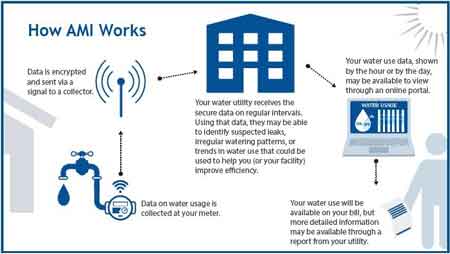
An AMI operational sensor network increases measurement density beyond substation SCADA points, providing feeder edge voltage profiles, last gasp outage signals, and power quality indicators. On circuits with limited field automation, thousands of endpoints create a granular observability layer unavailable through conventional supervisory systems.
The operational question becomes threshold discipline. Voltage deviation tolerance, aggregation interval, and event reporting logic determine whether the system generates actionable intelligence or uncontrolled event noise. If voltage thresholds are set at 2 percent sustained deviation over five minutes, short duration DER induced excursions remain invisible. If thresholds are tightened excessively, operators face alarm saturation.
Telemetry value increases when AMI data integrates into ADMS state estimation workflows that reconcile edge voltage readings with switching topology.
The consequence of a misaligned configuration is not theoretical. A feeder experiencing progressive end of line voltage drop may trigger customer complaints long before supervisory alarms activate. If AMI interval data is limited to 15 minute averages without exception reporting, operational response can lag beyond regulatory tolerance.
Stay informed with our FREE Metering, AMI & Edge Intelligence Newsletter — get the latest news, breakthrough technologies, and expert insights, delivered straight to your inbox.
Operational reliance requires quantified confidence. In a deployment of 400,000 meters, a 1 percent daily data loss equals 4,000 blind endpoints. That magnitude distorts feeder voltage analytics and undermines DER hosting assessments.
Communication architecture introduces measurable tradeoffs. RF mesh increases redundancy but introduces variable latency under congestion. Cellular backhaul stabilizes latency but increases operating expense and dependency risk. Engineers must determine whether restoration speed, cybersecurity segmentation, or cost stability governs design priority.
During major storm events, telemetry congestion can delay last gasp clustering. Outage management logic may misinterpret the feeder restoration state, prompting incorrect switching assumptions. The cascading consequence is secondary feeder overload when restoration sequencing is based on incomplete sensor confirmation.
Cybersecurity becomes an operational boundary rather than an IT overlay. Device identity enforcement and encryption protect against falsified voltage injection, which could distort state estimation within broader Grid Management Solutions environments.
Interval voltage data becomes actionable when correlated with load, topology, and asset condition. Voltage variance clustering across secondary transformers can reveal overload stress patterns before thermal alarms activate.
When integrated with Distributed Energy Resource Management System, AMI telemetry constrains reactive dispatch and prevents reverse power excursions during high photovoltaic output. Without reliable edge voltage validation, DER optimization algorithms risk overshooting regulator limits.
Higher sampling resolution improves hosting accuracy but increases storage and processing burden. Engineers must decide whether incremental visibility meaningfully alters feeder capacity conclusions or simply inflates data infrastructure cost.
Utilities operating voltage analytics across more than 250,000 endpoints have reported truck roll reductions exceeding 15 percent when customer voltage complaints can be remotely validated. That benefit depends on daily data completeness above 99 percent.
Every AMI operational sensor network embeds assumptions. Voltage averaging windows, outage debounce timers, and tamper filtering logic define what becomes visible to operators.
A feeder with high rooftop solar penetration introduces an operational edge case. Rapid irradiance swings can produce sub minute voltage rise events that fall below standard exception reporting windows. Cumulatively, these events increase regulator mechanical wear without crossing alarm thresholds.
Lowering event thresholds increases data volume and processing load. Raising thresholds increases the probability of undetected degradation. There is no neutral configuration.
This boundary interacts with spatial analytics inside Geospatial ADMS, where voltage anomalies must be timestamp aligned and location accurate to inform switching simulation.
The distinction between ADMS vs DERMS becomes operational when AMI telemetry feeds both restoration logic and DER constraint management. Closed loop switching decisions require minimum telemetry confidence levels.
Feeder reconfiguration algorithms inside ADMS Software can leverage last gasp clustering to isolate faulted segments. If clustering logic is distorted by incomplete reporting, automated restoration may energize partially faulted sections.
A cascading operational consequence emerges when incorrect isolation increases load transfer onto adjacent feeders. What began as telemetry incompleteness escalates into network wide reliability exposure.
Engineers must define minimum reporting thresholds before enabling automation. A network delivering less than 95% endpoint confirmation under event conditions may not justify autonomous switching.
Treating AMI as an operational sensor network shifts accountability from billing to grid operations. Telemetry performance becomes part of reliability governance.
The engineering decision is not whether meters can provide data. It is whether architecture, latency, cybersecurity controls, threshold configuration, and integration logic collectively support defensible decisions on switching, voltage control, and DER hosting.
Download our FREE Electrical Training Catalog and explore a full range of expert-led electrical training courses.

If these layers are misaligned, the AMI operational sensor network becomes a noisy archive. If aligned, it forms the densest telemetry layer in the distribution grid, shaping voltage stability, outage response, asset stress detection, and distributed energy integration at scale.
Advantages To Instructor-Led Training – Instructor-Led Course, Customized Training, Multiple Locations, Economical, CEU Credits, Course Discounts.
Request For QuotationWhether you would prefer Live Online or In-Person instruction, our electrical training courses can be tailored to meet your company's specific requirements and delivered to your employees in one location or at various locations.