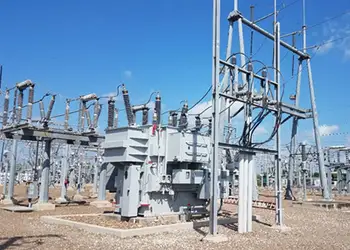
Substation Relay Protection Training
Our customized live online or in‑person group training can be delivered to your staff at your location.
- Live Online
- 12 hours Instructor-led
- Group Training Available
Regular Price:
$699
Coupon Price:
$599
PATH Transmission Line faces refiling in 2010 as PJM Interconnection, Allegheny Energy, and American Electric Power seek approval for a 765-kV Mid-Atlantic upgrade spanning West Virginia, Virginia, and Maryland amid regulatory review and opposition.
The Core Facts
A proposed 765-kV PJM-authorized power line linking WV, VA, and MD to bolster Mid-Atlantic grid reliability.
- Refile planned in 2010 using updated PJM load forecasts.
- 275-mile 765-kV route from WV to MD via Northern Virginia.
- Proposed by AEP and Allegheny Energy; PJM authorized in 2007.
- Opponents cite waning demand, efficiency, and smart grid plans.
- WV and MD proceedings delayed; MD operator refiles as Potomac Edison.
Utilities proposing a multi-state power line filed a request to withdraw their application to build the 31-mile Northern Virginia portion of the line, stating that their own energy forecasts show the line is not immediately needed.
PATH Allegheny Virginia Transmission Corp. said it would refile the application in 2010 based on updated load forecasts. The original application was based on 2014 energy-demand forecasts.
The State Corporation Commission scheduled a Wednesday hearing to consider the motion.
Allegheny Energy and partner American Electric Power have proposed building the 275-mile line from AEP's coal-fired John Amos plant in West Virginia, across 31 miles of Northern Virginia, to a substation near Kemptown, Maryland, while another 550-mile power line was proposed elsewhere.
Both utilities have argued that the 765-kilovolt transmission line is necessary to ensure reliability of the Mid-Atlantic region's electrical distribution system past 2014. The line was authorized in 2007 by PJM Interconnection, which manages the grid system for a 13-state region.
In its motion to Virginia regulators, PATH said it intended to filed a new application next year "based on the most current information then available" and propose reviews that align with other regulatory schedules in Maryland and West Virginia.
Opponents, arguing that energy demand has waned and the transmission line is not needed, said the motion was just the concession they were seeking from the utilities.
Demand has been driven down by energy efficiencies and customers cutting back on energy use in a sour economy, said Abigail Dillen, an attorney who is to represent the Sierra Club at the regulatory hearing in Richmond.
At least 250 groups representing landowners, the Sierra Club, local county commissions and boards of education are opposed to PATH's construction.
"This is a bid to bring cheap, coal-fired power to the East Coast," Miss Dillen said. "What it would allow is some of the oldest, dirtiest plants in the country to ramp up their capacity."
Opponents have pushed for a "smart electric grid" using wind power and other sources.
The West Virginia Public Service Commission has rejected a staff recommendation to dismiss an application for the multistate power line. It delayed a final decision on the project until February 2011.
West Virginia staff also argued that any decisions on the line should be delayed until electrical power need projections are updated.
The Maryland Public Service Commission rejected an application for the 20-mile Maryland segment in September, saying the proposed operator was not an electric company. A new application has been filed by Potomac Edison Co., one of Allegheny's electric utilities.
Related News
Related News

Maryland’s renewable energy facilities break pollution rules, say groups calling for enforcement
Maryland Renewable Energy Violations highlight RPS compliance gaps as facilities selling renewable energy certificates, including…
View more
Bright Feeds Powers Berlin Facility with Solar Energy
Bright Feeds Solar Upgrade integrates a 300-kW DC PV system and 625 solar panels at…
View more
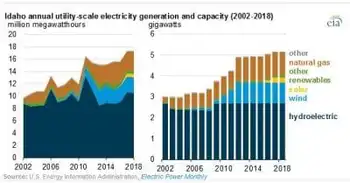
Idaho gets vast majority of electricity from renewables, almost half from hydropower
Idaho Renewable Energy 2018 saw over 80% in-state utility-scale power from hydropower, wind, solar, biomass,…
View more
California's Next Electricity Headache Is a Looming Shortage
California Electricity Reserve Mandate requires 3.3 GW of new capacity to bolster grid reliability amid…
View more
Smart grid and system improvements help avoid more than 500,000 outages over the summer
ComEd Smart Grid Reliability drives outage reduction across Illinois, leveraging smart switches, grid modernization, and…
View more
A New Electric Boat Club Launches in Seattle
Aurelia Boat Club delivers electric boat membership in Seattle, featuring zero-emission propulsion, quiet cruising, sustainable…
View more
Sign Up for Electricity Forum’s Newsletter
Stay informed with our FREE Newsletter — get the latest news, breakthrough technologies, and expert insights, delivered straight to your inbox.
Electricity Today T&D Magazine Subscribe for FREE

Stay informed with the latest T&D policies and technologies.
- Timely insights from industry experts
- Practical solutions T&D engineers
- Free access to every issue
