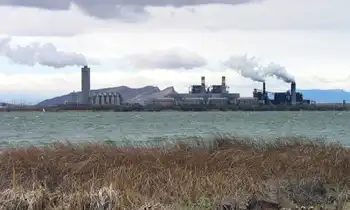
By The Liberal environmental plan would also require all gasoline sold in Ontario to contain 10 per cent cleaner-burning ethanol by 2010. It would also commit two per cent of existing provincial gas taxes toward more public transit projects.


Arc Flash Training CSA Z462 - Electrical Safety Essentials

Our customized live online or in‑person group training can be delivered to your staff at your location.

  • Live Online
  • 6 hours Instructor-led
  • Group Training Available
Regular Price:
$249
Coupon Price:
$199
Reserve Your Seat Today
-- Ontario's Liberals vow to get more hydroelectric power out of Niagara Falls as part of a pre-election promise to clean up the province's air quality, party Leader Dalton McGuinty says.

"I want to put a heavy emphasis on cleaner sources of electricity," McGuinty said in an interview from his Queen's Park office Monday after unveiling his party's environmental platform.

The idea of increasing capacity at the Sir Adam Beck generating stations has been kicking around since the mid 1980s, the last time the Liberals were in office, and local MPP Vince Kerrio was energy minister.

"We're talking about additional capacity to Beck by building a new tunnel under the city of Niagara Falls," McGuinty said.

Ontario's Progressive Conservatives announced in 1998 they would proceed with the first phase ? a $500 million tunnel from Chippawa to Queenston that would increase output by about 10 per cent. But the Tories put it on hold when they decided to open Ontario's electricity market to private-sector competition.

Since then, Ontario Power Generation officials have repeatedly said they would go ahead only if there was a business case for it.

"There is a wonderful business case for it," McGuinty said. "Hydroelectric generation is the best long-term investment we can make."

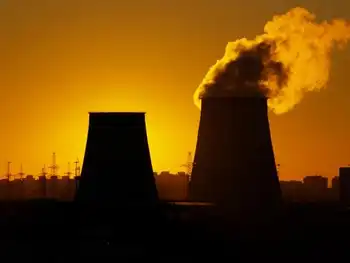
The Liberals would also close Ontario's coal-fired electricity generators by 2007. The Nanticoke plant near Simcoe and the Lakeview facility in Mississauga, which both burn coal to produce electricity, are considered leading contributors to the smog problem in southern Ontario.

But closing the coal-fired generators is an ambitious goal. Fossil fuels account for about one-quarter of OPG's generating capacity.

"In combination with Beck 3, the natural gas, private-sector proposals and bringing further nukes on stream, we will more than compensate for the loss of our coal-fired generators," McGuinty said.

He wants to reduce electricity consumption by five per cent, reversing a 15-year trend. Ontario's consumption has increased about 1.4 per cent a year since the mid-1980s because of population growth and a strong economy.

Related News

Current Model For Storing Nuclear Waste Is Incomplete

Nuclear Waste Corrosion accelerates as stainless steel, glass, and ceramics interact in aqueous conditions, driving localized corrosion in repositories like Yucca Mountain, according to Nature Materials research on high-level radioactive waste storage.


Key Points

Degradation of waste forms and canisters from water-driven chemistry, causing accelerated, localized corrosion in storage.

✅ Stainless steel-glass contact triggers severe localized attack

✅ Ceramics and steel co-corrosion observed under aqueous conditions

✅ Yucca Mountain-like chemistry accelerates waste form degradation


The materials the United States and other countries plan to use to store high-level nuclear waste, even as utilities expand carbon-free electricity portfolios, will likely degrade faster than anyone previously knew because of the way those materials interact, new research shows.

The findings, published today in the journal Nature Materials (https://www.nature.com/articles/s41563-019-0579-x), show that corrosion of nuclear waste storage materials accelerates because of changes in the chemistry of the nuclear waste solution, and because of the way the materials interact with one another.

"This indicates that the current models may not be sufficient to keep this waste safely stored," said Xiaolei Guo, lead author of the study and deputy director of Ohio State's Center for Performance and Design of Nuclear Waste Forms and Containers, part of the university's College of Engineering. "And it shows that we need to develop a new model for storing nuclear waste."

Beyond waste storage, options like carbon capture technologies are being explored to reduce atmospheric CO2 alongside nuclear energy.

The team's research focused on storage materials for high-level nuclear waste -- primarily defense waste, the legacy of past nuclear arms production. The waste is highly radioactive. While some types of the waste have half-lives of about 30 years, others -- for example, plutonium -- have a half-life that can be tens of thousands of years. The half-life of a radioactive element is the time needed for half of the material to decay.

The United States currently has no disposal site for that waste; according to the U.S. General Accountability Office, it is typically stored near the nuclear power plants where it is produced. A permanent site has been proposed for Yucca Mountain in Nevada, though plans have stalled. Countries around the world have debated the best way to deal with nuclear waste; only one, Finland, has started construction on a long-term repository for high-level nuclear waste.

But the long-term plan for high-level defense waste disposal and storage around the globe is largely the same, even as the U.S. works to sustain nuclear power for decarbonization efforts. It involves mixing the nuclear waste with other materials to form glass or ceramics, and then encasing those pieces of glass or ceramics -- now radioactive -- inside metallic canisters. The canisters then would be buried deep underground in a repository to isolate it.

At the generation level, regulators are advancing EPA power plant rules on carbon capture to curb emissions while nuclear waste strategies evolve.

In this study, the researchers found that when exposed to an aqueous environment, glass and ceramics interact with stainless steel to accelerate corrosion, especially of the glass and ceramic materials holding nuclear waste.

In parallel, the electrical grid's reliance on SF6 insulating gas has raised warming concerns across Europe.

The study qualitatively measured the difference between accelerated corrosion and natural corrosion of the storage materials. Guo called it "severe."

"In the real-life scenario, the glass or ceramic waste forms would be in close contact with stainless steel canisters. Under specific conditions, the corrosion of stainless steel will go crazy," he said. "It creates a super-aggressive environment that can corrode surrounding materials."

To analyze corrosion, the research team pressed glass or ceramic "waste forms" -- the shapes into which nuclear waste is encapsulated -- against stainless steel and immersed them in solutions for up to 30 days, under conditions that simulate those under Yucca Mountain, the proposed nuclear waste repository.

Those experiments showed that when glass and stainless steel were pressed against one another, stainless steel corrosion was "severe" and "localized," according to the study. The researchers also noted cracks and enhanced corrosion on the parts of the glass that had been in contact with stainless steel.

Part of the problem lies in the Periodic Table. Stainless steel is made primarily of iron mixed with other elements, including nickel and chromium. Iron has a chemical affinity for silicon, which is a key element of glass.

The experiments also showed that when ceramics -- another potential holder for nuclear waste -- were pressed against stainless steel under conditions that mimicked those beneath Yucca Mountain, both the ceramics and stainless steel corroded in a "severe localized" way.

Other Ohio State researchers involved in this study include Gopal Viswanathan, Tianshu Li and Gerald Frankel.

This work was funded in part by the U.S. Department of Energy Office of Science.

Meanwhile, U.S. monitoring shows potent greenhouse gas declines confirming the impact of control efforts across the energy sector.


Related News

View more

Some old dams are being given a new power: generating clean electricity

Hydroelectric retrofits for unpowered dams leverage turbines to add renewable capacity, bolster grid reliability, and enable low-impact energy storage, supporting U.S. and Canada decarbonization goals with lower costs, minimal habitat disruption, and climate resilience.


Key Points

They add turbines to existing dams to make clean power, stabilize the grid, and offer low-impact storage at lower cost.

✅ Lower capex than new dams; minimal habitat disruption

✅ Adds firming and storage to support wind and solar

✅ New low-head turbines unlock more retrofit sites


As countries race to get their power grids off fossil fuels to fight climate change, there's a big push in the U.S. to upgrade dams built for purposes such as water management or navigation with a feature they never had before — hydroelectric turbines. 

And the strategy is being used in parts of Canada, too, with growing interest in hydropower from Canada supplying New York and New England.

The U.S. Energy Information Administration says only three per cent of 90,000 U.S. dams currently generate electricity. A 2012 report from the U.S. Department of Energy found that those dams have 12,000 megawatts (MW) of potential hydroelectric generation capacity. (According to the National Hydropower Association, 1 MW can power 750 to 1,000 homes. That means 12,000 MW should be able to power more than nine million homes.)

As of May 2019, there were projects planned to convert 32 unpowered dams to add 330 MW to the grid over the next several years.

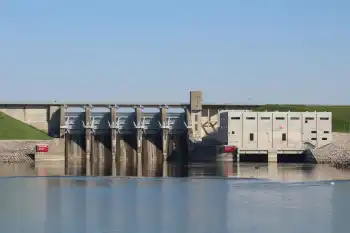
One that was recently completed was the Red Rock Hydroelectric Project, a 60-year-old flood control dam on the Des Moines River in Iowa that was retrofitted in 2014 to generate 36.4 MW at normal reservoir levels, and up to 55 MW at high reservoir levels and flows. It started feeding power to the grid this spring, and is expected to generate enough annually to supply power to 18,000 homes.

It's an approach that advocates say can convert more of the grid from fossil fuels to clean energy, often with a lower cost and environmental impact than building new dams.

Hydroelectric facilities can also be used for energy storage, complementing intermittent clean energy sources such as wind and solar with pumped storage to help maintain a more reliable, resilient grid.

The Nature Conservancy and the World Wildlife Fund are two environmental groups that oppose new hydro dams because they can block fish migration, harm water quality, damage surrounding ecosystems and release methane and CO2, and in some regions, Western Canada drought has reduced hydropower output as reservoirs run low. But they say adding turbines to non-powered dams can be part of a shift toward low-impact hydro projects that can support expansion of solar and wind power.

Paul Norris, president of the Ontario Waterpower Association, said there's typically widespread community support for such projects in his province amid ongoing debate over whether Ontario is embracing clean power in its future plans. "Any time that you can better use existing assets, I think that's a good thing."

New turbine technology means water doesn't need to fall from as great a height to generate power, providing opportunities at sites that weren't commercially viable in the past, Norris said, with recent investments such as new turbines in Manitoba showing what is possible.

In Ontario, about 1,000 unpowered dams are owned by various levels of government. "With the appropriate policy framework, many of these assets have the potential to be retrofitted for small hydro," Norris wrote in a letter to Ontario's Independent Electricity System Operator this year as part of a discussion on small-scale local energy generation resources.

He told CBC that several such projects are already in operation, such as a 950 kW retrofit of the McLeod Dam at the Moira River in Belleville, Ont., in 2008. 

Four hydro stations were going to be added during dam refurbishment on the Trent-Severn Waterway, but they were among 758 renewable energy projects cancelled by Premier Doug Ford's government after his election in 2018, a move examined in an analysis of Ontario's dirtier electricity outlook and its implications.

Patrick Bateman, senior vice-president of Waterpower Canada, said such dam retrofit projects are uncommon in most provinces. "I don't see it being a large part of the future electricity generation capacity."

He said there has been less movement on retrofitting unpowered dams in Canada compared to the U.S., because:

There are a lot more opportunities in Canada to refurbish large, existing hydro-generating stations to boost capacity on a bigger scale.

There's less growth in demand for clean energy, because more of Canada's grid is already non-carbon-emitting (80 per cent) compared to the U.S. (40 per cent).

Even so, Norris thinks Canadians should be looking at all opportunities and options when it comes to transitioning the grid away from fossil fuels, including retrofitting non-powered dams, especially as a recent report highlights Canada's looming power problem over the coming decades.

"If we're going to be serious about addressing the inevitable challenges associated with climate change targets and net zero, it really is an all-of-the-above approach."


Related News

View more

Perry presses ahead on advanced nuclear reactors

Advanced Nuclear Reactors drive U.S. clean energy with small modular reactors, a new test facility at Idaho National Laboratory, and public-private partnerships accelerating nuclear innovation, safety, and cost reductions through DOE-backed programs and university simulators.


Key Points

Advanced nuclear reactors are next-gen designs, including SMRs, offering safer, cheaper, low-carbon power.

✅ DOE test facility at Idaho National Laboratory

✅ Small modular reactors with passive safety systems

✅ University simulators train next-gen nuclear operators


Energy Secretary Rick Perry is advancing plans to shift the United States towards next-gen nuclear power reactors.

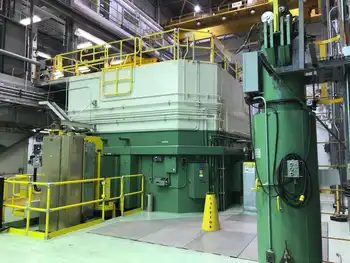
The Energy Department announced this week it has launched a new test facility at the Idaho National Laboratory where private companies can work on advanced nuclear technologies, as the first new U.S. reactor in nearly seven years starts up, to avoid the high costs and waste and safety concerns facing traditional nuclear power plants.

“[The National Reactor Innovation Center] will enable the demonstration and deployment of advanced reactors that will define the future of nuclear energy,” Perry said.

With climate change concerns growing and net-zero emissions targets emerging, some Republicans and Democrats are arguing for the need for more nuclear reactors to feed the nation’s electricity demand. But despite nuclear plants’ absence of carbon emissions, the high cost of construction, questions around what to do with the spent nuclear rods and the possibility of meltdown have stymied efforts.

A new generation of firms, including Microsoft founder Bill Gates’ Terra Power venture, are working on developing smaller, less expensive reactors that do not carry a risk of meltdown.

“The U.S. is on the verge of commercializing groundbreaking nuclear innovation, and we must keep advancing the public-private partnerships needed to traverse the dreaded valley of death that all too often stifles progress,” said Rich Powell, executive director of ClearPath, a non-profit advocating for clean energy and green industrial strategies worldwide.

The new Idaho facility is budgeted at $5 million under next year’s federal budget, even as the cost of U.S. nuclear generation has fallen to a ten-year low, which remains under negotiation in Congress.

On Thursday another advanced nuclear developer working on small modular systems, Oregon-based NuScale Power, announced it was building three virtual nuclear control rooms at Texas A&M University, Oregon State University and the University of Idaho, with funding from the Energy Department.

The simulators will be open to researchers and students, to train on the operation of smaller, modular reactors, as well as the general public.

NuScale CEO John Hopkins said the simulators would “help ensure that we educate future generations about the important role nuclear power and small modular reactor technology will play in attaining a safe, clean and secure energy future for our country.”


Related News

View more

Elizabeth May wants a fully renewable electricity grid by 2030. Is that possible?

Green Party Mission Possible 2030 outlines a rapid transition to renewable energy, electric vehicles, carbon pricing, and grid modernization, phasing out oil and gas while creating green jobs, public transit upgrades, and building retrofits.


Key Points

A Canadian climate roadmap to decarbonize by 2030 via renewables, EVs, carbon pricing, and grid upgrades.

✅ Ban on new gas cars by 2030; accelerate EV adoption and charging.

✅ 100 percent renewable-powered grid with interprovincial links.

✅ Just transition: retraining, green jobs, and building retrofits.


Green Party Leader Elizabeth May has a vision for Canada in 2030. In 11 years, all new cars will be electric. A national ban will prohibit anyone from buying a gas-powered vehicle. No matter where you live, charging stations will make driving long distances easy and affordable. Alberta’s oil industry will be on the way out, replaced by jobs in sectors such as urban farming, renewable energy and retrofitting buildings for energy efficiency. The electric grid will be powered by 100 per cent renewable energy as Canada’s race to net-zero accelerates.

It’s all part of the Greens’ “Mission Possible” – a detailed plan released Monday with a level of ambition made clear by its very name. May insists it’s the only way to confront the climate crisis head-on before it’s too late.

“We have to set our targets on what needs to be done. You can’t negotiate with physics,” May told CTV’s Power Play on Monday.

But is that 2030 vision realistic?

CTVNews.ca spoke with experts in economics, political policy, renewable energy and climate science to explore how feasible May’s plan is, how much it would cost and what transitioning to an environmentally-centred economy would look like for everyday Canadians.


MOVING TO A GREEN ECONOMY

Recent polling from Nanos Research shows that the environment and climate change is the top issue among voters this election.

If the Greens win a majority on Oct. 21 – an outcome that May herself acknowledged isn’t likely – it would signal a major restructuring of the Canadian economy.

According to the party’s platform, jobs in the fuels sectors, such as oil and gas production in Alberta, would eventually disappear. The Greens say those job losses would be replaced by opportunities in a variety of fields including renewable energy, farming, public transportation, manufacturing, construction and information technology.

The party would also introduce a guaranteed livable income and greater support for technical and educational training to help workers transition to new jobs.

But Jean-Thomas Bernard, an economist who specializes in energy markets, said plenty of people in today’s energy sector, such as oil and gas workers, wouldn’t have the skills to make that transition.

“Quite a few of these jobs have low technical requirements. Driving a truck is driving a truck. So quite few of these people will not have the capacity to be recycled into well-paid jobs in the renewable sector,” he said.

“Maybe this would be for the young generation, but not people who are 40, 45, 50.”

Ryan Katz-Rosene is an associate professor at the University of Ottawa who researches environmental policy. He says May’s overall pitch is technically possible but would require a huge amount of enthusiasm on behalf of the public. 

“The plan in itself is not physically impossible. It is theoretically achievable. But it would require a major, major change in the urgency and the level of action, the level of investment, the level of popular urgency, the level of political commitment,” he said.

“But it’s not completely fantastical in it being theoretically impossible.”


PHASING OUT BITUMEN PRODUCTION

Katz-Rosene said that, under the Greens’ plan, Canadians would need to pay for a bold carbon pricing plan that helps shift the country away from fossil fuels and has significant implications for electricity grids, he said. It would also mean dramatically upscaling the capacity of Canada’s existing electrical grid to account for millions of new electric cars, reflecting the need for more electricity to hit net-zero as demand grows.

 “Given Canada’s slow attempt to climate action and pretty lacklustre results in these years, to be frank, this plan is very, very difficult to achieve. We’re talking 11 years from now. But things change, people change, and sometimes that change can occur very quickly. Just look at the type of climate mobilization we’re seen among young people in the last year, or the last five years.”

Bernard, the economist, is less optimistic. He cited international agreements such as the Kyoto Protocol from 1997 and the more recent Paris Climate Agreement and said that little has come of those plans.

A climate solution with teeth, he suggests, would need to be global – something that no federal government can completely control.

“I find a lot this talk to be overly optimistic. I don’t know why we keep having this talk that is overly optimistic,” he said, adding that he believes humankind is already beyond the point of being able to stop irreversible climate change. 

“I think we are moving toward a mess, but the effort to control that is still not there.”

As for transitioning away from Canada’s oil industry, Bernard said May’s plan simply wouldn’t work.

“Trying to block some oil production here and there means more oil will be produced elsewhere,” he said. “Canada could become a clean country, but worldwide it would not be much.”

Mike Hudema, a climate organizer with Greenpeace Canada, thinks the Green Party’s promises for 2030 are big – and that’s kind of the point.

“They are definitely ambitious, but ambition is exactly what these times call for.  Unfortunately our government has delayed acting on this problem for so long that we have a very short timeline which we have to turn the ship,” he said.

“So this is the type of ambition that the science is calling for. So yes, I believe that if we here in Canada were to put our minds to addressing this problem, then we have the ability to reach it in that 2030 timeframe.”

In a statement to CTVNews.ca, a Green Party spokesperson said the 2030 timeline is intended to meet the 45 per cent reduction in emissions by 2030 as laid out by the Intergovernmental Panel on Climate Change.

“If we miss the 2030 target, we risk triggering runaway global warming,” the spokesperson said.


GREENING THE GRID BY 2030

Greening Canada’s existing electric grid – a goal May has pegged to 2030 – is quite feasible, Katz-Rosene said, and cleaning up Canada’s electricity is critical to meeting climate pledges. Already, 82 per cent of the country’s electric grid is run off of renewable resources, which makes Canada a world leader in the field, he said.

Hudema agrees.

“It is feasible. Canada does have a grid already that has a lot of renewables in it. So yes we can definitely make it over the hump and complete the transition. But we do need investments in our electric grid infrastructure to ensure a certain capability. That comes with tremendous job growth. That’s the exciting part that people keep missing,” Hudema said.

But Bernard said switching the grid to 100 per cent renewables would be quite difficult. He suggested that the Greens’ 2030 vision would require Ontario and Quebec’s hydro production to help power the Prairies.

“To think we could boost (hydro production) much more in order to meet Saskatchewan and Alberta’s needs? Oh boy. To do this before 2030? I think that’s not reasonable, not feasible.”

In a statement to CTV News, the Greens said their strategy includes building new connections between eastern Manitoba and western Ontario to transmit clean energy. They would also upgrade existing connections between New Brunswick and Nova Scotia and between B.C. and Alberta to boost reliability.

A number of “micro-grids” in local communities capable of storing clean energy would help reduce the dependency on nationwide distribution systems, the party said.

Even so, the Greens acknowledged that, by 2030, some towns and cities will still be using some fossil fuels, and that even by 2050 – the goal for achieving overall carbon neutrality – some “legacy users” of fossil fuels will remain.

However, according to party projections, the emissions of these “legacy users” would be at most 8 per cent of today’s levels and those emissions would be “more than completely offset” by re-forestation and new technologies, such as CO2 capture and storage.


ELECTRIC VEHICLE REVOLUTION

The Green Party’s platform promises to revolutionize the Canadian auto sector. By 2030, all new cars made in Canada would be electric and federal EV sales regulations would prohibit the sale of cars powered by gasoline.

Danny Harvey, a geography professor with the University of Toronto who specializes in renewable energy, said he thinks May’s plan for making a 100 per cent renewable-powered electric grid is feasible.

On cars, however, he thinks the emphasis on electric vehicles is “misplaced.”

“At this point in time we should be requiring automobiles to transition, by 2030, to making cars that can go three times further on a litre of gasoline than at present. This would require selling only advanced hybrid-electric vehicles (HEVs), which would run entirely on gasoline (like current HEVs),” he said.

“After that, and when the grid is fully ready, we could make the transition to fully electric or plugin hybrid electric vehicles, possibly using H2 for long-distance driving.”

At the moment, zero-emissions vehicles account for just over 2 per cent of annual vehicle sales in Canada. Katz-Rosene said that “isn’t a whole lot,” but the industry is on an exponential growth curve that doesn’t show any signs of slowing.

The trouble with May’s 2030 goal on electric vehicles, he said, has to do with Canadians’ taste in vehicles. In short: Canadians like trucks.

“The biggest obstacle I see is that I don’t even think it’s possible to get a light-duty truck, a Ford F150, in an electric model in Canada. And that’s the most popular type of vehicle,” he said.

However, if a zero emissions truck were on the market – something that automakers are already working on – then that could potentially shake things up, especially if the government introduces incentives for electric vehicles and higher taxes on gasoline, he said.


WHAT ABOUT THE COST?

CTVNews.ca reached out to the Green Party to ask how it would pay to revamp the electrical grid. The party did not give a precise figure but said that the plan “has been estimated to cost somewhat less” than the Trans Mountain Pipeline expansion.

The Greens have vowed to scrap the expansion and put that money toward the project.

Upgrading the electric grid to 100 per cent sustainable energy would also be a cost-effective, long-term solution, the Greens believe, though critics say Ottawa is making electricity more expensive for Albertans amid the transition.

“Current projects for renewable energy in Canada and worldwide are consistently at lower capital and operating costs than any type of fossil, hydro or nuclear energy project,” the party spokesperson said.

The party’s platform includes other potential sources of money, including closing tax loopholes for the wealthy, cracking down on offshore tax dodging and a new corporate tax on e-commerce companies, such as Facebook, Amazon and Netflix. The Greens have also vowed to eliminate all fossil fuel subsidies.

As for the economic realities, Katz-Rosene acknowledged that May’s plan may appeal to “radical” voters who view economic growth as anathema to addressing climate change.

But while May’s plan would be disruptive, it isn’t anti-capitalist, he said.

“It’s restrained capitalism. But it by no means an anti-capitalist platform, and none of the parties have an anti-capitalist platform by any stretch of the imagination,” Katz-Rosene said.

From an economist’s perspective, Bernard said the plan is still “very costly” and that taxes can only go so far.

“In the end, no corporation operates at a loss. At some stage, these taxes have to go to the users,” he said.

But conversations around money must also consider the cost of inaction on climate change, Hudema said.

“Costing (Elizabeth May) is always a concern and how we’re going to afford these things is something we definitely need to keep top of mind. But within that conversation we need to look at what is the cost of not doing what is in line with what the science is saying. I would say that cost is much more substantial.”

“The forecast, if we don’t act – it’s astronomical.”


Related News

View more

Why subsidies for electric cars are a bad idea for Canada

EV Subsidies in Canada influence greenhouse-gas emissions based on electricity grid mix; in Ontario and Quebec they reduce pollution, while fossil-fuel grids blunt benefits. Compare costs per tonne with carbon tax and renewable energy policies.


Key Points

Government rebates for electric vehicles, whose emissions impact and cost-effectiveness depend on provincial grid mix.

✅ Impact varies by grid emissions; clean hydro-nuclear cuts CO2.

✅ MEI estimates up to $523 per tonne vs $50 carbon price.

✅ Best value: tax carbon; target renewables, efficiency, hybrids.


Bad ideas sometimes look better, and sell better, than good ones – as with the proclaimed electric-car revolution that policymakers tout today. Not always, or else Canada wouldn’t be the mostly well-run place that it is. But sometimes politicians embrace a less-than-best policy – because its attractive appearance may make it more likely to win the popularity contest, right now, even though it will fail in the long run.

The most seasoned political advisers know it. Pollsters too. Voters, in contrast, don’t know what they don’t know, which is why bad policy often triumphs. At first glance, the wrong sometimes looks like it must be right, while better and best give the appearance of being bad and worst.

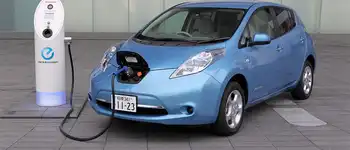
This week, the Montreal Economic Institute put out a study on the costs and benefits of taxpayer subsidies for electric cars. They considered the logic of the huge amounts of money being offered to purchasers in the country’s two largest provinces. In Quebec, if you buy an electric vehicle, the government will give you up to $8,000; in Ontario, buying an electric car or truck entitles you to a cheque from the taxpayer of between $6,000 and $14,000. The subsidies are rich because the cars aren’t cheap.

Will putting more electric cars on the road lower greenhouse-gas emissions? Yes – in some provinces, where they can be better for the planet when the grid is clean. But it all depends on how a province generates electricity. In places like Alberta, Saskatchewan, Nova Scotia and Nunavut territory, where most electricity comes from burning fossil fuels, an electric car may actually generate more greenhouse gases than one running on traditional gasoline. The tailpipe of an electric vehicle may not have any emissions. But quite a lot of emissions may have been generated to produce the power that went to the socket that charged it.

A few years ago, University of Toronto engineering professor Christopher Kennedy estimated that electric cars are only less polluting than the gasoline vehicles they replace when the local electrical grid produces a good chunk of its power from renewable sources – thereby lowering emissions to less than roughly 600 tonnes of CO2 per gigawatt hour.

Unfortunately, the electricity-generating systems in lots of places – from India to China to many American states – are well above that threshold. In those jurisdictions, an electric car will be powered in whole or in large part by electricity created from the burning of a fossil fuel, such as coal. As a result, that car, though carrying the green monicker of “electric,” is likely to be more polluting than a less costly model with an internal combustion or hybrid engine.

The same goes for the Canadian juridictions mentioned above. Their electricity is dirtier, so operating an electric car there won’t be very green. Alberta, for example, is aiming to generate 30 per cent of its electricity from renewable sources by 2030 – which means that the other 70 per cent of its electricity will still come from fossil fuels. (Today, the figure is even higher.) An Albertan trading in a gasoline car for an electric vehicle is making a statement – just not the one he or she likely has in mind.

In Ontario and Quebec, however, most electricity is generated from non-polluting sources, even though Canada still produced 18% from fossil fuels in 2019 overall. Nearly all of Quebec’s power comes from hydro, and more than 90 per cent of Ontario’s electricity is from zero-emission generation, mainly hydro and nuclear. British Columbia, Manitoba and Newfoundland and Labrador also produce the bulk of their electricity from hydro. Electric cars in those provinces, powered as they are by mostly clean electricity, should reduce emissions, relative to gas-powered cars.

But here’s the rub: Electric cars are currently expensive, and, as a recent survey shows, consequently not all that popular. Ontario and Quebec introduced those big subsidies in an attempt to get people to buy them. Those subsidies will surely put more electric cars on the road and in the driveways of (mostly wealthy) people. It will be a very visible policy – hey, look at all those electrics on the highway and at the mall!

However, that result will be achieved at great cost. According to the MEI, for Ontario to reach its goal of electrics constituting 5 per cent of new vehicles sold, the province will have to dish out up to $8.6-billion in subsidies over the next 13 years.

And the environmental benefits achieved? Again, according to the MEI estimate, that huge sum will lower the province’s greenhouse-gas emissions by just 2.4 per cent. If the MEI’s estimate is right, that’s far too many bucks for far too small an environmental bang.

Here’s another way to look at it: How much does it cost to reduce greenhouse-gas emissions by other means? Well, B.C.’s current carbon tax is $30 a tonne, or a little less than 7 cents on a litre of gasoline. It has caused GHG emissions per unit of GDP to fall in small but meaningful ways, thanks to consumers and businesses making millions of little, unspectacular decisions to reduce their energy costs. The federal government wants all provinces to impose a cost equivalent to $50 a tonne – and every economic model says that extra cost will make a dent in greenhouse-gas emissions, though in ways that will not involve politicians getting to cut any ribbons or hold parades.

What’s the effective cost of Ontario’s subsidy for electric cars? The MEI pegs it at $523 per tonne. Yes, that subsidy will lower emissions. It just does so in what appears to be the most expensive and inefficient way possible, rather than the cheapest way, namely a simple, boring and mildly painful carbon tax.

Electric vehicles are an amazing technology. But they’ve also become a way of expressing something that’s come to be known as “virtue signalling.” A government that wants to look green sees logic in throwing money at such an obvious, on-brand symbol, or touting a 2035 EV mandate as evidence of ambition. But the result is an off-target policy – and a signal that is mostly noise.


Related News

View more

Renewables surpass coal in US energy generation for first time in 130 years

Renewables Overtake Coal in the US, as solar, wind, and hydro expand grid share; EIA data show an energy transition accelerated by COVID-19, slashing emissions, displacing fossil fuels, and reshaping electricity generation and climate policy.


Key Points

It refers to the milestone where US renewable energy generation surpassed coal, marking a pivotal energy transition.

✅ EIA data show renewables topped coal consumption in 2019.

✅ Solar, wind, and hydro displaced aging, costly coal plants.

✅ COVID-19 demand drop accelerated the energy transition.


Solar, wind and other renewable sources have toppled coal in energy generation in the United States for the first time in over 130 years, with the coronavirus pandemic accelerating a decline in coal that has profound implications for the climate crisis.

Not since wood was the main source of American energy in the 19th century has a renewable resource been used more heavily than coal, but 2019 saw a historic reversal, building on wind and solar reaching 10% of U.S. generation in 2018, according to US government figures.

Coal consumption fell by 15%, down for the sixth year in a row, while renewables edged up by 1%, even as U.S. electricity use trended lower. This meant renewables surpassed coal for the first time since at least 1885, a year when Mark Twain published The Adventures of Huckleberry Finn and America’s first skyscraper was erected in Chicago.

Electricity generation from coal fell to its lowest level in 42 years in 2019, with the US Energy Information Administration (EIA) forecasting that renewables will eclipse coal as an electricity source this year, while a global eclipse by 2025 is also projected. On 21 May, the year hit its 100th day in which renewables have been used more heavily than coal.

“Coal is on the way out, we are seeing the end of coal,” said Dennis Wamsted, analyst at the Institute for Energy Economics and Financial Analysis. “We aren’t going to see a big resurgence in coal generation, the trend is pretty clear.”

The ongoing collapse of coal would have been nearly unthinkable a decade ago, when the fuel source accounted for nearly half of America’s generated electricity, even as a brief uptick in 2021 was anticipated. That proportion may fall to under 20% this year, with analysts predicting a further halving within the coming decade.

A rapid slump since then has not been reversed despite the efforts of the Trump administration, which has dismantled a key Barack Obama-era climate rule to reduce emissions from coal plants and eased requirements that prevent coal operations discharging mercury into the atmosphere and waste into streams.

Coal releases more planet-warming carbon dioxide than any other energy source, with scientists warning its use must be rapidly phased out to achieve net-zero emissions globally by 2050 and avoid the worst ravages of the climate crisis.

Countries including the UK and Germany are in the process of winding down their coal sectors, and in Europe renewables are increasingly crowding out gas as well, although in the US the industry still enjoys strong political support from Trump.

“It’s a big moment for the market to see renewables overtake coal,” said Ben Nelson, lead coal analyst at Moody’s. “The magnitude of intervention to aid coal has not been sufficient to fundamentally change its trajectory, which is sharply downwards.”

Nelson said he expects coal production to plummet by a quarter this year but stressed that declaring the demise of the industry is “a very tough statement to make” due to ongoing exports of coal and its use in steel-making. There are also rural communities with power purchase agreements with coal plants, meaning these contracts would have to end before coal use was halted.

The coal sector has been beset by a barrage of problems, predominantly from cheap, abundant gas that has displaced it as a go-to energy source. The Covid-19 outbreak has exacerbated this trend, even as global power demand has surged above pre-pandemic levels. With plunging electricity demand following the shutting of factories, offices and retailers, utilities have plenty of spare energy to choose from and coal is routinely the last to be picked because it is more expensive to run than gas, solar, wind or nuclear.

Many US coal plants are ageing and costly to operate, forcing hundreds of closures over the past decade. Just this year, power companies have announced plans to shutter 13 coal plants, including the large Edgewater facility outside Sheboygan, Wisconsin, the Coal Creek Station plant in North Dakota and the Four Corners generating station in New Mexico – one of America’s largest emitters of carbon dioxide.

The last coal facility left in New York state closed earlier this year.

The additional pressure of the pandemic “will likely shutter the US coal industry for good”, said Yuan-Sheng Yu, senior analyst at Lux Research. “It is becoming clear that Covid-19 will lead to a shake-up of the energy landscape and catalyze the energy transition, with investors eyeing new energy sector plays as we emerge from the pandemic.”

Climate campaigners have cheered the decline of coal but in the US the fuel is largely being replaced by gas, which burns more cleanly than coal but still emits a sizable amount of carbon dioxide and methane, a powerful greenhouse gas, in its production, whereas in the EU wind and solar overtook gas last year.

Renewables accounted for 11% of total US energy consumption last year – a share that will have to radically expand if dangerous climate change is to be avoided. Petroleum made up 37% of the total, followed by gas at 32%. Renewables marginally edged out coal, while nuclear stood at 8%.

“Getting past coal is a big first hurdle but the next round will be the gas industry,” said Wamsted. “There are emissions from gas plants and they are significant. It’s certainly not over.”


Related News

View more

Sign Up for Electricity Forum’s Newsletter

Stay informed with our FREE Newsletter — get the latest news, breakthrough technologies, and expert insights, delivered straight to your inbox.

Electricity Today T&D Magazine Subscribe for FREE

Stay informed with the latest T&D policies and technologies.
  • Timely insights from industry experts
  • Practical solutions T&D engineers
  • Free access to every issue

Download the 2025 Electrical Training Catalog

Explore 50+ live, expert-led electrical training courses –

  • Interactive
  • Flexible
  • CEU-cerified