By Allied Business Intelligence Inc is an Oyster Bay, NY-based technology research think tank and consultancy that offers expert advice and research on wireless, broadband, and emerging technologies. Details can be found at www.alliedworld.com or by call


Substation Relay Protection Training

Our customized live online or in‑person group training can be delivered to your staff at your location.

  • Live Online
  • 12 hours Instructor-led
  • Group Training Available
Regular Price:
$699
Coupon Price:
$599
Reserve Your Seat Today
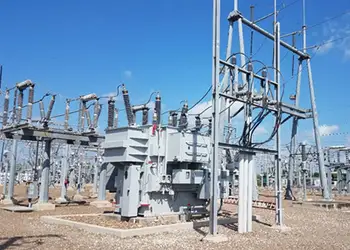
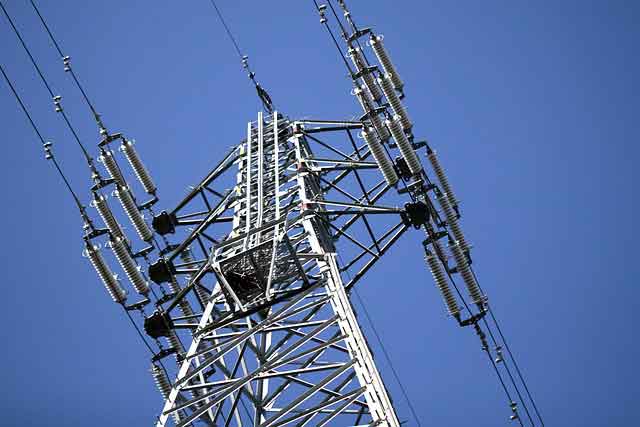
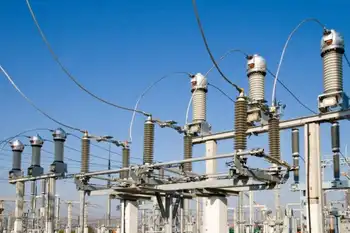
ABI's study indicates that global DG capacity could increase to 300,000 MW by 2011 from a little over 20,000 MW currently. "DG technologies from small gas turbines to fuel cells could be utilized to decrease the burden on current electricity infrastructure, giving more flexibility to end-users," said Atakan Ozbek, author of the study.

"Our research shows that the need for DG is unambiguous and emerging technologies will have to be supported by the U.S. government in order to lay out the necessary regulatory framework and provide crucial early incentives to clean technologies," added Ozbek, Director of Energy Research at ABI.

The incumbent technologies for DG applications are reciprocating engines, and small gas turbines. ABI's market study analyzes emerging DG technologies from fuel cells to microturbines, to wind turbines. Summary discussions are provided of the current regulatory practices, tax practices, environmental regulations, and business considerations effecting the present and future uptake of DG technologies. A detailed analysis of worldwide market segmentation and forecasts for DG is included.

Related News

Ottawa Launches Sewage Energy Project at LeBreton Flats

Ottawa Sewage Energy Exchange System uses wastewater heat recovery and efficient heat pumps to deliver renewable district energy, zero carbon heating and cooling, cutting greenhouse gas emissions at LeBreton Flats and scaling urban developments.


Key Points

A district energy system recovering wastewater heat via pumps to deliver zero carbon heating and cooling.

✅ Delivers 9 MW heating and cooling for 2.4M sq ft at LeBreton Flats

✅ Cuts 5,066 tonnes CO2e each year, reducing greenhouse gases

✅ Powers Odenak zero carbon housing via district energy


Ottawa is embarking on a groundbreaking initiative to harness the latent thermal energy within its wastewater system, in tandem with advances in energy storage in Ontario that strengthen grid resilience, marking a significant stride toward sustainable urban development. The Sewage Energy Exchange System (SEES) project, a collaborative effort led by the LeBreton Community Utility Partnership—which includes Envari Holding Inc. (a subsidiary of Hydro Ottawa) and Theia Partners—aims to revolutionize how the city powers its buildings.

Harnessing Wastewater for Sustainable Energy

The SEES will utilize advanced heat pump technology to extract thermal energy from the city's wastewater infrastructure, providing both heating and cooling to buildings within the LeBreton Flats redevelopment. This innovative approach eliminates the need for fossil fuels, aligning with Ottawa's commitment to reducing greenhouse gas emissions and promoting clean energy solutions across the province, including the Hydrogen Innovation Fund that supports new low-carbon pathways.

The system operates by diverting sewage from the municipal collection network into an external well, where it undergoes filtration to remove large solids. The filtered water is then passed through a heat exchanger, transferring thermal energy to the building's heating and cooling systems. After the energy is extracted, the treated water is safely returned to the city's sewer system.

Environmental and Economic Impact

Once fully implemented, the SEES is projected to deliver over 9 megawatts of heating and cooling capacity, servicing approximately 2.4 million square feet of development. This capacity is expected to reduce greenhouse gas emissions by approximately 5,066 tonnes annually—equivalent to the electricity consumption of over 3,300 homes for a year. Such reductions are pivotal in helping Ottawa meet its ambitious goal of achieving a 96% reduction in community-wide greenhouse gas emissions by 2040, as outlined in its Climate Change Master Plan and Energy Evolution strategy, and they align with Ontario's plan to rely on battery storage to meet rising demand across the grid.

Integration with the Odenak Development

The first phase of the SEES will support the Odenak development, a mixed-use project comprising two high-rise residential buildings. This development is poised to be Canada's largest residential zero-carbon project, echoing calls for Northern Ontario grid sustainability from community groups, featuring 601 housing units, with 41% designated as affordable housing. The integration of the SEES will ensure that Odenak operates entirely on renewable energy, setting a benchmark for future urban developments.

Broader Implications and Future Expansion

The SEES project is not just a localized initiative; it represents a scalable model for sustainable urban energy solutions that aligns with green energy investments in British Columbia and other jurisdictions. The LeBreton Community Utility Partnership is in discussions with the National Capital Commission to explore extending the SEES network to additional parcels within the LeBreton Flats redevelopment. Expanding the system could lead to economies of scale, further reducing costs and enhancing the environmental benefits.

Ottawa's venture into wastewater-based energy systems places it at the forefront of a growing trend in North America. Cities like Toronto and Vancouver have initiated similar projects, while related pilots such as the EV-to-grid pilot in Nova Scotia highlight complementary approaches, and European counterparts have long utilized sewage heat recovery systems. Ottawa's adoption of this technology underscores its commitment to innovation and sustainability in urban planning.

The SEES project at LeBreton Flats exemplifies how cities can repurpose existing infrastructure to create sustainable, low-carbon energy solutions. By transforming wastewater into a valuable energy resource, Ottawa is setting a precedent for environmentally responsible urban development. As the city moves forward with this initiative, it not only addresses immediate energy needs but also contributes to a cleaner, more sustainable future for its residents, even as the province accelerates Ontario's energy storage push to maintain reliability.


Related News

View more

Iran, Iraq Discuss Further Cooperation in Energy Sector

Iran-Iraq Electricity Cooperation advances with power grid synchronization, cross-border energy trade, 400-kV transmission lines, and education partnerships, boosting grid reliability, infrastructure investment, and electricity exports between Tehran and Baghdad for improved supply and stability.


Key Points

A bilateral initiative to synchronize grids, expand networks, and sustain electricity exports, improving reliability.

✅ 400-kV Amarah-Karkheh line enables synchronized operations.

✅ Extends electricity export contracts to meet Iraq demand.

✅ Enhances grid reliability, training, and infrastructure investment.


Aradakanian has focused his one-day visit to Iraq on discussions pertaining to promoting bilateral collaboration between the two neighboring nations in the field of electricity, grid development deals and synchronizing power grid between Tehran and Baghdad, cooperating in education, and expansion of power networks.

He is also scheduled to meet with Iraqi top officials in a bid to boost cooperation in the relevant fields.

Back in December 2019, Ardakanian announced that Iran will continue exports of electricity to Iraq by renewing earlier contract as it is supplying about 40% of Iraq's power today.

"Iran has signed a 3-year-long cooperation agreement with Iraq to help the country's power industry in different aspects. The documents states at its end that we will export electricity to Iraq as far as they need," Ardakanian told FNA on December 9, 2019.

The contract to "export Iran's electricity" to Iraq will be extended, he added.

Ardakanian also said that Iran and Iraq's power grids have become synchronized in a move that supports Iran's regional power hub plans since a month ago.

In 2004 Iran started selling electricity to Iraq. Iran electricity exports to the western neighbor are at its highest level of 1,361 megawatts per day now, as the country weighs summer power sufficiency ahead of peak demand.

The new Amarah-Karkheh 400-KV transmission line stretching over 73 kilometers, is now synchronized to provide electricity to both countries, reflecting regional power export trends as well. It also paves the way for increasing export to power-hungry Iraq in the near future.

With synchronization of the two grids, the quality of electricity in Iraq will improve as the country explores nuclear power options to tackle shortages.

According to official data, 82% of Iraq's electricity is generated by thermal power plants that use gas as feedstock, while Iran is converting thermal plants to combined cycle to save energy. This is expected to reach 84% by 2027.


Related News

View more

Feds to study using electricity to 'reduce or eliminate' fossil fuels

Electrification Potential Study for Canada evaluates NRCan's decarbonization roadmap, assessing electrification of end uses and replacements for fossil fuels across transportation, buildings, and industry, including propane, diesel, natural gas, and coal, to guide energy policy.


Key Points

An NRCan study assessing electrification to replace fossil fuels across sectors and guide deep decarbonization R&D.

✅ Evaluates non-electric alternatives alongside electrification paths

✅ Covers propane, diesel, natural gas, and coal end uses

✅ Guides NRCan R&D priorities for deep decarbonization


The federal government wants to spend up to $300,000 on a study aimed at understanding whether existing electrical technologies can “reduce or eliminate” fossil fuels used for virtually every purpose other than generating electricity.

The proposal has caused consternation within the Saskatchewan government, whose premier has criticized a 2035 net-zero grid target as shifting the goalposts, and which has spent months attacking federal policies it believes will harm the Western Canadian energy sector without meaningfully addressing climate change.

Procurement documents indicate the “Electrification Potential Study for Canada” will provide “strategic guidance on the need to pursue both electric and non-electric energy research and development to enable deep decarbonisation scenarios.”

“It is critical that (Natural Resources Canada) as a whole have a cross-sectoral, consistent, and comprehensive understanding of the viability of electric technologies as a replacement for fossil fuels,” the documents state.

The study proponent will be asked to examine possible replacements for a range of fuels, including propane, transportation fuel, fuel oil, diesel, natural gas and coal, even as Alberta maps a path to clean electricity for its grid. Only international travel fuel and electricity generation are outside the scope of the study.

“To be clear, the consultant should not answer these questions directly, but should conduct the analysis with them in mind. The goal … is to collate data which can be used by (Natural Resources Canada) to conduct analysis related to these questions,” the documents state.

Natural Resources Canada issued the request for proposals one week before Prime Minister Justin Trudeau officially launched a 40-day election campaign in which climate and energy policy, including debates over Alberta's power market like a Calgary retailer's challenge, is expected to play a defining role.

It also comes as the federal government works to complete the controversial Trans Mountain Pipeline Expansion project through British Columbia, amid tariff threats boosting support for Canadian energy projects, which it bought last year for $4.5 billion and is currently bogged down in the court system.

A Natural Resources Canada spokeswoman said the ministry would not be able to respond to questions until sometime on Thursday.

While the documents make clear that the study aims to answer unresolved questions about what the International Energy Agency calls an increasingly-electric future, with clean grid and storage trends emerging, without a specific timeline, the provincial government is far from thrilled.

Energy and Resources Minister Bronwyn Eyre said the document reflects the federal government’s “hostility” to the energy sector, even as Alberta's electricity sector faces profound change, because government ministries like Natural Resources Canada don’t do anything without political direction.

Asked whether a responsible government should consider every option before taking a decision, Eyre said a government that was not interested in eliminating fossil fuels entirely would not have used such “strong” language in a public document, noting that provinces like Ontario are grappling with hydro system problems as well.

“I think it’s a real wake-up call to what (Ottawa’s) endgame really is here,” she said, adding that the document does not ask the proponent to conduct an economic impact analysis or consider potential job losses in the energy sector.

The study is organized by Natural Resources Canada’s office of energy research and development, which is tasked with accelerating energy technology “in order to produce and use energy in … more clean and efficient ways,” the documents state.

Bidding on the proposal closes Oct. 14, one week before the federal election. The successful proponent must deliver a final report in April 2020, according to the documents.


Related News

View more

Ottawa sets out to protect its hydro heritage

Ottawa Hydro Substation Heritage Designation highlights Hydro Ottawa's 1920s architecture, Art Deco facades, and municipal utility history, protecting key voltage-reduction sites in Glebe, Carling-Merivale, Holland, King Edward, and Old Ottawa South.


Key Points

A city plan to protect Hydro Ottawa's 1920s substations for architecture, utility role, and civic electrical heritage.

✅ Protects five operating voltage-reduction sites citywide

✅ Recognizes Art Deco and early 20th century utility architecture

✅ Allows emergency demolition to ensure grid safety


The city of Ottawa is looking to designate five hydro substations built nearly a century ago as heritage structures, a move intended to protect the architectural history of Ottawa's earliest forays into the electricity business, even as Ottawa electricity consumption has shifted in recent years.

All five buildings are still used by Hydro Ottawa to reduce the voltage coming from transmission lines before the electricity is transmitted to homes and businesses, and when severe weather causes outages, Sudbury Hydro crews work to reconnect service across communities.

Electricity came to Ottawa in 1882 when two carbon lamps were installed on LeBreton Flats, heritage planner Anne Fitzpatrick told the city's built heritage subcommittee on Tuesday. It became a lucrative business, and soon a privately owned monopoly that drew public scrutiny similar to debates over retroactive charges in neighboring jurisdictions.

In 1905, city council held a special meeting to buy the electrical company, which led to a dramatic drop in electricity rates for residents, a contrast with recent discussions about peak hydro rates for self-isolating customers.

The substations are now owned by Hydro Ottawa, which agreed to the heritage designations on the condition it not be prevented from emergency demolitions if it needs to address incidents such as damaging storms in Ontario while it works to "preserve public safety and the continuity of critical hydro electrical services."

Built in 1922, the substation at the intersection of Glebe and Bronson avenues was the first to be built by the new municipal electrical department, long before modern battery storage projects became commonplace on Ontario's grid.

The largest of the substations being protected dates back to 1929 and is found at the corner of Carling Avenue and Merivale Road. It was built to accommodate a growing population in areas west of downtown including Hintonburg and Mechanicsville.

The substation on Holland Avenue near the Queensway is different from the others because it was built in 1924 to serve the Ottawa Electric Railway Company. The streetcar company operated from 1891 to 1959, and urban electrical infrastructure can face failures such as the Hydro-Québec manhole fire that left thousands without power.

This substation on King Edward Avenue was built in 1931 and designed by architect William Beattie, who also designed York Street Public School in Lowertown and the substation on Carling Avenue. 

The last substation to be built in a 'bold and decorative style' is at 39 Riverdale Ave. in Old Ottawa South, according to city staff. It was designed in an Art Deco style by prominent architect J. Albert Ewart, who was also behind the Civic Hospital and nearby Southminster Church on Bank Street.


Related News

View more

Battery-electric buses hit the roads in Metro Vancouver

TransLink Electric Bus Pilot launches zero-emission service in Metro Vancouver, cutting greenhouse gas emissions with fast-charging stations on Route 100, supporting renewable energy goals alongside trolley buses, CNG, and hybrid fleets.


Key Points

TransLink's Metro Vancouver program deploying charging, zero-emission buses on Route 100 to cut emissions and fuel costs.

✅ Cuts ~100 tonnes GHG and saves $40k per bus annually

✅ Five-minute on-route charging at terminals on Route 100

✅ Pilot data to guide zero-emission fleet transition by 2050


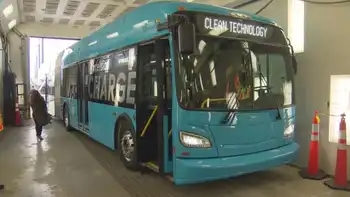
TransLink's first battery-electric buses are taking to the roads in Metro Vancouver as part of a pilot project to reduce emissions, joining other initiatives like electric school buses in B.C. that aim to cut pollution in transportation.

The first four zero-emission buses picked up commuters in Vancouver, Burnaby and  New Westminster on Wednesday. Six more are expected to be brought in, and similar launches like Edmonton's first electric bus are underway across Canada.

"With so many people taking transit in Vancouver today, electric buses will make a real difference," said Merran Smith, executive director of Clean Energy Canada, a think tank at Simon Fraser University, in a release.

According to TransLink, each bus is expected to reduce 100 tonnes of greenhouse gas emissions and save $40,000 in fuel costs per year compared to a conventional diesel bus.

"Buses already help tackle climate change by getting people out of cars, and Vancouver is ahead of the game with its electric trolleys," Smith said.

She added there is still more work to be done to get every bus off diesel, as seen with the TTC's battery-electric buses rollout in Toronto.

The buses will run along the No. 100 route connecting Vancouver and New Westminster. They recharge — it takes about five minutes — at new charging stations installed at both ends of the route while passengers load and unload or while the driver has a short break. 

Right now, more than half of TransLink's fleet currently operates with clean technology, offering insights alongside Toronto's large battery-electric fleet for other cities. 

In addition to the four new battery-electric buses, the fleet also includes hundreds of zero-emission electric trolley buses, compressed natural gas buses and hybrid diesel-electric buses, while cities like Montreal's first STM electric buses continue to expand adoption.

"Our iconic trolley buses have been running on electricity since 1948 and we're proud to integrate the first battery-electric buses to our fleet," said TransLink CEO Kevin Desmond in a press release.

TransLink has made it a goal to operate its fleet with 100 per cent renewable energy in all operations by 2050. Desmond says, the new buses are one step closer to meeting that goal.

The new battery-electric buses are part of a two-and-a-half year pilot project that looks at the performance, maintenance, and customer experience of making the switch to electric, complementing BC Hydro's vehicle-to-grid pilot initiative underway in the province.


Related News

View more

Trump's Proposal on Ukraine's Nuclear Plants Sparks Controversy

Ukraine Nuclear Plant Ownership Proposal outlines U.S. management of Ukrainian reactors amid the Russia-Ukraine war, citing nuclear safety, energy security, and IAEA oversight; Kyiv rejects ownership transfer, especially regarding Zaporizhzhia under Russian control.


Key Points

U.S. control of Ukraine's nuclear plants for safety; Kyiv rejects transfer, citing sovereignty risks at Zaporizhzhia.

✅ U.S. proposal to manage Ukraine's reactors amid war

✅ Kyiv refuses ownership transfer; open to investment

✅ Zaporizhzhia under Russian control raises safety risks


In the midst of the ongoing conflict between Russia and Ukraine, U.S. President Donald Trump has proposed a controversial idea: Ukraine should give its nuclear power plants to the United States for safekeeping and management. This suggestion came during a phone call with Ukrainian President Volodymyr Zelenskyy, wherein Trump expressed the belief that American ownership of these nuclear plants could offer them the best protection amid the ongoing war. But Kyiv, while open to foreign support, has firmly rejected the idea of transferring ownership, especially as the Zaporizhzhia nuclear plant remains under Russian occupation.

Ukraine’s nuclear energy infrastructure has always been a vital component of its power generation. Before the war, the country’s four nuclear plants supplied nearly half of its electricity. As Russia's military forces target Ukraine's energy infrastructure, including power plants and coal mines, international watchdogs like the IAEA have warned of nuclear risks as these nuclear facilities have become crucial to maintaining the nation’s energy stability. The Zaporizhzhia plant, in particular, has attracted international concern due to its size and the ongoing threat of a potential nuclear disaster.

Trump’s Proposal and Ukraine’s Response

Trump’s proposal of U.S. ownership came as a response to the ongoing threats posed by Russia’s occupation of the Zaporizhzhia plant. Trump argued that the U.S., with its expertise in running nuclear power plants, could safeguard these facilities from further damage and potential nuclear accidents. However, Zelenskyy quickly clarified that the discussion was only focused on the Zaporizhzhia plant, which is currently under Russian control. The Ukrainian president emphasized that Kyiv would not entertain the idea of permanently transferring ownership of its nuclear plants, even though they would welcome investment in their restoration and modernization, particularly after the war.

The Zaporizhzhia nuclear plant has been a focal point of geopolitical tensions since Russia's occupation in 2022. Despite being in "cold shutdown" to prevent further risk of explosions, the facility remains a major concern due to its potential to cause a nuclear disaster. Ukrainian officials, along with international observers, have raised alarm about the safety risks posed by the plant, including mines at Zaporizhzhia reported by UN watchdogs, which is situated in a war zone and under the control of Russian forces who are reportedly neglecting proper safety protocols.

The Fear of a Nuclear Provocation

Ukrainians have expressed concerns that Trump’s proposal could embolden Russia to escalate tensions further, even as a potential agreement on power-plant attacks has been discussed by some parties. Some fear that any attempt to reclaim the plant by Ukraine could trigger a Russian provocation, including a deliberate attack on the plant, which would have catastrophic consequences for both Ukraine and the broader region. The analogy is drawn with the destruction of the Nova Kakhovka dam, which Ukraine accuses Russia of sabotaging, an act that severely disrupted water supplies to the Zaporizhzhia plant. Ukrainian military officials, including Ihor Romanenko, a former deputy head of Ukraine’s armed forces, warned that Trump’s suggestion might be an exploitation of Ukraine’s vulnerable position in the ongoing war.

Despite these fears, there are some voices within Ukraine, including former employees of the Zaporizhzhia plant, who believe that a deliberate attack by Russian forces is unlikely. They argue that the Russian military needs the plant in functioning condition for future negotiations, with Russia building new power lines to reactivate the site as part of that calculus, and any damage could reduce its value in such exchanges. However, the possibility of Russian negligence or mismanagement remains a significant risk.

The Strategic Role of Ukraine's Nuclear Plants

Ukraine's nuclear plants were a cornerstone of the country’s energy sector long before the conflict began. In recent years, as Ukraine lost access to coal resources in the Donbas region due to Russian occupation, nuclear power became even more vital, alongside a growing focus on wind power to improve resilience. The country’s reliance on these plants grew as Russia launched a sustained campaign to destroy Ukraine’s energy infrastructure, including attacks on nuclear power stations.

The Zaporizhzhia plant, in particular, holds strategic importance not only due to its size but also because of its location in southeastern Ukraine, an area that has been at the heart of the conflict. Despite being in Russian hands, the plant’s reactors have been safely shut down, reducing the immediate risk of a nuclear explosion. However, the plant’s future remains uncertain, as Russia’s long-term control over it could disrupt Ukraine’s energy security for years to come.

Wider Concerns About Aging Nuclear Infrastructure

Beyond the geopolitical tensions, there are broader concerns about the aging infrastructure of Ukraine's nuclear power plants. International watchdogs, including the environmentalist group Bankwatch, have criticized these facilities as “zombie reactors” due to their outdated designs and safety risks. Experts have called for Ukraine to decommission some of these reactors, fearing that they are increasingly unsafe, especially in the context of a war.

However, Ukrainian officials, including Petro Kotin, head of Energoatom (Ukraine's state-owned nuclear energy company), argue that these reactors are still functional and critical to Ukraine's energy needs. The ongoing conflict, however, complicates efforts to modernize and secure these facilities, which are increasingly vulnerable to both physical damage and potential nuclear hazards.

The Global Implications

Trump's suggestion to take control of Ukraine's nuclear power plants has raised significant concerns on the international stage. Some fear that such a move could set a dangerous precedent for nuclear security and sovereignty. Others see it as an opportunistic proposal that exploits Ukraine's wartime vulnerability.

While the future of Ukraine's nuclear plants remains uncertain, one thing is clear: these facilities are now at the center of a geopolitical struggle that could have far-reaching consequences for the energy security of Europe and the world. The safety of these plants and their role in Ukraine's energy future will remain a critical issue as the war continues and as Ukraine navigates its relations with both the U.S. and Russia, with the grid even having resumed electricity exports at times.


Related News

View more

Sign Up for Electricity Forum’s Newsletter

Stay informed with our FREE Newsletter — get the latest news, breakthrough technologies, and expert insights, delivered straight to your inbox.

Electricity Today T&D Magazine Subscribe for FREE

Stay informed with the latest T&D policies and technologies.
  • Timely insights from industry experts
  • Practical solutions T&D engineers
  • Free access to every issue

Live Online & In-person Group Training

Advantages To Instructor-Led Training – Instructor-Led Course, Customized Training, Multiple Locations, Economical, CEU Credits, Course Discounts.

Request For Quotation

Whether you would prefer Live Online or In-Person instruction, our electrical training courses can be tailored to meet your company's specific requirements and delivered to your employees in one location or at various locations.