Pakistan supplies countries with nuke technology

By Independent-London


NFPA 70e Training - Arc Flash

Our customized live online or in‑person group training can be delivered to your staff at your location.
  • Live Online
  • 6 hours Instructor-led
  • Group Training Available
Regular Price:
$199
Coupon Price:
$149
Reserve Your Seat Today
PAKISTAN HAS secretly been supplying Iran with technology crucial to the development of a nuclear weapons programme, international inspectors say. There is also evidence Pakistan has been supplying North Korea and other countries with such expertise.

Experts from the International Atomic Energy Agency (IAEA) - the UN's nuclear watchdog - have recently uncovered a huge procurement network developed by Iran during the past 17 years to provide it with materials, tools and specialist knowledge.

Iran has not yet directly identified Pakistan as a supplier but reports say there is ample evidence to conclude it has provided crucial blueprints, technical guidance and equipment.

Pakistan responded by saying recently that the father of its nuclear bomb, Abdul Qadeer Khan, is being questioned by officials about possible links between Pakistan and the Iranian nuclear programme.

Reports suggested he had been under house arrest for several weeks following Iran's acknowledgement that it had been using centrifuge designs apparently identical to those used in Pakistan's nuclear weapons programme.

Masood Khan, the Pakistan Foreign Ministry spokesman, said Dr Khan, regarded as a national hero for creating an "Islamic atomic bomb" to rival India, is being questioned by Pakistani authorities, who are conducting interviews with several nuclear scientists working at Dr A Q Khan Research Laboratories.

Masood Khan said: "He is too eminent a scientist to undergo a normal debriefing session. However, some questions have been raised with him in relation to the ongoing debriefing sessions."

Sheikh Rashid Ahmed, Pakistan's Information minister, said: "Some individuals may have been doing something on their own. The government of Pakistan has not authorised any transfers of sensitive nuclear technology to other countries. Only individuals are being investigated."

The investigators believe that Pakistan's transfer of information happened many years ago and before General Pervez Musharraf, the current military ruler, came to power. But the revelation will further complicate the relationship between the US and Pakistan, which President Bush claims has been an ally in the so-called war on terror. There was no immediate comment recently from Washington, though reports suggest American officials are involved in the investigations and possibly the questioning of the Pakistani scientists.

Experts said Pakistan's transfer of key information was vital to Iran. David Albright, a former IAEA inspector in Iraq and president of the Institute for Science and International Security - a Washington research group that has tracked Iran's nuclear progress - said: "The possession of detailed designs could allow Iran to skip many difficult research steps."

Until now, Islamabad has steadfastly denied allegations that it has helped Iran and North Korea, countries regarded by the Bush administration as "axis of evil" states, with atomic programmes.

Diplomats from Britain, France and Germany obtained an agreement from Iran last month to open its nuclear facilities to international inspectors. The IAEA revealed soon afterwards that Iran had been secretly manufacturing small amounts of plutonium, normally associated with nuclear weapons. Iran has denied trying to develop such weapons, claiming that it is only developing a supply of nuclear fuel.

Related News
Ontario, Quebec to swap energy in new deal to help with electricity demands

Ontario-Quebec Energy Swap streamlines electricity exchange, balancing peak demand across clean grids with hydroelectric and nuclear power, enhancing reliability, capacity banking, and interprovincial load management for industry growth, EV adoption, and seasonal heating-cooling needs.


Key Points

10-year, no-cash power swap aligning peaks; hydro and nuclear enhance reliability and let Ontario bank capacity.

✅ Up to 600 MW exchanged yearly; reviews adjust volumes

✅ Peaks differ: summer A/C in Ontario, winter heating in Quebec

✅ Capacity banking enables future-year withdrawals


Ontario and Quebec have agreed to swap energy to build on an electricity deal to help each other out when electricity demands peak.

The provinces' electricity operators, the Independent Electricity System Operator holds capacity auctions and Hydro-Quebec, will trade up to 600 megawatts of energy each year, said Ontario Energy Minister Todd Smith.

“The deal just makes a lot of sense from both sides,” Smith said in an interview.

“The beauty as well is that Quebec and Ontario are amongst the cleanest grids around.”

The majority of Ontario's power comes from nuclear energy while the majority of Quebec's energy comes from hydroelectric power, including Labrador power in regional transmission networks.

The deal works because Ontario and Quebec's energy peaks come at different times, Smith said.

Ontario's energy demands spike in the summer, largely driven by air conditioning on hot days, and the province has occasionally set off-peak electricity prices to provide temporary relief, he said.

Quebec's energy needs peak in the winter, mostly due to electric heating on cold days.

The deal will last 10 years, with reviews along the way to adjust energy amounts based on usage.

“With the increase in energy demand, we must adopt more energy efficiency programs like Peak Perks and intelligent measures in order to better manage peak electricity consumption,” Quebec's Energy Minister Pierre Fitzgibbon wrote in a statement.

Smith said the energy deal is a straight swap, with no payments on either side, and won't reduce hydro bills as the transfer could begin as early as this winter.

Ontario will also be able to bank unused energy to save capacity until it is needed in future years, Smith said.

Both provinces are preparing for future energy needs, as electricity demands are expected to grow dramatically in the coming years with increased demand from industry and the rise of electric vehicles, and Ontario has tabled legislation to lower electricity rates to support consumers.


Related News

View more

Growing pot sucks up electricity and pumps out an astounding amount of carbon dioxide — it doesn't have to

Sustainable Cannabis Cultivation leverages greenhouse design, renewable energy, automation, and water recapture to cut electricity use, emissions, and pesticides, delivering premium yields with natural light, smart sensors, and efficient HVAC and irrigation control.


Key Points

A data-driven, low-impact method that cuts energy, water, and chemicals while preserving premium yields.

✅ 70-90% less electricity vs. conventional indoor grows

✅ Natural light, solar, and rainwater recapture reduce footprint

✅ Automation, sensors, and HVAC stabilize microclimates


In the seven months since the Trudeau government legalized recreational marijuana use, licensed producers across the country have been locked in a frenetic race to grow mass quantities of cannabis for the new market.

But amid the rush for scale, questions of sustainability have often taken a back seat, and in Canada, solar adoption has lagged in key sectors.

According to EQ Research LLC, a U.S.-based clean-energy consulting firm, cannabis facilities can need up to 150 kilowatt-hours of electricity per year per square foot. Such input is on par with data centres, which are themselves 50 to 200 times more energy-intensive than a typical office building, and achieving zero-emission electricity by 2035 would help mitigate the associated footprint.

At the Lawrence Berkley National Laboratory in California, a senior scientist estimated that one per cent of U.S. electricity use came from grow ops. The same research — published in 2012 — also found that the procedures for refining a kilogram of weed emit around 4,600 kilograms of carbon dioxide to the atmosphere, equivalent to operating three million cars for a year, though a shift to zero-emissions electricity by 2035 could substantially cut those emissions.

“All factors considered, a very large expenditure of energy and consequent ‘environmental imprint’ is associated with the indoor cultivation of marijuana,” wrote Ernie Small, a principal research scientist for Agriculture and Agri-Food Canada, in the 2018 edition of the Biodiversity Journal.

Those issues have left some turning to technology to try to reduce the industry’s footprint — and the economic costs that come with it — even as more energy sources make better projects for forward-looking developers.

“The core drawback of most greenhouse environments is that you’re just getting large rooms, which are harder to control,” says Dan Sutton, the chief executive officer of Tantalus Labs., a B.C.-based cannabis producer. “What we did was build a system specifically for cannabis.”

Sutton is referring to SunLab, the culmination of four years of construction, and at present the main site where his company nurtures rows of the flowering plant. The 120,000-square foot structure was engineered for one purpose: to prove the merits of a sustainable approach.

“We’re actually taking time-series data on 30 different environmental parameters — really simple ones like temperature and humidity — all the way down to pH of the soil and water flow,” says Sutton. “So if the temperature gets a little too cold, the system recognizes that and kicks on heaters, and if the system senses that the environment is too hot in the summertime, then it automatically vents.”

A lot is achieved without requiring much human intervention, he adds. Unlike conventional indoor operations, SunLab demands up to 90 per cent less electricity, avoids using pesticides, and draws from natural light and recaptured rainwater to feed its crops.

The liquid passes through a triple-filtration process before it is pumped into drip irrigation tubing. “That allows us to deliver a purity of water input that is cleaner than bottled water,” says Sutton.

As transpiration occurs, a state-of-the-art, high-capacity airflow suspended below the ceiling cycles air at seven-minute intervals, repeatedly cooling the air and preventing outbreaks of mould, while genetically modified “guardian” insects swoop in to eliminate predatory pests.

“When we first started, people never believed we would cultivate premium quality cannabis or cannabis that belongs on the top shelf, shoulder to shoulder with the best in the world and the best of indoor,” says Sutton.

Challenges still exist, but they pale in comparison to the obstacles that American companies with an interest in adopting greener solutions persistently face, and in provinces like Alberta, an Alberta renewable energy surge is reshaping the opportunity set.

Although cannabis is legal in a number of states, it remains illegal federally, which means access to capital and regulatory clarity south of the border can be difficult to come by.

“Right now getting a new project built is expensive to do because you can’t get traditional bank loans,” says Canndescent CEO Adrian Sedlin, speaking by phone from California.

In retrofitting the company’s farm to accommodate a sizeable solar field, he struggled to secure investors, even as a solar-powered cannabis facility in Edmonton showcased similar potential.

“We spent over a year and a half trying to get it financed,” says Sedlin. “Finding someone was the hard part.”

Decriminalizing the drug would ultimately increase the supply of capital and lower the costs for innovative designs, something Sedlin says would help incentivize producers to switch to more effective and ecologically sound techniques.

Some analysts argue that selling renewable energy in Alberta could become a major growth avenue that benefits energy-intensive industries like cannabis cultivation.

Canndescent, however, is already there.

“We’re now harnessing the sun to reduce our reliance on fossil fuels and going to sustainable, or replenishable, energy sources, while leveraging the best and most efficient water practices,” says Sedlin. “It’s the right thing to do.”


Related News

View more

Duke Energy Florida to build its largest battery storage projects yet

Duke Energy Florida battery storage will add 22 MW across Trenton, Cape San Blas and Jennings, improving grid reliability, outage resilience, enabling peak shaving and deferring distribution upgrades to increase efficiency and customer value.


Key Points

Three lithium battery projects totaling 22 MW to improve Florida grid reliability, outage resilience and efficiency.

✅ 22 MW across Trenton, Cape San Blas and Jennings sites

✅ Enhances outage resilience and grid reliability

✅ Defers costly distribution upgrades and improves efficiency


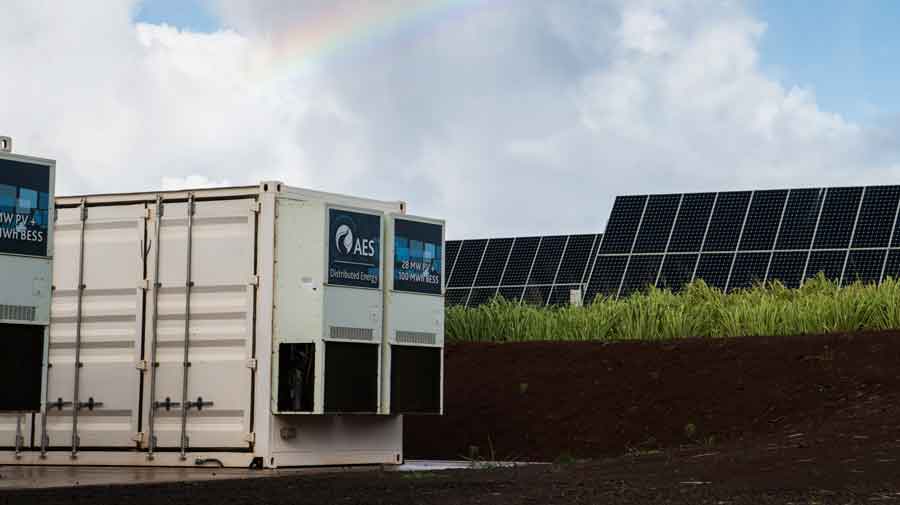
Duke Energy Florida (DEF) has announced three battery energy storage projects, totaling 22 megawatts, that will improve overall reliability and support critical services during power outages.

Duke Energy, the nation's largest electric utility, unveils its new logo. (PRNewsFoto/Duke Energy) (PRNewsfoto/Duke Energy)

Collectively, the storage facilities will enhance grid operations, increase efficiencies and improve overall reliability for surrounding communities, with virtual power plant programs offering a model for coordinating distributed resources.

They will also provide important backup generation during power outages, a service that is becoming increasingly important with the number and intensity of storms that have recently impacted the state.

As the grid manager and operator, DEF can maximize the versatility of battery energy storage systems (BESS) to include multiple customer and electric system benefits such as balancing energy demand, managing intermittent resources, increasing energy security and deferring traditional power grid upgrades.

These benefits help reduce costs for customers and increase operational efficiencies.

The 11-megawatt (MW) Trenton lithium-based battery facility will be located 30 miles west of Gainesville in Gilchrist County. The energy storage project will continue to improve power reliability using newer technologies.

The 5.5-MW Cape San Blas lithium-based battery facility will be located approximately 40 miles southeast of Panama City in Gulf County. The project will provide additional power capacity to meet our customers' rising energy demand in the area. This project is an economical alternative to replacing distribution equipment necessary to accommodate local load growth.

The 5.5-MW Jennings lithium-based battery facility will be located 1.5 miles south of the Florida-Georgia border in Hamilton County. The project will continue to improve power reliability through energy storage as an alternative solution to installing new and more costly distribution equipment.

Currently the company plans to complete all three projects by the end of 2020.

"These battery projects provide electric system benefits that will help improve local reliability for our customers and provide significant energy services to the power grid," said Catherine Stempien, Duke Energy Florida state president. "Duke Energy Florida will continue to identify opportunities in battery storage technology which will deliver efficiency improvements to our customers."


Additional renewables projects

As part of DEF's commitment to renewables, the company is investing an estimated $1 billion to construct or acquire a total of 700 MW of cost-effective solar power facilities and 50 MW of battery storage through 2022.

Duke Energy is leading the industry deployment of battery technology, with SDG&E's Emerald Storage project underscoring broader adoption across the sector today. Last fall, the company and University of South Florida St. Petersburg unveiled a Tesla battery storage system that is connected to a 100-kilowatt (kW) solar array – the first of its kind in Florida.

This solar-battery microgrid system manages the energy captured by the solar array, situated on top of the university's parking garage, and similar low-income housing microgrid financing efforts are expanding access. The solar array was constructed three years ago through a $1 million grant from Duke Energy. The microgrid provides a backup power source during a power outage for the parking garage elevator, lights and electric vehicle charging stations. Click here to learn more.

In addition to expanding its battery storage technology and solar investments, DEF is investing in transportation electrification to support the growing U.S. adoption of electric vehicles (EV), including EV charging infrastructure, 530 EV charging stations and a modernized power grid to deliver the diverse and reliable energy solutions customers want and need.


Related News

View more

Planning for Toronto?s Growing Electricity Needs

Toronto Grid Upgrade expands electricity capacity and reliability with new substations, upgraded transmission lines, and integrated renewable energy, supporting EV growth, sustainability goals, and resilient power for Toronto's growing residential and commercial sectors.


Key Points

A joint plan to boost grid capacity, add renewables, and improve reliability for Toronto's rising power demand.

✅ New substations and upgraded transmission lines increase capacity

✅ Integrates solar, wind, and storage for cleaner, reliable power

✅ Supports EV adoption, reduces outages, and future-proofs the grid


As Toronto's population and economy continue to expand, the surge in electricity demand in the city is also increasing rapidly. In response, the Ontario government, in partnership with the City of Toronto and various stakeholders, has launched an initiative to enhance the electricity infrastructure to meet future needs.

The Ontario Ministry of Energy and the City of Toronto are focusing on a multi-faceted approach that includes upgrades to existing power systems and the integration of renewable energy sources, as well as updated IoT cybersecurity standards for sector devices. This initiative is critical as Toronto looks towards a sustainable future, with projections indicating significant growth in both residential and commercial sectors.

Energy Minister Todd Smith highlighted the urgency of this project, stating, “With Toronto's growing population and dynamic economy, the need for reliable electricity cannot be overstated. We are committed to ensuring that our power systems are not only capable of meeting today's demands but are also future-proofed against the needs of tomorrow.”

The plan involves substantial investments in grid infrastructure to increase capacity and improve reliability. This includes the construction of new substations and the enhancement of old ones, along with the upgrading of transmission lines and exploration of macrogrids to strengthen reliability. These improvements are designed to reduce the frequency and severity of power outages while accommodating new developments and technologies such as electric vehicles, which are expected to place additional demands on the system.

Additionally, the Ontario government is exploring the potential for renewable energy sources, such as rooftop solar grids and wind, to be integrated into the city’s power grid. This shift towards green energy is part of a broader effort to reduce carbon emissions and promote environmental sustainability.

Toronto Mayor John Tory emphasized the collaborative nature of this initiative, stating, “This is a prime example of how collaboration between different levels of government and the private sector can lead to innovative solutions that benefit everyone. By enhancing our electricity infrastructure, we are not only improving the quality of life for our residents but also supporting Toronto's competitive edge as a global city.”

The project also includes a public engagement component, where citizens are encouraged to provide input on the planning and implementation phases. This participatory approach ensures that the solutions developed are in alignment with the needs and expectations of Toronto's diverse communities.

Experts agree that the timing of these upgrades is critical. As urban populations grow, the strain on infrastructure, especially in a powerhouse like Toronto, can lead to significant challenges. Proactive measures, such as those being implemented by Ontario and Toronto, and mirrored by British Columbia's clean energy shift underway on the west coast, are essential in avoiding potential crises and ensuring economic stability.

The success of this initiative could serve as a model for other cities facing similar challenges, highlighting the importance of forward-thinking and cooperation in urban planning and energy management. As Toronto moves forward with these ambitious plans, the eyes of the world, particularly other urban centers, will be watching and learning how to similarly tackle the dual challenges of growth and sustainability, with recent examples like London's newest electricity tunnel demonstrating large-scale grid upgrades.

This strategic approach to managing Toronto's electricity needs reflects a comprehensive understanding of the complexities involved in urban energy systems and a commitment to ensuring a resilient and sustainable future that aligns with Canada's net-zero grid by 2050 goals at the national level for all residents.


Related News

View more

Clean B.C. is quietly using coal and gas power from out of province

BC Hydro Electricity Imports shape CleanBC claims as Powerex trades cross-border electricity, blending hydro with coal and gas supplies, affecting emissions, grid carbon intensity, and how electric vehicles and households assess "clean" power.


Key Points

Powerex buys power for BC Hydro, mixing hydro with coal and gas, shifting emissions and affecting CleanBC targets.

✅ Powerex trades optimize price, not carbon intensity

✅ Imports can include coal- and gas-fired generation

✅ Emissions affect EV and CleanBC decarbonization claims


British Columbians naturally assume they’re using clean power when they fire up holiday lights, juice up a cell phone or plug in a shiny new electric car. 

That’s the message conveyed in advertisements for the CleanBC initiative launched by the NDP government, amid indications that residents are split on going nuclear according to a survey, which has spent $3.17 million on a CleanBC “information campaign,” including almost $570,000 for focus group testing and telephone town halls, according to the B.C. finance ministry.

“We’ll reduce air pollution by shifting to clean B.C. energy,” say the CleanBC ads, which feature scenic photos of hydro reservoirs. “CleanBC: Our Nature. Our Power. Our Future.” 

Yet despite all the bumph, British Columbians have no way of knowing if the electricity they use comes from a coal-fired plant in Alberta or Wyoming, a nuclear plant in Washington, a gas-fired plant in California or a hydro dam in B.C. 

Here’s why. 

BC Hydro’s wholly-owned corporate subsidiary, Powerex Corp., exports B.C. power when prices are high and imports power from other jurisdictions when prices are low. 

In 2018, for instance, B.C. imported more electricity than it exported — not because B.C. has a power shortage (it has a growing surplus due to the recent spate of mill closures and the commissioning of two new generating stations in B.C.) but because Powerex reaps bigger profits when BC Hydro slows down generators to import cheaper power, especially at night.

“B.C. buys its power from outside B.C., which we would argue is not clean,” says Martin Mullany, interim executive director for Clean Energy BC. 

“A good chunk of the electricity we use is imported,” Mullany says. “In reality we are trading for brown power” — meaning power generated from conventional ‘dirty’ sources such as coal and gas. 

Wyoming, which generates almost 90 per cent of its power from coal, was among the 12 U.S. states that exported power to B.C. last year. (Notably, B.C. did not export any electricity to Wyoming in 2018.)

Utah, where coal-fired power plants produce 70 per cent of the state’s energy amid debate over the costs of scrapping coal-fired electricity, and Montana, which derives about 55 per cent of its power from coal, also exported power to B.C. last year. 

So did Nebraska, which gets 63 per cent of its power from coal, 15 per cent from nuclear plants, 14 per cent from wind and three per cent from natural gas.   

Coal is responsible for about 23 per cent of the power generated in Arizona, another exporter to B.C., while gas produces about 44 per cent of the electricity in that state.  

In 2017, the latest year for which statistics are available, electricity imports to B.C. totalled just over 1.2 million tonnes of carbon dioxide emissions, according to the B.C. environment ministry — roughly the equivalent of putting 255,000 new cars on the road, using the U.S. Environmental Protection Agency’s calculation of 4.71 tonnes of annual carbon emissions for a standard passenger vehicle. 

These figures far outstrip the estimated local and upstream emissions from the contested Woodfibre LNG plant in Squamish that is expected to release annual emissions equivalent to 170,000 new cars on the road.

Import emissions cast a new light on B.C.’s latest “milestone” announcement that 30,000 electric cars are now among 3.7 million registered vehicles in the province.

BC Electric Vehicles Announcement Horgan Heyman Mungall Weaver
In November of 2018 the province announced a new target to have all new light-duty cars and trucks sold to be zero-emission vehicles by the year 2040. Photo: Province of B.C. / Flickr

“Making sure more of the vehicles driven in the province are powered by BC Hydro’s clean electricity is one of the most important steps to reduce [carbon] pollution,” said the November 28 release from the energy ministry, noting that electrification has prompted a first call for power in 15 years from BC Hydro.

Mullany points out that Powerex’s priority is to make money for the province and not to reduce emissions.

“It’s not there for the cleanest outcome,” he said. “At some time we have to step up to say it’s either the money or the clean power, which is more important to us?”

Electricity bought and sold by little-known, unregulated Powerex
These transactions are money-makers for Powerex, an opaque entity that is exempt from B.C.’s freedom of information laws. 

Little detailed information is available to the public about the dealings of Powerex, which is overseen by a board of directors comprised of BC Hydro board members and BC Hydro CEO and president Chris O’Reilly. 

According to BC Hydro’s annual service plan, Powerex’s net income ranged from $59 million to $436 million from 2014 to 2018. 

“We will never know the true picture. It’s a black box.” 

Powerex’s CEO Tom Bechard — the highest paid public servant in the province — took home $939,000 in pay and benefits last year, earning $430,000 of his executive compensation through a bonus and holdback based on his individual and company performance.  

“The problem is that all of the trade goes on at Powerex and Powerex is an unregulated entity,” Mullany says. 

“We will never know the true picture. It’s a black box.” 

In 2018, Powerex exported 8.7 million megawatt hours of electricity to the U.S. for a total value of almost $570 million, according to data from the Canada Energy Regulator. That same year, Powerex imported 9.6 million megawatt hours of electricity from the U.S. for almost $360 million. 

Powerex sold B.C.’s publicly subsidized power for an average of $87 per megawatt hour in 2018, according to the Canada Energy Regulator. It imported electricity for an average of $58 per megawatt hour that year. 

In an emailed statement in response to questions from The Narwhal, BC Hydro said “there can be a need to import some power to meet our electricity needs” due to dam reservoir fluctuations during the year and from year to year.

‘Impossible’ to determine if electricity is from coal or wind power
Emissions associated with electricity imports are on average “significantly lower than the emissions of a natural gas generating plant because we mostly import electricity from hydro generation and, increasingly, power produced from wind and solar,” BC Hydro claimed in its statement. 

But U.S. energy economist Robert McCullough says there’s no way to distinguish gas and coal-fired U.S. power exports to B.C. from wind or hydro power, noting that “electrons lack labels.” 

Similarly, when B.C. imports power from Alberta, where generators are shifting to gas and 48.5 per cent of electricity production is coal-fired and 38 per cent comes from natural gas, there’s no way to tell if the electricity is from coal, wind or gas, McCullough says.

“It really is impossible to make that determination.” 

Wyoming Gilette coal pits NASA
The Gillette coal pits in Wyoming, one of the largest coal-producers in the U.S. Photo: NASA Earth Observatory

Neither the Canada Energy Regulator nor Statistics Canada could provide annual data on electricity imports and exports between B.C. and Alberta. 

But you can watch imports and exports in real time on this handy Alberta website, which also lists Alberta’s power sources. 

In 2018, California, Washington and Oregon supplied considerably more power to B.C. than other states, according to data from Canada Energy Regulator. 

Washington, where about one-quarter of generated power comes from fossil fuels, led the pack, with more than $339 million in electricity exports to B.C. 

California, which still gets more than half of its power from gas-fired plants even though it leads the U.S. in renewable energy with substantial investments in wind, solar and geothermal, was in second place, selling about $18.4 million worth of power to B.C. 

And Oregon, which produces about 43 per cent of its power from natural gas and six per cent from coal, exported about $6.2 million worth of electricity to B.C. last year. 

By comparison, Nebraska’s power exports to B.C. totalled about $1.6 million, Montana’s added up to $1.3 million,  Nevada’s were about $706,000 and Wyoming’s were about $346,000.

Clean electrons or dirty electrons?
Dan Woynillowicz, deputy director of Clean Energy Canada, which co-chaired the B.C. government’s Climate Solutions and Clean Growth Advisory Council, says B.C. typically exports power to other jurisdictions during peak demand. 

Gas-fired plants and hydro power can generate electricity quickly, while coal-fired power plants take longer to ramp up and wind power is variable, Woynillowicz notes. 

“When you need power fast and there aren’t many sources that can supply it you’re willing to pay more for it.”

Woynillowicz says “the odds are high” that B.C. power exports are displacing dirty power.

Elsewhere in Canada, analysts warn that Ontario's electricity could get dirtier as policies change, raising similar concerns.

“As a consumer you never know whether you’re getting a clean electron or a dirty electron. You’re just getting an electron.” 


Related News

View more

World Bank Backs India's Low-Carbon Transition with $1.5 Billion

World Bank Financing for India's Low-Carbon Transition accelerates clean energy deployment, renewable energy capacity, and energy efficiency, channeling climate finance into solar, wind, grid upgrades, and green jobs for sustainable development and climate resilience.


Key Points

$1.5B World Bank support to scale renewables, boost energy efficiency, and drive India's low-carbon growth.

✅ Funds solar, wind, and grid modernization projects

✅ Backs industrial and building energy-efficiency upgrades

✅ Catalyzes green jobs, innovation, and climate resilience


In a significant move towards bolstering India's efforts towards a low-carbon future, the World Bank has approved an additional $1.5 billion in financing. This article explores how this funding aims to support India's transition to cleaner energy sources, informed by global moves toward clean and universal electricity standards and market access, the projects it will fund, and the broader implications for sustainable development.

Commitment to Low-Carbon Transition

India, as one of the world's largest economies, faces substantial challenges in balancing economic growth with environmental sustainability. The country has committed to reducing its carbon footprint and enhancing energy efficiency through various initiatives and partnerships. The World Bank's financing represents a crucial step towards achieving these goals within the context of the global energy transition now underway, providing essential resources to accelerate India's transition towards a low-carbon economy.

Projects Supported by World Bank Funding

The $1.5 billion financing package will support several key projects aimed at advancing India's renewable energy sector and promoting sustainable development practices. These projects may include the expansion of solar and wind energy capacity, enhancing energy efficiency in industries and buildings, improving waste management systems, and fostering innovation in clean technologies.

Impact on Renewable Energy Sector

India's renewable energy sector stands to benefit significantly from the World Bank's financial support. With investments in solar and wind power projects, and broader shifts toward carbon-free electricity across utilities, the country can increase its renewable energy capacity, reduce dependency on fossil fuels, and mitigate greenhouse gas emissions. This expansion not only enhances energy security but also creates opportunities for job creation and economic growth in the clean energy sector.

Enhancing Energy Efficiency

In addition to renewable energy projects, the financing will likely focus on enhancing energy efficiency across various sectors. Improving energy efficiency in industries, transportation, and residential buildings is critical to reducing overall energy consumption, and analyses of decarbonizing Canada's electricity grid highlight how efficiency supports lower carbon emissions and progress toward sustainable development goals. The World Bank's support in this area can facilitate technological advancements and policy reforms that promote energy conservation practices.

Promoting Sustainable Development

The World Bank's financing is aligned with India's broader goals of promoting sustainable development and addressing climate change impacts. By investing in clean energy infrastructure and promoting environmentally sound practices, and amid momentum from the U.S. climate deal that shapes investment expectations, the funding contributes to enhancing resilience to climate risks, improving air quality, and fostering inclusive economic growth that benefits all segments of society.

Collaboration and Partnership

The approval of $1.5 billion in financing underscores the importance of international collaboration and partnership in advancing global climate goals, drawing lessons from China's path to carbon neutrality where relevant. The World Bank's engagement with India demonstrates a commitment to supporting developing countries in their efforts to transition towards sustainable development pathways and build resilience against climate change impacts.

Challenges and Opportunities

Despite the positive impact of the World Bank's financing, India faces challenges such as regulatory barriers, funding constraints, and technological limitations in scaling up renewable energy and energy efficiency initiatives, as well as evolving investor sentiment amid U.S. oil policy shifts that affect energy strategy. Addressing these challenges requires coordinated efforts from government agencies, private sector stakeholders, and international partners to overcome barriers and maximize the impact of investments in sustainable development.

Conclusion

The World Bank's approval of $1.5 billion in financing to support India's low-carbon transition marks a significant milestone in global efforts to combat climate change and promote sustainable development. By investing in renewable energy, enhancing energy efficiency, and fostering innovation, the funding contributes to building a cleaner, more resilient future for India and sets a precedent for international cooperation in addressing pressing environmental challenges worldwide.


Related News

View more

Sign Up for Electricity Forum’s Newsletter

Stay informed with our FREE Newsletter — get the latest news, breakthrough technologies, and expert insights, delivered straight to your inbox.

Electricity Today T&D Magazine Subscribe for FREE

Stay informed with the latest T&D policies and technologies.
  • Timely insights from industry experts
  • Practical solutions T&D engineers
  • Free access to every issue

Download the 2025 Electrical Training Catalog

Explore 50+ live, expert-led electrical training courses –

  • Interactive
  • Flexible
  • CEU-cerified