By


Electrical Testing & Commissioning of Power Systems

Our customized live online or in‑person group training can be delivered to your staff at your location.

  • Live Online
  • 12 hours Instructor-led
  • Group Training Available
Regular Price:
$599
Coupon Price:
$499
Reserve Your Seat Today
-- SUBNET Solutions Inc.(SUBNET) (http://www.subnetsolutions.com) of Calgary,AB announced today that it has signed a purchase agreement with Alabama Power Company (http://www.alabamapower.com), a subsidiary of Atlanta-based Southern Company (NYSE:SO) (http://www.southernco.com), for the supply of its Substation Suite software products and associated professional services. The initial authorization issued under this purchase agreement is to implement SUBNET's Substation Suite solution into 25 Alabama Power substations within the next several months.SUBNET's Substation Suite software is seen as an integral part of Alabama Power's new substation networking system. This purchase agreement also establishes terms for future deployment of the Substation Suite solution by Alabama Power and other Southern Company power companies.

The Substation Suite software is designed to provide simple,yet secure,corporate intranet access to substation information required by engineering,maintenance and other utility departments without interfering with,or affecting,mission critical operational systems such as EMS/SCADA systems. Substation Suite,by providing convenient and continuous remote access to the huge amounts of data available in today's substations,enables utilities to dramatically improve their responsiveness and efficiencies in managing and maintaining their transmission and distribution systems assets. "Because Substation Suite cost effectively provides powerful substation networking functionality, it represents an excellent solution for electric utilities to standardize on."said Ameen H.Hamdon,President of SUBNET Solutions Inc. "We are very excited to have a world class utility such as Alabama Power make such a significant commitment to our Substation Suite technology."

The Substation Suite is a set of three software applications designed for the Microsoft Windows 2000/XP Professional operating system. The primary application, Substation Explorer ,is a powerful,easy to use Substation Human Machine Interface (HMI)software application that is capable of collecting data from substation devices and creating dynamic single lines, alarm annunciator and trend displays. These displays can be viewed locally in the substation or securely throughout a utility's Corporate Network via a web browser. Substation Explorer is also capable of sending email alerts to utility personnel, notifying them of key substation alarms, and interfacing with corporate data historians for advanced substation data logging applications.

The second software product included in the Suite, Substation Communicator, is a simple and secure port tunneling application that allows utility personnel to remotely access the configuration and maintenance ports of substation intelligent electronic devices (IEDs). The third product, Substation Network Monitor, is a network-enabled version of the ASE2000 Protocol Test Set application. This is a partnered product of Applied Systems Engineering, Inc., and SUBNET. This application extends the advanced capabilities of the ASE2000 Test Set, so that utility communication personnel can monitor, analyze and troubleshoot protocol communication traffic remotely, eliminating the need to travel to the substation.

Substation Suite applications are in use by over 20 utilities throughout North America. For additional details regarding SUBNET's Substation Suite products, or other SUBNET products and services, visit our website at http://www.subnetsolutions.com

Related News

Battery-electric buses hit the roads in Metro Vancouver

TransLink Electric Bus Pilot launches zero-emission service in Metro Vancouver, cutting greenhouse gas emissions with fast-charging stations on Route 100, supporting renewable energy goals alongside trolley buses, CNG, and hybrid fleets.


Key Points

TransLink's Metro Vancouver program deploying charging, zero-emission buses on Route 100 to cut emissions and fuel costs.

✅ Cuts ~100 tonnes GHG and saves $40k per bus annually

✅ Five-minute on-route charging at terminals on Route 100

✅ Pilot data to guide zero-emission fleet transition by 2050


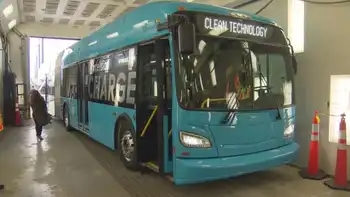
TransLink's first battery-electric buses are taking to the roads in Metro Vancouver as part of a pilot project to reduce emissions, joining other initiatives like electric school buses in B.C. that aim to cut pollution in transportation.

The first four zero-emission buses picked up commuters in Vancouver, Burnaby and  New Westminster on Wednesday. Six more are expected to be brought in, and similar launches like Edmonton's first electric bus are underway across Canada.

"With so many people taking transit in Vancouver today, electric buses will make a real difference," said Merran Smith, executive director of Clean Energy Canada, a think tank at Simon Fraser University, in a release.

According to TransLink, each bus is expected to reduce 100 tonnes of greenhouse gas emissions and save $40,000 in fuel costs per year compared to a conventional diesel bus.

"Buses already help tackle climate change by getting people out of cars, and Vancouver is ahead of the game with its electric trolleys," Smith said.

She added there is still more work to be done to get every bus off diesel, as seen with the TTC's battery-electric buses rollout in Toronto.

The buses will run along the No. 100 route connecting Vancouver and New Westminster. They recharge — it takes about five minutes — at new charging stations installed at both ends of the route while passengers load and unload or while the driver has a short break. 

Right now, more than half of TransLink's fleet currently operates with clean technology, offering insights alongside Toronto's large battery-electric fleet for other cities. 

In addition to the four new battery-electric buses, the fleet also includes hundreds of zero-emission electric trolley buses, compressed natural gas buses and hybrid diesel-electric buses, while cities like Montreal's first STM electric buses continue to expand adoption.

"Our iconic trolley buses have been running on electricity since 1948 and we're proud to integrate the first battery-electric buses to our fleet," said TransLink CEO Kevin Desmond in a press release.

TransLink has made it a goal to operate its fleet with 100 per cent renewable energy in all operations by 2050. Desmond says, the new buses are one step closer to meeting that goal.

The new battery-electric buses are part of a two-and-a-half year pilot project that looks at the performance, maintenance, and customer experience of making the switch to electric, complementing BC Hydro's vehicle-to-grid pilot initiative underway in the province.


Related News

View more

UK low-carbon electricity generation stalls in 2019

UK low-carbon electricity 2019 saw stalled growth as renewables rose slightly, wind expanded, nuclear output fell, coal hit record lows, and net-zero targets demand faster deployment to cut CO2 intensity below 100gCO2/kWh.


Key Points

Low-carbon sources supplied 54% of UK power in 2019, up just 1TWh; wind grew, nuclear fell, and coal dropped to 2%.

✅ Wind up 8TWh; nuclear down 9TWh amid outages

✅ Fossil fuels 43% of generation; coal at 2%

✅ Net-zero needs 15TWh per year added to 2030


The amount of electricity generated by low-carbon sources in the UK stalled in 2019, Carbon Brief analysis shows.

Low-carbon electricity output from wind, solar, nuclear, hydro and biomass rose by just 1 terawatt hour (TWh, less than 1%) in 2019. It represents the smallest annual increase in a decade, where annual growth averaged 9TWh. This growth will need to double in the 2020s to meet UK climate targets while replacing old nuclear plants as they retire.

Some 54% of UK electricity generation in 2019 came from low-carbon sources, including 37% from renewables and 20% from wind alone, underscoring wind's leading role in the power mix during key periods. A record-low 43% was from fossil fuels, with 41% from gas and just 2% from coal, also a record low. In 2010, fossil fuels generated 75% of the total.

Carbon Brief’s analysis of UK electricity generation in 2019 is based on figures from BM Reports and the Department for Business, Energy and Industrial Strategy (BEIS). See the methodology at the end for more on how the analysis was conducted.

The numbers differ from those published earlier in January by National Grid, which were for electricity supplied in Great Britain only (England, Wales and Scotland, but excluding Northern Ireland), including via imports from other countries.

Low-carbon low
In 2019, the UK became the first major economy to target net-zero greenhouse gas emissions by 2050, increasing the ambition of its legally binding Climate Change Act.

To date, the country has cut its emissions by around two-fifths since 1990, with almost all of its recent progress coming from the electricity sector.

Emissions from electricity generation have fallen rapidly in the decade since 2010 as coal power has been almost phased out and even gas output has declined. Fossil fuels have been displaced by falling demand and by renewables, such as wind, solar and biomass.

But Carbon Brief’s annual analysis of UK electricity generation shows progress stalled in 2019, with the output from low-carbon sources barely increasing compared to a year earlier.

The chart below shows low-carbon generation in each year since 2010 (grey bars) and the estimated level in 2019 (red). The pale grey bars show the estimated future output of existing low-carbon sources after old nuclear plants retire and the pale red bars show the amount of new generation needed to keep electricity sector emissions to less than 100 grammes of CO2 per kilowatt hour (gCO2/kWh), the UK’s nominal target for the sector.

 Annual electricity generation in the UK by fuel, terawatt hours, 2010-2019. Top panel: fuel by fuel. Bottom panel: cumulative total generation from all sources. Source: BEIS energy trends, BM Reports and Carbon Brief analysis. Chart by Carbon Brief using Highcharts.
As the chart shows, the UK will require significantly more low-carbon electricity over the next decade as part of meeting its legally binding climate goals.

The nominal 100gCO2/kWh target for 2030 was set in the context of the UK’s less ambitious goal of cutting emissions to 80% below 1990 levels by 2050. Now that the country is aiming to cut emissions to net-zero by 2050, that 100gCO2/kWh indicator is likely to be the bare minimum.

Even so, it would require a rapid step up in the pace of low-carbon expansion, compared to the increases seen over the past decade. On average, low-carbon generation has risen by 9TWh each year in the decade since 2010 – including a rise of just 1TWh in 2019.

Given scheduled nuclear retirements and rising demand expected by the Committee on Climate Change (CCC) – with some electrification of transport and heating – low-carbon generation would need to increase by 15TWh each year until 2030, just to meet the benchmark of 100gCO2/kWh.

For context, the 3.2 gigawatt (GW) Hinkley C new nuclear plant being built in Somerset will generate around 25TWh once completed around 2026. The world’s largest offshore windfarm, the 1.2GW Hornsea One scheme off the Yorkshire coast, will generate around 5TWh each year.

The new Conservative government is targeting 40GW of offshore wind by 2030, up from today’s figure of around 8GW. If policies are put in place to meet this goal, then it could keep power sector emissions below 100gCO2/kWh, depending on the actual performance of the windfarms built.

However, new onshore wind and solar, further new nuclear or other low-carbon generation, such as gas with carbon capture and storage (CCS), is likely to be needed if demand is higher than expected, or if the 100gCO2/kWh benchmark is too weak in the context of net-zero by 2050.

The CCC says it is “likely” to “reflect the need for more rapid deployment” of low-carbon towards net-zero emissions in its advice on the sixth UK carbon budget for 2033-2037, due in September.

Trading places
Looking more closely at UK electricity generation in 2019, Carbon Brief’s analysis shows why there was so little growth for low-carbon sources compared to the previous year.

There was another increase for wind power in 2019 (up 8TWh, 14%), with record wind generation as several large new windfarms were completed including the 1.2GW Hornsea One project in October and the 0.6GW Beatrice offshore windfarm in Q2 of 2019. But this was offset by a decline for nuclear (down 9TWh, 14%), due to ongoing outages for reactors at Hunterston in Scotland and Dungeness in Kent.

(Analysis of data held by trade organisation RenewableUK suggests some 0.6GW of onshore wind capacity also started operating in 2019, including the 0.2GW Dorenell scheme in Moray, Scotland.)

As a result of these movements, the UK’s windfarms overtook nuclear for the first time ever in 2019, becoming the country’s second-largest source of electricity generation, and earlier, wind and solar together surpassed nuclear in the UK as momentum built. This is shown in the figure below, with wind (green line, top panel) trading places with nuclear (purple) and gas (dark blue) down around 25% since 2010 but remaining the single-largest source.

 Annual electricity generation in the UK by fuel, terawatt hours, 2010-2019. Top panel: fuel by fuel. Bottom panel: cumulative total generation from all sources. Source: BEIS energy trends, BM Reports and Carbon Brief analysis. Chart by Carbon Brief using Highcharts.
The UK’s currently suspended nuclear plants are due to return to service in January and March, according to operator EDF, the French state-backed utility firm. However, as noted above, most of the UK’s nuclear fleet is set to retire during the 2020s, with only Sizewell B in Suffolk due to still be operating by 2030. Hunterston is scheduled to retire by 2023 and Dungeness by 2028.

Set against these losses, the UK has a pipeline of offshore windfarms, secured via “contracts for difference” with the government, at a series of auctions. The most recent auction, in September 2019, saw prices below £40 per megawatt hour – similar to current wholesale electricity prices.

However, the capacity contracted so far is not sufficient to meet the government’s target of 40GW by 2030, meaning further auctions – or some other policy mechanism – will be required.

Coal zero
As well as the switch between wind and nuclear, 2019 also saw coal fall below solar for the first time across a full year, echoing the 2016 moment when wind outgenerated coal across the UK, after it suffered another 60% reduction in electricity output. Just six coal plants remain in the UK, with Aberthaw B in Wales and Fiddlers Ferry in Cheshire closing in March.

Coal accounted for just 2% of UK generation in 2019, a record-low coal share since centralised electricity supplies started to operate in 1882. The fuel met 40% of UK needs as recently as 2012, but has plummeted thanks to falling demand, rising renewables, cheaper gas and higher CO2 prices.

The reduction in average coal generation hides the fact that the fuel is now often not required at all to meet the UK’s electricity needs. The chart below shows the number of days each year when coal output was zero in 2019 (red line) and the two previous years (blue).

 Cumulative number of days when UK electricity generation from renewable sources has been higher than that from fossil fuels. Source: BEIS energy trends, BM Reports and Carbon Brief analysis. Chart by Carbon Brief using Highcharts.
The 83 days in 2019 with zero coal generation amount to nearly a quarter of the year and include the record-breaking 18-day stretch without the fuel.

Great Britain has been running for a record TWO WEEKS without using coal to generate electricity – the first time this has happened since 1882.

The country’s grid has been coal-free for 45% of hours in 2019 so far.https://www.carbonbrief.org/countdown-to-2025-tracking-the-uk-coal-phase-out …

Coal generation was set for significant reductions around the world in 2019 – including a 20% reduction for the EU as a whole – according to analysis published by Carbon Brief in November.

Notably, overall UK electricity generation fell by another 9TWh in 2019 (3%), bringing the total decline to 58TWh since 2010. This is equivalent to more than twice the output from the Hinkley C scheme being built in Somerset. As Carbon Brief explained last year, falling demand has had a similar impact on electricity-sector CO2 emissions as the increase in output from renewables.

This is illustrated by the fact that the 9TWh reduction in overall generation translated into a 9TWh (6%) cut in fossil-fuel generation during 2019, with coal falling by 10TWh and gas rising marginally.

Increasingly renewable
As fossil-fuel output and overall generation have declined, the UK’s renewable sources of electricity have continued to increase. Their output has risen nearly five-fold in the past decade and their share of the UK total has increased from 7% in 2010 to 37% in 2019.

As a result, the UK’s increasingly renewable grid is seeing more minutes, hours and days during which the likes of wind, solar and biomass collectively outpace all fossil fuels put together, and on some days wind is the main source as well.

The chart below shows the number of days during each year when renewables generated more electricity than fossil fuels in 2019 (red line) and each of the previous four years (blue lines). In total, nearly two-fifths of days in 2019 crossed this threshold.

 Cumulative number of days when the UK has not generated any electricity from coal. Source: BEIS energy trends, BM Reports and Carbon Brief analysis. Chart by Carbon Brief using Highcharts.
There were also four months in 2019 when renewables generated more of the UK’s electricity than fossil fuels: March, August, September and December. The first ever such month came in September 2018 and more are certain to follow.

National Grid, which manages Great Britain’s high-voltage electricity transmission network, is aiming to be able to run the system without fossil fuels by 2025, at least for short periods. At present, it sometimes has to ask windfarm operators to switch off and gas plants to start running in order to keep the electricity grid stable.

Note that biomass accounted for 11% of UK electricity generation in 2019, nearly a third of the total from all renewables. Some two-thirds of the biomass output is from “plant biomass”, primarily wood pellets burnt at Lynemouth in Northumberland and the Drax plant in Yorkshire. The remainder was from an array of smaller sites based on landfill gas, sewage gas or anaerobic digestion.

The CCC says the UK should “move away” from large-scale biomass power plants, once existing subsidy contracts for Drax and Lynemouth expire in 2027.

Using biomass to generate electricity is not zero-carbon and in some circumstances could lead to higher emissions than from fossil fuels. Moreover, there are more valuable uses for the world’s limited supply of biomass feedstock, the CCC says, including carbon sequestration and hard-to-abate sectors with few alternatives.

Methodology
The figures in the article are from Carbon Brief analysis of data from BEIS Energy Trends chapter 5 and chapter 6, as well as from BM Reports. The figures from BM Reports are for electricity supplied to the grid in Great Britain only and are adjusted to include Northern Ireland.

In Carbon Brief’s analysis, the BM Reports numbers are also adjusted to account for electricity used by power plants on site and for generation by plants not connected to the high-voltage national grid. This includes many onshore windfarms, as well as industrial gas combined heat and power plants and those burning landfill gas, waste or sewage gas.

By design, the Carbon Brief analysis is intended to align as closely as possible to the official government figures on electricity generated in the UK, reported in BEIS Energy Trends table 5.1.

Briefly, the raw data for each fuel is in most cases adjusted with a multiplier, derived from the ratio between the reported BEIS numbers and unadjusted figures for previous quarters.

Carbon Brief’s method of analysis has been verified against published BEIS figures using “hindcasting”. This shows the estimates for total electricity generation from fossil fuels or renewables to have been within ±3% of the BEIS number in each quarter since Q4 2017. (Data before then is not sufficient to carry out the Carbon Brief analysis.)

For example, in the second quarter of 2019, a Carbon Brief hindcast estimates gas generation at 33.1TWh, whereas the published BEIS figure was 34.0TWh. Similarly, it produces an estimate of 27.4TWh for renewables, against a BEIS figure of 27.1TWh.

National Grid recently shared its own analysis for electricity in Great Britain during 2019 via its energy dashboard, which differs from Carbon Brief’s figures.


Related News

View more

Clocks are running slow across Europe because of an argument over who pays the electricity bill

European Grid Frequency Clock Slowdown has made appliance clocks run minutes behind as AC frequency drifts on the 50 Hz electricity grid, driven by a Kosovo-Serbia billing dispute and ENTSO-E monitored supply-demand imbalance.


Key Points

An EU-wide timing error where 50 Hz AC deviations slow appliance clocks due to Kosovo-Serbia grid imbalances.

✅ Clocks drifted up to six minutes across interconnected Europe

✅ Cause: unpaid power in N. Kosovo, contested by Serbia

✅ ENTSO-E reported 50 Hz deviations from supply-demand mismatch


Over the past couple of months, Europeans have noticed time slipping away from them. It’s not just their imaginations: all across the continent, clocks built into home appliances like ovens, microwaves, and coffee makers have been running up to six minutes slow. The unlikely cause? A dispute between Kosovo and Serbia over who pays the electricity bill.

To make sense of all this, you need to know that the clocks in many household devices use the frequency of electricity to keep time. Electric power is delivered to our homes in the form of an alternating current, where the direction of the flow of electricity switches back and forth many times a second. (How this system came to be established is complex, but the advantage is that it allows electricity to be transmitted efficiently.) In Europe, this frequency is 50 Hertz — meaning a current alternating of 50 times a second. In America, it’s 60 Hz, and during peak summer demand utilities often prepare for blackouts as heat drives loads higher.

Since the 1930s, manufacturers have taken advantage of this feature to keep time. Each clock needs a metronome — something with a consistent rhythm that helps space out each second — and an alternating current provides one, saving the cost of extra components. Customers simply set the time on their oven or microwave once, and the frequency keeps it precise.

At least, that’s the theory. But because this timekeeping method is reliant on electrical frequency, when the frequency changes, so do the clocks. That is what has been happening in Europe.

The news was announced this week by ENTSO-E, the agency that oversees the single, huge electricity grid connecting 25 European countries and which recently synchronized with Ukraine to bolster regional resilience. It said that variations in the frequency of the AC caused by imbalances between supply and demand on the grid have been messing with the clocks. The imbalance is itself caused by a political argument between Serbia and Kosovo. “This is a very sensitive dispute that materializes in the energy issues,” Susanne Nies, a spokesperson for ENTSO-E, told The Verge.

Essentially, after Kosovo declared independence from Serbia in 2008, there were long negotiations over custody of utilities like telecoms and electricity infrastructure. As part of the ongoing agreements (Serbia still does not recognize Kosovo as a sovereign state), four Serb-majority districts in the north of Kosovo stopped paying for electricity. Kosovo initially covered this by charging the rest of the country more, but last December, it decided it had had enough and stopped paying. This led to an imbalance: the Kosovan districts were still using electricity, but no one was paying to put it on the grid.

This might sound weird, but it’s because electricity grids work on a system of supply and demand, where surging consumption has even triggered a Nordic grid blockade in response to constrained flows. As Stewart Larque of the UK’s National Grid explains, you want to keep the same amount of electricity going onto the grid from power stations as the amount being taken off by homes and businesses. “Think of it like driving a car up a hill at a constant speed,” Larque told The Verge. “You need to carefully balance acceleration with gravity.” (The UK itself has not been affected by these variations because it runs its own grid.)


“THEY ARE FREE-RIDING ON THE SYSTEM.”

This balancing act is hugely complex and requires constant monitoring of supply and demand and communication between electricity companies across Europe, and growing cyber risks have spurred a renewed focus on protecting the U.S. power grid among operators worldwide. The dispute between Kosovo and Serbia, though, has put this system out of whack, as the two governments have been refusing to acknowledge what the other is doing.

“The Serbians [in Kosovo] have, according to our sources, not been paying for their electricity. So they are free-riding on the system,” says Nies.

The dispute came to a temporary resolution on Tuesday, when the Kosovan government stepped up to the plate and agreed to pay a fee of €1 million for the electricity used by the Serb-majority municipalities. “It is a temporary decision but as such saves our network functionality,” said Kosovo’s prime minister Ramush Haradinaj. In the longer term, though, a new agreement will need to be reached.

There have been rumors that the increase in demand from northern Kosovo was caused by cryptocurrency miners moving into the area to take advantage of the free electricity. But according to ENTSO-E, this is not the case. “It is absolutely unrelated to cryptocurrency,” Nies told The Verge. “There’s a lot of speculation about this, and it’s absolutely unrelated.” Representatives of Serbia’s power operator, EMS, refused to answer questions on this.

For now, “Kosovo is in balance again,” says Nies. “They are producing enough [electricity] to supply the population. The next step is to take the system back to normal, which will take several weeks.” In other words, time will return to normal for Europeans — if they remember to change their clocks, even as the U.S. power grid sees more blackouts than other developed nations.


Related News

View more

American Households Struggle with Sky-High Energy Bills During Extreme Summer Heat

US Summer Energy Bills Crisis is driven by record heatwaves, soaring electricity prices, AC cooling demand, energy poverty risks, and LIHEAP relief, straining low-income households, vulnerable seniors, and budgets amid volatile utilities and peak demand.


Key Points

Rising household energy costs from extreme heat, higher electricity prices, and AC demand, straining vulnerable families.

✅ Record heatwaves drive peak electricity and cooling loads

✅ Tiered rates and volatile markets inflate utility bills

✅ LIHEAP aid and cooling centers offer short-term relief


As the sweltering heat of summer continues to grip much of the United States, American households are grappling with a staggering rise in energy bills. The combination of record-breaking temperatures and rising electricity prices is placing an unprecedented financial strain on families, raising concerns about the long-term impact on household budgets and overall well-being.

Record Heat and Energy Consumption

This summer has witnessed some of the hottest temperatures on record across the country. With many regions experiencing prolonged heatwaves, the demand for air conditioning and cooling systems has surged amid unprecedented electricity demand across parts of the U.S. The increased use of these energy-intensive appliances has led to a sharp rise in electricity consumption, which, combined with elevated energy prices, has pushed household energy bills to new heights.

The situation is particularly dire for households that are already struggling financially. Many families are facing energy bills that are not only higher than usual but are reaching levels that are unsustainable, underscoring electricity struggles for thousands of families across the country. This has prompted concerns about the potential for energy poverty, where individuals are forced to make difficult choices between paying for essential services and covering other necessary expenses.

Impact on Low-Income and Vulnerable Households

Low-income households and vulnerable populations are disproportionately affected by these soaring energy costs. For many, the financial burden of high energy bills is compounded by energy insecurity during the pandemic and other economic pressures, such as rising food prices and stagnant wages. The strain of paying for electricity during extreme heat can lead to tough decisions, including cutting back on other essential needs like healthcare or education.

Moreover, the heat itself poses a serious health risk, particularly for the elderly, children, and individuals with pre-existing health conditions. High temperatures can exacerbate conditions such as cardiovascular and respiratory illnesses, making the need for reliable cooling even more critical. For those struggling to afford adequate cooling, the risk of heat-related illnesses and fatalities increases significantly.

Utilities and Energy Pricing

The sharp rise in energy bills can be attributed to several factors, including higher costs of electricity production and distribution. The ongoing transition to cleaner energy sources, while necessary for long-term environmental sustainability, has introduced short-term volatility in energy markets. Additionally, power-company supply chain crises and increased demand during peak summer months have contributed to higher prices.

Utilities are often criticized for their pricing structures, which can be complex and opaque. Some regions, including areas where California electricity bills soar under scrutiny, use tiered pricing models that charge higher rates as energy consumption increases. This can disproportionately impact households that need to use more energy during extreme heat, further exacerbating financial strain.

Government and Community Response

In response to the crisis, various government and community initiatives are being rolled out to provide relief. Federal and state programs aimed at assisting low-income households with energy costs are being expanded. These programs, such as the Low-Income Home Energy Assistance Program (LIHEAP), offer financial assistance to help with utility bills, but demand often outstrips available resources.

Local community organizations are also stepping in to offer support. Initiatives include distributing fans and portable air conditioners, providing temporary cooling centers, and offering financial assistance to help cover energy costs. These efforts are crucial in helping to mitigate the immediate impact of high energy bills on vulnerable households.

Long-Term Solutions and Sustainability

The current crisis highlights the need for long-term solutions to address both the causes and consequences of high energy costs. Investing in energy efficiency and renewable energy technologies can help reduce the overall demand for electricity and lower long-term costs. Improvements in building insulation, the adoption of energy-efficient appliances, and advancements in smart grid technologies to prevent summer power outages are all essential components of a sustainable energy future.

Furthermore, addressing income inequality and supporting economic stability are critical to ensuring that all households can manage their energy needs without facing financial hardship. Policymakers will need to consider a range of strategies, including financial support programs, regulatory reforms, and infrastructure investments, to create a more equitable and resilient energy system.

Conclusion

As American households endure the double burden of extreme summer heat and skyrocketing energy bills, the need for immediate relief and long-term solutions has never been clearer. The current crisis serves as a reminder of the broader challenges facing the nation’s energy system and the importance of addressing both short-term needs and long-term sustainability. By investing in efficient technologies, supporting vulnerable populations, and developing resilient infrastructure, the U.S. can work towards a future where energy costs are manageable, and everyone has access to the resources they need to stay safe and comfortable.


Related News

View more

Hydro One’s takeover of U.S. utility sparks customer backlash: ‘This is an incredibly bad idea’

Hydro One-Avista acquisition sparks Idaho regulatory scrutiny over foreign ownership, utility merger impacts, rate credits, and public interest, as FERC and FCC approvals advance and consumers question governance, service reliability, and long-term rate stability.


Key Points

A cross-border utility merger proposal with Idaho oversight, weighing foreign ownership, rates, and reliability.

✅ Idaho PUC review centers on public interest and rate impacts.

✅ FERC and FCC approvals granted; state decisions pending.

✅ Avista to retain name and Spokane HQ post-transaction.


“Please don’t sell us to Canada.” That refrain, or versions of it, is on full display at the Idaho Public Utilities Commission, which admittedly isn’t everyone’s go-to entertainment site. But it is vitally important for this reason: the first big test of the expansionist dreams of the politically tempest-tossed Hydro One, facing political risk as it navigates markets, rests with its successful acquisition of Avista Corp., provider of electric generation, transmission and distribution to retail customers spread from Oregon to Washington to Montana and Idaho and up into Alaska.

The proposed deal — announced last summer, but not yet consummated — marks the first time the publicly traded Hydro One has embarked upon the acquisition of a U.S. utility. And if Idahoans spread from Boise to Coeur d’Alene to Hayden are any indication, they are not at all happy with the idea of foreign ownership. Here’s Lisa McCumber, resident of Hayden: “I am stating my objection to this outrageous merger/takeover. Hydro One charges excessive fees to the people it provides for, this is a monopoly beyond even what we are used to. I, in no way, support or as a customer, agree with the merger of this multi-billion-dollar, foreign, company.”

#google#

Or here’s Debra Bentley from Coeur d’Alene: “Fewer things have more control over a nation than its power source. In an age where we are desperately trying to bring American companies back home and ‘Buy American’ is somewhat of a battle cry, how is it even possible that it would or could be allowed for this vital necessity … to be controlled by a foreign entity?”

Or here’s Spencer Hutchings from Sagle: “This is an incredibly bad idea.”

There are legion of similar emails from concerned consumers, and the Maine transmission line debate offers a parallel in public opposition.

The rationale for the deal? Last fall Hydro One CEO Mayo Schmidt testified before the Idaho commission, which regulates all gas, water and electricity providers in the state. “Hydro One is a pure-play transmission and distribution utility located solely within Ontario,” Schmidt told commissioners. “It seeks diversification both in terms of jurisdictions and service areas. The proposed Transaction with Avista achieves both goals by expanding Hydro One into the U.S. Pacific Northwest and expanding its operations to natural gas distribution and electric generation. The proposed Transaction with Avista will deliver the increased scale and benefits that come from being a larger player in the utility industry.”

Translation: now that it is a publicly traded entity, Hydro needs to demonstrate a growth curve to the investment community. The value to you and me? Arguable. This is a transaction framed as a benefit to shareholders, one that won’t cause harm to customers. Premier Kathleen Wynne is feeling the pain of selling off control of an essential asset. In his testimony to the commission, Schmidt noted that the Avista acquisition would take the province’s Hydro ownership to under 45 per cent. (The Electricity Act technically prevents the sale of shares that would take the government’s ownership position below 40 per cent, though acquisitions appear to allow further dilution. )

Stratospheric compensation, bench-marked against other chief executives who enjoy similarly outsized rewards, is part of this game. I have written about Schmidt’s unconscionable compensation before, but that was when he was making a relatively modest $4 million. Relative, that is, to his $6.2 million in 2017 compensation ($3.5 million of that is in the form of share based awards).

Should the acquisition of Avista be approved, amendments to the CIC, or change in control agreements, for certain named Avista executive officers will allow them to voluntarily terminate their employment without “good reason.” That includes Scott Morris, the company’s CEO, who will exit with severance of $6.9 million (U.S.) and additional benefits taking the total to a potential $15.7 million.

Back to the deal: cost savings over time could be achieved, Schmidt continued in his testimony, though he was unable to quantify those. The integration between the two companies, he promised, will be “seamless.” Retail customers in Idaho, Washington and Oregon would benefit from proposed “Rate Credits” equalling an estimated $15.8 million across five years, even as Hydro One seeks to redesign its bills in Ontario. Idahoans would see a one per cent rate decrease through that period.

While Avista would become a wholly owned Hydro subsidiary, it would retain its name, and its headquarters in Spokane, Wash. In the case of Idaho specifically, a proposed settlement in April, subject to final approval by the commission, stipulates agreements on everything from staffing to governance to community contributions.

Will that meet the test? It’s up to the commission to determine whether the proposed transaction will keep a lid on rates and is “consistent with the public interest.” Hydro One is hoping for a decision from regulatory agencies in all the named states by mid-August and a closing date by the end of September, though U.S. regulators can ultimately determine the fate of such deals. The Federal Energy Regulatory Commission granted its approval in January, followed last week by the Federal Communications Commission. Washington and Alaska have reached settlement agreements. These too are pending final state approvals.

The $5.3-billion deal (or $6.7 billion Canadian) is subject to ongoing hearings in Idaho, and elsewhere rate hikes face opposition as hearings begin. Members of the public are encouraged to have their say. The public comment deadline is June 27.


Related News

View more

Garbage Truck Crash Knocks Down Power Poles in Little Haiti

Little Haiti Garbage Truck Power Outage in Miami after mechanical arms snagged power lines, snapping power poles; FPL crews, police, and businesses faced traffic delays, safety risks, and rapid restoration efforts across the neighborhood.


Key Points

A Miami incident where a garbage truck snagged power lines, toppling poles and causing outages and traffic delays.

✅ Mechanical arms caught overhead lines; three power poles snapped

✅ FPL dispatched, police directed traffic; restoration prioritized

✅ Dozens of businesses affected; afternoon rush hour congestion


On January 16, 2025, a significant incident unfolded in Miami's Little Haiti neighborhood when a garbage truck collided with power lines, causing three power poles to collapse and resulting in widespread power outages and traffic disruptions.

Incident Details

Around 1:30 p.m., a garbage truck traveling west on Northeast 82nd Street toward Interstate 95 became entangled with overhead power lines. The truck's mechanical arms caught the lines, leading to the snapping of three power poles and plunging the area into darkness, a scenario echoed by urban incidents like a manhole fire that left thousands without power. Witnesses reported a loud boom followed by an immediate power outage. One local business owner described the event, stating, "There was a loud boom, and suddenly the power went out."

Impact on the Community

The incident caused significant disruptions in the Little Haiti area. At least a dozen businesses were affected by the power outage, and in wider Florida events restoration can take weeks depending on damage, leading to operational halts and potential financial losses. The timing of the crash, during the afternoon rush hour, exacerbated traffic congestion as commuters were forced to navigate through the area, and similar disruptions occur when strong winds knock out power, further complicating the situation.

Response and Recovery Efforts

In response to the incident, Miami police directed traffic to alleviate congestion and ensure public safety. Florida Power & Light (FPL) crews, known for their major outage response, were promptly dispatched to the scene to assess the damage and begin restoration efforts. The priority was to safely remove the damaged power poles and restore electricity to the affected area. FPL's swift action was crucial in minimizing the duration of the power outage and restoring normalcy to the community.

Safety Considerations

This incident underscores the importance of safety protocols for vehicles operating in areas with overhead power lines. Garbage trucks, due to their design and operational mechanisms, are particularly susceptible to such accidents, and in broader disasters some regions require a power grid rebuild to recover, highlighting the stakes. It is imperative for operators to be vigilant and adhere to safety guidelines to prevent similar occurrences.

Community Resilience

Despite the challenges posed by the incident, the Little Haiti community demonstrated resilience. Local businesses and residents cooperated with authorities, while utilities elsewhere have restored power to thousands after major events, and the prompt response from emergency services highlighted the community's strength in the face of adversity.


Related News

View more

Sign Up for Electricity Forum’s Newsletter

Stay informed with our FREE Newsletter — get the latest news, breakthrough technologies, and expert insights, delivered straight to your inbox.

Electricity Today T&D Magazine Subscribe for FREE

Stay informed with the latest T&D policies and technologies.
  • Timely insights from industry experts
  • Practical solutions T&D engineers
  • Free access to every issue

Live Online & In-person Group Training

Advantages To Instructor-Led Training – Instructor-Led Course, Customized Training, Multiple Locations, Economical, CEU Credits, Course Discounts.

Request For Quotation

Whether you would prefer Live Online or In-Person instruction, our electrical training courses can be tailored to meet your company's specific requirements and delivered to your employees in one location or at various locations.