Wind energy — too much of a good thing

By GLG News


Arc Flash Training CSA Z462 - Electrical Safety Essentials

Our customized live online or in‑person group training can be delivered to your staff at your location.

  • Live Online
  • 6 hours Instructor-led
  • Group Training Available
Regular Price:
$249
Coupon Price:
$199
Reserve Your Seat Today
A surfeit of wind energy is pushing down the price of all electricity.

The real time price of electricity in West Texas, where almost all generation is wind, was negative for 23% of April. The negative prices spilled over to the rest of Texas for about 1% of the month. This may be the future of the electric industry, with negative prices for a substantial amount of time each month.

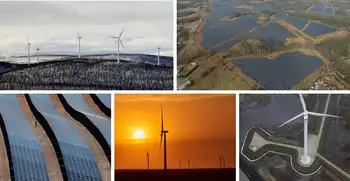
Various government programs are promoting renewable energy production schemes, such as wind machines, solar cells, and geothermal. These schemes include:

• Tax Credits — Developers receive a discount on their income taxes for investment in renewable energy projects. The tax credits can be based on the amount invested in the project or in the amount of energy produced by the project.

• Renewable Portfolio Standards (RPS) — States require their utilities to produce a stated fraction of their electricity using various types of renewable energy. The definition of utility varies, sometimes including municipally owned utilities, cooperatively owned utilities, marketers, and consumers who produce their own electricity. The definition of renewable varies, sometimes including nuclear, conventional hydro, trash burners, etc.

RPS generally includes a provision for a Renewable Energy Credit (REC) where a utility with a surplus of renewable can sell their compliance to others with a shortage. Some states value one form of renewable at multiples of other forms of renewable, such that RECs may not be fungible across state lines.

The effect of these government programs is a surfeit of renewable energy projects, especially wind projects. Since electricity is fungible, the surfeit of renewable energy projects is creating a surplus of electricity capacity, and sometimes a surplus of the actual production of electricity. Since electricity cannot be easily stored, the surplus can cause operating problems and is driving down the market price for electricity in the competitive markets such as ERCOT, the Electricity Reliability Council Of Texas, which operates the electricity facilities in most of Texas.

ERCOT has identified four different market areas based on the likelihood of transmission constraints between these market areas. The smallest market area is the West market area, which is dominated by wind generation. The capacity of wind generators in the West market area is so great that they occasionally swamp the transmission lines connecting the West market area with the rest of ERCOT. During such times, ERCOT calls upon the generators in the West market area to reduce generation, essentially to dump wind.

Until recently the ERCOT procedure was to actually tell generators in the West market area to dump wind. The wind generators apparently were unhappy with the command and control attitude of ERCOT and sought an economic approach. The current ERCOT approach allows generators in the West market area to bid for access to the transmission lines connecting the West market area to the rest of ERCOT. At least that was effectively the situation for 23% of the time in April 2009. During 664 of the quarter hour periods in April, the price for generation in the West market area was less than zero, with generators paying for the right to dump electricity into the grid. During 28 of those quarter hour periods the negative prices spilled over to other parts of ERCOT.

Renewable energy projects are able to bid negative prices due to the substantial revenue streams they obtain from sources other than ERCOT. A close analogy exists in another renewable energy market, the burning of trash in incinerators to make electricity.

Some incinerators do not have a sufficient volume of trash to produce all of the electricity for which they might be under contractual obligation to produce. The incinerators at such time will buy fossil fuels, such as coal, oil, or natural gas. As much as possible, the incinerators will instead burn trash, charging the trash hauler a tipping fee. Thus, the incinerators will see their fuel cost go from positive to negative depending upon the abundance of trash.

The trash hauler is willing to pay the tipping fee to the incinerator as opposed to the higher cost of owning a sanitary land fill or paying a higher tipping feel at an independently owned land fill. The trash hauler would prefer to be paid by the incinerator for the fuel provided by the trash hauler, but is able to afford the tipping fee because the trash hauler has other sources of revenue in the form of pickup fees. Similarly, renewable energy projects would prefer to be paid for their electricity but can afford to pay for the right to dump their electricity onto ERCOT since they have other sources of revenue.

The migration of extreme electricity prices from one region to another region has been seen in the past. While the ERCOT example is the spread of low prices from the West market area to the rest of ERCOT, the West Coast of North America provided the opposite example in 2000/2001.

The high prices faced by California were passed on by the market to Oregon, Washington, and Canada. Consumers in that area responded, most famously by shutting down aluminum smelters to sell their electrical rights into the California market. This led to higher world prices of aluminum ingots and to higher electricity prices in Venezuela. The electricity supply agreements to the smelters in Venezuela had net back pricing, with the price of electricity determined by the price the smelters received for their ingots.

Related News
Imported coal volumes up 17% during Apr-Oct as domestic supplies shrink

India Thermal Power Coal Imports surged 17.6% as CEA-monitored plants offset weaker CIL and SCCL supplies, driven by Saubhagya-led electricity demand, regional power deficits, and varied consumption across Uttar Pradesh, Bihar, Maharashtra, and Gujarat.


Key Points

Fuel volumes imported for Indian thermal plants, tracked by CEA, reflecting shifts in CIL/SCCL supply, demand, and regional power deficits.

✅ Imports up 17.6% as domestic CIL/SCCL deliveries lag targets

✅ Saubhagya-driven demand lifts generation in key beneficiary states

✅ Industrial slowdowns cut usage in Maharashtra, Tamil Nadu, Gujarat


The receipt of imported coal by thermal power plants, where plant load factors have risen, has shot up by 17.6 per cent during April-October. The coal import volumes refer to the power plants monitored by the Central Electricity Authority (CEA), and come amid moves to ration coal supplies as electricity demand surges, a power update report from CARE Ratings showed.

Imports escalated as domestic supplies by Coal India Ltd (CIL) and another state run producer- Singareni Collieries Company Ltd (SCCL) dipped in the period, after earlier shortages that have since eased in later months. Rate of supplies by the two coal companies to the CEA monitored power stations stood at 80.4 per cent, indicating a shortfall of 19.6 per cent against the allocated quantity.

According to the study by CARE Ratings, total coal supplied by CIL and SCCL to the power sector stood at 315.9 million tonnes (mt) during April-October as against 328.5 mt in the comparable period of last fiscal year.

The study noted that growth in power generation during the April-October 2019, with India now the third-largest electricity producer globally, was on account of higher demand from Pradhan Mantri Sahaj Bijli Har Ghar Yojana or Saubhagya Scheme beneficiary states. Providing connection to households in order to achieve 100% per cent electrification has in part helped the sector avert de-growth, as part of efforts to rewire Indian electricity and expand access.

Large states namely Uttar Pradesh, Bihar, Punjab, West Bengal and Rajasthan have recorded over five per cent growth in consumption of power. These states along with Odisha, Madhya Pradesh and Assam accounted for 75 per cent of the beneficiaries under the Saubhagya Scheme (Household Electrification Scheme). The ongoing economic downturn has led to a sharp fall in electricity demand from industrialised states. Maharashtra, which is also the largest power consuming state in India, recorded a decline in consumption of 5.6 per cent.

Other states namely Tamil Nadu, Telangana, Gujarat and Odisha too recorded fall in power consumed, echoing global dips in daily electricity demand seen later during the pandemic. These states house large clusters of mining, automobile, cement and other manufacturing industries, and a decline in these sectors led to fall in demand for power across these states. - The demand-supply gap or power deficit has remained at 0.6 per cent during the April-October 2019. North-East reported 4.8 per cent of power deficit followed by Northern Region at 1.3 per cent. Within Northern Region, Jammu & Kashmir and Uttar Pradesh accounted for 65 per cent and 30 per cent respectively of the regions power supply deficit.


Related News

View more

TCS Partners with Schneider Electric Marathon de Paris to Boost AI and Technology

TCS AI Partnership Paris Marathon integrates predictive analytics, digital twin simulations, real-time runner tracking, and sustainability solutions to elevate logistics, athlete performance, and immersive spectator engagement across the Schneider Electric Marathon de Paris ecosystem.


Key Points

AI-driven TCS partnership enhancing Paris logistics, performance, engagement, and sustainability for three years.

✅ Predictive analytics and digital twins optimize race-day ops

✅ Real-time runner tracking and health insights

✅ Sustainable resource management and waste reduction


Tata Consultancy Services (TCS) has officially become the AI & Technology Partner for the Schneider Electric Marathon de Paris, marking the start of a three-year collaboration with one of the world’s most prestigious running events. This partnership, announced on April 1, 2025, aims to revolutionize the marathon experience by integrating cutting-edge technology, artificial intelligence (AI), and data analytics, and modern AI data centers to power scalable capabilities, enhancing both the runner's journey and the spectator experience.

The Schneider Electric Marathon de Paris, which attracts over 55,000 runners from across the globe, is a renowned event that not only challenges athletes but also captivates a worldwide audience. As the Official AI & Technology Partner, TCS is set to bring its deep expertise in AI, digital innovation, and data-driven insights to this iconic event, drawing on adjacent domains such as substation automation training to strengthen operations. With more than 30 years of presence in France and its significant partnerships with French corporations, TCS is uniquely positioned to merge its global technology capabilities with local knowledge, thus adding immense value to this prestigious marathon.

The collaboration will primarily focus on enhancing the race logistics, improving athlete performance, and creating a personalized experience for both runners and spectators. Using advanced AI tools, predictive analytics, and digital twin technologies, TCS will streamline various aspects of the event. For example, AI-powered predictive models, reflecting progress recognized by European electricity prediction specialists in forecasting, will be used to track and monitor runners in real-time, providing insights into their performance and well-being during the race. Additionally, the implementation of digital twin technology will enable TCS to create accurate virtual models of the event, improving logistics and supporting better decision-making.

One of the key goals of the partnership is to improve the sustainability of the marathon. By utilizing advanced AI solutions, including AI for energy savings approaches, TCS will help optimize race-day operations, ensuring efficient management of resources, reducing waste, and minimizing environmental impact. This aligns with the growing trend of incorporating sustainability into large-scale events, ensuring that such iconic marathons not only provide an exceptional experience for participants but also contribute to global environmental goals.

TCS’s PacePort™ innovation hub in Paris will play a pivotal role in the collaboration. This innovation center will serve as the testing ground for new AI-powered solutions and tools aimed at improving runner performance and creating a more engaging race experience. Early priorities for the project include the development of personalized AI-based training programs for runners, real-time tracking systems for athlete health monitoring, and advanced analytics to support better training and recovery strategies, drawing on insights from EU smart meter analytics to inform personalization.

Additionally, TCS will introduce new technologies to enhance spectator engagement. Digital experiences, such as virtual race tracking and immersive content, will bring spectators closer to the event, even if they are not physically present at the marathon. This will allow fans worldwide to engage with the race in more interactive ways, enhancing the global reach and excitement surrounding the event.

TCS’s role in the Schneider Electric Marathon de Paris is part of its broader strategy to leverage technology in the realm of sports. The company already supports several major global marathons, including those in New York, London, where projects like the London electricity tunnel showcase infrastructure innovation, and Mumbai, contributing to their operational success and social impact. In fact, marathons supported by TCS raised nearly $280 million for charitable causes in 2024 alone, demonstrating the company’s commitment to blending innovation with social responsibility.

The strategic partnership with the Paris marathon also underscores TCS’s continued commitment to its French operations, and aligns with Schneider Electric’s Notre Dame restoration initiatives that highlight local impact, reinforcing its role as a leader in AI and digital technology. Through this collaboration, TCS aims to not only support the marathon’s logistical and technological needs but also to contribute to the broader development of digital sports experiences.

This partnership promises to deliver a more dynamic, sustainable, and engaging marathon experience, benefiting runners, spectators, and the broader event ecosystem. With TCS’s cutting-edge technology and commitment to enhancing the marathon, the Schneider Electric Marathon de Paris is poised to set new standards for global sports events, blending athletic performance with digital innovation in unprecedented ways.


Related News

View more

Failed PG&E power line blamed for Drum fire off Hwy 246 last June

PG&E Drum Fire Cause identified as a power line failure in Santa Barbara County, with arcing electricity igniting vegetation near Buellton on Drum Canyon Road; 696 acres burned as investigators and CPUC review PG&E safety.


Key Points

A failed PG&E power line sparked the 696-acre Drum Fire near Buellton; the utility is conducting its own probe.

✅ Power line failed between poles, arcing ignited vegetation.

✅ 696 acres burned; no structures damaged or injuries.

✅ PG&E filed CPUC incident report; ongoing investigation.


A downed Pacific Gas and Electric Co. power line was the cause of the Drum fire that broke out June 14 on Drum Canyon Road northwest of Buellton, a reminder that a transformer explosion can also spark multiple fires, the Santa Barbara County Fire Department announced Thursday.

The fire broke out about 12:50 p.m. north of Highway 246 and burned about 696 acres of wildland before firefighters brought it under control, although no structures were damaged or mass outages like the Los Angeles power outage occurred, according to an incident summary.

A team of investigators pinpointed the official cause as a power line that failed between two utility poles and fell to the ground, and as downed line safety tips emphasize, arcing electricity ignited the surrounding vegetation, said County Fire Department spokesman Capt. Daniel Bertucelli.

In response, a PG&E spokesman said the utility is conducting its own investigation and does not have access to whatever data investigators used, and, as the ATCO regulatory penalty illustrates, such matters can draw significant oversight, but he noted the company filed an electric incident report on the wire with the California Public Utilities Commission on June 14.

"We are grateful to the first responders who fought the 2020 Drum fire in Santa Barbara County and helped make sure that there were no injuries or fatalities, outcomes not always seen in copper theft incidents, and no reports of structures damaged or burned," PG&E spokesman Mark Mesesan said.

"While we are continuing to conduct our own investigation into the events that led to the Drum fire, and as the Site C watchdog inquiry shows, oversight bodies can seek more transparency, PG&E does not have access to the Santa Barbara County Fire Department's report."

He said PG&E remains focused on reducing wildfire risk across its service area while limiting the scope and duration of public safety power shutoffs, including strategies like line-burying decisions adopted by other utilities, and that the safety of customers and communities it serves are its most important responsibility.


Related News

View more

Rio Tinto Completes Largest Off-Grid Solar Plant in Canada's Northwest Territories

Rio Tinto Off-Grid Solar Power Plant showcases renewable energy at the Diavik Diamond Mine in Canada's Northwest Territories, cutting diesel use, lowering carbon emissions, and boosting remote mining resilience with advanced photovoltaic technology.


Key Points

A remote solar PV plant at Diavik mine supplying clean power while cutting diesel use, carbon emissions, and costs.

✅ Largest off-grid solar in Northwest Territories

✅ Replaces diesel generators during peak solar hours

✅ Enhances sustainability and lowers operating costs


In a significant step towards sustainable mining practices, Rio Tinto has completed the largest off-grid solar power plant in Canada’s Northwest Territories. This groundbreaking achievement not only highlights the company's commitment to renewable energy, as Canada nears 5 GW of solar capacity nationwide, but also sets a new standard for the mining industry in remote and off-grid locations.

Located in the remote Diavik Diamond Mine, approximately 220 kilometers south of the Arctic Circle, Rio Tinto's off-grid solar power plant represents a technological feat in harnessing renewable energy in challenging environments. The plant is designed to reduce reliance on diesel fuel, traditionally used to power the mine's operations, and mitigate carbon emissions associated with mining activities.

The decision to build the solar power plant aligns with Rio Tinto's broader sustainability goals and commitment to reducing its environmental footprint. By integrating renewable energy sources like solar power, a strategy that renewable developers say leads to better, more resilient projects, the company aims to enhance energy efficiency, lower operational costs, and contribute to global efforts to combat climate change.

The Diavik Diamond Mine, jointly owned by Rio Tinto and Dominion Diamond Mines, operates in a remote region where access to traditional energy infrastructure is limited, and where, despite lagging solar demand in Canada, off-grid solutions are increasingly vital for reliability. Historically, diesel generators have been the primary source of power for the mine's operations, posing logistical challenges and environmental impacts due to fuel transportation and combustion.

Rio Tinto's investment in the off-grid solar power plant addresses these challenges by leveraging abundant sunlight in the Northwest Territories to generate clean electricity directly at the mine site. The solar array, equipped with advanced photovoltaic technology, which mirrors deployments such as Arvato's first solar plant in other sectors, is capable of producing a significant portion of the mine's electricity needs during peak solar hours, reducing reliance on diesel generators and lowering overall carbon emissions.

Moreover, the completion of the largest off-grid solar power plant in Canada's Northwest Territories underscores the feasibility and scalability of renewable energy solutions, from rooftop arrays like Edmonton's largest rooftop solar to off-grid systems in remote and resource-intensive industries like mining. The success of this project serves as a model for other mining companies seeking to enhance sustainability practices and operational resilience in challenging geographical locations.

Beyond environmental benefits, Rio Tinto's initiative is expected to have positive economic and social impacts on the local community. By reducing diesel consumption, the company mitigates air pollution and noise levels associated with mining operations, improving environmental quality and contributing to the well-being of nearby residents and wildlife.

Looking ahead, Rio Tinto's investment in renewable energy at the Diavik Diamond Mine sets a precedent for responsible resource development and sustainable mining practices in Canada, where solar growth in Alberta is accelerating, and globally. As the mining industry continues to evolve, integrating renewable energy solutions like off-grid solar power plants will play a crucial role in achieving long-term environmental sustainability and operational efficiency.

In conclusion, Rio Tinto's completion of the largest off-grid solar power plant in Canada's Northwest Territories marks a significant milestone in the mining industry's transition towards renewable energy. By harnessing solar power to reduce reliance on diesel generators, the company not only improves operational efficiency and environmental stewardship but also adds to momentum from corporate power purchase agreements like RBC's Alberta solar deal, setting a positive example for sustainable development in remote regions. As global demand for responsible mining practices grows, initiatives like Rio Tinto's off-grid solar project demonstrate the potential of renewable energy to drive positive change in resource-intensive industries.


Related News

View more

COVID-19 pandemic zaps electricity usage in Ontario as people stay home

Ontario Electricity Demand 2020 shows a rare decline amid COVID-19, with higher residential peak load, lower commercial usage, hot-weather air conditioning, nuclear baseload constraints, and smart meter data shaping grid operations and forecasting.


Key Points

It refers to 2020 power use in Ontario: overall demand fell, while residential peaks rose and commercial loads dropped.

✅ Peak load shifted to homes; commercial usage declined.

✅ Hot summers raised peaks; overall annual demand still fell.

✅ Smart meters aid forecasting; grid must balance nuclear baseload.


Demand for electricity in Ontario last year fell to levels rarely seen in decades amid shifts in usage patterns caused by pandemic measures, with Ottawa’s electricity consumption dropping notably, new data show.

The decline came despite a hot summer that had people rushing to crank up the air conditioning at home, the province’s power management agency said, even as the government offered electricity relief to families and small businesses.

“We do have this very interesting shift in who’s using the energy,” said Chuck Farmer, senior director of power system planning with the Independent Electricity System Operator.

“Residential users are using more electricity at home than we thought they would and the commercial consumers are using less.”

The onset of the pandemic last March prompted stay-home orders, businesses to close, and a shuttering of live sports, entertainment and dining out. Social distancing and ongoing restrictions, even as the first wave ebbed and some measures eased, nevertheless persisted and kept many people home as summer took hold and morphed into winter, while the province prepared to extend disconnect moratoriums for residential customers.

System operator data show peak electricity demand rose during a hot summer spell to 24,446 megawatts _ the highest since 2013. Overall, however, Ontario electricity demand last year was the second lowest since 1988, the operator said.

In all, Ontario used 132.2 terawatt-hours of power in 2020, a decline of 2.9 per cent from 2019.

With more people at home during the lockdown, winter residential peak demand has climbed 13 per cent above pre-pandemic levels, even as Hydro One made no cut in peak rates for self-isolating customers, while summer peak usage was up 19 per cent.

“The peaks are getting higher than we would normally expect them to be and this was caused by residential customers _ they’re home when you wouldn’t expect them to be home,” Farmer said.

Matching supply and demand _ a key task of the system operator _ is critical to meeting peak usage and ensuring a stable grid, and the operator has contingency plans with some key staff locked down at work sites to maintain operations during COVID-19, because electricity cannot be stored easily. It is also difficult to quickly raise or lower the output from nuclear-powered generators, which account for the bulk of electricity in the province, as demand fluctuates.

READ MORE: Ontario government extends off-peak electricity rates to Feb. 22

Life patterns have long impacted overall usage. For example, demand used to typically climb around 10 p.m. each night as people tuned into national television newscasts. Livestreaming has flattened that bump, while more energy-efficient lighting led to a drop in provincial demand over the holiday season.

The pandemic has now prompted further intra-day shifts in usage. Fewer people are getting up in the morning and powering up at home before powering down and rushing off to work or school. The summer saw more use of air conditioners earlier than normal after-work patterns.

Weather has always been a key driver of demand for power, accounting for example for the record 27,005 megawatts of usage set on a brutally hot Aug. 1, 2006. Similarly, a mild winter and summer led to an overall power usage drop in 2017.

Still, the profound social changes prompted by the COVID-19 pandemic _ and whether some will be permanent _ have complicated demand forecasting.

“Work patterns used to be much more predictable,” the agency said. “The pandemic has now added another element of variability for electricity demand forecasting.”

Some employees sent home to work have returned to their offices and other workplaces, and many others are likely do so once the pandemic recedes. However, some larger companies have indicated that working from home will be long term.

“Companies like Facebook and Shopify have already stated their intention to make work from home a more permanent arrangement,” the operator said. “This is something our near-term forecasters would take into account when preparing for daily operation of the grid.”

Aggregated data from better smart meters, which show power usage throughout the day, is one method of improving forecasting accuracy, the operator said.


Related News

View more

British Columbians can access more in EV charger rebates

B.C. EV Charging Rebates boost CleanBC incentives as NRCan and ZEVIP funding covers up to 75% of Level 2 and DC fast-charger purchase and installation costs for homes, workplaces, condos, apartments, and fleet operators.


Key Points

Incentives in B.C. cover up to 75% of Level 2 and DC fast charger costs for homes, workplaces, and fleets.

✅ Up to 75% back; Level 2 max $5,000; DC fast max $75,000 for fleets.

✅ Eligible sites: homes, workplaces, condos, apartments, fleet depots.

✅ Funded by CleanBC with NRCan ZEVIP; time-limited top-up.


The Province and Natural Resources Canada (NRCan) are making it more affordable for people to install electric vehicle (EV) charging stations in their homes, businesses and communities, as EV demand ramps up across the province.

B.C. residents, businesses and municipalities can receive higher rebates for EV charging stations through the CleanBC Go Electric EV Charger Rebate and Fleets programs. For a limited time, funding will cover as much as 75% of eligible purchase and installation costs for EV charging stations, which is an increase from the previous 50% coverage.

“With electric vehicles representing 13% of all new light-duty vehicles sold in B.C. last year, our province has the strongest adoption rate of electric vehicles in Canada. We’re positioning ourselves to become leaders in the EV industry,” said Bruce Ralston, B.C.’s Minister of Energy, Mines and Low Carbon Innovation. “We’re working with our federal partners to increase rebates for home, workplace and fleet charging, and making it easier and more affordable for people to make the switch to electric vehicles.”

With a $2-million investment through NRCan’s Zero-Emission Vehicle Infrastructure Program (ZEVIP) to top up the Province’s EV Charger Rebate program, workplaces, condominiums and apartments can get a rebate for a Level 2 charging station for as much as 75% of purchase and installation costs to a maximum of $5,000. As many as 360 EV chargers will be installed through the program.

“We’re making electric vehicles more affordable and charging more accessible where Canadians live, work and play,” said Jonathan Wilkinson, federal Minister of Natural Resources. “Investing in more EV chargers, like the ones announced today in British Columbia, will put more Canadians in the driver’s seat on the road to a net-zero future and help achieve our climate goals.”

Through the CleanBC Go Electric Fleets program and in support of B.C. businesses that own and operate fleet vehicles, NRCan has invested $1.54 million through ZEVIP to top up rebates. Fleet operators can get combined rebates from NRCan and the Province for a Level 2 charging station as much as 75% to a maximum of $5,000 of purchase and installation costs, and 75% to a maximum of $75,000 for a direct-current, fast-charging station. As many as 450 EV chargers will be installed through the program.

CleanBC is a pathway to a more prosperous, balanced and sustainable future. It supports government’s commitment to climate action to meet B.C.’s emission targets and build a cleaner, stronger economy.

Quick Facts:

  • A direct-current fast charger on the BC Electric Highway allows an EV to get 100-300 kilometres of range from 30 minutes of charging.
  • Faster chargers, which give more range in less time, are coming out every year.
  • A Level 2 charger allows an EV to get approximately 30 kilometres of range per hour of charging.
  • It uses approximately the same voltage as a clothes dryer and is usually installed in homes, workplaces or for fleets to get a faster charge than a regular outlet, or in public places where people might park for a longer time.
  • A key CleanBC action is to strengthen the Zero-Emission Vehicles Act to require light-duty vehicle sales to be 26% zero-emission vehicles (ZEVs) by 2026, 90% by 2030 and 100% by 2035, five years ahead of the original target.
  • At the end of 2021, B.C. had more than 3,000 public EV charging stations and almost 80,000 registered ZEVs.

Learn More:

To learn more about home and workplace EV charging-station rebates, eligibility and application processes, visit: https://goelectricbc.gov.bc.ca/   

To learn more about the Fleets program, visit: https://pluginbc.ca/go-electric-fleets/    

To learn more about Natural Resources Canada’s Zero-Emission Vehicle Infrastructure Program, visit:
https://www.nrcan.gc.ca/energy-efficiency/transportation-alternative-fuels/zero-emission-vehicle-infrastructure-program/21876


Related News

View more

Sign Up for Electricity Forum’s Newsletter

Stay informed with our FREE Newsletter — get the latest news, breakthrough technologies, and expert insights, delivered straight to your inbox.

Electricity Today T&D Magazine Subscribe for FREE

Stay informed with the latest T&D policies and technologies.
  • Timely insights from industry experts
  • Practical solutions T&D engineers
  • Free access to every issue

Live Online & In-person Group Training

Advantages To Instructor-Led Training – Instructor-Led Course, Customized Training, Multiple Locations, Economical, CEU Credits, Course Discounts.

Request For Quotation

Whether you would prefer Live Online or In-Person instruction, our electrical training courses can be tailored to meet your company's specific requirements and delivered to your employees in one location or at various locations.