



By © 2001 Canada NewsWire Ltd, all rights reserved © 2001 Canada NewsWire Ltée, tous droits réservés


High Voltage Maintenance Training Online

Our customized live online or in‑person group training can be delivered to your staff at your location.

  • Live Online
  • 12 hours Instructor-led
  • Group Training Available
Regular Price:
$599
Coupon Price:
$499
Reserve Your Seat Today
Ontario's largest municipal electrical utility expects a seamless transition

TORONTO /CNW/ - Toronto Hydro, the largest municipal electrical utility in Ontario and the largest buyer of power in Ontario, said today that it will be ready for a May 1st market opening.

"We've taken a leadership role in the transition to a competitive marketplace and invested millions of dollars to prepare for market opening. We're frankly delighted to have a green light. We'll be ready," says Courtney Pratt, President and CEO, Toronto Hydro Corporation.

Toronto Hydro has spent more than two years preparing key systems for the transition to a competitive market. While the equipment on the electricity distribution system won't change, the company is installing new information technology systems that will serve 656,952 customers located in the City of Toronto. Toronto Hydro took an early lead in installing key billing system processes necessary for retail competition.

Recent milestone tests indicate that Toronto Hydro will be ready to meet market opening regulatory requirements, says Pratt, acknowledging that there has been a heavy commitment of human and financial resources.

"Our customers can expect a seamless transition when the competitive market opens," says Pratt. "There will be no change to their electricity service - the high levels of safety and reliability that we have delivered to our customers over the years will stay the same."

Recently Toronto Hydro spearheaded a coalition of major energy suppliers who support a competitive electricity market. In the months leading up to market opening, the Coalition will promote consumer understanding about the electricity market.

"The majority of consumers support competition in the electricity market. And they are more comfortable about the change when they know that the safety and reliability of electricity service will remain the same," says Pratt.

"The public likes the idea of 'competition with controls'. People want to be assured that they will be protected in terms of licensing, monitoring and regulation of electricity transmission, distribution and supply. And they want to know that they will have a choice of buying electricity from their local utility or a licensed retailer."

Toronto Hydro is the second largest municipal distribution utility in North America. Incorporated in 1999 and wholly-owned by the City of Toronto, Toronto Hydro Corporation operates three affiliate companies - Toronto Hydro-Electric System Limited, Toronto Hydro Energy Services Inc. and Toronto Hydro Telecom. Toronto Hydro-Electric System Limited, the regulated electricity distribution affiliate, has annual sales of approximately $2 billion. Toronto Hydro Energy Services Inc., licensed to serve customers across Ontario, is a retailer of electricity, natural gas and energy efficient products and services, and the developer of alternative clean and green energy. Toronto Hydro Telecom Inc. provides data communications services over its fibre optic network to business customers throughout the City of Toronto.

For further information: Blair Peberdy, Vice President of Corporate Planning and Communications, Toronto Hydro, 416.460.6634 or 416.542.2515; Stephen Andrews, Manager, Communications and Public Affairs, Toronto Hydro, 416.542.2670

This information is being distributed to you by Canada NewsWire. Ces renseignements vous ont été distribués par Canada NewsWire et CNW Québec.

Related News

Portsmouth residents voice concerns over noise, flicker generated by turbine

Portsmouth Wind Turbine Complaints highlight noise, shadow flicker, resident impacts, Town Council hearings, and Green Development mitigation plans near Portsmouth High School, covering renewable energy output, PPAs, and community compliance.


Key Points

Resident reports of noise and shadow flicker near Portsmouth High School, prompting review and mitigation efforts.

✅ Noise exceeds ambient levels seasonally, residents report fatigue.

✅ Shadow flicker lasts up to 90 minutes on affected homes.

✅ Town tasks developer to meet neighbors and propose mitigation.


The combination of the noise and shadows generated by the town’s wind turbine has rankled some neighbors who voiced their frustration to the Town Council during its meeting Monday.

Mark DePasquale, the founder and chairman of the company that owns the turbine, tried to reassure them with promises to address the bothersome conditions.

David Souza, a lifelong town resident who lives on Lowell Drive, showed videos of the repeated, flashing shadows cast on his home by the three blades spinning.

“I am a firefighter. I need to get my sleep,” he said. “And now it’s starting to affect my job. I’m tired.”

Town Council President Keith Hamilton tasked DePasquale with meeting with the neighbors and returning with an update in a month. “What I do need you to do, Mr. DePasquale, is to follow through with all these people.”

DePasquale said he was unaware of the flurry of complaints lodged by the residents Monday. His company had only heard of one complaint. “If I knew there was an issue before tonight, we would have responded,” he said.

His company, Green Development LLC, formerly Wind Energy Development LLC, installed the 279-foot-tall turbine near Portsmouth High School that started running in August 2016, as offshore developers like Deepwater Wind in Massachusetts plan major construction nearby. It replaced another turbine installed by a separate company that broke down in 2012.

In November 2014, the town signed an agreement with Wind Energy Development to take down the existing turbine, pay off the remaining $1.45 million of the bond the town took out to install it and put up a new turbine, amid broader legal debates like the Cornwall wind farm ruling that can affect project timelines.

In exchange, Wind Energy Development sells a portion of the energy generated by the turbine to the town at a rate of 15.5 cents per kilowatt hour for 25 years. Some of the energy generated is sold to the town of Coventry.

“We took down (the old turbine) and paid off the debt,” DePasquale said, noting that cancellations can carry high costs as seen in Ontario wind project penalties for scrapping projects. “I have no problem doing whatever the council wants … There was an economic decision made to pay off the bond and build something better.”

The turbine was on pace to produce 4 million-plus kilowatt hours per year, Michelle Carpenter, the chief operating officer of Wind Energy Development, said last April. It generates enough energy to power all municipal and school buildings in town, she said, while places like Summerside’s wind power show similarly strong output.

The constant stream of shadows cast on certain homes in the area can last for as long as an hour-and-a-half, according to Souza. “We shouldn’t have to put up with this,” he said.

Sprague Street resident John Vegas said the turbine’s noise, especially in late August, is louder than the neighborhood’s ambient noise.

“Throughout the summer, there’s almost no flicker, but this time of year it’s very prominent,” Vegas added. “It can be every day.”

He mentioned neighbors needed to be better organized to get results.

“When the residents purchased our properties we did not have this wind turbine in our backyard,” Souza said in a memo. “Due to the wind turbine … our quality of life has suffered.”

After the discussion, the council unanimously voted to allow Green Development to sublease excess energy to the Rhode Island Convention Center Authority, a similar agreement to the one the company struck with Coventry, as regional New England solar growth adds pressure on grid upgrade planning.

“This has to be a sustainable solution,” DePasquale said. “We will work together with the town on a solution.”


Related News

View more

Multi-billion-dollar hydro generation project proposed for Meaford military base

Meaford Pumped Storage Project aims to balance the grid with hydro-electric generation, a hilltop reservoir, and transmission lines near Georgian Bay, pending environmental assessment, permitting, and federal review of impacts on fish and drinking water.


Key Points

TC Energy proposal to pump water uphill off-peak and generate 1,000 MW at peak, pending studies and approvals.

✅ Balances grid by storing off-peak energy and generating at peak.

✅ Requires reservoir, break wall, transmission lines, generating station.

✅ Environmental studies and federal review underway before approvals.


Plans for a $3.3 billion hydro-electric project in Meaford are still in the early study stages, but some residents have concerns about what it might mean for the environment, as past Site C stability issues have illustrated for large hydro projects.

A one-year permit was granted for TC Energy Corporation (TC Energy) to begin studies on the proposed location back in May, and cross-border projects like the New England Clean Power Link require federal permits as well to proceed. Local municipalities were informed of the project in June.

TC Energy is proposing to have a pumped storage project at the 4th Canadian Division Training (4CDTC) Meaford property, which is on federal lands.

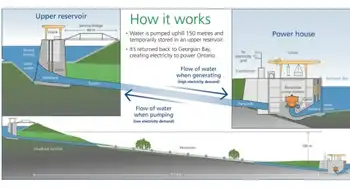
A letter sent to local municipalities explains that the plan is to balance supply and demand on the electrical grid by pumping water uphill during off-peak hours. It would then release the water back into Georgian Bay during peak periods, generating up to 1,000 megawatts of electricity.

The project is expected to create 800 jobs over four years of construction, in addition to long-term operational positions.


According to the company's website, the proposed pump station would require a large reservoir on the military base, a generating station, transmission lines infrastructure, and a break wall 850 metres from shore.

Some residents fear the project will threaten the bay and the fish, echoing Site C dam concerns shared with northerners, and the region's drinking water.

Meaford's mayor says the town has no jurisdiction on federal lands, but that a list of concerns has been forwarded to the company, while Ontario First Nations have urged government action on urgent transmission needs elsewhere.

TC Energy will tackle preliminary engineering and environmental studies to determine the feasibility of the proposed location, which could take up to two years.

Once the assessments are done, they need to be presented to the government for further review and approval, as seen when Ottawa's Site C stance left work paused pending a treaty rights challenge.

TC Energy's website states that the company anticipates construction to begin in 2022 if it gets all the go-ahead, with the plant to begin operations four years later.

Input from residents is being collected until April 2020, similar to when the National Energy Board heard oral traditional evidence on the Manitoba-Minnesota transmission line.


Related News

View more

Three New Solar Electricity Facilities in Alberta Contracted At Lower Cost than Natural Gas

Alberta Solar Energy Contracts secure low-cost photovoltaic PPAs for government operations, delivering renewable electricity at 4.8 cents/kWh, beating natural gas LCOE, enhancing summer grid efficiency across Hays, Tilley, and Jenner with Canadian Solar.


Key Points

Low-cost PV power agreements meeting 55% of Alberta government electricity demand via new Canadian Solar facilities.

✅ Price: 4.8 cents/kWh CAD, under gas-fired generation LCOE.

✅ Sites: Hays, Tilley, Jenner; 50% equity with Conklin Métis Local #193.

✅ Supplies 55% of provincial government electricity demand.


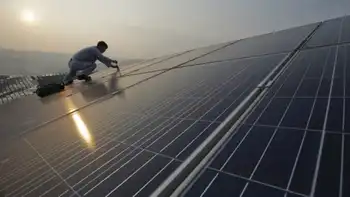
Three new solar electricity facilities to be built in south eastern Alberta (Canada) amid Alberta's solar growth have been selected through a competitive process to supply the Government of Alberta with 55 per cent of their annual electricity needs. The facilities will be built near Hays, Tilley, and Jenner, by Canadian Solar with Conklin Métis Local #193 as 50-percent equity owners.

The Government of Alberta's operations have been powered 100 per cent with wind power since 2007. Upon the expiration of some of these contracts, they have been renewed to switch from wind to solar energy. The average contract pricing will be $0.048 per kilowatt hour (3.6 cents/kWh USD), which is less than the average historical wholesale power pool price paid to natural gas-fired electricity in the province in years 2008 - 2018.

"The conversation about solar energy has long been fixated on its price competitiveness with fossil fuels," said John Gorman, CanSIA President & CEO. "Today's announcement demonstrates that low cost solar energy has arrived as a mainstream option in Alberta, even as demand for solar lags in Canada according to federal assessments. The conversation should next focus on how to optimize an all-of-the-above strategy for developing the province's renewable and non-renewable resources."

"This price discovery is monumental for the solar industry in Canada" said Patrick Bateman, CanSIA Director of Policy & Market Development. "At less than five cents per kilowatt hour, this solar electricity has a cost that is less than that of natural gas. Achieving Alberta's legislated 30 per cent by 2030 renewable electricity target just became a whole lot cheaper!".


Quick Facts:

  • The contract price of 4.8 cents/kWh CAD to be paid by Alberta Infrastructure for this solar electricity represents a lower Levelized Cost of Electricity (LCOE) than the average annual wholesale price paid by the power pool to combined-cycle and single-cycle natural gas-fired electricity generation which was 7.1 cents/kWh and 11.2 cents/kWh respectively from 2008 - 2018.
  • Alberta receives more hours of sunshine than Miami, Florida in the summer months. Alberta's electricity supply is most strained in summer, highlighting challenges for solar expansion when high temperatures increase the resistance of the distribution and transmission systems, and reduce the efficiency of cooling thermal power plants. For this reason, solar facilities sited near to electricity demand improves overall grid efficiency. Supply shortages are atypical in Alberta in winter when solar energy is least available. When they do occur, imports are increased and large loads are decreased.
  • In 2018, Alberta's solar electricity generation exceeded 50 MW. While representing much less than 1% of the province's electricity supply today, the Canadian Solar Industries Association (CanSIA) forecasts that solar energy could supply as much as 3 per cent of the province's electricity by 2030, supporting renewable energy job growth across Alberta. A recent supply chain study of the solar electricity sector in Alberta by Solas Energy Consulting Inc. found a potential of $4.1 billion in market value and a labour force rising to 10,000 in 2030.


To learn more about solar energy and the best way for consumers to go solar, please visit the Canadian Solar Industries Association at www.CanSIA.ca.


Related News

View more

EIA expects solar and wind to be larger sources of U.S. electricity generation this summer

US Summer Electricity Outlook 2022 projects rising renewable energy generation as utility-scale solar and wind capacity additions surge, while coal declines and natural gas shifts amid higher fuel prices and regional supply constraints.


Key Points

An EIA forecast of summer 2022 power: more solar and wind, less coal, and shifting gas use amid higher fuel prices.

✅ Solar +10 million MWh; wind +8 million MWh vs last summer

✅ Coal generation -20 million MWh amid supply constraints, retirements

✅ Gas prices near $9/MMBtu; slight national gen decline


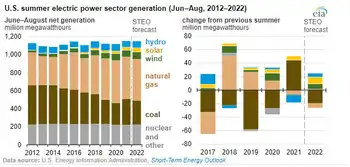
In our Summer Electricity Outlook, a supplement to our May 2022 Short-Term Energy Outlook, we expect the largest increases in U.S. electric power sector generation this summer will come from renewable energy sources such as wind and solar generation. These increases are the result of new capacity additions. We forecast utility-scale solar generation between June and August 2022 will grow by 10 million megawatthours (MWh) compared with the same period last summer, and wind generation will grow by 8 million MWh. Forecast generation from coal and natural gas declines by 26 million MWh this summer, although natural gas generation could increase in some electricity markets where coal supplies are constrained.

For recent context, overall U.S. power generation in January rose 9.3% year over year, the EIA reports.

Wind and solar power electric-generating capacity has been growing steadily in recent years. By the start of June, we estimate the U.S. electric power sector will have 65 gigawatts (GW) of utility-scale solar-generating capacity, a 31% increase in solar capacity since June 2021. Almost one-third of this new solar capacity will be built in the Texas electricity market. The electric power sector will also have an estimated 138 GW of wind capacity online this June, which is a 12% increase from last June.

Along with growth in renewables capacity, we expect that an additional 6 GW of new natural gas combined-cycle generating capacity will come online by June 2022, an increase of 2% from last summer. Despite this increase in capacity, we expect natural gas-fired electricity generation at the national level will be slightly (1.3%) lower than last summer.

We forecast the price of natural gas delivered to electric generators will average nearly $9 per million British thermal units between June and August 2022, which would be more than double the average price last summer. The higher expected natural gas prices and growth in renewable generation will likely lead to less natural gas-fired generation in some regions of the country.

In contrast to renewables and natural gas, the electricity industry has been steadily retiring coal-fired power plants over the past decade. Between June 2021 and June 2022, the electric power sector will have retired 6 GW (2%) of U.S. coal-fired generating capacity.

In previous years, higher natural gas prices would have resulted in more coal-fired electricity generation across the fleet. However, coal-fired power plants have been limited in their ability to replenish their historically low inventories in recent months as a result of mine closures, rail capacity constraints, and labor market tightness. These coal supply constraints, along with continued retirement of generating capacity, contribute to our forecast that U.S. coal-fired generation will decline by 20 million MWh (7%) this summer. In some regions of the country, these coal supply constraints may lead to increased natural gas-fired electricity generation despite higher natural gas prices.


Related News

View more

Group to create Canadian cyber standards for electricity sector IoT devices

Canadian Industrial IoT Cybersecurity Standards aim to unify device security for utilities, smart grids, SCADA, and OT systems, aligning with NERC CIP, enabling certification, trust marks, compliance testing, and safer energy sector deployments.


Key Points

National standards to secure industrial IoT for utilities and grids, enabling certification and NERC CIP alignment.

✅ Aligns with NERC CIP and NIST frameworks for energy sector security

✅ Defines certification, testing tools, and a trusted device repository

✅ Enhances OT, SCADA, and smart grid resilience against cyber threats


The Canadian energy sector has been buying Internet-connected sensors for monitoring a range of activities in generating plants, distribution networks facing harsh weather risks and home smart meters for several years. However, so far industrial IoT device makers have been creating their own security standards for devices, leaving energy producers and utilities at their mercy.

The industry hopes to change that by creating national cybersecurity standards for industrial IoT devices, with the goal of improving its ability to predict, prevent, respond to and recover from cyber threats, such as emerging ransomware attacks across the grid.

To help, the federal government today announced an $818,000 grant support a CIO Strategy Council project oversee the setting of standards.

In an interview council executive director Keith Jansa said the money will help a three-year effort that will include holding a set of cross-country meetings with industry, government, academics and interest groups to create the standards, tools to be able to test devices against the standards and the development of product repository of IoT safe devices companies can consult before making purchases.

“The challenge is there are a number of these devices that will be coming online over the next few years,” Jansa said. “IoT devices are designed for convenience and not for security, so how do you ensure that a technology an electricity utility secures is in fact safeguarded against cyber threats? Currently, there is no associated trust mark or certification that gives confidence associated with these devices.”

He also said the council will work with the North American Electric Reliability Corporation (NERC), which sets North American-wide utility safety procedural standards and informs efforts on protecting the power grid across jurisdictions. The industrial IoT standards will be product standards.

According to Robert Wong, vice-president and CIO of Toronto Hydro, all the big provincial utilities are subject to adhering to NERC CIP standards which have requirements for both cyber and physical security. Ontario is different from most provinces in that it has local distribution companies — like Toronto Hydro — which buy electricity in bulk and resell it to customers.  These LDCs don’t own or operate critical infrastructure and therefore don’t have to follow the NERC CIP standards.

Regional reforms, such as regulatory changes in Atlantic Canada, aim to bring greener power options to the grid.

Electricity is considered around the world as one of a country’s critical national infrastructure. Threats to the grid can be used for ransom or by a country for political pressure. Ukraine had its power network knocked offline in 2015 and 2016 by what were believed to be Russian-linked attackers operating against utilities.

All the big provincial utilities operate “critical infrastructure” and are subject to adhering to NERC CIP (critical infrastructure protection) standards, which have requirements for both cyber and physical security, as similar compromises at U.S. electric utilities have highlighted recently.  There are audited on a regular basis for compliance and can face hefty fines if they fail to meet the requirements.  The LDCs in Ontario don’t own or operate “critical infrastructure” and therefore are not required to adopt NERC CIP standards (at least for now).

The CIO Strategy Council is a forum for chief information officers that is helping set standards in a number of areas. In January it announced a partnership with the Internet Society’s Canada Chapter to create standards of practice for IoT security for consumer devices. As part of the federal government’s updated national cybersecurity strategy it is also developing a national cybersecurity standard for small and medium-sized businesses. That strategy would allow SMBs to advertise to customers that they meet minimum security requirements.

“The security of Canadians and our critical infrastructure is paramount,” federal minister of natural resources Seamus O’Regan said in a statement with today’s announcement. “Cyber attacks are becoming more common and dangerous. That’s why we are supporting this innovative project to protect the Canadian electricity sector.”

The announcement was welcomed by Robert Wong, Toronto Hydro’s vice-president and CIO. “Any additional investment towards strengthening the safeguards against cyberattacks to Canada’s critical infrastructure is definitely good news.  From the perspective of the electricity sector, the convergence of IT and OT (operational technology) has been happening for some time now as the traditional electricity grid has been transforming into a Smart Grid with the introduction of smart meters, SCADA systems, electronic sensors and monitors, smart relays, intelligent automated switching capabilities, distributed energy resources, and storage technologies (batteries, flywheels, compressed air, etc.).

“In my experience, many OT device and system manufacturers and vendors are still lagging the traditional IT vendors in incorporating Security by Design philosophies and effective security features into their products.  This, in turn, creates greater risks and challenges for utilities to protecting their critical infrastructures and ensuring a reliable supply of electricity to its customers.”

The Ontario Energy Board, which regulates the industry in the province, has led an initiative for all utilities to adopt the National Institute of Standards and Technology (NIST) Cybersecurity Framework, along with the ES-C2M2 maturity and Privacy By Design models, he noted.  Toronto Hydro has been managing its cybersecurity practice in adherence to these standards, as the city addresses growing electricity needs as well, he said.

“Other jurisdictions, such as Israel, have invested heavily on a national level in developing its cybersecurity capabilities and are seen as global leaders.  I am confident that given the availability of talent, capabilities and resources in Canada (especially around the GTA) if we get strong support and leadership at a federal level we can also emerge as a leader in this area as well.”


Related News

View more

Nissan accepting electricity from EVs as payment for parking

Nissan V2G Parking lets EV drivers pay with electricity via bidirectional charging at the Yokohama Nissan Pavilion, showcasing vehicle-to-grid, smart energy trading, and integrated mobility experiences like Ariya rides and Formula E simulators.


Key Points

A program where EV owners use V2G to pay for parking by discharging power at Nissan's Yokohama Pavilion.

✅ Pay for parking with EV energy via V2G

✅ Powered by Nissan LEAFs and solar at the Pavilion

✅ Showcases Ariya, Formula E, ProPILOT, and I2V tech


Nissan is letting customers pay for parking with electricity by discharging power from their electric car’s battery pack, a concept similar to how EV owners sell electricity back to the grid in other programs. In what the company claims to be a global first, owner of electric cars can trade energy for a parking space at Nissan Pavilion exhibition space in Yokohama, Japan, echoing how parked EVs earn from Europe's grids in comparable schemes.

The venue that showcases Nissan's future technologies, opened its doors to public on August 1 and will remain so through October 23, underscoring how stored EV energy can power buildings in broader applications. “(It) is a place where customers can see, feel, and be inspired by (the company's) near-future vision for society and mobility," says CEO Makoto Uchida. “As the world shifts to electric mobility, EVs will be integrated into society in ways that go beyond just transportation."

Apart from the innovate parking experience, people visiting the pavilion can also virtually experience the thrill of Formula E electric street racing or go for a ride in the all-new Ariya electric crossover, similar to demos at the Everything Electric show in Vancouver. Other experiences include ProPILOT advanced driver assistance system as well as Nissan’s Invisible-to-Visible (I2V) technology, which combines information from the real and virtual worlds to assist drivers, themes also explored at an EV education centre in Toronto for public outreach.

A mobility hub in front of the Pavilion offers a variety of services including EV car-sharing. The Pavilion also operates a cafe operated on power supplied by Nissan LEAF electric cars and solar energy, showcasing vehicle-to-building charging benefits on site.

As part of its Nissan NEXT transformation plan, the company plans to expand its global lineup of EVs and aims to sell more than 1 million electrified vehicles a year by the end of fiscal 2023, aligning with the American EV boom and the challenge of scaling charging infrastructure.


Related News

View more

Sign Up for Electricity Forum’s Newsletter

Stay informed with our FREE Newsletter — get the latest news, breakthrough technologies, and expert insights, delivered straight to your inbox.

Electricity Today T&D Magazine Subscribe for FREE

Stay informed with the latest T&D policies and technologies.
  • Timely insights from industry experts
  • Practical solutions T&D engineers
  • Free access to every issue

Live Online & In-person Group Training

Advantages To Instructor-Led Training – Instructor-Led Course, Customized Training, Multiple Locations, Economical, CEU Credits, Course Discounts.

Request For Quotation

Whether you would prefer Live Online or In-Person instruction, our electrical training courses can be tailored to meet your company's specific requirements and delivered to your employees in one location or at various locations.