TransAlta Completes Purchase of Vision Quest

By Canadian Corporate News


Substation Relay Protection Training

Our customized live online or in‑person group training can be delivered to your staff at your location.
  • Live Online
  • 12 hours Instructor-led
  • Group Training Available
Regular Price:
$699
Coupon Price:
$599
Reserve Your Seat Today
TransAlta Corporation announced it has completed the previously announced purchase of Vision Quest Windelectric Inc. for $37 million.

This deal brings TransAlta's total investment in the Calgary wind power company to $50 million. TransAlta will also assume Vision Quest's $32 million debt.

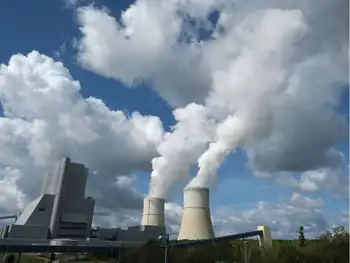
TransAlta Corporation is Canada's largest non-regulated electric generation and marketing company, with more than $7 billion in assets and 9,000 megawatts of capacity either in operation or under construction. As one of North America's lowest-cost operators, our growth is focused on developing coal- and gas-fired generation in Canada, the US and Mexico.

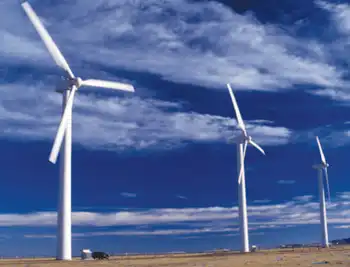
Vision Quest Windelectric Inc., now a wholly owned, independently operated subsidiary of TransAlta, owns and operates 67 wind turbine power plants with 44 megawatts of total peak capacity. Vision Quest is currently building the McBride Lake Windfarm in Alberta - Canada's largest windfarm to date. Output from McBride Lake is fully contracted on a long-term basis. Output from Vision Quest's facilities is enough energy to supply more than 60,000 average Canadian homes annually. Vision Quest is active in Alberta as a generator, holds electricity retailer licenses in Ontario, and has interests in wind power projects in several other provinces.

Related News
Bruce nuclear reactor taken offline as $2.1B project 'officially' begins

Bruce Power Unit 6 refurbishment replaces major reactor components, shifting supply to hydroelectric and natural gas, sustaining Ontario jobs, extending plant life to 2064, and managing radioactive waste along Lake Huron, on-time and on-budget.


Key Points

A 4-year, $2.1B reactor overhaul within a 13-year, $13B program to extend plant life to 2064 and support Ontario jobs.

✅ Unit 6 offline 4 years; capacity shift to hydro and gas

✅ Part of 13-year, $13B program; extends life to 2064

✅ Creates jobs; manages radioactive waste at Lake Huron


The world’s largest nuclear fleet, became a little smaller Monday morning. Bruce Power has began the process to take Unit 6 offline to begin a $2.1 billion project, supported by manufacturing contracts with key suppliers, to replace all the major components of the reactor.

The reactor, which produces enough electricity to power 750,000 homes and reflects higher output after upgrades across the site, will be out of service for the next four years.

In its place, hydroelectric power and natural gas will be utilized more.

Taking Unit 6 offline is just the “official” beginning of a 13-year, $13-billion project to refurbish six of Bruce Power’s eight nuclear reactors, as Ontario advances the Pickering B refurbishment as well on its grid.

Work to extend the life of the nuclear plant started in 2016, and the company recently marked an operating record while supporting pandemic response, but the longest and hardest part of the project - the major component replacement - begins now.

“The Unit 6 project marks the next big step in a long campaign to revitalize this site,” says Mike Rencheck, Bruce Power’s president and CEO.

The overall project is expected to last until 2033, and mirrors life extensions at Pickering supporting Ontario’s zero-carbon goals, but will extend the life of the nuclear plant until 2064.

Extending the life of the Bruce Power nuclear plant will sustain 22,000 jobs in Ontario and add $4 billion a year in economic activity to the province, say Bruce Power officials.

About 2,000 skilled tradespeople will be required for each of the six reactor refurbishments - 4,200 people already work at the sprawling nuclear plant near Kincardine.

It will also mean tons of radioactive nuclear waste will be created that is currently stored in buildings on the Bruce Power site, along the shores of Lake Huron.

Bruce Power restarted two reactors back in 2012, and in later years doubled a PPE donation to support regional health partners. That project was $2-billion over-budget, and three years behind schedule.

Bruce Power officials say this refurbishment project is currently on-time and on-budget.


Related News

View more

Iran turning thermal power plants to combined cycle to save energy

Iran Combined-Cycle Power Plants drive energy efficiency, cut greenhouse gases, and expand megawatt capacity by converting thermal units; MAPNA-led upgrades boost grid reliability, reduce fuel use, and accelerate electricity generation growth nationwide.


Key Points

Upgraded thermal plants that reuse waste heat to boost efficiency, cut emissions, and add capacity to Iran's grid.

✅ 27 thermal plants converted; 160 more viable units identified

✅ Adds 12,600 MW capacity via heat recovery steam generators

✅ Combined-cycle share: 31.2% of 80.509 GW capacity


Iran has turned six percent of its thermal power plans into combined cycle plants in order to reduce greenhouse gases and save energy, with potential to lift thermal plants' PLF under rising demand, IRNA reported, quoting an energy official.

According to the MAPNA Group’s Managing Director Abbas Aliabadi, so far 27 thermal power plants have been converted to combined-cycle ones, aligning with Iran’s push to transmit power to Europe as a regional hub.

“The conversion of a thermal power plant to a combined cycle one takes about one to two years, however, it is possible for us to convert all the country’s thermal power plants into combined cycle plants over a five-year period.

Currently, a total of 478 thermal power plants are operating throughout Iran, of which 160 units could be turned into combined cycle plants. In doing so, 12,600 megawatts will be added to the country’s power capacity, supporting ongoing exports such as supplying a large share of Iraq's electricity under existing arrangements.

Related cross-border work includes deals to rehabilitate Iraq's power grid that support future exchanges.

As reported by IRNA on Wednesday, Iran’s Nominal electricity generation capacity has reached 80,509 megawatts (80.509 gigawatts), and it is deepening energy cooperation with Iraq to bolster regional reliability. The country increased its electricity generation capacity by 500 megawatts (MW) compared to the last year (ended on March 20).

Currently, with a total generation capacity of 25,083 MW (31.2 percent) combined cycle power plants account for the biggest share in the country’s total power generation capacity followed by gas power plants generating 29.9 percent, amid global trends where renewables are set to eclipse coal and regional moves such as Israel's coal reduction signal accelerating shifts. EF/MA


Related News

View more

Two huge wind farms boost investment in America’s heartland

MidAmerican Energy Wind XI expands Iowa wind power with the Beaver Creek and Prairie farms, 169 turbines and 338 MW, delivering renewable energy, grid reliability, rural jobs, and long-term tax revenue through major investment.


Key Points

MidAmerican Energy Wind XI is a $3.6B Iowa wind buildout adding 2,000 MW to enhance reliability, jobs, and tax revenue.

✅ 169 turbines at Beaver Creek and Prairie deliver 338 MW.

✅ Wind supplies 36.6 percent of Iowa electricity generation.

✅ Projects forecast $62.4M in property taxes over 20 years.


Power company MidAmerican Energy recently announced the beginning of operations at two huge wind farms in the US state of Iowa.

The two projects, called Beaver Creek and Prairie, total 169 turbines and have a combined capacity of 338 megawatts (MW), enough to meet the annual electricity needs of 140,000 homes in the state.

“We’re committed to providing reliable service and outstanding value to our customers, and wind energy accomplishes both,” said Mike Fehr, vice president of resource development at MidAmerican. “Wind energy is good for our customers, and it’s an abundant, renewable resource that also energizes the economy.”

The wind farms form part of MidAmerican Energy’s major Wind XI project, which will see an extra 2,000MW of wind power built, and $3.6 billion invested amid notable wind farm acquisitions shaping the market by the end of 2019. The company estimates it is the largest economic development project in Iowa’s history.

Iowa is something of a hidden powerhouse in American wind energy. The technology provides an astonishing 36.6 percent of the state’s entire electricity generation and plays a growing role in the U.S. electricity mix according to the American Wind Energy Association (AWEA). It also has the second largest amount of installed capacity in the nation at 6917MW; Texas is first with over 21,000MW.

Along with capital investment, wind power brings significant job opportunities and tax revenues for the state. An estimated 9,000 jobs are supported by the industry, something a U.S. wind jobs forecast stated could grow to over 15,000 within a couple of years.

MidAmerican Energy is also keen to stress the economic benefits of its new giant projects, claiming that they will bring in $62.4 million of property tax revenue over their 20-year lifetime.

Tom Kiernan, AWEA’s CEO, revealed last year that, as the most-used source of renewable electricity in the U.S., wind energy is providing more than five states in the American Midwest with over 20 percent of electricity generation, “a testament to American leadership and innovation”.

“For these states, and across America, wind is welcome because it means jobs, investment, and a better tomorrow for rural communities”, he added.


Related News

View more

COVID-19 Pandemic Puts $35 Billion in Wind Energy Investments at Risk, Says Industry Group

COVID-19 Impact on U.S. Wind Industry: disrupting wind power projects, tax credits, and construction timelines, risking rural revenues, jobs, and $35B investments; AWEA seeks Congressional flexibility as OEM shutdowns like Siemens Gamesa intensify delays.


Key Points

Pandemic disruptions threaten 25 GW of projects, $35B investment, rural revenues, jobs, and tax-credit timelines.

✅ 25 GW at risk; $35B investment jeopardized

✅ Rural taxes and land-lease payments may drop $8B

✅ AWEA seeks Congressional flexibility on tax-credit deadlines


In one of the latest examples of the havoc that the novel coronavirus is wreaking on the U.S. economy and the crisis hitting solar and wind sector alike, the American Wind Energy Association (AWEA) -- the national trade association for the U.S. wind industry -- yesterday stated its concerns that COVID-19 will "pose significant challenges to the American wind power industry." According to AWEA's calculations, the disease is jeopardizing the development of approximately 25 gigawatts of wind projects, representing $35 billion in investments, even as wind additions persist in some markets amid the pandemic.

Rural communities, where about 99% of wind projects are located, in particular, face considerable risk. The AWEA estimates that rural communities stand to lose about $8 billion in state and local tax payments and land-lease payments to private landowners. In addition, it's estimated that the pandemic threatens the loss of over 35,000 jobs, and the U.S. wind jobs outlook underscores the stakes, including wind turbine technicians, construction workers, and factory workers.

The development of wind projects is heavily reliant on the earning of tax credits, and debates over a Solar ITC extension highlight potential impacts on wind. However, in order to qualify for the current credits, project developers are bound to begin construction before Dec. 31, 2020. With local and state governments implementing various measures to stop the spread of the virus, the success of project developers' meeting this deadline is dubious, as utility-scale solar construction slows nationwide due to COVID-19. Addressing this and other challenges, the AWEA is turning to the government for help. In the trade association's press release, it states that "to protect the industry and these workers, AWEA is asking Congress for flexibility in allowing existing policies to continue working for the industry through this period of uncertainty."

Illustrating one of the ways in which COVID-19 is affecting the industry, Siemens Gamesa, a global leader in the manufacturing of wind turbines, closed a second Spanish factory this week after learning that a second of its employees had tested positive for the novel coronavirus.


Related News

View more

Trump's Proposal on Ukraine's Nuclear Plants Sparks Controversy

Ukraine Nuclear Plant Ownership Proposal outlines U.S. management of Ukrainian reactors amid the Russia-Ukraine war, citing nuclear safety, energy security, and IAEA oversight; Kyiv rejects ownership transfer, especially regarding Zaporizhzhia under Russian control.


Key Points

U.S. control of Ukraine's nuclear plants for safety; Kyiv rejects transfer, citing sovereignty risks at Zaporizhzhia.

✅ U.S. proposal to manage Ukraine's reactors amid war

✅ Kyiv refuses ownership transfer; open to investment

✅ Zaporizhzhia under Russian control raises safety risks


In the midst of the ongoing conflict between Russia and Ukraine, U.S. President Donald Trump has proposed a controversial idea: Ukraine should give its nuclear power plants to the United States for safekeeping and management. This suggestion came during a phone call with Ukrainian President Volodymyr Zelenskyy, wherein Trump expressed the belief that American ownership of these nuclear plants could offer them the best protection amid the ongoing war. But Kyiv, while open to foreign support, has firmly rejected the idea of transferring ownership, especially as the Zaporizhzhia nuclear plant remains under Russian occupation.

Ukraine’s nuclear energy infrastructure has always been a vital component of its power generation. Before the war, the country’s four nuclear plants supplied nearly half of its electricity. As Russia's military forces target Ukraine's energy infrastructure, including power plants and coal mines, international watchdogs like the IAEA have warned of nuclear risks as these nuclear facilities have become crucial to maintaining the nation’s energy stability. The Zaporizhzhia plant, in particular, has attracted international concern due to its size and the ongoing threat of a potential nuclear disaster.

Trump’s Proposal and Ukraine’s Response

Trump’s proposal of U.S. ownership came as a response to the ongoing threats posed by Russia’s occupation of the Zaporizhzhia plant. Trump argued that the U.S., with its expertise in running nuclear power plants, could safeguard these facilities from further damage and potential nuclear accidents. However, Zelenskyy quickly clarified that the discussion was only focused on the Zaporizhzhia plant, which is currently under Russian control. The Ukrainian president emphasized that Kyiv would not entertain the idea of permanently transferring ownership of its nuclear plants, even though they would welcome investment in their restoration and modernization, particularly after the war.

The Zaporizhzhia nuclear plant has been a focal point of geopolitical tensions since Russia's occupation in 2022. Despite being in "cold shutdown" to prevent further risk of explosions, the facility remains a major concern due to its potential to cause a nuclear disaster. Ukrainian officials, along with international observers, have raised alarm about the safety risks posed by the plant, including mines at Zaporizhzhia reported by UN watchdogs, which is situated in a war zone and under the control of Russian forces who are reportedly neglecting proper safety protocols.

The Fear of a Nuclear Provocation

Ukrainians have expressed concerns that Trump’s proposal could embolden Russia to escalate tensions further, even as a potential agreement on power-plant attacks has been discussed by some parties. Some fear that any attempt to reclaim the plant by Ukraine could trigger a Russian provocation, including a deliberate attack on the plant, which would have catastrophic consequences for both Ukraine and the broader region. The analogy is drawn with the destruction of the Nova Kakhovka dam, which Ukraine accuses Russia of sabotaging, an act that severely disrupted water supplies to the Zaporizhzhia plant. Ukrainian military officials, including Ihor Romanenko, a former deputy head of Ukraine’s armed forces, warned that Trump’s suggestion might be an exploitation of Ukraine’s vulnerable position in the ongoing war.

Despite these fears, there are some voices within Ukraine, including former employees of the Zaporizhzhia plant, who believe that a deliberate attack by Russian forces is unlikely. They argue that the Russian military needs the plant in functioning condition for future negotiations, with Russia building new power lines to reactivate the site as part of that calculus, and any damage could reduce its value in such exchanges. However, the possibility of Russian negligence or mismanagement remains a significant risk.

The Strategic Role of Ukraine's Nuclear Plants

Ukraine's nuclear plants were a cornerstone of the country’s energy sector long before the conflict began. In recent years, as Ukraine lost access to coal resources in the Donbas region due to Russian occupation, nuclear power became even more vital, alongside a growing focus on wind power to improve resilience. The country’s reliance on these plants grew as Russia launched a sustained campaign to destroy Ukraine’s energy infrastructure, including attacks on nuclear power stations.

The Zaporizhzhia plant, in particular, holds strategic importance not only due to its size but also because of its location in southeastern Ukraine, an area that has been at the heart of the conflict. Despite being in Russian hands, the plant’s reactors have been safely shut down, reducing the immediate risk of a nuclear explosion. However, the plant’s future remains uncertain, as Russia’s long-term control over it could disrupt Ukraine’s energy security for years to come.

Wider Concerns About Aging Nuclear Infrastructure

Beyond the geopolitical tensions, there are broader concerns about the aging infrastructure of Ukraine's nuclear power plants. International watchdogs, including the environmentalist group Bankwatch, have criticized these facilities as “zombie reactors” due to their outdated designs and safety risks. Experts have called for Ukraine to decommission some of these reactors, fearing that they are increasingly unsafe, especially in the context of a war.

However, Ukrainian officials, including Petro Kotin, head of Energoatom (Ukraine's state-owned nuclear energy company), argue that these reactors are still functional and critical to Ukraine's energy needs. The ongoing conflict, however, complicates efforts to modernize and secure these facilities, which are increasingly vulnerable to both physical damage and potential nuclear hazards.

The Global Implications

Trump's suggestion to take control of Ukraine's nuclear power plants has raised significant concerns on the international stage. Some fear that such a move could set a dangerous precedent for nuclear security and sovereignty. Others see it as an opportunistic proposal that exploits Ukraine's wartime vulnerability.

While the future of Ukraine's nuclear plants remains uncertain, one thing is clear: these facilities are now at the center of a geopolitical struggle that could have far-reaching consequences for the energy security of Europe and the world. The safety of these plants and their role in Ukraine's energy future will remain a critical issue as the war continues and as Ukraine navigates its relations with both the U.S. and Russia, with the grid even having resumed electricity exports at times.


Related News

View more

How the dirtiest power station in western Europe switched to renewable energy

Drax Biomass Conversion accelerates renewable energy by replacing coal with wood pellets, sustainable forestry feedstock, and piloting carbon capture and storage, supporting the UK grid, emissions cuts, and a net-zero pathway.


Key Points

Drax Biomass Conversion is Drax's shift from coal to biomass with CCS pilots to cut emissions and aid UK's net-zero.

✅ Coal units converted to biomass wood pellets

✅ Sourced from sustainable forestry residues

✅ CCS pilots target lifecycle emissions cuts


A power station that used to be the biggest polluter in western Europe has made a near-complete switch to renewable energy, mirroring broader shifts as Denmark's largest energy company plans to end coal by 2023.

The Drax Power Station in Yorkshire, England, used to spew out millions of tons of carbon dioxide a year by burning coal. But over the past eight years, it has overhauled its operations by converting four of its six coal-fired units to biomass. The plant's owners say it now generates 15% of the country's renewable power, as Britain recently went a full week without coal power for the first time.

The change means that just 6% of the utility's power now comes from coal, as the wider UK coal share hits record lows across the national electricity system. The ultimate goal is to stop using coal altogether.

"We've probably reduced our emissions more than any other utility in the world by transforming the way we generate power," Will Gardner, CEO of the Drax Group, told CNN Business.

Subsidies have helped finance the switch to biomass, which consists of plant and agricultural matter and is viewed as a promising substitute for coal, and utilities such as Nova Scotia Power are also increasing biomass use. Last year, Drax received £789 million ($1 billion) in government support.


Is biomass good for the environment?

While scientists disagree over the extent to which biomass as a fuel is environmentally friendly, and some environmentalists urge reducing biomass use amid concerns about lifecycle emissions, Drax highlights that its supplies come from from sustainably managed and growing forests.

Most of the biomass used by Drax consists of low-grade wood, sawmill residue and trees with little commercial value from the United States. The material is compressed into sawdust pellets.

Gardner says that by purchasing bits of wood not used for construction or furniture, Drax makes it more financially viable for forests to be replanted. And planting new trees helps offset biomass emissions.

Forests "absorb carbon as they're growing, once they reach maturity, they stop absorbing carbon," said Raphael Slade, a senior research fellow at Imperial College London.

But John Sterman, a professor at MIT's Sloan School of Management, says that in the short term burning wood pellets adds more carbon to the atmosphere than burning coal.

That carbon can be absorbed by new trees, but Sterman says the process can take decades.

"If you're looking at five years, [biomass is] not very good ... If you're looking at a century-long time scale, which is the sort of time scale that many foresters plan, then [biomass] can be a lot more beneficial," says Slade.


Carbon capture

Enter carbon capture and storage technology, which seeks to prevent CO2 emissions from entering the atmosphere and has been touted as a possible solution to the climate crisis.

Drax, for example, is developing a system to capture the carbon it produces from burning biomass. But that could be 10 years away.


The Coal King is racing to avoid bankruptcy

The power station is currently capturing just 1 metric ton of CO2 emissions per day. Gardner says it hopes to increase this to 10,000 metric tons per day by the mid to late 2020s.

"The technology works but scaling it up and rolling it out, and financing it, are going to be significant challenges," says Slade.

The Intergovernmental Panel on Climate Change shares this view. The group said in a 2018 report that while the potential for CO2 capture and storage was considerable, its importance in the fight against climate change would depend on financial incentives for deployment, and whether the risks of storage could be successfully managed. These include a potential CO2 pipeline break.

In the United Kingdom, the government believes that carbon capture and storage will be crucial to reaching its goal of achieving net-zero greenhouse gas emissions by 2050, even as low-carbon generation stalled in 2019 according to industry analysis.

It has committed to consulting on a market-based industrial carbon capture framework and in June awarded £26 million ($33 million) in funding for nine carbon capture, usage and storage projects, amid record coal-free generation on the British grid.


Related News

View more

Sign Up for Electricity Forum’s Newsletter

Stay informed with our FREE Newsletter — get the latest news, breakthrough technologies, and expert insights, delivered straight to your inbox.

Electricity Today T&D Magazine Subscribe for FREE

Stay informed with the latest T&D policies and technologies.
  • Timely insights from industry experts
  • Practical solutions T&D engineers
  • Free access to every issue

Live Online & In-person Group Training

Advantages To Instructor-Led Training – Instructor-Led Course, Customized Training, Multiple Locations, Economical, CEU Credits, Course Discounts.

Request For Quotation

Whether you would prefer Live Online or In-Person instruction, our electrical training courses can be tailored to meet your company's specific requirements and delivered to your employees in one location or at various locations.