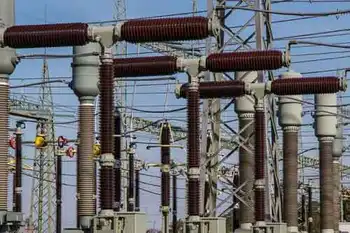
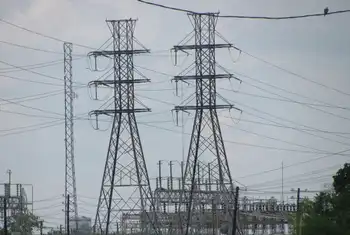
TransAlta selling interest in power plant to affiliate

By Canadian Press


Substation Relay Protection Training

Our customized live online or in‑person group training can be delivered to your staff at your location.
  • Live Online
  • 12 hours Instructor-led
  • Group Training Available
Regular Price:
$699
Coupon Price:
$599
Reserve Your Seat Today
Private electricity producer TransAlta Corp. plans to sell its stake in a coal-fired power plant in central Alberta to an affiliated company for $315 million.

TransAlta announced recently it intends to sell its 50 per cent interest in the two-unit, 756-megawatt coal-fired Sheerness station to TransAlta Cogeneration, a limited partnership 50.01 per cent by TransAlta and 49.99 per cent by TransAlta Power, another affiliated company.

TransAlta Power was set up to own three cogeneration plants in Ontario and 60 per cent of a plant in Fort Saskatchewan, Alta.

Cogeneration plants are typically gas-fired operations that produce electricity and steam, a byproduct which is then resold to nearby industrial users.

After the Sheerness sale, Canadian Utilities Ltd. will continue to own the other 50 per cent of the plant and operate the facility, about 200 kilometres northeast of Calgary.

TransAlta said it expects to get $315 million from the sale, resulting in an after-tax gain of about $55 million. The Calgary company said it will use the money to pay down debt.

"The sale of Sheerness is another step in our continued drive to maintain a strong balance sheet and provide the company with more financial flexibility," Steve Snyder, TransAlta's president and chief executive, said in a release.

In a related move, TransAlta Power said it has filed a plan with regulators to offer partnership units and purchase warrants to raise about $150 million to help finance the acquisition.

"We expect the addition of the Sheerness facility to TransAlta Power L.P. to increase cash distributions to unitholders by approximately 4.6 per cent," said Ian Bourne, president and director. "In addition, we will now have a more diversified fuel and geographic base, as well as improved liquidity and access to capital as a result of the larger market capitalization."

TransAlta Corp. is a major power producer with operations in Canada, the United States and Mexico.

Related News
China to build 525-MW hydropower station on Yangtze tributary

Baima Hydropower Station advances China renewable energy on the Wujiang River, a Yangtze tributary in Chongqing; a 525 MW cascade project approved by NDRC, delivering 1.76 billion kWh and improving river shipping.


Key Points

An NDRC-approved 525 MW project on Chongqing's Wujiang River, producing 1.76 billion kWh and improving navigation.

✅ 10.2 billion yuan investment; final cascade plant on Wujiang in Chongqing

✅ Expected output: 1.76 billion kWh; capacity 525 MW; NDRC approval

✅ Improves river shipping; relocation of 5,000 residents in Wulong


China plans to build a 525-MW hydropower station on the Wujiang River, a tributary of the Yangtze River, in Southwest China's Chongqing municipality, aligning with projects like the Lawa hydropower station elsewhere in the Yangtze basin.

The Baima project, the last of a cascade of hydropower stations on the section of the Wujiang River in Chongqing, has gotten the green light from the National Development and Reform Commission, China's state planning agency, even as some independent power projects elsewhere face uncertainty, such as the Siwash Creek project in British Columbia, the Chongqing Municipal Commission of Development and Reform said Monday.

The project, in Baima township of Wulong district, is expected to involve an investment of 10.2 billion yuan ($1.6 billion), as China explores compressed air generation to bolster grid flexibility, it said.

#google#

With a power-generating capacity of 525 MW, it is expected to generate 1.76 billion kwh of electricity a year, supporting efforts to reduce coal power production nationwide, and help improve the shipping service along the Wujiang River.

More than 5,000 local residents will be relocated to make room for the project, which forms part of a broader energy mix alongside advances in nuclear energy in China.


Related News

View more

Neo-Nazi, woman accused of plotting 'hate-fueled attacks' on power stations, federal complaint says

Baltimore Substation Attack Plot highlights alleged neo-Nazi plans targeting electrical substations and the power grid, as FBI and DHS warn of domestic extremism threats to critical infrastructure, with arrests in Maryland disrupting potential sniper attacks.


Key Points

An alleged extremist plot to disable Baltimore's power grid by shooting substations, thwarted by federal arrests.

✅ Two suspects charged in Maryland conspiracy

✅ Targets included five substations around Baltimore

✅ FBI cites domestic extremism threat to infrastructure


A neo-Nazi in Florida and a Maryland woman conspired to attack several electrical substations in the Baltimore area, federal officials say.

Sarah Beth Clendaniel and Brandon Clint Russell were arrested and charged in a conspiracy to disable the power grid by shooting out substations via "sniper attacks," according to a criminal complaint from the U.S. Attorney's Office for the District of Maryland.

Clendaniel allegedly said she wanted to "completely destroy this whole city" and was planning to target five substations situated in a "ring" around Baltimore, the complaint said. Russell is part of a violent extremist group that has cells in multiple states, and he previously planned to attack critical infrastructure in Florida, the complaint said.

"This planned attack threatened lives and would have left thousands of Marylanders in the cold and dark," Maryland U.S. Attorney Erek Barron said in a press release. "We are united and committed to using every legal means necessary to disrupt violence, including hate-fueled attacks."

The news comes as concerns grow about an increase in targeted substation attacks on U.S. substations tied to domestic extremism.


What to know about substation attacks

Federal data shows vandalism and suspicious activities at electrical facilities soared nationwide last year, and cyber actors have accessed utilities' control rooms as well.

At the end of the year, attacks or potential attacks were reported on more than a dozen substations and one power plant across five states, and Symantec documented Russia-linked Dragonfly activity targeting the energy sector earlier. Several involved firearms.

In December, targeted attacks on substations in North Carolina left tens of thousands without power amid freezing temperatures, spurring renewed focus on protecting the U.S. power grid among officials. The FBI is investigating.

Vandalism at facilities in Washington left more than 21,000 without electricity on Christmas Day, even as hackers breached power-plant systems in other states. Two men were arrested, and one told police he planned to disrupt power to commit a burglary.

The Department of Homeland Security last year said domestic extremists had been developing "credible, specific plans" since at least 2020 and would continue to "encourage physical attacks against electrical infrastructure," and the U.S. government has condemned Russia for power grid hacking as well.

Last February, three neo-Nazis pleaded guilty to federal crimes related to a scheme to attack the grid with rifles, with each targeting a substation in a different region of the U.S., even as reports that Russians hacked into US electric utilities drew widespread attention.


Related News

View more

Electricity Grids Can Handle Electric Vehicles Easily - They Just Need Proper Management

EV Grid Capacity Management shows how smart charging, load balancing, and off-peak pricing align with utility demand response, DC fast charging networks, and renewable integration to keep national electricity infrastructure reliable as EV adoption scales


Key Points

EV Grid Capacity Management schedules charging and balances load to keep EV demand within utility capacity.

✅ Off-peak pricing and time-of-use tariffs shift charging demand.

✅ Smart chargers enable demand response and local load balancing.

✅ Gradual EV adoption allows utilities to plan upgrades efficiently.


One of the most frequent concerns you will see from electric vehicle haters is that the electricity grid can’t possibly cope with all cars becoming EVs, or that EVs will crash the grid entirely. However, they haven’t done the math properly. The grids in most developed nations will be just fine, so long as the demand is properly management. Here’s how.

The biggest mistake the social media keyboard warriors make is the very strange assumption that all cars could be charging at once. In the UK, there are currently 32,697,408 cars according to the UK Department of Transport. The UK national grid had a capacity of 75.8GW in 2020. If all the cars in the UK were EVs and charging at the same time at 7kW (the typical home charger rate), they would need 229GW – three times the UK grid capacity. If they were all charging at 50kW (a common public DC charger rate), they would need 1.6TW – 21.5 times the UK grid capacity. That sounds unworkable, and this is usually the kind of thinking behind those who claim the UK grid can't cope with EVs.

What they don’t seem to realize is that the chances of every single car charging all at once are infinitesimally low. Their arguments seem to assume that nobody ever drives their car, and just charges it all the time. If you look at averages, the absurdity of this position becomes particularly clear. The distance each UK car travels per year has been slowly dropping, and was 7,400 miles on average in 2019, again according to the UK Department of Transport. An EV will do somewhere between 2.5 and 4.5 miles per kWh on average, so let’s go in the middle and say 3.5 miles. In other words, each car will consume an average of 2,114kWh per year. Multiply that by the number of cars, and you get 69.1TWh. But the UK national grid produced 323TWh of power in 2019, so that is only 21.4% of the energy it produced for the year. Before you argue that’s still a problem, the UK grid produced 402TWh in 2005, which is more than the 2019 figure plus charging all the EVs in the UK put together. The capacity is there, and energy storage can help manage EV-driven peaks as well.

Let’s do the same calculation for the USA, where an EV boom is about to begin and planning matters. In 2020, there were 286.9 million cars registered in America. In 2020, while the US grid had 1,117.5TW of utility electricity capacity and 27.7GW of solar, according to the US Energy Information Administration. If all the cars were EVs charging at 7kW, they would need 2,008.3TW – nearly twice the grid capacity. If they charged at 50kW, they would need 14,345TW – 12.8 times the capacity.

However, in 2020, the US grid generated 4,007TWh of electricity. Americans drive further on average than Brits – 13,500 miles per year, according to the US Department of Transport’s Federal Highway Administration. That means an American car, if it were an EV, would need 3,857kWh per year, assuming the average efficiency figures above. If all US cars were EVs, they would need a total of 1,106.6TWh, which is 27.6% of what the American grid produced in 2020. US electricity consumption hasn’t shrunk in the same way since 2005 as it has in the UK, but it is clearly not unfeasible for all American cars to be EVs. The US grid could cope too, even as state power grids face challenges during the transition.

After all, the transition to electric isn’t going to happen overnight. The sales of EVs are growing fast, with for example more plug-ins sold in the UK in 2021 so far than the whole of the previous decade (2010-19) put together. Battery-electric vehicles are closing in on 10% of the market in the UK, and they were already 77.5% of new cars sold in Norway in September 2021. But that is new cars, leaving the vast majority of cars on the road fossil fuel powered. A gradual introduction is essential, too, because an overnight switchover would require a massive ramp up in charge point installation, particularly devices for people who don’t have the luxury of home charging. This will require considerable investment, but could be served by lots of chargers on street lamps, which allegedly only cost £1,000 ($1,300) each to install, usually with no need for extra wiring.

This would be a perfectly viable way to provide charging for most people. For example, as I write this article, my own EV is attached to a lamppost down the street from my house. It is receiving 5.5kW costing 24p (32 cents) per kWh through SimpleSocket, a service run by Ubitricity (now owned by Shell) and installed by my local London council, Barnet. I plugged in at 11am and by 7.30pm, my car (which was on about 28% when I started) will have around 275 miles of range – enough for a couple more weeks. It will have cost me around £12 ($16) – way less than a tank of fossil fuel. It was a super-easy process involving the scanning of a QR code and entering of a credit card, very similar to many parking systems nowadays. If most lampposts had one of these charging plugs, not having off-street parking would be no problem at all for owning an EV.

With most EVs having a range of at least 200 miles these days, and the average mileage per day being 20 miles in the UK (the 7,400-mile annual figure divided by 365 days) or 37 miles in the USA, EVs won’t need charging more than once a week or even every week or two. On average, therefore, the grids in most developed nations will be fine. The important consideration is to balance the load, because if too many EVs are charging at once, there could be a problem, and some regions like California are looking to EVs for grid stability as part of the solution. This will be a matter of incentivizing charging during off-peak times such as at night, or making peak charging more expensive. It might also be necessary to have the option to reduce charging power rates locally, while providing the ability to prioritize where necessary – such as emergency services workers. But the problem is one of logistics, not impossibility.

There will be grids around the world that are not in such a good place for an EV revolution, at least not yet, and some critics argue that policies like Canada's 2035 EV mandate are unrealistic. But to argue that widespread EV adoption will be an insurmountable catastrophe for electricity supply in developed nations is just plain wrong. So long as the supply is managed correctly to make use of spare capacity when it’s available as much as possible, the grids will cope just fine.


Related News

View more

Ottawa making electricity more expensive for Albertans

Alberta Electricity Price Surge reflects soaring wholesale rates, natural gas spikes, carbon tax pressures, and grid decarbonization challenges amid cold-weather demand, constrained supply, and Europe-style energy crisis impacts across the province.


Key Points

An exceptional jump in Alberta's power costs driven by gas price spikes, high demand, policy costs, and tight supply.

✅ Wholesale prices averaged $123/MWh in December

✅ Gas costs surged; supply constraints and outages

✅ Carbon tax and decarbonization policies raised costs


Albertans just endured the highest electricity prices in 21 years. Wholesale prices averaged $123 per megawatt-hour in December, more than triple the level from the previous year and highest for December since 2000.

The situation in Alberta mirrors the energy crisis striking Europe where electricity prices are also surging, largely due to a shocking five-fold increase in natural gas prices in 2021 compared to the prior year.

The situation should give pause to Albertans when they consider aggressive plans to “decarbonize” the electric grid, including proposals for a fully renewable grid by 2030 from some policymakers.

The explanation for skyrocketing energy prices is simple: increased demand (because of Calgary's frigid February demand and a slowly-reviving post-pandemic economy) coupled with constrained supply.

In the nitty gritty details, there are always particular transitory causes, such as disputes with Russian gas companies (in the case of Europe) or plant outages (in the case of Alberta).

But beyond these fleeting factors, there are more permanent systemic constraints on natural gas (and even more so, coal-fired) power plants.

I refer of course to the climate change policies of the Trudeau government at the federal level and some of the more aggressive provincial governments, which have notable implications for electricity grids across Canada.

The most obvious example is the carbon tax, the repeal of which Premier Jason Kenney made a staple of his government.

Putting aside the constitutional issues (on which the Supreme Court ruled in March of last year that the federal government could impose a carbon tax on Alberta), the obvious economic impact will be to make carbon-sourced electricity more expensive.

This isn’t a bug or undesired side-effect, it’s the explicit purpose of a carbon tax.

Right now, the federal carbon tax is $40 per tonne, is scheduled to increase to $50 in April, and will ultimately max out at a whopping $170 per tonne in 2030.

Again, the conscious rationale of the tax, aligned with goals for cleaning up Canada's electricity, is to make coal, oil and natural gas more expensive to induce consumers and businesses to use alternative energy sources.

As Albertans experience sticker shock this winter, they should ask themselves — do we want the government intentionally making electricity and heating oil more expensive?

Of course, the proponent of a carbon tax (and other measures designed to shift Canadians away from carbon-based fuels) would respond that it’s a necessary measure in the fight against climate change, and that Canada will need more electricity to hit net-zero according to the IEA.

Yet the reality is that Canada is a bit player on the world stage when it comes to carbon dioxide, responsible for only 1.5% of global emissions (as of 2018).

As reported at this “climate tracker” website, if we look at the actual policies put in place by governments around the world, they’re collectively on track for the Earth to warm 2.7 degrees Celsius by 2100, far above the official target codified in the Paris Agreement.

Canadians can’t do much to alter the global temperature, but federal and provincial governments can make energy more expensive if policymakers so choose, and large-scale electrification could be costly—the Canadian Gas Association warns of $1.4 trillion— if pursued rapidly.

As renewable technologies become more reliable and affordable, business and consumers will naturally adopt them; it didn’t take a “manure tax” to force people to use cars rather than horses.

As official policy continues to make electricity more expensive, Albertans should ask if this approach is really worth it, or whether options like bridging the Alberta-B.C. electricity gap could better balance costs.

Robert P. Murphy is a senior fellow at the Fraser Institute.


Related News

View more

Warning: Manitoba Hydro can't service new 'energy intensive' customers

Manitoba Hydro capacity constraints challenge clean energy growth as industrial demand, hydrogen projects, EV batteries, and electrification strain the grid; limited surplus, renewables, storage, and transmission bottlenecks hinder new high-load connections.


Key Points

Limited surplus power blocks new energy-intensive loads until added generation and transmission expand Manitoba's grid.

✅ No firm commitments for new energy-intensive industrial customers

✅ Single large load could consume remaining surplus capacity

✅ New renewables need transmission; gas, nuclear face trade-offs


Manitoba Hydro lacks the capacity to provide electricity to any new "energy intensive" industrial customers, the Crown corporation warns in a confidential briefing note that undercuts the idea this province can lure large businesses with an ample supply of clean, green energy, as the need for new power generation looms for the utility.

On July 28, provincial economic development officials unveiled an "energy roadmap" that said Manitoba Hydro must double or triple its generating capacity, as electrical demand could double over the next two decades in order to meet industrial and consumer demand for electricity produced without burning fossil fuels.

Those officials said 18 potential new customers with high energy needs were looking at setting up operations in Manitoba — and warned the province must be careful to choose businesses that provide the greatest economic benefit as well as the lowest environmental impact.

In a briefing note dated Sept. 13, obtained by CBC News, Manitoba Hydro warns it doesn't have enough excess power to hook up any of these new heavy electricity-using customers to the provincial power grid.

There are actually 57 proposals to use large volumes of electricity, Hydro says in the note, including eight projects already in the detailed study phase and nine where the proponents are working on construction agreements.

"Manitoba Hydro is unable to offer firm commitments to prospective customers that may align with Manitoba's energy roadmap and/or provincial economic development objectives," Hydro warns in the note, explaining it is legally obliged to serve all existing customers who need more electricity.

"As such, Manitoba Hydro cannot reserve electric supply for particular projects."

Hydro says in the note its "near-term surplus electricity supply" is so limited amid a Western Canada drought that "a single energy-intensive connection may consume all remaining electrical capacity."

Adding more electrical generating capacity won't be easy, even with new turbine investments underway, and will not happen in time to meet demands from customers looking to set up shop in the province, Hydro warns.

The Crown corporation goes on to say it's grappling with numerous requests from existing and prospective energy-intensive customers, mainly for producing hydrogen, manufacturing electric vehicle batteries and switching from fossil fuels to electricity, such as to use electricity for heat in buildings.

In a statement, Hydro said it wants to ensure Manitobans know the corporation is not running out of power — just the ability to meet the needs of large new customers, and continues to provide clean energy to neighboring provinces today.

"The size of loads looking to come to Manitoba are significantly larger than we typically see, and until additional supply is available, that limits our ability to connect them," Hydro spokesperson Bruce Owen said in a statement.

Adding wind power or battery storage, for example, would require the construction of more transmission lines, and deals such as SaskPower's purchase depend on that interprovincial infrastructure as well.

Natural gas plants are relatively inexpensive to build but do not align with efforts to reduce carbon emissions. Nuclear power plants require at least a decade of lead time to build, and tend to generate local opposition.

Hydro has also ruled out building another hydroelectric dam on the Nelson River, where the Conawapa project was put on hold in 2014.


Related News

View more

Seven small UK energy suppliers must pay renewables fees or risk losing licence

Ofgem Renewables Obligations drive supplier payments for renewables fees, feed-in tariffs, and renewable generation, with non-payment risking supply licences amid the price cap and volatile wholesale prices across the UK energy market.


Key Points

Mandatory payments by suppliers funding renewables via feed-in tariffs; non-payment can trigger supply licence revoking.

✅ Covers Renewables Obligation and Feed-in Tariff scheme compliance.

✅ Non-payment can lead to Ofgem action and licence loss.

✅ Affected by price cap and wholesale price volatility.


Seven small British energy suppliers owe a total of 34 million pounds ($43.74 million) in renewables fees, amid a renewables backlog that has stalled projects, and could face losing their supply licences if they cannot pay, energy regulator Ofgem reports.

Under Britain’s energy market rules, suppliers of energy must meet so-called renewables obligations and feed-in tariffs, including households' ability to sell solar power back to energy firms, which are imposed on them by the government to help fund renewable power generation.

Several small energy companies have gone bust over the past two years, a trend echoed by findings from a global utility study on renewable priorities, as they struggled to pay the renewables fees and as their profits were affected by a price cap on the most commonly used tariffs and fluctuating wholesale prices, even as a 10 GW contract brings new renewable capacity onto the UK grid.

Ofgem has called on the companies to make necessary payments by Oct. 31, as moves to offer community-generated power to all UK customers progress.

“If they do not pay Ofgem could start the process of revoking their licences to supply energy,” it said in a statement, as offshore wind power continues to scale nationwide.

The seven suppliers are, amid debates over clean energy impacts, Co-Operative Energy Limited; Flow Energy Limited; MA Energy Limited; Nabuh Energy Limited; Robin Hood Energy Limited; Symbio Energy Limited and Tonik Energy Limited. ($1 = 0.7773 pounds)


Related News

View more

Sign Up for Electricity Forum’s Newsletter

Stay informed with our FREE Newsletter — get the latest news, breakthrough technologies, and expert insights, delivered straight to your inbox.

Electricity Today T&D Magazine Subscribe for FREE

Stay informed with the latest T&D policies and technologies.
  • Timely insights from industry experts
  • Practical solutions T&D engineers
  • Free access to every issue

Download the 2025 Electrical Training Catalog

Explore 50+ live, expert-led electrical training courses –

  • Interactive
  • Flexible
  • CEU-cerified