Validating AMI Data with ADMS Power Flow Estimates
By Jenika Raub, Senior Manager, Grid Data & Analytics, Salt River Project
By Jenika Raub, Senior Manager, Grid Data & Analytics, Salt River Project
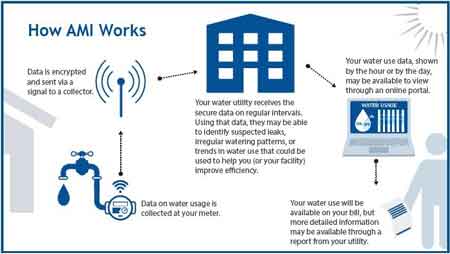

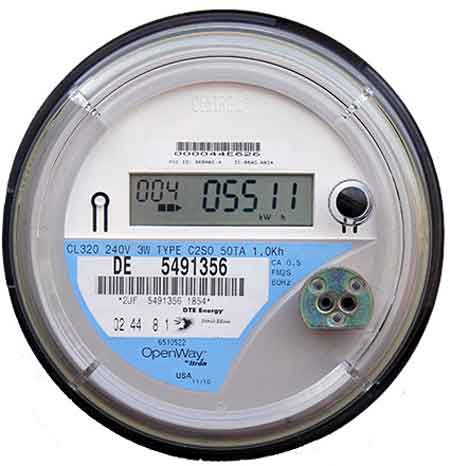
AMI data delivers high-resolution load and voltage measurements from deployed meters, providing utilities with the empirical foundation required to validate power flow models, improve distribution accuracy, and support safe switching, DER integration, and real-time operational intelligence.
AMI data is no longer a billing artifact. It functions as a distributed measurement dataset that reflects actual electrical behavior at the service level. As electrification accelerates and distributed energy resources introduce bidirectional variability, modeled assumptions alone cannot sustain operational confidence. Measured feeder behavior must continuously be reconciled with calculated load forecasts.
Utilities increasingly rely on AMI-derived load measurements as structured inputs to operational platforms such as ADMS, where switching safety, restoration sequencing, and voltage stability depend on an accurate system representation.
Distribution operations depend on accurate power flow modeling to estimate voltage levels, current distribution, and equipment loading across feeders and transformers.
Modern ADMS software platforms calculate distribution power flow using:
• SCADA telemetry
• feeder topology models
• switching device status
• load profiles and customer classifications
• distributed generation estimates
These inputs are partially modeled and partially measured. AMI data introduces direct service-level measurements that validate whether modeled feeder behavior aligns with observed electrical conditions.
Maintaining accurate meter-to-transformer and transformer-to-feeder relationships requires synchronized network representations, such as geospatial ADMS, to ensure meter load measurements align correctly with feeder topology.
By aggregating meter-level measurements to the transformer or switch level, utilities compare measured load against modeled load estimates generated within ADMS. Discrepancies reveal model drift, connectivity errors, or outdated load assumptions.
This validation process strengthens operator confidence and directly supports broader grid management solutions by anchoring feeder decisions in empirical measurement rather than estimation.
Stay informed with our FREE Metering, AMI & Edge Intelligence Newsletter — get the latest news, breakthrough technologies, and expert insights, delivered straight to your inbox.
Switching operations redistribute load across feeders and transformers. If model assumptions are inaccurate, switching actions may create overload conditions or unintended voltage excursions.
AMI data allows engineers to validate load levels at operational boundaries before executing switching sequences. Aggregated meter telemetry confirms whether feeder conditions reflect modeled expectations.
In large distribution systems containing tens of thousands of switching devices and hundreds of thousands of service transformers, continuous validation through meter-derived data preserves situational awareness. Switching decisions become less dependent on estimated profiles and more dependent on verified electrical state.
This measurable alignment improves system reliability and strengthens power system reliability across modern distribution networks.
Distribution systems are dynamic. Load variation, topology changes, DER output, and weather events continuously alter electrical conditions.
Static load profiles cannot capture these variations with sufficient precision. AMI data enables continuous calibration of distribution models by identifying variance between calculated and measured load.
When discrepancies emerge, engineers refine:
• feeder load profiles
• transformer loading assumptions
• voltage prediction parameters
• topology correlations
• outage restoration logic
These refinements propagate into operational platforms, improving the fidelity of feeder simulations and restoration sequencing within modern grid modeling environments.
During outages, meter-level telemetry transmitted through the Advanced Metering Infrastructure confirms service interruption and verifies restoration without requiring physical inspection, narrowing restoration uncertainty windows.
Distributed energy resources such as rooftop solar, battery storage, and electric vehicle charging introduce localized variability and reverse power flow.
AMI data provides direct observation of voltage fluctuation and load variability at the customer interface. This measurement supports coordination between operational platforms and the distributed energy resource management system, ensuring DER activity remains within feeder constraints.
Understanding how operational authority shifts between centralized platforms is further clarified in discussions comparing ADMS vs DERMS, where data alignment determines which system governs specific control decisions.
Empirical measurement reduces uncertainty introduced by bidirectional power flow and strengthens operational predictability.
Large utilities may collect hundreds of millions of interval readings per day. Converting this telemetry into operational intelligence requires a robust data engineering architecture.
Utilities integrate AMI data into centralized environments that support:
• data ingestion pipelines
• time synchronization
• cleansing and validation
• connectivity mapping
• automated anomaly detection
Protecting this operational data ecosystem requires controls aligned with cybersecurity for utilities to preserve data integrity and operational continuity.
Structured correctly, this infrastructure converts raw measurements into actionable model inputs and strengthens intelligent asset management across distribution fleets.
AMI data has evolved from billing support into a validation engine for distribution system modeling. It confirms whether feeder simulations reflect actual electrical conditions and ensures switching decisions align with measured reality.
Advanced analytical platforms such as GenAI Copilots for Utility Engineering assist engineers in interpreting variance, accelerating correction cycles, and identifying emerging system risks.
As distribution grids become more dynamic, AMI data provides the empirical measurement layer required to sustain operational accuracy.
Utilities that embed structured data validation into their operational workflows narrow the gap between modeled assumptions and observed electrical behavior. That narrowing defines modern distribution reliability.
Think you know Metering, AMI & Edge Intelligence? Take our quick, interactive quiz and test your knowledge in minutes.
Explore 50+ live, expert-led electrical training courses –