By -- Source, Sacramento Bee


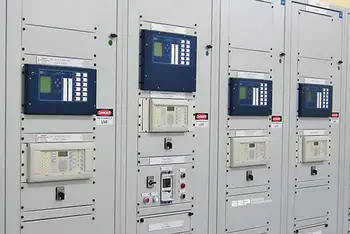
Protective Relay Training - Basic

Our customized live online or in‑person group training can be delivered to your staff at your location.
  • Live Online
  • 12 hours Instructor-led
  • Group Training Available
Regular Price:
$699
Coupon Price:
$599
Reserve Your Seat Today
Operators of California's electric grid played market games in an effort to counter those being played by generators, and consumers were the losers, state Sen. Joe Dunn said Tuesday.

The state Independent System Operator said it would investigate the Santa Ana Democrat's charges, and a spokesman for the state's power buying agency said it was concerned that the ISO had behaved improperly.

State Department of Water Resources spokesman Oscar Hidalgo said the ISO asked for its help and then suggested a solution that would have saved the state money but involved making false statements.

"We didn't feel it was proper. Yeah, we would have saved money, but it's not a proper way to do business," Hidalgo said. "It's against the market rules."

The department did not comply with the request, he said.

Dunn and Hidalgo say the incident unfolded Nov. 14, 2001, when the ISO asked the state to buy more power. This is their account:

Even though the state had enough power, the ISO was anticipating repairs on a transmission line would make it essential to draw electricity from two plants -- one run by Duke Energy Corp. and one by Reliant Energy Inc.

Those plants were not prepared to make themselves available, the ISO reportedly told the Department of Water Resources, and it needed the state to promise to buy their power.

When the state objected to the expense, the ISO offered a variation. If the state would submit a "fictitious load" -- falsely inflate future power needs -- then the department wouldn't have to sell power at a loss.

The department refused to submit a false estimate, but it did help the ISO, buying more than $900,000 of extra electricity and selling other, surplus power at a loss.

ISO Chairman Michael Kahn said the allegation would be investigated but that "there is no evidence at this time to indicate any wrongful conduct or manipulation of the ISO's markets."

The ISO says the incident saved consumers money and kept the grid stable.

Reliant officials had no comment on the incident, which Dunn said was triggered partly because generators had been disregarding ISO orders to run when needed. Duke officials could not be reached for comment.

"The ISO, in our view, was engaging in the manipulation of the market itself in response to the manipulation engaged in by the generators," said Dunn, who chairs the Senate committee investigating price manipulation.

Related News
EV Sales Still Behind Gas Cars

U.S. EV and Hybrid Sales 2024 show slower adoption versus gas-powered cars, as charging infrastructure gaps, range anxiety, higher upfront costs, and affordability concerns persist despite incentives, battery tech advances, and expanding fast-charging networks.


Key Points

They represent 10-15% of U.S. car sales, lagging gas models due to costs, charging gaps, range anxiety, and access.

✅ 10-15% of U.S. auto sales; gas cars dominate

✅ Barriers: upfront cost, limited charging, range anxiety

✅ Incentives, battery tech, and networks may boost adoption


Sales of hybrid and electric vehicles (EVs) in the U.S. are continuing to trail behind traditional gas-powered vehicles in 2024, despite significant advancements in automotive technology and growing public awareness of environmental concerns. While the electric vehicle market has seen steady growth and recent sales momentum over the past few years, the gap between EVs and gasoline-powered cars remains wide.

In 2024, hybrid and electric vehicles are projected to account for roughly 10-15% of total car sales in the U.S., a figure that, though significant, still lags far behind the sales of gas-powered vehicles and follows a Q1 2024 EV market share dip in the U.S., according to recent data. Analysts point to several factors contributing to this slower adoption rate, including higher upfront costs, limited charging infrastructure, and consumer concerns over range anxiety. Additionally, while EVs and hybrids offer lower lifetime operating costs, the initial price difference remains a hurdle for many prospective buyers.

One of the key challenges for EV sales continues to be the perception of cost, even as analyses show they can be better for the planet and often your budget over time. While federal and state incentives have made EVs more affordable, especially for lower-income buyers, the price tag for many electric models remains steep, particularly for higher-end vehicles. Even with government rebates, EVs can still be priced higher than their gasoline counterparts, making them less accessible for middle-class consumers. Many potential buyers are also hesitant to make the switch, unsure if the long-term savings will outweigh the initial investment.

Another critical factor is the limited charging infrastructure in many parts of the country. Though major cities have seen significant improvements in charging stations, rural areas and smaller towns still lack the necessary infrastructure to support widespread EV use. This uneven distribution of charging stations leads to concerns about being stranded in areas without access to fast-charging options. While automakers are working on expanding charging networks, the pace of this development is slow, and EVs won't go mainstream until key problems are fixed according to industry leaders.

Range anxiety is also a continuing issue, despite improvements in battery technology. Though newer electric vehicles can go further on a single charge than ever before, the range of many EVs still doesn't meet the expectations of some drivers, particularly those who regularly take long road trips or live in rural areas. The longer charging times and the necessity of planning routes around charging stations add to the hesitation, especially when gasoline-powered vehicles provide greater convenience and flexibility.

The shift toward EVs is further hindered by the continued dominance of gas-powered cars in the market. Gasoline vehicles benefit from decades of development, an extensive fueling infrastructure, and familiarity with the technology. For many consumers, the convenience, affordability, and ease of use of gas-powered vehicles still outweigh the benefits of switching to an electric alternative. Additionally, with fluctuating fuel prices, many drivers continue to find gas-powered cars relatively cost-effective in terms of daily commuting, especially when compared to the current costs of EV ownership.

Despite these challenges, there is hope for a future shift. The federal government’s push for stricter emissions regulations and tax incentives continues to fuel growth in the electric vehicle market. As automakers ramp up production and more affordable options become available, EV sales are expected to increase in the coming years. Companies like Tesla, Ford, whose hybrids are getting a boost, and General Motors are leading the charge, while new manufacturers like Rivian and Lucid Motors are offering alternatives to traditional gasoline vehicles.

Furthermore, the development of new technologies, such as solid-state batteries and faster charging systems, could help alleviate some of the current drawbacks of electric vehicles. If these advancements reach mass-market production in the next few years, they could help make EVs a more attractive and practical option for consumers, aligning with within-a-decade adoption forecasts from some industry observers.

In conclusion, while hybrid and electric vehicles are growing in popularity, gas-powered vehicles continue to dominate the U.S. car market in 2024. Challenges such as high upfront costs, limited charging infrastructure, and concerns about range persist, making it difficult for many consumers to make the switch to electric even as they ask if it's time to buy an EV in 2024. However, with continued investment in technology and infrastructure, the gap between EVs and gas-powered vehicles could narrow in the years to come.


Related News

View more

Coalition pursues extra $7.25B for DOE nuclear cleanup, job creation

DOE Environmental Management Funding Boost seeks $7.25B to accelerate nuclear cleanup, upgrade Savannah River Site infrastructure, create jobs, and support small businesses, echoing ARRA 2009 results and expediting DOE EM waste remediation nationwide.


Key Points

A proposed $7.25B stimulus for DOE's EM to accelerate nuclear cleanup, modernize infrastructure, and create jobs.

✅ $7.25B one-time stimulus for DOE EM cleanup and infrastructure.

✅ Targets Savannah River Site; supports jobs and small businesses.

✅ Builds on ARRA 2009; accelerates nuclear waste remediation.


A bloc of local governments and nuclear industry, nuclear innovation efforts, labor and community groups are pressing Congress to provide a one-time multibillion-dollar boost to the U.S. Department of Energy Office of Environmental Management, the remediation-focused Savannah River Site landlord.

The organizations and officials -- including Citizens For Nuclear Technology Awareness Executive Director Jim Marra and Savannah River Site Community Reuse Organization President and CEO Rick McLeod -- sent a letter Friday to U.S. House and Senate leadership "strongly" supporting a $7.25 billion funding injection, even as ACORE challenges coal and nuclear subsidies in separate regulatory proceedings, arguing it "will help reignite the national economy," help revive small businesses and create thousands of new jobs despite the novel coronavirus crisis.

More than 30 million Americans have filed unemployment claims in the past two months, with additional clean energy job losses reported, too. Hundreds of thousands of claims have been filed in South Carolina since mid-March, compounding issues like unpaid utility bills in neighboring states.

The requested money could, too, speed Environmental Management's nuclear waste cleanup missions and be used to fix ailing infrastructure and strengthen energy security for rural communities nationwide -- some of which dates back to the Cold War -- at sites across the country. That's a "rare" opportunity, reads the letter, which prominently features the Energy Communities Alliance logo and its chairman's signature.

Similar funding programs, like what was done with the 2009 American Recovery and Reinvestment Act and recent clean energy funding initiatives, have been successful.

At the time, amid a staggering economic downturn nationwide, Environmental Management contractors "hired over 20,000 new workers," putting them "to work to reduce the overall cleanup complex footprint by 688 square miles while strengthening local economies," the Friday letter reads.

The Energy Department's cleanup office estimates the $6 billion investment years ago reduced its environmental liability by $13 billion, according to a 2012 report.

Such a leap forward, the coalition believes, is repeatable, a view reflected in current plans to revitalize coal communities with clean energy projects across the country.

"We are confident that DOE can successfully manage increased funding and leverage it for future economic development as it has in the past," the letter states. It continues: "We take pride in working together to support jobs and development of infrastructure and work that make our country stronger and assists us to recover from the impacts of COVID-19."

As of Monday afternoon, 8,942 cases of COVID-19, the disease caused by the novel coronavirus, have been logged in South Carolina. Aiken County is home to 155 of those cases.


Related News

View more

Mines found at Ukraine's Zaporizhzhia nuclear plant, UN watchdog says

Zaporizhzhia Nuclear Plant Mines reported by IAEA at the Russian-occupied site: anti-personnel devices in a buffer zone, restricted areas; access limits to reactor rooftops and turbine halls heighten nuclear safety and security concerns in Ukraine.


Key Points

IAEA reports anti-personnel mines at Russian-held Zaporizhzhia, raising nuclear safety risks in buffer zones.

✅ IAEA observes mines in buffer zone at occupied site

✅ Restricted areas; no roof or turbine hall access granted

✅ Safety systems unaffected, but staff under pressure


The United Nations atomic watchdog said it saw anti-personnel mines at the site of Ukraine's Zaporizhzhia nuclear power plant which is occupied by Russian forces.

Europe's largest nuclear facility fell to Russian forces shortly after the invasion of Ukraine in February last year, as Moscow later sought to build power lines to reactivate it amid ongoing control of the area. Kyiv and Moscow have since accused each other of planning an incident at the site.

On July 23 International Atomic Energy Agency (IAEA) experts "saw some mines located in a buffer zone between the site's internal and external perimeter barriers," agency chief Rafael Grossi said in a statement on Monday.

The statement did not say how many mines the team had seen.

The devices were in "restricted areas" that operating plant personnel cannot access, Mr Grossi said, adding the IAEA's initial assessment was that any detonation "should not affect the site's nuclear safety and security systems".

Laying explosives at the site was "inconsistent with the IAEA safety standards and nuclear security guidance" and, amid controversial proposals on Ukraine's nuclear plants that have circulated internationally, created additional psychological pressure on staff, he added.

Ukrainians in Nikopol are out of water and within Russia's firing line. But Zaporizhzhia nuclear power plant could pose the biggest threat, even as Ukraine has resumed electricity exports to regional grids.

Last week the IAEA said its experts had carried out inspections at the plant, without "observing" the presence of any mines, although they had not been given access to the rooftops of the reactor buildings, while a possible agreement to curb attacks on plants was being discussed.

The IAEA had still not been given access to the roofs of the reactor buildings and their turbine halls, its latest statement said, even as a proposal to control Ukraine's nuclear plants drew scrutiny.

After falling into Russian hands, Europe's biggest power plant was targeted by gunfire and has been severed from the grid several times, raising nuclear risk warnings from the IAEA and others.

The six reactor units, which before the war produced around a fifth of Ukraine's electricity, have been shut down for months, prompting interest in wind power development as a harder-to-disrupt source.


Related News

View more

OPINION | Bridging the electricity gap between Alberta and B.C. makes perfect climate sense

BC-Alberta Transmission Intertie enables clean hydro to balance wind and solar, expanding transmission capacity so Site C hydro can dispatch power, cut emissions, lower costs, and accelerate electrification across provincial grids under federal climate policy.


Key Points

A cross-provincial grid link using BC hydro to firm Alberta wind and solar, cutting emissions and costs.

✅ Balances variable renewables with dispatchable hydro from Site C.

✅ Enables power trade: peak exports, low-cost wind imports.

✅ Lowers decarbonization costs and supports electrification goals.


By Mark Jaccard

Lost in the news and noise of the federal government's newly announced $170-per-tonne carbon tax was a single, critical sentence in Canada's updated climate plan, one that signals a strategy that could serve as the cornerstone for a future free of greenhouse gas emissions.

"The government will work with provinces and territories to connect parts of Canada that have abundant clean hydroelectricity with parts that are currently more dependent on fossil fuels for electricity generation — including by advancing strategic intertie projects."

Why do we think this one sentence is so important? And what has it got to do with the controversial Site C project Site C electricity debate under construction in British Columbia?

The answer lies in the huge amount of electricity we'll need to generate in Canada to achieve our climate goals for 2030 and 2050. Even while we aggressively pursue energy efficiency, our electric cars, buses and perhaps trucks in Canada's net-zero race will need a huge amount of new electricity, as will our buildings and industries. 

Luckily, Canada is blessed with an electricity system that is the envy of the world — already over 80 per cent zero emission, the bulk being from flexible hydro-electricity, with a backbone of nuclear power largely in Ontario, a national electricity success and rapidly growing shares of cheap wind and solar. 

Provincial differences
Yet the story differs significantly from one province to another. While B.C.'s electricity is nearly emissions free, the opposite is true of its neighbour, Alberta, where more than 80 per cent still comes from fossil fuels. This, despite an impressive shift away from coal power in recent years.

Now imagine if B.C. and Alberta were one province.

This might sound like the start of a bad joke, or a horror movie to some, but it's the crux of new research by a trio of energy economists who put a fine point on the value of such co-operation.

The study, by Brett Dolter, Kent Fellows and Nic Rivers, takes a detailed look at the economic case for completing Site C, BC Hydro's controversial large hydro project under construction, and makes three key conclusions.

First, they argue Site C should likely not have been started in the first place. Only a narrow set of assumptions can now justify its total cost. But what's done is done, and absent a time machine, the decision to complete the dam rests on go-forward costs.

On that note, their second conclusion is no more optimistic. Considering the cost to complete the project, even accounting for avoiding termination costs should it be cancelled, they find the economics of completing Site C over-budget status to be weak. If the New York Times had a Site C needle in the style of the newspaper's election visual, it would be "leaning cancel" at this point.

In Alberta, more than 80 per cent of the electricity still comes from fossil fuels, despite an impressive shift away from coal power in recent years. (CBC)
But it is their third conclusion that stands out as worthy of attention. They argue there is a case for completing Site C if the following conditions are met:

B.C. and Alberta reduce their electricity sector emissions by more than 75 per cent (this really means Alberta, given B.C.'s already clean position); and

B.C. and Alberta expand their ability to move electricity between their respective provinces by building new transmission lines.

Let's deal with each of these in turn.

On Condition 1, we give an emphatic: YES! Reducing electricity emissions is an absolute must to meet climate pledges if Canada is to come even close to achieving its net-zero goals. As noted above, a clean electricity grid will be the cornerstone of a decarbonized economy as we generate a great deal more power to electrify everything from industrial processes to heating to transportation and more. 

Condition 2 is more challenging. Talk of increasing transmission connections across Canada, including Hydro-Québec's U.S. strategy has been ongoing for over 50 years, with little success to speak of. But this time might well be different. And the implications for a completed Site C, should the government go that route, are profound.

Wind and solar costs rapidly declining
Somewhat ironically, the case for Site C is made stronger by the rapidly declining costs of two of its apparent renewable competitors: wind and solar.

The cost of wind and solar generation has fallen by 70 per cent and 90 per cent, respectively, a dramatic decline in the past 10 years. No longer can these variable sources of power be derided as high cost; they are unequivocally the cheapest sources of raw energy in electricity systems today.

However, electricity system operators must deal with their "non-dispatchability," a seemingly complicated term that simply means they produce electricity only when the sun shines and the wind blows, which is not necessarily when electricity customers want their electricity delivered (dispatched) to them. And because of this characteristic, the value of dispatchable electricity sources, like a completed Site C, will grow as a complement to wind and solar. 

Thus, as Alberta's generation of cheap wind and solar grows, so too does the value of connecting it with the firm, dispatchable resources available in B.C.

Rather than displacing wind and solar, large hydro facilities with the ability to increase or decrease output on short notice can actually enable more investment in these renewable sources. Expanding the transmission connection, with Site C on one side of that line, becomes even more valuable.

Many in B.C. might read this and rightly ask themselves, why should we foot the bill for this costly project to help out Albertans? The answer is that it won't be charity — B.C. will get paid handsomely for the power it delivers in peak periods and will be able to import wind power at low prices from Alberta in other times. B.C. will benefit greatly from these gains of trade.

Turning to Alberta, why should Albertans support B.C. reaping these gains? The answer is two-fold.

First, Site C will actually enable more low-cost wind and solar to be built in Alberta due to hydro's ability to balance these non-dispatchable renewables. Jobs and economic opportunity will occur in Alberta from this renewable energy growth.

Second, while B.C. imports won't come cheap, they will be less costly than the decarbonization alternatives Alberta would need without B.C.'s flexible hydro, as the economists' study shows. This means lower overall costs to Alberta's power consumers.

A clear role for Ottawa
To be sure, there are challenges to increasing the connectedness of B.C. and Alberta's power systems, not least of which is BC Hydro being a regulated, government-owned monopoly while Alberta is a competitive market amongst private generators. Some significant accommodations in climate policy and grids will be needed to ensure both sides can compete and benefit from trade on an equal footing.

There is also the pesky matter of permitting and constructing thousands of kilometres of power lines. Getting linear energy infrastructure built in Canada has not exactly been our forte of late.

We are not naive to the significant challenges in such an approach, but it's not often that we see such a clear narrative for beneficial climate action that, when considered at the provincial level, is likely to be thwarted, but when considered more broadly can produce a big win.

It's the clearest example yet of a role for the federal government to bridge the gap, to facilitate the needed regulatory conversations, and, let's be frank, to bring money to the table to make the line happen. Neither provincial side is likely to do it on their own, nor, as history has shown, are they likely to do it together. 

For a government committed to reducing emissions, and with a justified emphasis on the electricity sector, the opportunity to expand the Alberta-B.C. transmission intertie, leveraging the flexibility of B.C.'s hydro with the abundance of wind and solar potential on the Prairies, offers a potential massive decarbonization win for Western Canada that is too good to ignore.


Mark Jaccard, a professor at Simon Fraser University, and Blake Shaffer, a professor at the University of Calgary


Related News

View more

Is a Resurgence of Nuclear Energy Possible in Germany?

Germany Nuclear Phase-Out reflects a decisive energy policy shift, retiring reactors as firms shun new builds amid high costs, radioactive waste challenges, climate goals, insurance gaps, and debate over small modular reactors and subsidies.


Key Points

Germany's policy to end nuclear plants and block new builds, emphasizing safety, waste, climate goals, and viability.

✅ Driven by safety risks, waste storage limits, and insurance gaps

✅ High capital costs and subsidies make new reactors uneconomic

✅ Political debate persists; SMRs raise cost and proliferation concerns


A year has passed since Germany deactivated its last three nuclear power plants, marking a significant shift in its energy policy.

Nuclear fission once heralded as the future of energy in Germany during the 1960s, was initially embraced with minimal concern for the potential risks of nuclear accidents. As Heinz Smital from Greenpeace recalls, the early optimism was partly driven by national interest in nuclear weapon technology rather than energy companies' initiatives.

Jochen Flasbarth, State Secretary in the Ministry of Development, reflects on that era, noting Germany's strong, almost naive, belief in technology. Germany, particularly the Ruhr region, grappled with smog-filled skies at that time due to heavy industrialization and coal-fired power plants. Nuclear energy presented a "clean" alternative at the time.

This sentiment was also prevalent in East Germany, where the first commercial nuclear power plant came online in 1961. In total, 37 nuclear reactors were activated across Germany, reflecting a widespread confidence in nuclear technology.

However, the 1970s saw a shift in attitudes. Environmental activists protested the construction of new power plants, symbolizing a generational rift. The 1979 Three Mile Island incident in the US, followed by the catastrophic Chornobyl disaster in 1986, further eroded public trust in nuclear energy.

The Chornobyl accident, in particular, significantly dampened Germany's nuclear ambitions, according to Smital. Post-Chernobyl, plans for additional nuclear power plants in Germany, once numbering 60, drastically declined.

The emergence of the Green Party in 1980, rooted in anti-nuclear sentiment, and its subsequent rise to political prominence further influenced Germany's energy policy. The Greens, joining forces with the Social Democrats in 1998, initiated a move away from nuclear energy, facing opposition from the Christian Democrats (CDU) and Christian Social Union (CSU).

However, the Fukushima disaster in 2011 prompted a policy reversal from CDU and CSU under Chancellor Angela Merkel, leading to Germany's eventual nuclear phase-out in March 2023, after briefly extending nuclear power amid the energy crisis.

Recently, the CDU and CSU have revised their stance once more, signaling a potential U-turn on the nuclear phaseout, advocating for new nuclear reactors and the reactivation of the last shut-down plants, citing climate protection and rising fossil fuel costs. CDU leader Friedrich Merz has lamented the shutdown as a "black day for Germany." However, these suggestions have garnered little enthusiasm from German energy companies.

Steffi Lemke, the Federal Environment Minister, isn't surprised by the companies' reluctance, noting their longstanding opposition to nuclear power, which she argues would do little to solve the gas issue in Germany, due to its high-risk nature and the long-term challenge of radioactive waste management.

Globally, 412 reactors are operational across 32 countries, even as Europe is losing nuclear power during an energy crunch, with the total number remaining relatively stable over the years. While countries like China, France, and the UK plan new constructions, there's a growing interest in small, modern reactors, which Smital of Greenpeace views with skepticism, noting their potential military applications.

In Germany, the unresolved issue of nuclear waste storage looms large. With temporary storage facilities near power plants proving inadequate for long-term needs, the search for permanent sites faces resistance from local communities and poses financial and logistical challenges.

Environment Minister Lemke underscores the economic impracticality of nuclear energy in Germany, citing prohibitive costs and the necessity of substantial subsidies and insurance exemptions.

As things stand, the resurgence of nuclear power in Germany appears unlikely, with economic factors playing a decisive role in its future.


Related News

View more

Scientists generate 'electricity from thin air.' Humidity could be a boundless source of energy.

Air Humidity Energy Harvesting converts thin air into clean electricity using air-gen devices with nanopores, delivering continuous renewable energy from ambient moisture, as demonstrated by UMass Amherst researchers in Advanced Materials.


Key Points

A method using nanoporous air-gen devices to harvest continuous clean electricity from ambient atmospheric moisture.

✅ Nanopores drive charge separation from ambient water molecules

✅ Works across materials: silicon, wood, bacterial films

✅ Predictable, continuous power unlike intermittent solar or wind


Sure, we all complain about the humidity on a sweltering summer day. But it turns out that same humidity could be a source of clean, pollution-free energy, aligning with efforts toward cheap, abundant electricity worldwide, a new study shows.

"Air humidity is a vast, sustainable reservoir of energy that, unlike wind and solar power resources, is continuously available," said the study, which was published recently in the journal Advanced Materials.

While humidity harvesting promises constant output, advances like a new fuel cell could help fix renewable energy storage challenges, researchers suggest.

“This is very exciting,” said Xiaomeng Liu, a graduate student at the University of Massachusetts-Amherst, and the paper’s lead author. “We are opening up a wide door for harvesting clean electricity from thin air.”

In fact, researchers say, nearly any material can be turned into a device that continuously harvests electricity from humidity in the air, a concept echoed by raindrop electricity demonstrations in other contexts.

“The air contains an enormous amount of electricity,” said Jun Yao, assistant professor of electrical and computer engineering at the University of Massachusetts-Amherst and the paper’s senior author. “Think of a cloud, which is nothing more than a mass of water droplets. Each of those droplets contains a charge, and when conditions are right, the cloud can produce a lightning bolt – but we don’t know how to reliably capture electricity from lightning.

"What we’ve done is to create a human-built, small-scale cloud that produces electricity for us predictably and continuously so that we can harvest it.”

The heart of the human-made cloud depends on what Yao and his colleagues refer to as an air-powered generator, or the "air-gen" effect, which relates to other atmospheric power concepts like night-sky electricity studies in the field.

In broader renewable systems, flexible resources such as West African hydropower can support variable wind and solar output, complementing atmospheric harvesting concepts as they mature.

The study builds on research from a study published in 2020. That year, scientists said this new technology "could have significant implications for the future of renewable energy, climate change and in the future of medicine." That study indicated that energy was able to be pulled from humidity by material that came from bacteria; related bio-inspired fuel cell design research explores better electricity generation, the new study finds that almost any material, such as silicon or wood, also could be used.

The device mentioned in the study is the size of a fingernail and thinner than a single hair. It is dotted with tiny holes known as nanopores, it was reported. "The holes have a diameter smaller than 100 nanometers, or less than a thousandth of the width of a strand of human hair."


Related News

View more

Sign Up for Electricity Forum’s Newsletter

Stay informed with our FREE Newsletter — get the latest news, breakthrough technologies, and expert insights, delivered straight to your inbox.

Electricity Today T&D Magazine Subscribe for FREE

Stay informed with the latest T&D policies and technologies.
  • Timely insights from industry experts
  • Practical solutions T&D engineers
  • Free access to every issue

Live Online & In-person Group Training

Advantages To Instructor-Led Training – Instructor-Led Course, Customized Training, Multiple Locations, Economical, CEU Credits, Course Discounts.

Request For Quotation

Whether you would prefer Live Online or In-Person instruction, our electrical training courses can be tailored to meet your company's specific requirements and delivered to your employees in one location or at various locations.