Latest AI Integration Articles
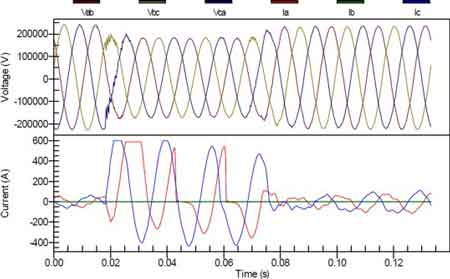
Fault Analysis in Power System Using AI Waveform Intelligence
Fault analysis in power system uses AI waveform intelligence and system data to identify fault cause, determine affected equipment, and guide engineering response, enabling utilities to prevent equipment failure, improve protection coordination, and strengthen grid reliability.
Fault Analysis in Power System
Fault detection confirms the presence of an abnormal electrical condition. Fault analysis determines what that condition means. Once detection systems identify waveform instability or a fault, engineering teams must understand its origin, severity, and operational implications. Fault analysis in power system provides the technical interpretation required to protect infrastructure and prevent reliability degradation.
This interpretation begins with waveform…
View more
Sign Up for Electricity Forum’s AI Integration Newsletter
Stay informed with our FREE AI Integration Newsletter — get the latest news, breakthrough technologies, and expert insights, delivered straight to your inbox.
Utility NOC Maturity Model for Grid Observability
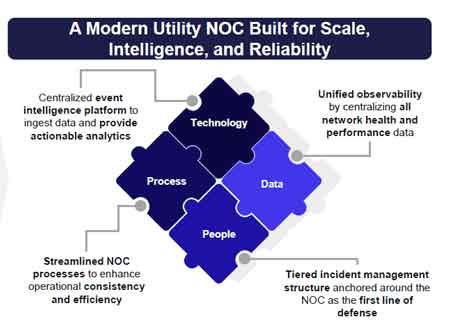
Utility NOC Maturity Model defines the staged evolution from reactive monitoring to predictive grid observability and centralized grid intelligence governance in regulated OT environments, where threshold discipline determines operational risk exposure.
A modern utility Network Operations Center (NOC) is no longer a device alarm clearing function. It is an operational control layer that determines whether telemetry, topology awareness, and remediation authority are aligned to grid risk. The maturity path of the Utility Network Operations Center Maturity Model defines how that control layer evolves under regulatory, cyber, and reliability constraints.
In regulated OT environments, monitoring gaps do not remain informational weaknesses.…
View more
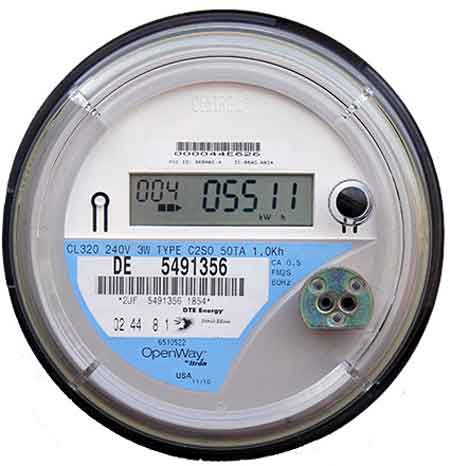
AMI Smart Meter Grid Edge Intelligence
AMI smart meter technology is no longer a billing endpoint. It is an operational measurement node at the lowest voltage tier of the distribution system, influencing voltage regulation, DER hosting capacity, outage verification, and transformer loading visibility.
Earlier deployments treated endpoint telemetry as a revenue support function. Fifteen-minute intervals constrained operational value and limited feeder-level insight. Modern architectures introduce sub-second sampling and localized analytics, shifting the meter into the operational control layer.
As endpoint visibility increases, engineering accountability increases as well. Voltage excursions, reverse power flow, and abnormal loading patterns become measurable rather than inferred. What was once model uncertainty…
View more
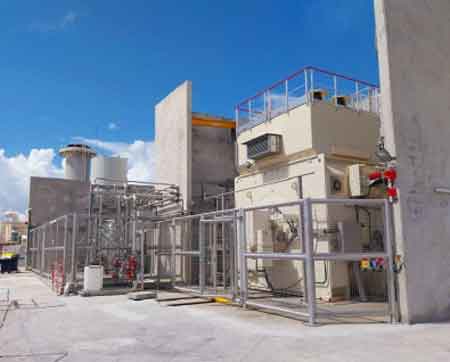
Hosting Capacity Analysis In Distribution System Planning
Hosting capacity analysis determines DER limits on distribution feeders by accounting for power flow, voltage rise, thermal loading, and protection constraints. It supports interconnection screening, grid planning, and evaluation of system limits under varying conditions.
Hosting capacity analysis is the process of using power system simulation to determine the maximum amount of distributed energy resources that can be connected to a distribution system without violating voltage, thermal, or protection limits. In practical utility planning, it defines how much DER can be added at specific nodes or along a feeder while preserving system reliability, acceptable operating margins, and safe interconnection performance.…
View more

Distribution System Modeling for Feeder Representation
Distribution system modeling is the process of creating a mathematical representation of an electrical distribution network to analyze system behavior, load flow, and operational performance.
It defines network topology, component characteristics, and load behavior, enabling calculation of voltage, current, and power flow across feeders and distribution circuits.
The model links topology, electrical parameters, and load representation via power-flow equations to produce outputs such as voltage profiles, system losses, feeder loading, and phase imbalance. These outputs form the basis for evaluating how distribution networks perform under real operating conditions.
This representation is necessary because distribution systems are not static. Switching operations,…
View more
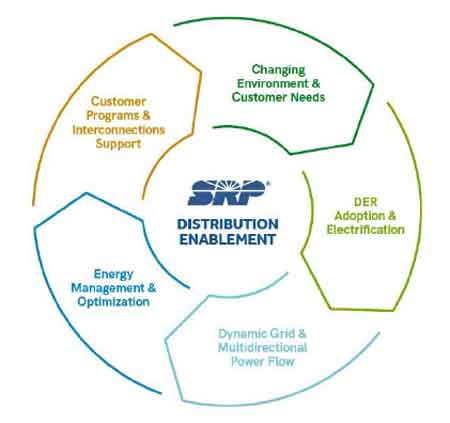
Line Sensors for Utilities in Distribution Fault Detection
Line sensors for utilities provide near real-time fault detection, waveform capture, and feeder visibility, reducing patrol time, improving outage isolation, and strengthening ADMS model accuracy across overhead and underground distribution networks.
Line sensors for utilities shift distribution control from post-event troubleshooting to near real-time situational awareness. When deployed on critical feeders, high-fire-risk circuits, and hard-to-access underground sections, they alter how operators interpret breaker trips, patrol decisions, and sectionalizing sequences.
In systems spanning tens of thousands of distribution miles with large underground penetration, the absence of intermediate sensing creates blind segments between substations and field devices. A breaker trip confirms interruption…
View more
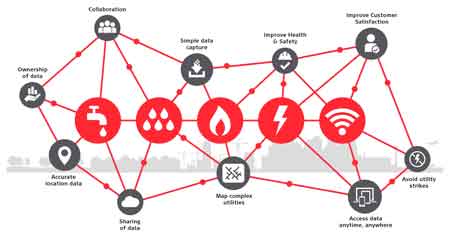
Utility Network Device Management for Distribution Control
Utility Network Device Management integrates AMI, GIS, and SCADA into a validated digital twin that governs device state, topology accuracy, load flow integrity, outage localization, and predictive maintenance across distribution systems.
Utility Network Device Management governs the operational state of transformers, reclosers, regulators, switches, meters, and protection assets across modern distribution systems. It integrates AMI, GIS, and SCADA into a continuously verified digital twin that functions as a structural control boundary for operational decisions.
In high-density distribution environments where millions of endpoints stream interval data, device-level topology accuracy determines whether switching sequences, overload assessments, and outage localization actions are based…
View more